Seed Cycling Chart: Which Seeds for Each Phase of Your Cycle
Your complete seed cycling guide — which seeds for each phase, how to prepare them, and what the research actually says about hormones and fertility.

I get asked about seed cycling more than almost any other topic — and the first question is always the same: "Which seeds, when?" So I made a seed cycling chart. Actually, I made several, because the standard 28-day version doesn't work for everyone, and nobody seems to talk about what to do when your cycle is 35 days or completely absent.
So what is seed cycling, exactly? It's the practice of eating specific seeds during each half of your menstrual cycle to support hormone balance. Below you'll find the complete seed cycling chart for each phase of your cycle, plus modified versions for PCOS, irregular cycles, and perimenopause. I've also included the actual nutritional breakdown of what each seed brings to the table, because "supports oestrogen" is not a useful explanation when you're trying to understand why this might work.
The Standard Seed Cycling Chart
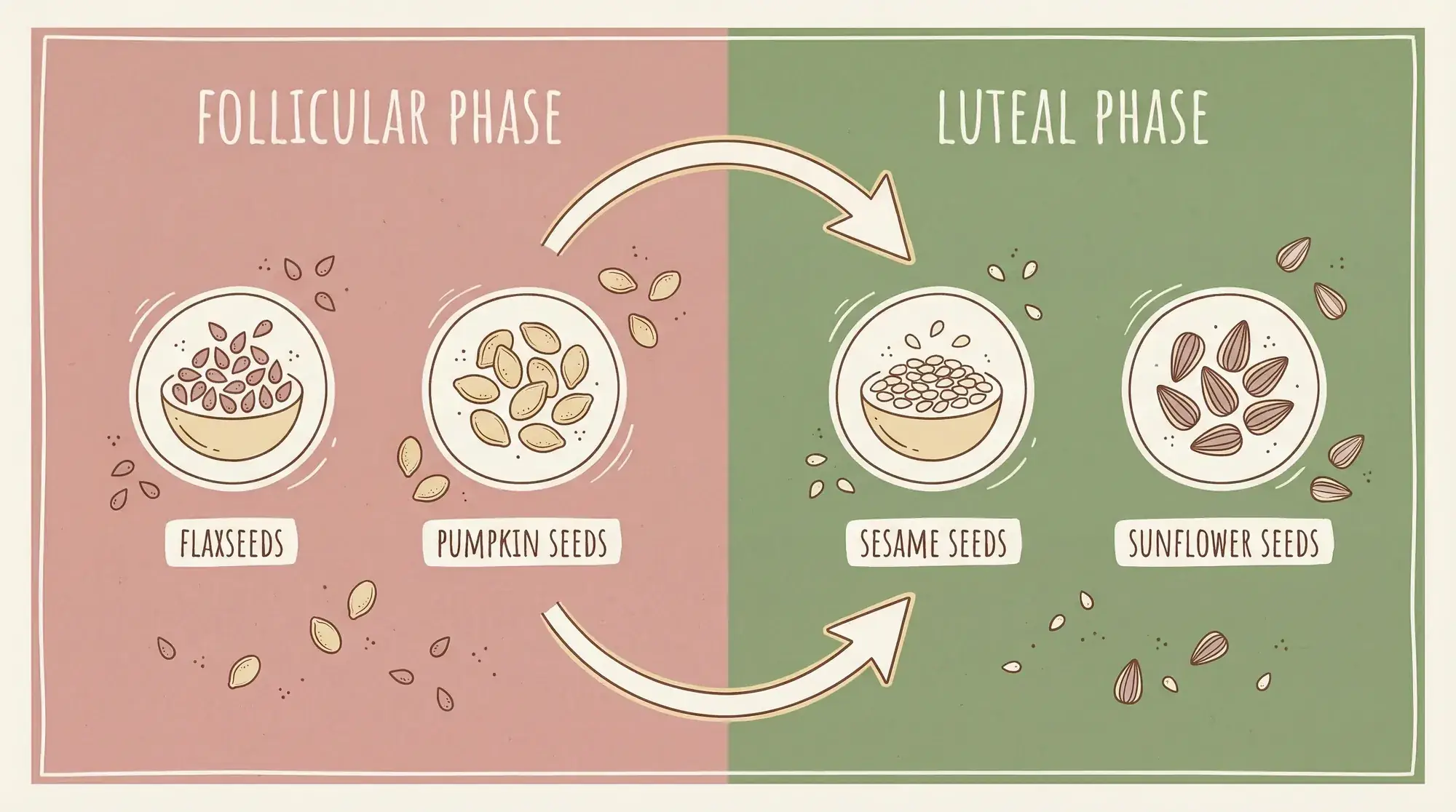
Seed cycling follows a simple pattern: two seeds during the first half of your cycle (follicular phase), two different seeds during the second half (luteal phase). Each pair contains specific nutrients thought to support the dominant hormone of that phase.
| Phase | Days | Seeds | Amount | Key Nutrients | Supports |
|---|---|---|---|---|---|
| Follicular | Day 1 (period starts) → ovulation | Ground flaxseeds + raw pumpkin seeds | 1 tbsp each daily | Lignans, omega-3 (ALA), zinc, magnesium | Oestrogen metabolism |
| Luteal | Ovulation → period starts | Ground sunflower seeds + sesame seeds | 1 tbsp each daily | Vitamin E, selenium, omega-6 (LA), lignans | Progesterone production |
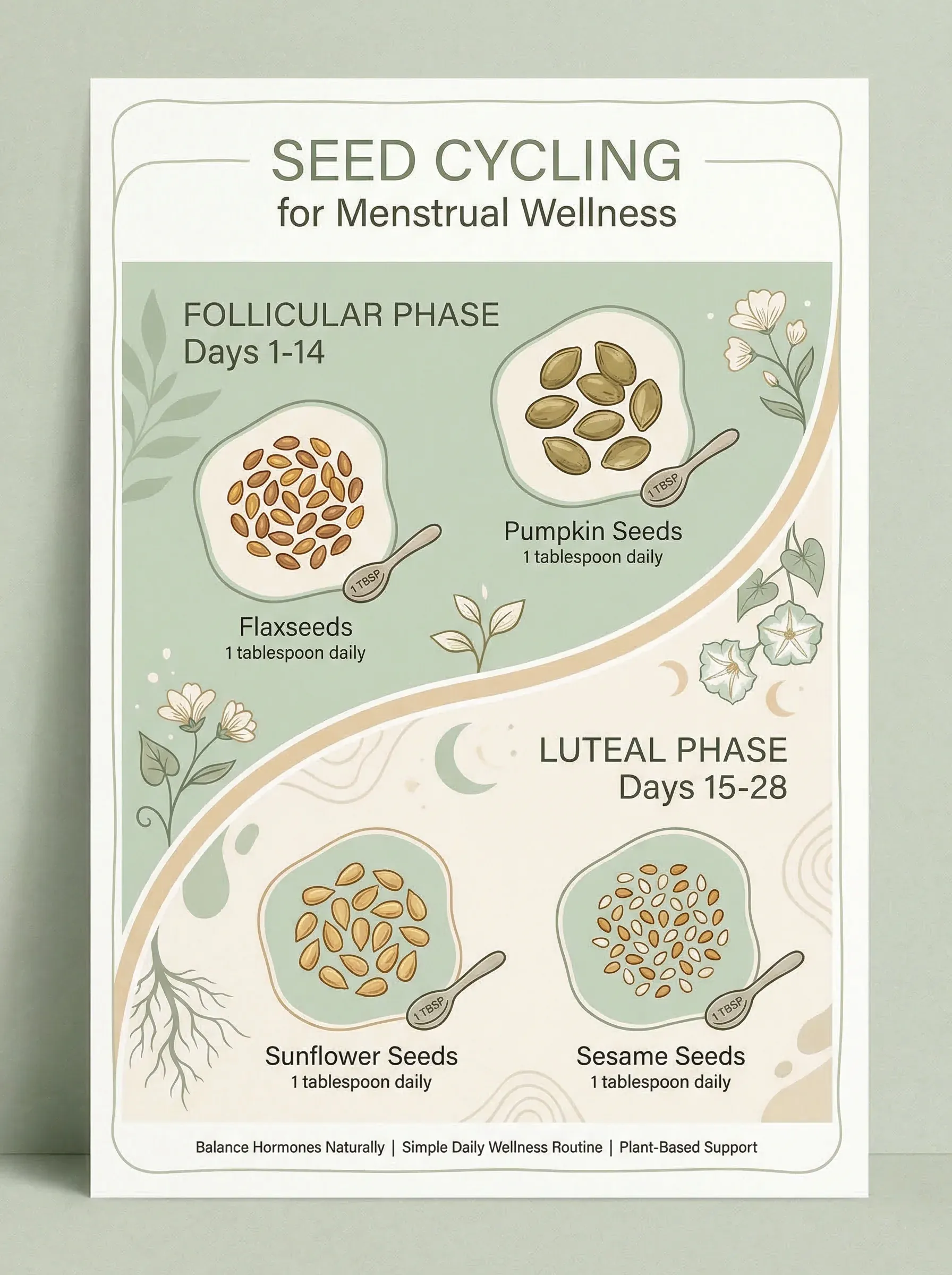
That's the foundation. Two tablespoons of seeds a day — one from each seed in the pair. Not complicated. The trick is consistency and freshness (more on that below).
What Each Seed Actually Does
Follicular Phase Seeds
Flaxseeds are the most researched seed in relation to hormones. They contain the highest concentration of lignans of any food — roughly 300 times more than most other plant foods (Thompson et al., 1991). Lignans are phytoestrogens that bind to oestrogen receptors and help modulate oestrogen metabolism. A study by Phipps et al. (1993) in the Journal of Clinical Endocrinology & Metabolism found that consuming 10g of ground flaxseed daily lengthened the luteal phase and reduced anovulatory cycles in premenopausal women.
Pumpkin seeds are one of the richest food sources of zinc — about 7.5mg per 30g serving, which is roughly half the daily recommended intake. Zinc is essential for follicle development, egg maturation, and FSH function (Tian & Bhargava, 2022). They're also high in magnesium (about 150mg per 30g), which supports over 300 enzymatic reactions including hormone synthesis.
Luteal Phase Seeds
Sunflower seeds are packed with vitamin E — about 7.4mg per 30g, nearly half the daily requirement. Vitamin E is a fat-soluble antioxidant that's been shown to improve endometrial thickness (Takasaki et al., 2006) and may support progesterone production by protecting the corpus luteum from oxidative stress. They also provide selenium, which is involved in thyroid hormone conversion — relevant because thyroid dysfunction and luteal phase defects often overlap.
Sesame seeds are another lignan powerhouse. A randomised controlled trial by Wu et al. (2006) found that 50g of sesame powder daily for 5 weeks significantly increased vitamin E status and improved antioxidant markers in postmenopausal women. They contain sesamin and sesamolin, which may support progesterone metabolism. They're also a good source of calcium (about 280mg per 30g) and omega-6 fatty acids.
Seed Cycling Chart for PCOS
If you have PCOS with irregular or absent periods, the standard "follow your cycle" approach falls apart immediately — because what cycle? Here's what I recommend to my clients instead. If you've been searching for a seed cycling chart PCOS-friendly enough for irregular cycles, use the moon cycle as your anchor.
| Moon Phase | Equivalent | Seeds | Duration |
|---|---|---|---|
| New moon → full moon | Follicular phase | Ground flaxseeds + pumpkin seeds | ~14 days |
| Full moon → new moon | Luteal phase | Ground sunflower + sesame seeds | ~14 days |
I know the moon cycle thing sounds a bit woo — I was sceptical too. But the point isn't lunar magic. It's giving your body a consistent hormonal rhythm when it doesn't have one naturally. Any fixed 14/14 day rotation works. The moon just makes it easy to remember (and there's actually some interesting research on circadian rhythms and menstrual synchrony, though nothing conclusive).
For PCOS specifically, the lignans in flaxseeds are particularly relevant. A systematic review in Cureus (PMC12461132) found that flaxseed lignans can influence oestrogen metabolism by modulating the conversion of stronger oestrogens (oestradiol) to weaker forms (oestrone) — potentially helpful in the oestrogen-dominant states seen in PCOS.
Seed Cycling Chart for Fertility
If you're actively trying to conceive, the seed cycling chart stays the same but timing matters more. You need to know when you're ovulating — don't guess based on "day 14."
| Phase | When to Switch | Seeds | Why It Matters for Fertility |
|---|---|---|---|
| Follicular | Day 1 of period → confirmed ovulation (OPK, BBT, or monitor) | Flaxseeds + pumpkin seeds | Zinc supports follicle maturation and egg quality |
| Luteal | Day after ovulation → period or positive test | Sunflower + sesame seeds | Vitamin E supports endometrial thickness and corpus luteum |
When I was trying to conceive, I tracked ovulation with both OPKs and BBT so I knew exactly when to switch seeds. If your follicular phase is longer than 14 days (mine was sometimes 16–17 days), stay on flax and pumpkin until you actually ovulate. Don't switch at day 14 just because the chart says so.
How to Prepare Your Seeds (It Matters)
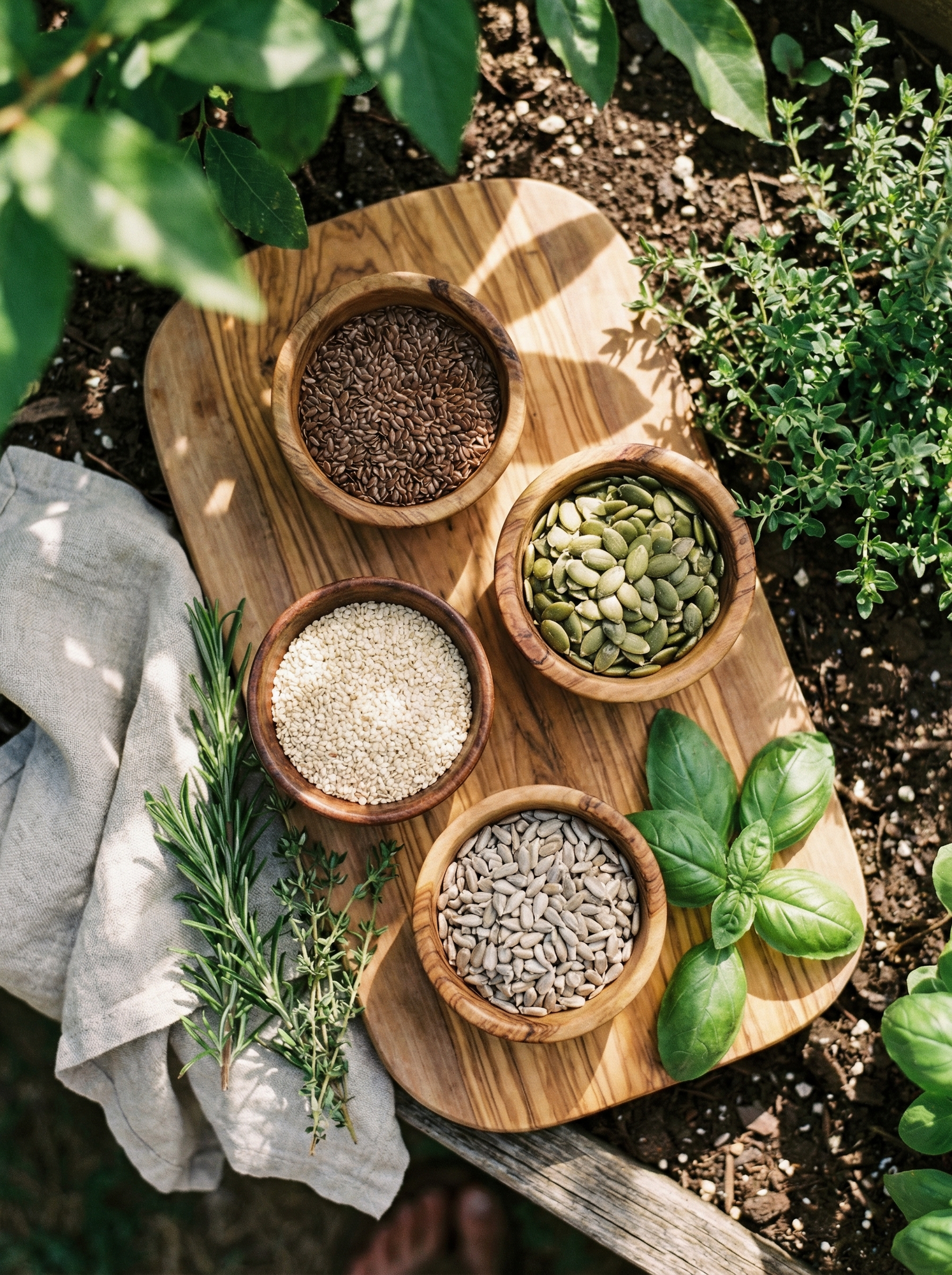
This is where most people go wrong. Eating whole flaxseeds is essentially pointless — they pass through your digestive system intact, taking all those lignans with them. Here's what works:
- Grind fresh: Use a coffee grinder or small blender. Grind 3–4 days' worth at a time, store in an airtight container in the fridge. Pre-ground flaxseed from the supermarket is already oxidised.
- Eat raw: Heat degrades the omega-3 fatty acids in flaxseeds and the vitamin E in sunflower seeds. Add to smoothies, yoghurt, porridge (after cooking), or salads.
- Fresh matters: Buy whole seeds and store in the freezer. Oils in seeds go rancid surprisingly quickly — especially flax. If your flaxseeds taste bitter, they've turned.
- Don't overthink amounts: 1 tablespoon of each seed in your pair = 2 tablespoons total per day. Some practitioners recommend up to 2 tablespoons each. I start clients at 1 and go from there.
Does Seed Cycling Work?
I want to be straight with you: there are no large-scale randomised controlled trials on seed cycling as a complete protocol. So does seed cycling work? The evidence is mostly indirect — studies on individual seed components (lignans, zinc, vitamin E, omega-3s) rather than the rotation system itself.
What we do have:
- Phipps et al. (1993) showed flaxseed supplementation reduced anovulatory cycles and lengthened luteal phases
- A 2025 case study (PMC12156535) documented successful fertility intervention in PCOS using seed cycling alongside myo-inositol — the patient conceived after 6 months
- A systematic review (PMC12461132) concluded that the individual components of seed cycling seeds have plausible mechanisms for supporting hormonal balance in PMS and PCOS
- Nowak et al. (2007) found pumpkin seed oil reduced blood pressure and improved lipid profiles in postmenopausal women
The honest answer: the theory is sound, the individual nutrients are well-evidenced, but the specific rotation protocol hasn't been rigorously tested. That said, you're eating seeds. The downside risk is essentially zero, the nutritional benefits are real regardless of the hormone angle, and I've seen genuinely positive changes in my clients' cycles over 3–6 months. It's not magic. But it's a solid foundation.
When to Expect Results
This is not a quick fix. Seeds are food, not medication. Here's a realistic timeline:
| Timeframe | What You Might Notice |
|---|---|
| Month 1 | Probably nothing dramatic. Your body is adjusting. You might notice slightly less bloating. |
| Months 2–3 | Some women report lighter PMS symptoms, less breast tenderness, more regular cycles. This is where consistency pays off. |
| Months 3–6 | If seed cycling is going to shift your cycle, this is when you'll see it. Cycle length may stabilise, ovulation may become more consistent. |
I tell my clients: commit to 3 full cycles before you evaluate. And keep tracking — BBT, cycle length, symptoms. Without data, you won't know if anything's actually changing.
The Bottom Line
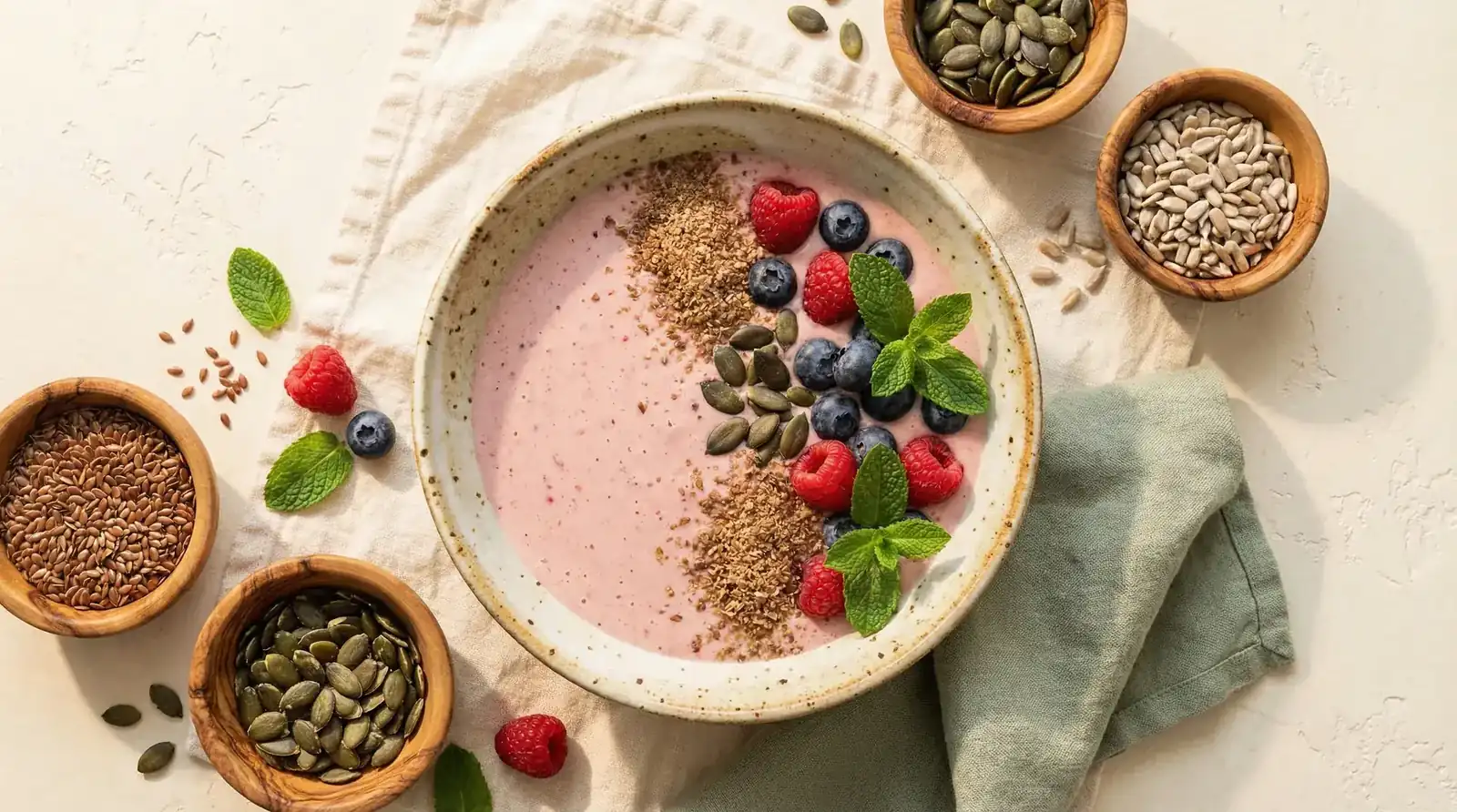
Seed cycling is one of the simplest dietary interventions you can try for hormone balance. Two tablespoons of seeds a day, rotated with your cycle. Seed cycling for hormones isn't a magic bullet, but the individual nutrients in each seed have genuine evidence behind them — lignans for oestrogen modulation, zinc for follicle development, vitamin E for progesterone support, omega-3s for inflammation.
Is it a miracle cure? No. Is it backed by large clinical trials as a complete protocol? Not yet. But the nutritional science is solid, the risk is zero, and it puts you back in the driver's seat of your cycle. Print the chart, stick it on your fridge, and give it three months.
FAQ
▸Can I do seed cycling if I’m on the pill?
You can eat the seeds for their nutritional benefits, but the hormonal cycling aspect won’t apply — the pill overrides your natural hormone fluctuations. If you come off the pill and want to support your cycle re-regulating, seed cycling is a good starting point.
▸What if my cycle is longer or shorter than 28 days?
Don’t force it into a 28-day box. Track ovulation (OPKs, BBT, or a fertility monitor) and switch seeds when you actually ovulate, not on a calendar date. Your follicular phase length varies — your luteal phase should stay fairly consistent at 12–14 days.
▸Can seed cycling help with PCOS?
The individual seed nutrients are relevant to PCOS — zinc for androgen metabolism, lignans for oestrogen modulation, omega-3s for inflammation. A case study (PMC12156535) reported improved hormonal markers and eventual conception when seed cycling was part of a PCOS treatment plan alongside myo-inositol. It’s not a standalone treatment, but a sensible complementary approach.
▸Do I need to eat organic seeds?
For flaxseeds specifically, I’d recommend organic where possible — they’re often sprayed with glyphosate as a pre-harvest desiccant, and the lignans you’re eating them for can absorb pesticide residues. For pumpkin, sunflower, and sesame, conventional is fine if organic isn’t accessible or affordable.
▸Can men do seed cycling?
There’s no male equivalent of the rotation protocol, but the seeds themselves are excellent for male fertility. Pumpkin seeds (zinc) and flaxseeds (omega-3s) support sperm health. There’s no need to cycle them — just include them daily.
▸What seeds go in which phase?
Follicular phase (days 1-14): 1 tbsp ground flaxseed + 1 tbsp ground pumpkin seeds. Luteal phase (days 15-28): 1 tbsp ground sesame seeds + 1 tbsp ground sunflower seeds. The theory is that each combination supports the dominant hormones of that phase.
▸How do I seed cycle with irregular periods?
If your cycle is irregular, use the new moon as day 1 and follow a 28-day schedule regardless of when your period actually comes. Alternatively, track ovulation with OPKs and switch seeds at ovulation rather than day 14.
▸Can men do seed cycling?
The concept was designed around the female menstrual cycle, so it doesn't directly apply to men. However, the seeds themselves (especially pumpkin seeds for zinc and flaxseed for omega-3s) are nutritionally beneficial for male fertility too.
You might also find helpful:
References
- Thompson LU et al. (1991). Flaxseed and its lignan and oil components reduce mammary tumor growth at a late stage of carcinogenesis. Carcinogenesis, 17(6), 1373–1376.
- Phipps WR et al. (1993). Effect of flax seed ingestion on the menstrual cycle. Journal of Clinical Endocrinology & Metabolism, 77(5), 1215–1219. doi:10.1210/jcem.77.5.8077314
- Tian X & Bhargava R (2022). Zinc and reproductive function. Nutrients, 14(18), 3755. doi:10.3390/nu14183755
- Takasaki A et al. (2006). Endometrial growth and uterine blood flow: a pilot study for improving endometrial thickness in the patients with a thin endometrium. Fertility and Sterility, 86(5), 1467–1472. doi:10.1016/j.fertnstert.2006.03.064
- Wu WH et al. (2006). Sesame ingestion affects sex hormones, antioxidant status, and blood lipids in postmenopausal women. The Journal of Nutrition, 136(5), 1270–1275. doi:10.1093/jn/136.5.1270
- Nowak DA et al. (2007). The effect of pumpkin seed oil on serum lipid profiles and blood pressure in postmenopausal women. Climacteric, 10(5), 430–442.
- PMC12461132 (2025). Efficacy of Seed Cycling as an Integrative Therapy for Premenstrual Syndrome and Polycystic Ovary Syndrome. Cureus.
- PMC12156535 (2025). Seed Cycling and Hormonal Balance: A Case Study of Successful Fertility Intervention in PCOS. Cureus.
Medical disclaimer: This article is for informational purposes only and does not constitute medical advice. Always consult your doctor or registered dietitian before making changes to your supplement routine, particularly if you have a diagnosed hormonal condition or are taking medication.
⚕️ Medical Disclaimer
This article is for informational purposes only and does not constitute medical advice. Always consult a qualified healthcare professional before making decisions about your fertility or reproductive health.
Written by
Subscribe to Fertilitys
All my Free Resources. No spam. Unsubscribe anytime.