How to Increase AMH Levels: A Nutritionist's Evidence-Based Protocol
I doubled my AMH from 3 to 6.43 pmol/L. Here's the evidence-based protocol — supplements, diet, and lifestyle shifts backed by peer-reviewed research.


When my fertility specialist told me my AMH was 3 pmol/L at 32, she said I should consider freezing my eggs "sooner rather than later." The implication was clear — my ovarian reserve was declining, and there wasn't much I could do about it.
I refused to accept that. As a nutritionist, I knew that while we can't create new eggs, we can influence the environment those eggs develop in. So I built a protocol — supplements, diet changes, lifestyle shifts — and committed to it for a full year. Twelve months later, my AMH had risen to 6.43 pmol/L. More than doubled.
Now, I need to be honest with you: my experience is one story, not a clinical trial. AMH is complex, and what worked for me won't work identically for everyone. But there is genuine research behind many of the strategies I used — and that's what this article is about. Not miracle cures. Not false promises. Just the evidence, the practical steps, and what I learned along the way.
Can You Actually Increase AMH Levels?
This is the question that dominates fertility forums and late-night Google searches. The honest answer is nuanced.
AMH (anti-Müllerian hormone) is produced by the small growing follicles in your ovaries. It reflects the size of your remaining egg pool — your ovarian reserve. Since women are born with all the eggs they'll ever have, the conventional wisdom has been that AMH can only go down.
But "conventional wisdom" and "the complete picture" aren't always the same thing.
Several peer-reviewed studies now show that certain interventions can increase measurable AMH levels. A 2013 study published in Gynecological Endocrinology found that DHEA supplementation significantly improved AMH, inhibin B, and antral follicle count in women with diminished ovarian reserve (Inal et al., 2013). A 2017 study in Nutrients demonstrated that vitamin D3 supplementation increased AMH by an average of 12.9% within one week in young women (Dennis et al., 2017).
There's an important distinction here. These interventions likely aren't creating new eggs. What they may be doing is:
- Improving the environment in which existing follicles develop
- Recruiting more dormant follicles into the growing pool (which produces AMH)
- Correcting deficiencies that were suppressing your AMH reading below its true level
- Reducing oxidative damage to the follicles you have
In my practice, I've seen clients' AMH levels stabilise and sometimes improve — particularly those who were vitamin D deficient, highly stressed, or had poor dietary patterns. The women who start from the worst baseline often see the most meaningful changes.
What AMH Measures — And What It Doesn't
Before diving into strategies, you need to understand what you're actually trying to improve.
AMH tells you about quantity — how many eggs remain. It does not directly measure quality. This matters enormously because egg quality is what determines whether you can conceive, and quality is influenced by factors like mitochondrial function, oxidative stress, and chromosomal integrity.
A landmark 2017 study in JAMA by Steiner et al. followed 750 women and found that low AMH did not significantly reduce the probability of conceiving naturally. Women with low AMH who were otherwise healthy had similar conception rates to those with normal AMH.
This doesn't mean AMH is irrelevant — it's a valuable piece of the puzzle, especially for IVF planning. But it means that even if your AMH doesn't budge, improving the quality of your remaining eggs through nutrition and lifestyle can still meaningfully improve your fertility.
I tell my clients: focus on what you can control, and let the numbers follow.
The Four Pillars: My Complete Protocol
When I built my own protocol after my AMH diagnosis, I didn't just throw supplements at the problem. I structured everything around four evidence-based pillars that target the key mechanisms of ovarian ageing.
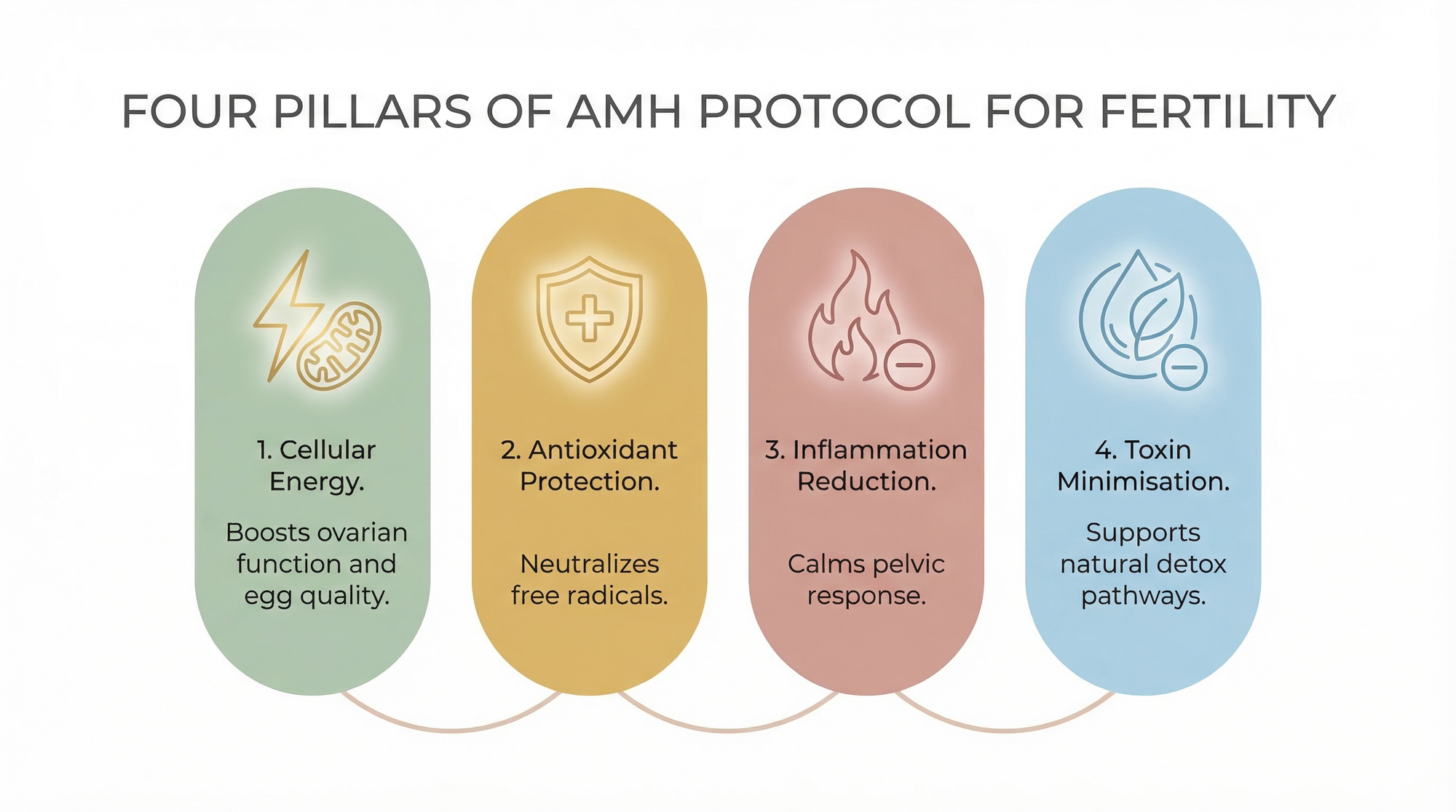
Pillar 1: Cellular Energy
Your eggs are among the most energy-demanding cells in your body. Each mature egg contains around 100,000 mitochondria — tiny power plants that fuel the division process needed for healthy embryos. As we age, mitochondrial function declines, and this is increasingly recognised as a key driver of age-related fertility decline.
CoQ10 (Coenzyme Q10) is the cornerstone supplement here. A 2018 randomised controlled trial by Xu et al. found that 600mg daily of CoQ10 for 60 days significantly improved embryo quality in women with diminished ovarian reserve undergoing IVF. Importantly, while CoQ10 didn't increase AMH itself, it improved the quality of eggs retrieved — which is arguably what matters most.
I took 400mg of ubiquinol (the active form) daily. In my practice, I recommend this to virtually every client over 35 or anyone with diminished ovarian reserve.
Pillar 2: Antioxidant Protection
Oxidative stress — an imbalance between damaging free radicals and your body's ability to neutralise them — accelerates ovarian ageing. Your follicles are particularly vulnerable because they have high metabolic activity and limited antioxidant defences.
Beyond CoQ10, key antioxidants include:
- Vitamin E — protects cell membranes, including those of developing eggs
- Vitamin C — works synergistically with vitamin E to recycle it back to its active form
- Selenium — essential for glutathione production, your body's master antioxidant
- Alpha-lipoic acid — a unique antioxidant that works in both water and fat environments
The simplest way to boost your antioxidant intake? Eat more colour. Berries, dark leafy greens, pomegranate, beetroot, turmeric — these foods deliver antioxidants in their natural, synergistic form alongside hundreds of other protective compounds.
Pillar 3: Inflammation Reduction
Chronic low-grade inflammation disrupts hormone signalling and damages the ovarian environment. Common sources include processed foods, excess sugar, alcohol, poor sleep, and chronic stress.
My approach focused on an anti-inflammatory Mediterranean eating pattern (more on this below), omega-3 fatty acids from oily fish and supplementation, and — this was hard for me — cutting out alcohol completely. I also prioritised sleep and stress management, which have direct effects on inflammatory markers.
Pillar 4: Toxin Minimisation
Endocrine disruptors are chemicals that interfere with your hormone system. They're found in plastics, pesticides, personal care products, and household cleaners. Research links exposure to phthalates, BPA, and certain pesticides with lower AMH levels and reduced ovarian reserve.
My non-negotiables: switching to organic for the Dirty Dozen, removing plastic food containers, choosing clean beauty products, and filtering drinking water.
Supplements That May Support AMH Levels
Let me walk you through the supplements with the strongest evidence — starting with the one that has the most direct research on AMH itself.
DHEA (Dehydroepiandrosterone)
DHEA is the supplement with the most direct evidence for increasing AMH. It's a hormone precursor that your adrenal glands produce naturally, and levels decline with age.
A 2017 randomised, double-blinded, placebo-controlled study found that 75mg of DHEA daily for 12 weeks significantly improved AMH levels in women with diminished ovarian reserve (Narkwichean et al., 2017). A 2024 clinical study published in Steroids confirmed these findings, noting that improvements were more pronounced in younger women under 38 (Basha et al., 2024).
DHEA is also the most researched supplement for improving IVF outcomes in poor responders, with approximately one third of IVF centres worldwide now recommending it.
Critical safety note: DHEA is a hormone and must only be taken under medical supervision. It can affect testosterone levels, isn't appropriate for women with PCOS, and interacts with other medications. Never self-prescribe DHEA.
Vitamin D
Vitamin D deficiency is remarkably common — particularly in northern climates — and there's growing evidence it may suppress AMH readings.
A 2017 study in Nutrients showed that a single high-dose vitamin D3 supplement increased AMH by an average of 12.9% within one week in vitamin D deficient women (Dennis et al., 2017). A 2022 study in Medicine confirmed that 12 weeks of vitamin D supplementation improved AMH and antral follicle count in women with diminished ovarian reserve and vitamin D deficiency (Aramesh et al., 2022).
The mechanism appears to involve vitamin D receptors on granulosa cells — the cells that directly produce AMH. When you're deficient, these cells may not function optimally, leading to AMH readings that underestimate your true reserve.
I recommend all my clients get their vitamin D tested. If levels are below 75 nmol/L (30 ng/mL), supplementation is straightforward and may reveal a more accurate picture of your ovarian reserve.
CoQ10 (Coenzyme Q10)
As mentioned in Pillar 1, CoQ10 supports mitochondrial function in your eggs. While the 2018 Xu et al. study showed it doesn't significantly increase AMH itself, it improved embryo quality, fertilisation rates, and the number of high-quality embryos.
A 2024 systematic review and meta-analysis published in Annals of Medicine confirmed that CoQ10 pretreatment before IVF improves clinical pregnancy rates, the number of retrieved oocytes, and high-quality embryo rates in women with diminished ovarian reserve (Chen et al., 2024).
Standard dosing: 200–600mg daily of ubiquinol (the reduced, more bioavailable form). I take 400mg. It's well-tolerated with minimal side effects.
Omega-3 Fatty Acids
Omega-3s — particularly DHA and EPA from fish oil — reduce inflammation, support cell membrane integrity, and may improve blood flow to the ovaries. While direct AMH studies are limited, a 2022 study in the Journal of Clinical Medicine found that higher omega-3 intake was associated with better ovarian reserve markers.
I recommend 1–2g of combined EPA/DHA daily from a quality fish oil or algae-based supplement (for vegetarians).
Melatonin
Melatonin has shown promise as an antioxidant within the follicular environment. A 2012 study by Tamura et al. found that 3mg of melatonin improved fertilisation rates and egg quality in IVF patients. However, human evidence for AMH improvement specifically is still emerging — most positive studies have been in animal models.
I include it as an optional part of my protocol at 3mg before bed, primarily for its antioxidant effects and sleep support. But I'm transparent with clients: the evidence is stronger for sleep quality than for direct AMH improvement.
Foods That Support Ovarian Health
Supplements are one piece of the puzzle. Diet is the foundation everything else builds on.
A 2024 study published in Nutrición Hospitalaria found that higher adherence to a Mediterranean diet was associated with significantly higher AMH levels, while high intake of red meat and carbonated drinks was linked to lower AMH (Sánchez-Ruiz et al., 2024).
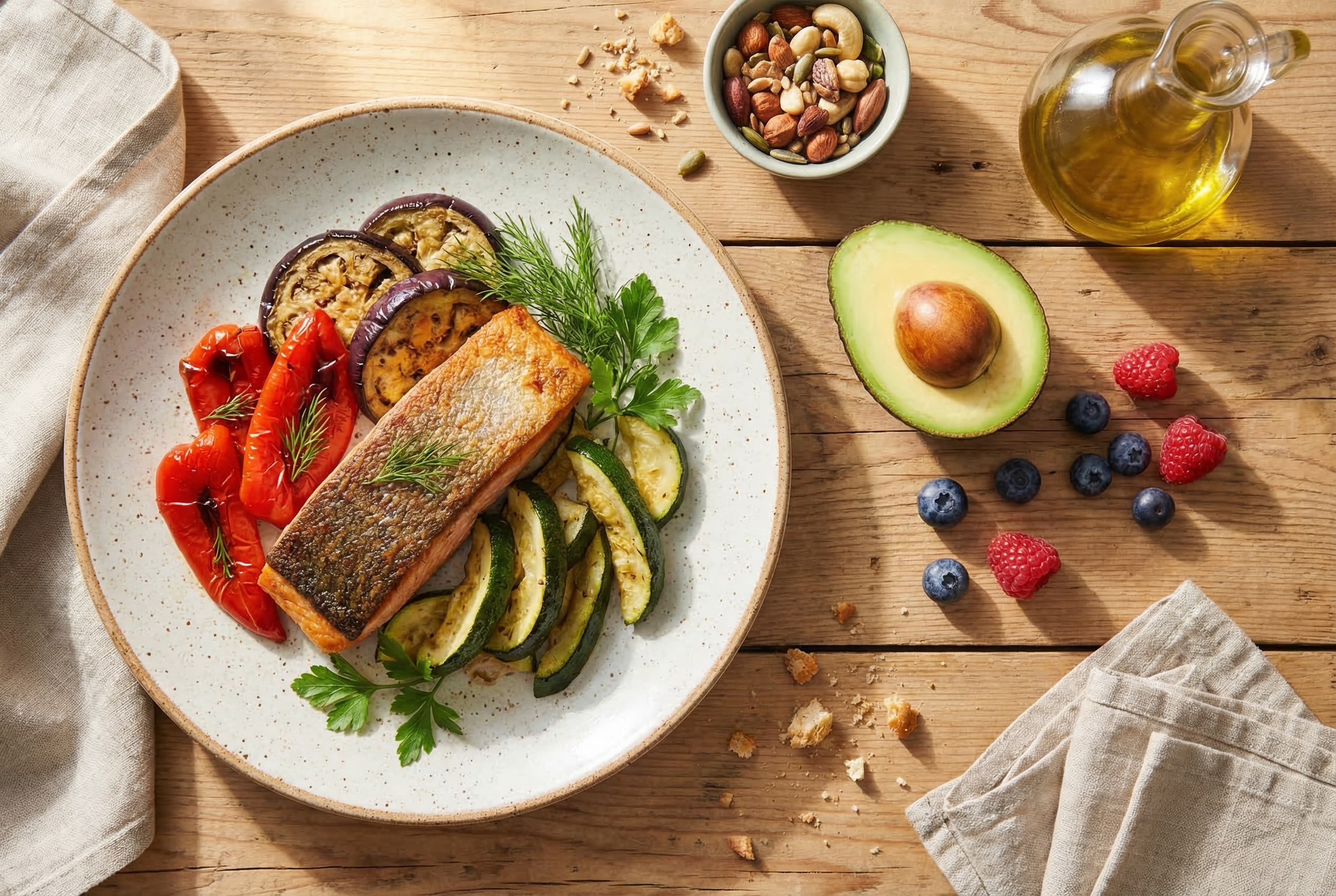
My fertility-focused Mediterranean approach centres on:
- Oily fish 2–3 times per week — salmon, sardines, mackerel (omega-3s, vitamin D, selenium)
- Colourful vegetables at every meal — aim for 7+ portions daily (antioxidants, folate, fibre)
- Berries daily — blueberries, raspberries, pomegranate (anthocyanins, vitamin C)
- Nuts and seeds — walnuts, almonds, pumpkin seeds (vitamin E, zinc, healthy fats)
- Extra virgin olive oil as your primary cooking fat (polyphenols, monounsaturated fats)
- Whole grains over refined — oats, quinoa, brown rice (B vitamins, magnesium)
- Legumes regularly — lentils, chickpeas, beans (plant protein, folate, iron)
- Eggs — ideally organic, a complete protein source with choline for methylation
And what to minimise:
- Alcohol — I cut it out completely. Even moderate drinking is linked to reduced ovarian reserve in some studies
- Ultra-processed foods — they drive inflammation and often contain endocrine disruptors from packaging
- Excess sugar — spikes insulin, increases oxidative stress, disrupts hormone balance
- Trans fats — found in some fried and packaged foods, directly harmful to egg quality
Lifestyle Changes That Make a Real Difference
Exercise: Find Your Sweet Spot
Moderate exercise supports fertility through improved blood flow, reduced inflammation, and better insulin sensitivity. A 2017 study published in the Journal of Obstetrics and Gynaecology of India found that physically active women had significantly higher AMH levels than sedentary women, particularly those under 30 (Moran et al., 2017).
But intensity matters. There's evidence that excessive high-intensity exercise — particularly endurance training — may actually suppress reproductive function. A study on competitive spinning found decreased AMH in regular participants.
My approach: I stopped HIIT training completely when I was building my protocol. I switched to walking, yoga, Pilates, swimming, and moderate strength training. It felt counterintuitive — I'd always been someone who pushed hard in the gym — but my body needed recovery, not more stress.
Stress Management
Chronic stress elevates cortisol, which directly interferes with reproductive hormone signalling. While we can't eliminate stress, we can change our physiological response to it.
Evidence-supported strategies include:
- Daily meditation or breathwork (even 10 minutes reduces cortisol measurably)
- Yoga — multiple studies show improved fertility outcomes
- Nature exposure — 20+ minutes outdoors reduces stress hormones
- Sleep optimisation — 7–9 hours in a dark, cool room. This is non-negotiable.
- Setting boundaries — saying no is a fertility intervention
Sleep
Melatonin — your sleep hormone — is also a powerful antioxidant within your ovarian follicles. Disrupted sleep means less natural melatonin production, which means less antioxidant protection for your developing eggs.
Prioritise: consistent sleep/wake times, no screens for an hour before bed, a cool dark bedroom, and limiting caffeine after midday.
Recreational Drugs and Fertility
I feel strongly about this: recreational drugs have no place in a fertility journey. Cannabis affects ovulation timing and embryo implantation. Cocaine damages fallopian tubes and disrupts hormone production. MDMA depletes serotonin, which affects reproductive hormone regulation. Even occasional use can impact egg quality during the 90+ day development window. If your partner uses recreational drugs, this applies to them too — sperm quality is equally affected.
Acupuncture and Complementary Therapies
A 2023 systematic review and meta-analysis published in Frontiers in Endocrinology evaluated acupuncture for diminished ovarian reserve across multiple randomised controlled trials. The findings suggested that acupuncture may increase AMH levels and improve ovarian response, though the authors noted that study quality was variable and more large-scale trials are needed (Xie et al., 2023).
I included acupuncture in my own protocol — weekly sessions for six months. I can't isolate its effect from everything else I was doing, but the research is promising enough that I recommend it to clients who can access it. At minimum, the relaxation benefits support the stress reduction pillar.
Other complementary therapies with some evidence include fertility massage (improving pelvic blood flow), moxibustion (often used alongside acupuncture in traditional Chinese medicine), and castor oil packs (traditional, limited research but low risk).
How Long Before You See Results?
This is where patience becomes critical.
Follicle development from dormant to ovulation-ready takes approximately 90 days. So any intervention you start today won't influence the eggs maturing right now — it's working on the next wave, and the one after that.
Based on the research and my own experience:
- Vitamin D correction: AMH changes can appear within 1–4 weeks if you were deficient
- DHEA: Studies typically show improvements at 8–12 weeks
- CoQ10: Egg quality improvements typically require 2–3 months
- Diet and lifestyle changes: Full effects emerge over 3–6 months
- Comprehensive protocol: I recommend committing for a full 12 months
I had my AMH retested at 6 months (modest improvement) and again at 12 months (significant improvement to 6.43). One of my clients, a woman in her late 30s who came to me with an AMH of 4.2 pmol/L, saw hers rise to 7.1 after nine months on a similar protocol. Not everyone sees this degree of change — but meaningful improvement is possible.

When to Talk to Your Doctor
Natural approaches and medical treatment aren't mutually exclusive — they work best together. Please talk to your GP or fertility specialist if:
- Your AMH is below 5.4 pmol/L (0.8 ng/mL) — this suggests significantly diminished ovarian reserve
- You're over 35 and have been trying to conceive for 6+ months
- You're considering egg freezing or IVF — optimising your protocol beforehand can improve outcomes
- You want to try DHEA — this requires medical supervision and monitoring
- You have other reproductive health conditions (PCOS, endometriosis, thyroid issues)
In my own journey, I worked with both my nutritionist background and a fertility specialist. The natural protocol supported the medical approach, not replaced it.
The Bottom Line
Can you increase AMH levels? The evidence says: possibly, yes — particularly if you have correctable deficiencies, are willing to commit to sustained dietary and lifestyle changes, and work with appropriate medical guidance.
But here's what I want you to take away more than any number: AMH is one marker. It measures quantity, not quality. And quality is far more responsive to the choices you make every day — what you eat, how you move, what you avoid, and how you manage stress.
My AMH doubled. But honestly? Even if it hadn't moved at all, I believe the protocol still would have improved my fertility. Because every pillar — the nutrition, the supplements, the lifestyle changes — also supports egg quality, hormone balance, and the uterine environment. And I went on to have Bowie.
Start where you are. Be patient. Give your body at least a year. And remember — you're not just changing a number on a test. You're creating the best possible environment for the eggs you have.
This article is for informational purposes only and does not constitute medical advice. Always consult your healthcare provider before starting any supplement or making significant changes to your health routine, particularly DHEA which requires medical supervision.

Frequently Asked Questions
References
- Moy V, et al. (2015). Obesity adversely affects serum anti-Müllerian hormone levels. Fertility and Sterility, 103(2), 388-395. PubMed
- Bentov Y, et al. (2014). Coenzyme Q10 supplementation and oocyte aneuploidy in women undergoing IVF-ICSI treatment. Fertility and Sterility, 101(2), e15. DOI
- Xu Y, et al. (2020). Pretreatment with coenzyme Q10 improves ovarian response and embryo quality. Reproductive BioMedicine Online, 40(4), 520-527. PubMed
▸Can AMH levels increase naturally without supplements?
Yes, in some cases. Correcting vitamin D deficiency alone can increase AMH readings, and significant dietary improvements — particularly shifting to a Mediterranean-style eating pattern — have been associated with higher AMH in observational studies. Reducing environmental toxin exposure and managing stress may also help. However, the most robust evidence for AMH improvement involves targeted supplementation (particularly DHEA under medical supervision) alongside lifestyle changes.
▸How long does it take to see AMH levels improve?
It depends on the intervention. Vitamin D correction can show AMH changes within 1–4 weeks. DHEA typically requires 8–12 weeks. Comprehensive dietary and lifestyle protocols usually need 3–6 months before meaningful changes appear. I recommend committing to at least 12 months for the full benefit, as the eggs you're influencing today won't mature for roughly 90 days.
▸Is DHEA safe to take for fertility?
DHEA has shown benefit in clinical trials for women with diminished ovarian reserve, but it is a hormone and must only be taken under medical supervision. It can raise testosterone levels, isn't appropriate for women with PCOS or androgen excess, and may interact with other medications. Your fertility specialist can test your DHEA-S levels and determine whether supplementation is appropriate for your situation.
▸What foods increase AMH levels?
No single food directly increases AMH, but a Mediterranean dietary pattern — rich in oily fish, vegetables, fruits, nuts, seeds, olive oil, and whole grains — has been associated with higher AMH levels and better ovarian reserve markers. Antioxidant-rich foods like berries, pomegranate, and dark leafy greens support ovarian health by reducing oxidative stress. Equally important is reducing ultra-processed foods, excess sugar, and alcohol.
▸Does CoQ10 increase AMH?
Current evidence suggests CoQ10 does not significantly increase AMH levels directly. However, it does improve egg quality, embryo quality, and clinical pregnancy rates in women with diminished ovarian reserve — which is arguably more important than the AMH number itself. CoQ10 works by supporting mitochondrial function in developing eggs, and most fertility specialists recommend 200–600mg daily of ubiquinol.
▸Can you get pregnant with low AMH?
Yes. A 2017 JAMA study found that women with low AMH who were otherwise healthy had similar natural conception rates to those with normal AMH. Low AMH indicates a smaller egg reserve, not necessarily poor egg quality. Many women with low AMH conceive naturally or with fertility treatment. What matters is optimising the quality of the eggs you have through nutrition, supplementation, and lifestyle — and working with a fertility specialist to develop the right approach for you.
▸Should I try to increase AMH before IVF?
Optimising your health before IVF is widely recommended by fertility specialists. DHEA supplementation for 8–12 weeks before IVF has been shown to improve outcomes in poor responders, and CoQ10 can improve egg and embryo quality. Correcting vitamin D deficiency is also important. However, don't delay necessary treatment to wait for AMH changes — discuss timing with your specialist, as age is also a critical factor.
▸Can you actually increase your AMH?
AMH naturally declines with age, and no supplement or lifestyle change has been proven to significantly increase it. Some studies suggest vitamin D and DHEA may modestly support AMH levels. Focus on egg quality rather than chasing an AMH number.
▸Does vitamin D affect AMH?
Research suggests a correlation between vitamin D levels and AMH — women with adequate vitamin D tend to have higher AMH. Correcting a vitamin D deficiency may support ovarian function, though it won't dramatically change your AMH.
▸How quickly does AMH decline?
AMH declines gradually throughout your 30s, with a steeper drop typically after 35. The rate varies enormously between women. Some maintain reasonable levels into their early 40s while others see significant decline in their mid-30s.
You might also find helpful:
References
- Steiner AZ, et al. (2017). Association Between Biomarkers of Ovarian Reserve and Infertility Among Older Women of Reproductive Age. JAMA, 318(14):1367–1376.
- Inal HA, et al. (2013). Dehydroepiandrosterone supplementation improves predictive markers for diminished ovarian reserve: serum AMH, inhibin B and antral follicle count. Gynecological Endocrinology, 29(12):989–992.
- Dennis NA, et al. (2017). Acute Supplementation with High Dose Vitamin D3 Increases Serum Anti-Müllerian Hormone in Young Women. Nutrients, 9(7):719.
- Narkwichean A, et al. (2017). Evaluation of Dehydroepiandrosterone Supplementation on Diminished Ovarian Reserve: A Randomized, Double-Blinded, Placebo-Controlled Study. Reproductive Biology and Endocrinology, 15(1):26.
- Basha M, et al. (2024). Dehydroepiandrosterone supplementation improves diminished ovarian reserve: clinical and in silico studies. Steroids, 209:109456.
- Aramesh S, et al. (2022). Effects of vitamin D supplementation on ovarian reserve markers in infertile women with diminished ovarian reserve. Medicine, 101(6):e28796.
- Xu Y, et al. (2018). Pretreatment with coenzyme Q10 improves ovarian response and embryo quality in low-prognosis young women with decreased ovarian reserve: a randomized controlled trial. Reproductive Biology and Endocrinology, 16(1):29.
- Chen Y, et al. (2024). Clinical evidence of coenzyme Q10 pretreatment for women with diminished ovarian reserve undergoing IVF/ICSI: a systematic review and meta-analysis. Annals of Medicine, 56(1):2389469.
- Sánchez-Ruiz P, et al. (2024). Influence of adherence to a Mediterranean diet and nutritional status on ovarian reserve. Nutrición Hospitalaria, 41(2):395–402.
- Xie L, et al. (2023). Clinical efficacy of acupuncture for diminished ovarian reserve: a systematic review and meta-analysis of randomized controlled trials. Frontiers in Endocrinology, 14:1136121.
- Chiu YH, et al. (2018). Association Between Pesticide Residue Intake From Consumption of Fruits and Vegetables and Pregnancy Outcomes. JAMA Internal Medicine, 178(1):17–26.
- Tamura H, et al. (2012). Melatonin as a free radical scavenger in the ovarian follicle. Endocrine Journal, 60(1):1–13.
⚕️ Medical Disclaimer
This article is for informational purposes only and does not constitute medical advice. Always consult a qualified healthcare professional before making decisions about your fertility or reproductive health.
Written by

Subscribe to Fertilitys
All my Free Resources. No spam. Unsubscribe anytime.