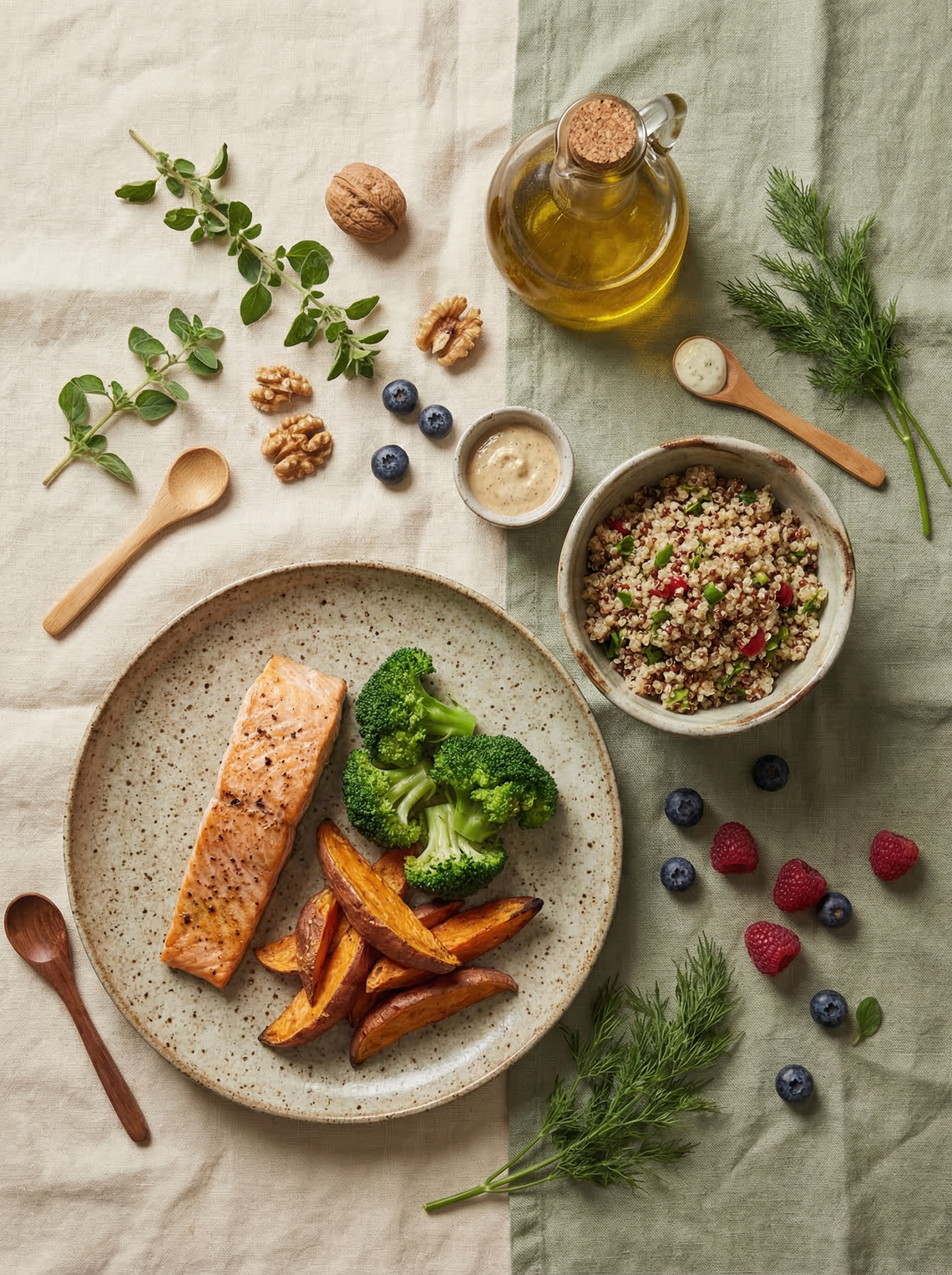
Fertility Foods: What to Eat When You're Trying to Conceive
A registered nutritionist's evidence-based guide to the foods that actually support conception — from the Mediterranean diet to specific nutrients for egg quality, ovulation, and hormone balance.


I spent years telling clients to "eat well" before I actually understood what that meant for fertility. It wasn't until my own AMH came back at 3 — when I was expecting something closer to 20 — that I stopped treating nutrition as background noise and started treating it as medicine.
One of my clients came to me after two years of unexplained infertility. She was eating what she thought was a healthy diet — salads, smoothies, low-fat everything. When we dug into the details, she was barely getting any healthy fats, her iron was borderline, and she was having three large coffees a day. Within four months of restructuring her diet around the principles in this article, her cycles regulated and she conceived naturally. Food isn't magic — but it's more powerful than most people realise.
Here's what I've learned, both from the research and from sitting across the table from hundreds of women trying to conceive: the foods you eat affect your hormones, your egg quality, your ovulation, and your chances of getting pregnant. Not in a magical overnight way. But in a measurable, evidence-backed, "this actually shifts the odds" kind of way.
⏰ Start Earlier Than You Think
Most fertility advice talks about a 3-month window. I think that's too late. I tell every client: start cleaning up your diet and lifestyle at least a year before you want to conceive. Egg development takes around 90 days, but the environment those eggs develop in — your nutrition, stress levels, toxin exposure — benefits from a much longer runway. I started my own protocol 14 months before I conceived. The earlier you start, the more time your body has to build the foundations.
This isn't a list of fertility superfoods to panic-buy. It's a practical, science-backed guide to eating in a way that supports your reproductive system — whether you're just starting to think about trying, actively in the thick of it, or preparing for IVF.
The Research Behind Fertility Foods: What We Actually Know
The strongest evidence we have comes from the Nurses' Health Study II — a massive Harvard study that tracked 17,544 women over eight years. Researchers identified a dietary pattern associated with significantly lower risk of ovulatory infertility. Women who scored highest on this "fertility diet" had a 66% lower risk of ovulatory problems and a 27% lower risk of infertility from all causes (Chavarro et al., 2007).
What did this fertility diet look like? More plant protein, full-fat dairy, monounsaturated fats, and iron from non-meat sources. Less trans fat, less animal protein, lower glycaemic load. It wasn't complicated — but it was specific.
A 2023 meta-analysis in Nutrients found that women with higher adherence to a Mediterranean-style diet had nearly double the odds of successful pregnancy through IVF — an odds ratio of 1.91 (Grieger et al., 2023). And a separate 2024 review confirmed that dietary patterns rich in fruits, vegetables, whole grains, fish, and healthy fats consistently correlated with better fertility outcomes across multiple studies (Biology, 2024).
The pattern is clear: it's not about one magic food. It's about an overall way of eating.
Why the Mediterranean Diet Keeps Coming Up
If you've done any reading about fertility and food, you've probably seen "Mediterranean diet" mentioned fifty times. There's a reason for that — and it's not because researchers are secretly funded by olive oil companies.
The Mediterranean diet is built around vegetables, fruits, whole grains, legumes, nuts, olive oil, and fish. Moderate dairy (often fermented, like yoghurt). Small amounts of red meat. And — this matters — it's naturally anti-inflammatory.
Inflammation is one of the biggest quiet disruptors of fertility. It can interfere with ovulation, implantation, and embryo development. Conditions like PCOS, endometriosis, and unexplained infertility all have inflammatory components. A 2023 systematic review found that Mediterranean diet adherence was associated with improved fertility markers across both natural conception and assisted reproduction (Nutrition Reviews, 2023).
When I got my AMH results and started overhauling my own diet, the Mediterranean approach was the foundation. Not because I read a blog about it — because the research kept pointing there. I went heavy on oily fish, switched to extra virgin olive oil for everything, loaded up on leafy greens, and started eating lentils and chickpeas like my life depended on it. Which, in a way, it did.
The Best Fertility Foods: What to Eat and Why
Right. Let's get into specifics. These aren't ranked by importance — your body needs all of them working together. But I've grouped them by what they actually do for your reproductive system.
Foods That Support Egg Quality
Egg quality is arguably the single biggest factor in conception, and it's particularly affected by oxidative stress. Antioxidant-rich foods help protect your eggs from damage.
- Berries — Blueberries, strawberries, raspberries. Packed with anthocyanins and vitamin C. I eat a handful daily. They're one of the cheapest, easiest antioxidant wins.
- Oily fish — Salmon, sardines, mackerel. Rich in omega-3 fatty acids (DHA and EPA), which are critical for cell membrane health. A 2018 review in Human Reproduction Update found omega-3 supplementation improved oocyte quality in IVF patients (Gaskins & Chavarro, 2018). Aim for 2-3 portions per week.
- Eggs — Ironic, isn't it? But egg yolks are a brilliant source of choline, vitamin D, and B12 — all critical for egg maturation. Don't skip the yolk.
- Avocados — Monounsaturated fats support hormone production. Plus they're rich in folate. I add half an avocado to most lunches.
- Walnuts — The best nut for omega-3s (alpha-linolenic acid). A small handful daily. They're also rich in vitamin E, which protects cell membranes from oxidative damage.
Foods That Support Ovulation
Regular, healthy ovulation requires stable blood sugar, adequate iron, and balanced hormones. These foods help on all three fronts.
- Lentils and beans — Plant protein was one of the standout findings in the Nurses' Health Study. Swapping just 5% of your calories from animal protein to plant protein was associated with a 50% lower risk of ovulatory infertility. Lentils are also packed with folate and iron.
- Dark leafy greens — Spinach, kale, Swiss chard. Rich in folate (the natural form of folic acid), iron, and calcium. The NHS recommends 400 micrograms of folic acid daily from at least one month before conception — the CDC says the same. Leafy greens are one of the best food sources.
- Full-fat dairy — This one surprises people. The Harvard study found that women who ate full-fat dairy had better fertility outcomes than those who stuck to skimmed. One serving of full-fat yoghurt or whole milk daily was associated with lower ovulatory infertility risk. The theory: removing fat from dairy may change the hormone ratios in the milk.
- Sweet potatoes — Excellent source of beta-carotene, which your body converts to vitamin A — essential for reproductive health. Also a slow-release carb, which helps with blood sugar stability.
Foods That Reduce Inflammation
Chronic low-grade inflammation is a fertility thief. It disrupts hormone signalling, impairs implantation, and worsens conditions like PCOS and endometriosis.
- Turmeric — Curcumin, the active compound, is one of the most studied anti-inflammatory agents in food. I add it to golden milk, scrambled eggs, and roasted vegetables. Always pair it with black pepper — piperine increases curcumin absorption by up to 2,000%.
- Extra virgin olive oil — Contains oleocanthal, which has similar anti-inflammatory properties to ibuprofen. Use it as your primary cooking and dressing fat.
- Ginger — Fresh ginger in cooking, teas, and smoothies. Anti-inflammatory and also helps with nausea (useful if you're in early pregnancy and don't know it yet).
- Fatty fish (again) — The omega-3 EPA is specifically anti-inflammatory. This is why fish keeps appearing on every fertility food list. It really does pull double duty.

Foods That Support Hormone Balance
- Flaxseeds — Contain lignans, which are phytoestrogens that help modulate oestrogen levels. I recommend 1-2 tablespoons of ground flaxseed daily. Raw, whole flaxseeds pass through undigested — you need them ground.
- Cruciferous vegetables — Broccoli, cauliflower, Brussels sprouts, cabbage. They contain indole-3-carbinol (I3C), which supports healthy oestrogen metabolism. Aim for one serving daily.
- Pumpkin seeds — Rich in zinc, which is essential for progesterone production. Also a good source of magnesium and omega-3s. A tablespoon as a snack or salad topper.
- Fermented foods — Sauerkraut, kimchi, kefir, natural yoghurt. Your gut microbiome directly affects oestrogen metabolism through the estrobolome. A 2023 review highlighted the gut-fertility connection as an emerging area of research with strong preliminary evidence.
What About Supplements? Food First, Always
I get asked this constantly: "Do I need supplements if I'm eating well?" My honest answer: probably, for a few key nutrients. But food should always be the foundation.
Supplements fill gaps. Food provides the whole package — fibre, co-factors, phytonutrients, and hundreds of compounds that work together in ways a pill can't replicate. A folate supplement doesn't come with the magnesium, vitamin K, and fibre you'd get from the spinach it's mimicking.
That said, there are nutrients where food alone often falls short during the preconception period:
- Folic acid / folate — 400mcg daily minimum, ideally as methylfolate if you have MTHFR variants. Start at least 3 months before trying.
- Vitamin D — Most people in the UK are deficient, especially between October and March. The NHS recommends 10mcg (400 IU) daily. I personally take more — my blood levels were low even in summer.
- Omega-3 (DHA/EPA) — Unless you're eating oily fish 3+ times per week, a supplement makes sense. I use one that provides at least 500mg combined DHA/EPA.
- CoQ10 — This one made the biggest difference for me. I took 200mg daily as ubiquinol. Research suggests it supports mitochondrial function in eggs, which is particularly relevant as egg quality naturally declines with age. My AMH went from 3 to 6.43 over the period I was supplementing — though I can't attribute that to CoQ10 alone.
For supplements, I personally use Wild Nutrition because they're food-grown and properly bioavailable. But the brand matters less than the form and dosage.
Foods to Limit or Avoid When Trying to Conceive
I don't believe in demonising food groups. But the evidence is pretty clear on a few things that actively work against fertility.
Trans Fats
The Nurses' Health Study found that each 2% increase in calories from trans fats (rather than carbohydrates) was associated with a 73% increased risk of ovulatory infertility. Trans fats are found in some processed foods, baked goods, and margarine. Check labels for "partially hydrogenated" oils. In the UK, trans fats have largely been removed from food production, but imported packaged foods may still contain them. In the US, the FDA banned artificial trans fats from the food supply in 2020, though trace amounts can still appear.
Excess Sugar and Refined Carbs
High glycaemic load diets cause blood sugar spikes, which trigger insulin surges. Chronically elevated insulin disrupts ovulation and increases androgen production — the exact hormonal pattern seen in PCOS. This doesn't mean you can never eat bread. It means choosing wholegrain over white, pairing carbs with protein or fat, and not living on pasta and fruit juice.
Alcohol
This is one where the evidence is frustratingly unclear. Some studies suggest moderate alcohol (1-2 drinks per week) has minimal impact on fertility. Others show any alcohol reduces IVF success rates. The UK's NHS advice is straightforward: if you're trying to conceive, the safest approach is not to drink at all. I stopped completely during my own journey — not because one glass of wine would have ruined everything, but because I wanted to remove every variable I could control.
High-Mercury Fish
Fish is brilliant for fertility — but some types carry too much mercury, which is toxic to developing embryos. Avoid shark, swordfish, king mackerel, and marlin. Limit tuna to 2 steaks or 4 medium tins per week (NHS guidance). Stick to low-mercury options: salmon, sardines, anchovies, herring, and trout.
Excess Caffeine
The NHS and ACOG both recommend limiting caffeine to 200mg per day when trying to conceive — roughly one regular coffee or two cups of tea. High caffeine intake (over 500mg/day) has been associated with longer time to conception in several studies. I switched to one morning coffee and herbal tea for the rest of the day.
Recreational Drugs
I'm going to be direct about this: recreational drugs and fertility do not mix. Cannabis reduces sperm count and motility in men (Gundersen et al., 2015), disrupts ovulation in women, and is associated with longer time to conception. Cocaine constricts blood flow to the uterus. MDMA and amphetamines affect hormone regulation. Even occasional use can disrupt the delicate hormonal balance you're trying to support. I've had clients tell me they only use cannabis "socially" or "once a month" — but when you're trying to conceive, there's no safe amount. If your partner uses recreationally too, they need to stop. Sperm takes 72 days to develop, and every exposure during that window matters.
Building Your Fertility Plate: A Practical Framework
Forget complicated meal plans. Here's how I teach my clients to think about each meal:
- Half your plate: Colourful vegetables and leafy greens (folate, antioxidants, fibre)
- Quarter plate: Quality protein — a mix of plant and animal (lentils, beans, fish, eggs, poultry)
- Quarter plate: Complex carbs (sweet potato, brown rice, quinoa, wholegrain bread)
- A generous drizzle: Healthy fats (extra virgin olive oil, avocado, nuts, seeds)
- Something fermented: A side of sauerkraut, a spoonful of kimchi, or natural yoghurt with berries
That's it. No calorie counting. No elaborate recipes. Just this framework at every meal, and you'll naturally hit most of the nutrient targets that support fertility.

A Sample Day of Fertility-Friendly Eating
Breakfast: Two eggs scrambled with spinach and turmeric, half an avocado on wholegrain sourdough, a handful of berries on the side.
Mid-morning: Full-fat natural yoghurt with ground flaxseed, walnuts, and a drizzle of honey.
Lunch: A big mixed salad with roasted sweet potato, chickpeas, rocket, cherry tomatoes, pumpkin seeds, and extra virgin olive oil dressing. Side of sauerkraut.
Afternoon snack: Apple slices with almond butter. Or a small handful of Brazil nuts (3-4 — they're rich in selenium, which supports thyroid function).
Dinner: Baked salmon with roasted Mediterranean vegetables (courgette, peppers, red onion) and quinoa. Fresh lemon and olive oil drizzle.
Nothing extreme. Nothing expensive. Just real food, consistently.
Fertility Foods for Men: It Takes Two
I'd be doing you a disservice if I didn't mention this. Around 40-50% of fertility issues involve a male factor. And men's sperm quality is directly affected by diet — arguably more quickly than women's egg quality, because sperm production takes about 72 days compared to the 90+ days of egg maturation.
The key nutrients for male fertility are:
- Zinc — Found in oysters (the richest food source by far), pumpkin seeds, beef, and chickpeas. Zinc is essential for testosterone production and sperm formation. A 2020 systematic review found zinc supplementation improved sperm concentration and motility (Fallah et al., 2018).
- Selenium — Brazil nuts are the champion here (just 2-3 daily provides the full RDA). Selenium protects sperm from oxidative damage.
- Lycopene — Found in cooked tomatoes, watermelon, and pink grapefruit. A 2019 Sheffield University trial found that lycopene supplementation improved sperm morphology and fast-swimming sperm by 40%.
- Folate — Not just for women. Low folate in men has been associated with higher rates of chromosomal abnormalities in sperm.
- Omega-3s — Support sperm membrane fluidity and motility. Same fish recommendations apply: salmon, sardines, mackerel.
The simplest thing your partner can do? Eat the same fertility-friendly meals you're eating. The Mediterranean diet benefits both of you.

Do Organic Foods Matter for Fertility?
This is a question I used to dodge. Now I don't.
A 2018 study in JAMA Internal Medicine following 325,639 women found that those who reported eating more organic food had a 24% lower risk of infertility (Baudry et al., 2018). And a Harvard study of women undergoing IVF found that higher pesticide residue intake (from conventionally grown fruits and vegetables) was associated with lower pregnancy and live birth rates (Chiu et al., 2018).
When I was trying, I went fully organic. I know that's a privilege — organic food costs more, and it's not always accessible. If budget is tight, focus on the "Dirty Dozen" — the twelve fruits and vegetables with the highest pesticide residue when grown conventionally:
- Strawberries
- Spinach
- Kale, collard greens, and mustard greens
- Peaches
- Pears
- Nectarines
- Apples
- Grapes
- Bell and hot peppers
- Cherries
- Blueberries
- Green beans
Buy these organic when you can. For everything else — thick-skinned produce like avocados, onions, sweetcorn, pineapple — conventional is fine. Eating conventionally grown vegetables is still far better than not eating vegetables at all.
🍎 The Dirty Dozen — Always Buy Organic
These twelve fruits and vegetables carry the heaviest pesticide loads year after year. This isn't optional for me — if you're trying to conceive, these MUST be organic. Pesticide residues are endocrine disruptors that can interfere with oestrogen, progesterone, and thyroid function. A 2018 JAMA study of 325,639 women found higher organic food consumption was associated with lower cancer risk (Baudry et al., 2018), and the Harvard EARTH study found women eating high-pesticide produce had 18% fewer eggs retrieved during IVF and 26% lower odds of live birth (Chiu et al., 2018).
The 2025 list: Strawberries, spinach, kale/collard/mustard greens, peaches, pears, nectarines, apples, grapes, bell & hot peppers, cherries, blueberries, green beans.
The Clean Fifteen (OK to buy conventional): Avocados, sweetcorn, pineapple, onions, papaya, frozen peas, asparagus, honeydew, kiwi, cabbage, mushrooms, mangoes, sweet potatoes, watermelon, carrots. (Source: EWG, 2025)

Eating for Fertility With a Condition: PCOS, Endometriosis, and Low AMH
The general fertility diet advice above works for most people. But if you have a specific condition, there are some tweaks worth knowing about.
PCOS
Blood sugar management is your top priority. Insulin resistance drives most PCOS symptoms. Focus on low-glycaemic carbs, pair every carb with protein or fat, and consider front-loading your calories earlier in the day — a 2013 study found that women with PCOS who ate a large breakfast and smaller dinner had a 50% reduction in testosterone and a 50% increase in ovulation rates compared to those who ate the same calories in reverse (Jakubowicz et al., 2013).
Endometriosis
Anti-inflammatory eating is especially important. Double down on omega-3-rich foods and reduce omega-6 sources (processed vegetable oils, fried foods). Some evidence suggests reducing red meat and increasing fish intake may help manage endometriosis symptoms. Cruciferous vegetables are particularly beneficial here because they support oestrogen detoxification.
Low AMH / Diminished Ovarian Reserve
This was me. The focus shifts to maximising the quality of the eggs you have. Antioxidant-rich foods become even more important — think berries, dark leafy greens, colourful vegetables. My protocol was heavy on CoQ10 (200mg/day as ubiquinol), vitamin D, omega-3s, and a diet that was basically Mediterranean on steroids. I cut processed food almost entirely, went organic, stopped HIIT exercise (which can increase oxidative stress), and switched to yoga and gentle walks. My AMH went from 3 to 6.43. I can't prove it was the food — but the timing lined up.
Common Myths About Fertility Foods
Before we wrap up, let me address some things that drive me slightly mad.
"Pineapple core helps implantation." There's no peer-reviewed evidence for this. Pineapple core contains bromelain, an anti-inflammatory enzyme, and it's nutritious enough — but the idea that eating it during your luteal phase will help an embryo implant is wishful thinking. Eat it if you enjoy it. Don't eat it expecting a miracle.
"You need to eat for two." You're not pregnant yet. And even when you are, "eating for two" is a myth — you need roughly 200 extra calories per day in the third trimester, and nothing extra in the first. What matters now is nutrient density, not volume.
"Just take a prenatal and you're covered." Prenatals are a safety net, not a substitute. They typically lack adequate omega-3, vitamin D, and magnesium. And they can't provide the fibre, phytonutrients, and thousands of bioactive compounds that come from actual food.
"Dairy is bad for fertility." The evidence actually suggests the opposite — full-fat dairy may be protective against ovulatory infertility. The "dairy is inflammatory" narrative isn't supported by the fertility-specific research. Unless you have a genuine intolerance, there's no evidence-based reason to cut it.

The Bottom Line
Your diet won't single-handedly determine whether you conceive. Fertility is complex, and there are factors — age, genetics, underlying conditions — that no amount of salmon and spinach can override.
But here's what the evidence consistently shows: the way you eat can meaningfully improve your chances. A Mediterranean-style diet rich in vegetables, healthy fats, plant proteins, and oily fish supports ovulation, reduces inflammation, improves egg and sperm quality, and creates a better hormonal environment for conception.
You don't need a perfect diet. You don't need to spend a fortune on organic everything. You need a consistently good pattern — more whole foods, fewer processed ones, and enough of the key nutrients that your reproductive system is waiting for.
Start where you are. Add more colour to your plate. Swap your afternoon biscuit for a handful of walnuts. Drizzle olive oil instead of reaching for the vegetable oil. These small shifts compound over time — and they're the ones that actually stick.
Frequently Asked Questions
▸What are the best foods to eat when trying to get pregnant?
The best fertility-boosting foods include oily fish (salmon, sardines), leafy greens (spinach, kale), berries, eggs, lentils, full-fat yoghurt, avocado, nuts (especially walnuts), and extra virgin olive oil. Together these provide omega-3 fatty acids, folate, antioxidants, iron, and healthy fats — the nutrients most consistently linked to better fertility outcomes in research.
▸How long before trying to conceive should I change my diet?
At least a year — not the three months most sources suggest. Egg development takes roughly 90 days, but the hormonal and nutritional environment those eggs develop in benefits from a much longer runway. The earlier you start building good habits, the more your body has to work with.
▸Is the Mediterranean diet good for fertility?
Yes — it’s the most studied dietary pattern for fertility. The Harvard Nurses’ Health Study II found that women following a Mediterranean-style diet had a 66% lower risk of ovulatory infertility. It emphasises healthy fats, oily fish, whole grains, and plenty of colourful produce.
▸Does being vegan or vegetarian affect fertility?
Not necessarily, but you need to plan carefully. Plant-based diets can miss key fertility nutrients: vitamin B12, iron (plant iron is less bioavailable), zinc, omega-3 DHA/EPA, and iodine. Supplement B12 and consider algae-based omega-3s. A well-planned plant-based diet can absolutely support fertility.
▸Can certain foods improve egg quality?
Egg quality is primarily about mitochondrial function and reducing oxidative stress. Foods rich in CoQ10 precursors (organ meats, oily fish), antioxidants (berries, dark leafy greens), omega-3 fatty acids (salmon, walnuts), and vitamin E (sunflower seeds, almonds) are the strongest dietary support for egg quality.
▸How much folic acid do I need before pregnancy?
The standard recommendation is 400mcg of folic acid daily, starting at least one month before conception and continuing through the first 12 weeks. If you have a family history of neural tube defects, your GP may recommend 5mg. I prefer methylfolate rather than synthetic folic acid — particularly if you have an MTHFR variation.
▸Should I avoid caffeine when trying to conceive?
You don’t need to eliminate caffeine entirely, but keep it under 200mg per day — roughly one regular-sized coffee or two cups of tea. A 2016 meta-analysis found that caffeine intake above 300mg/day was associated with increased risk of miscarriage.
References
- Chavarro JE, Rich-Edwards JW, Rosner BA, Willett WC. Diet and lifestyle in the prevention of ovulatory disorder infertility. Obstet Gynecol. 2007;110(5):1050-1058. PubMed
- Grieger JA, Grzeskowiak LE, Bianco-Miotto T, et al. Can dietary patterns impact fertility outcomes? A systematic review and meta-analysis. Nutrients. 2023;15(11):2589. PubMed
- Ferreri P, Ferretti F, Castellini G, et al. Dietary patterns and fertility. Biology. 2024;13(2):131. MDPI
- Gaskins AJ, Chavarro JE. Diet and fertility: a review. Am J Obstet Gynecol. 2018;218(4):379-389. PubMed
- de Angelis C, Nardone A, Garifalos F, et al. Mediterranean diet and infertility: a systematic review with meta-analysis of cohort studies. Nutr Rev. 2023;81(7):775-801. PubMed
- Jakubowicz D, Barnea M, Wainstein J, Froy O. Effects of caloric intake timing on insulin resistance and hyperandrogenism in lean women with polycystic ovary syndrome. Clin Sci. 2013;125(9):423-432. PubMed
- Baudry J, Assmann KE, Touvier M, et al. Association of frequency of organic food consumption with cancer risk. JAMA Intern Med. 2018;178(12):1597-1606. PubMed
- Chiu YH, Williams PL, Gillman MW, et al. Association between pesticide residue intake from consumption of fruits and vegetables and pregnancy outcomes among women undergoing infertility treatment. JAMA Intern Med. 2018;178(1):17-26. PubMed
- Fallah A, Mohammad-Hasani A, Colagar AH. Zinc is an essential element for male fertility: a review of Zn roles in men's health. J Reprod Infertil. 2018;19(2):69-81. PubMed
- Gonzales GF. Ethnobiology and ethnopharmacology of Lepidium meyenii (Maca), a plant from the Peruvian highlands. Evid Based Complement Alternat Med. 2012;2012:193496. PubMed
This article is for informational purposes only and does not constitute medical advice. Always consult your GP, fertility specialist, or registered dietitian before making significant dietary changes or starting new supplements, especially if you have a medical condition or are undergoing fertility treatment.
Written by

Subscribe to Fertilitys
All my Free Resources. No spam. Unsubscribe anytime.