PCOS Breakfast Ideas: 9 Nutritionist-Approved Recipes That Steady Your Blood Sugar
I share the exact breakfast formula I use with my PCOS clients — plus 9 recipes that take under 15 minutes and genuinely help with insulin resistance.


I spent years getting breakfast wrong.
Before my own fertility journey — before the low AMH diagnosis, before I retrained as a nutritionist — I'd grab toast and jam or a bowl of cereal and wonder why I crashed by 10am. When I started working with clients who had PCOS (polycystic ovary syndrome), I saw the same pattern everywhere. Breakfast was either skipped entirely or built around refined carbs that sent blood sugar on a rollercoaster before they'd even left the house.
Here's what changed everything for me and for my clients: we stopped treating breakfast as an afterthought and started treating it as the most strategic meal of the day. Not because of some wellness trend — because the science genuinely backs it up. And the recipes don't have to be complicated. Most of what I'm sharing here takes under 15 minutes.
Why Breakfast Matters More When You Have PCOS
PCOS and insulin resistance are tangled together. Around 70% of women with PCOS have some degree of insulin resistance, regardless of their weight — and that excess insulin drives up testosterone, disrupts ovulation, and makes symptoms like acne, hair loss, and weight gain worse.

What you eat first thing directly shapes your insulin response for the rest of the day. A 2013 study by Jakubowicz et al. in Clinical Science found that women with PCOS who ate a larger, protein-rich breakfast (around 980 calories) and a smaller dinner saw a 54% decrease in fasting insulin levels and a 50% reduction in free testosterone after just 12 weeks. They also ovulated more frequently — a huge finding for anyone trying to conceive.
That doesn't mean you need to eat 980 calories at breakfast (please don't feel pressured to). The takeaway is simpler: front-loading your nutrition — protein, fat, fibre — sets your hormones up for a better day.
More recently, a 2024 meta-analysis published in Nutrition & Diabetes confirmed that high-protein diets significantly reduced fasting insulin (by 2.69 μIU/mL on average) and HOMA-IR scores in women with PCOS compared to standard diets. And a 2025 systematic review in Frontiers in Nutrition showed that increased dietary fibre intake meaningfully improved insulin sensitivity in PCOS patients.
Translation? Protein and fibre at breakfast isn't a nice-to-have. For PCOS, it's a genuine intervention.
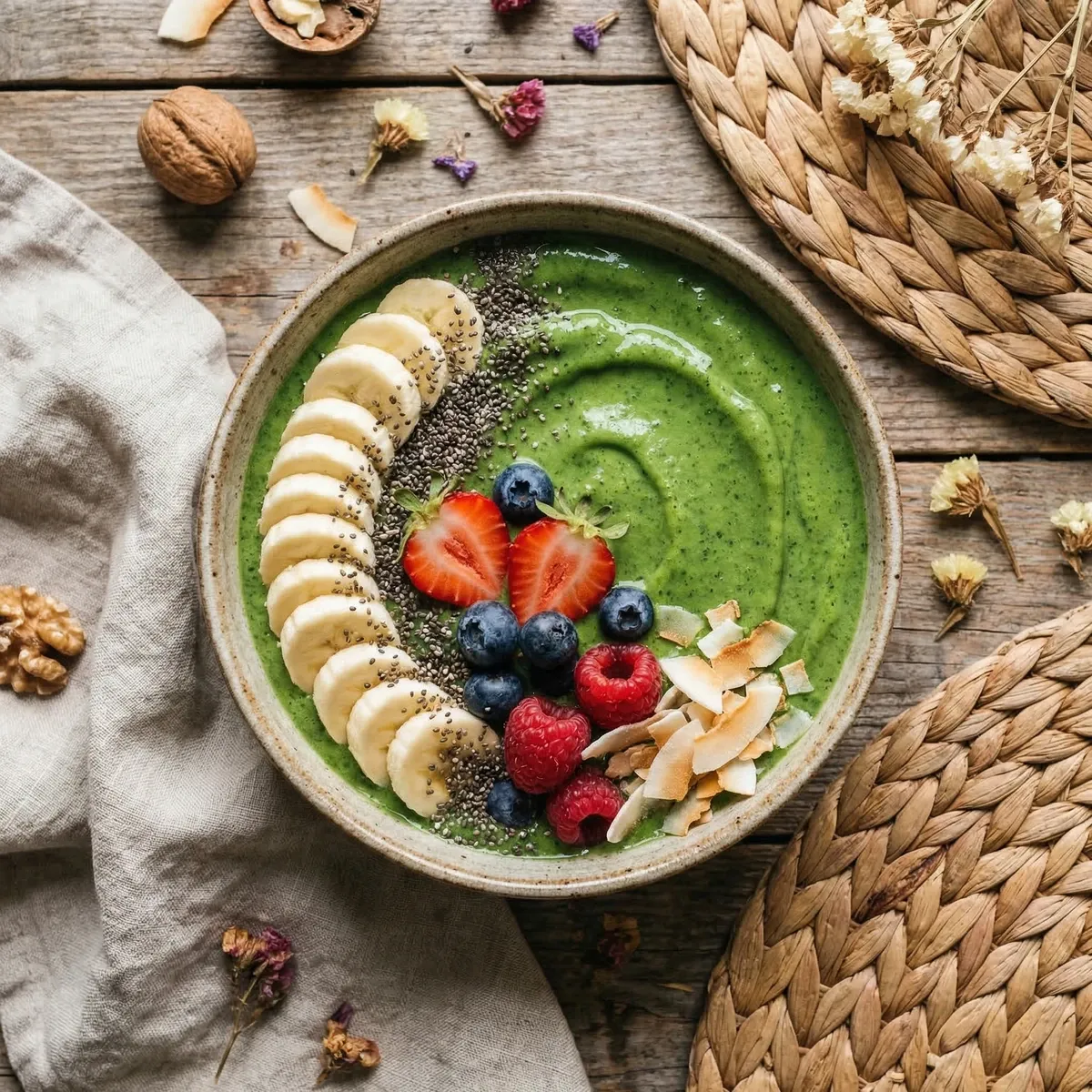

The PCOS Breakfast Formula I Use With Every Client
I don't believe in rigid meal plans — they fall apart by week two. Instead, I teach my clients a formula they can adapt to whatever's in their fridge:
- Protein (20–30g): eggs, Greek yoghurt, cottage cheese, smoked salmon, tofu, protein powder
- Fibre (5–10g): berries, flaxseed, chia seeds, oats, vegetables, nuts
- Healthy fat: avocado, nuts, olive oil, nut butter, seeds
- Optional complex carb: sourdough, sweet potato, oats (keep portions moderate)
When all three components show up on the plate, blood sugar stays steadier, you feel full until lunch, and — this is the bit my clients always notice first — the 3pm sugar cravings fade. One woman I worked with had been battling afternoon biscuit binges for years. Within two weeks of restructuring her breakfast this way, they stopped. Not through willpower. Through biochemistry.
Quick PCOS Breakfasts (Under 10 Minutes)
I know mornings are chaotic. These are the pcos breakfast recipes I actually make on weekdays when I'm short on time.
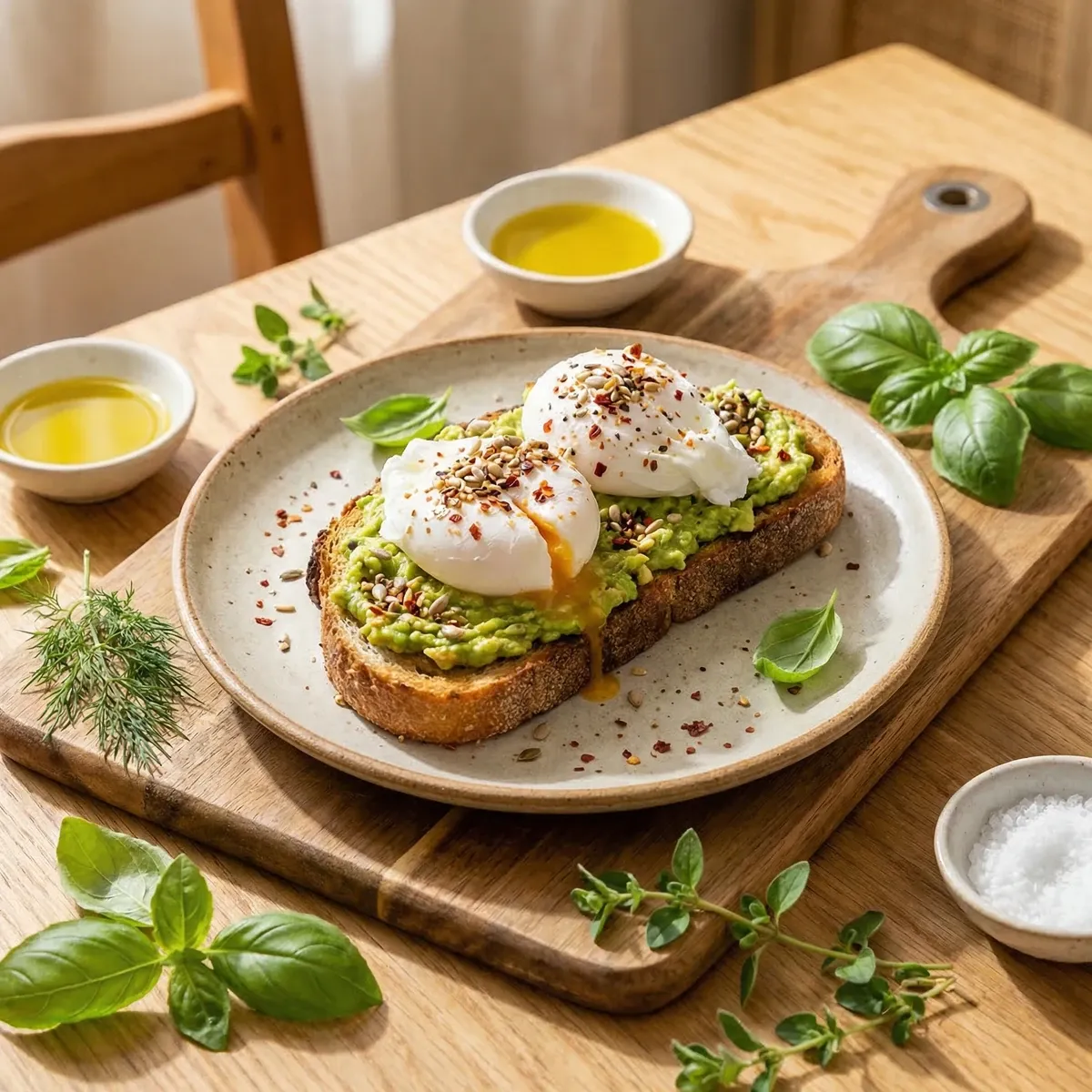
1. Two-Egg Avocado Toast on Sourdough
Scramble or fry two eggs in olive oil (not vegetable oil — the omega-6 content in seed oils can feed inflammation). Serve on one slice of sourdough with half an avocado, a squeeze of lemon, and a pinch of chilli flakes. Around 25g protein, plenty of healthy fat, and the sourdough's fermentation process lowers its glycaemic index compared to regular bread.
2. Greek Yoghurt Power Bowl
200g full-fat Greek yoghurt (not fat-free — you need the fat for satiety and hormone production), a handful of mixed berries, 1 tablespoon ground flaxseed, 1 tablespoon walnuts, and a drizzle of raw honey if you want sweetness. This gives you roughly 22g protein and 7g fibre. I make this three mornings a week — it takes genuinely two minutes.
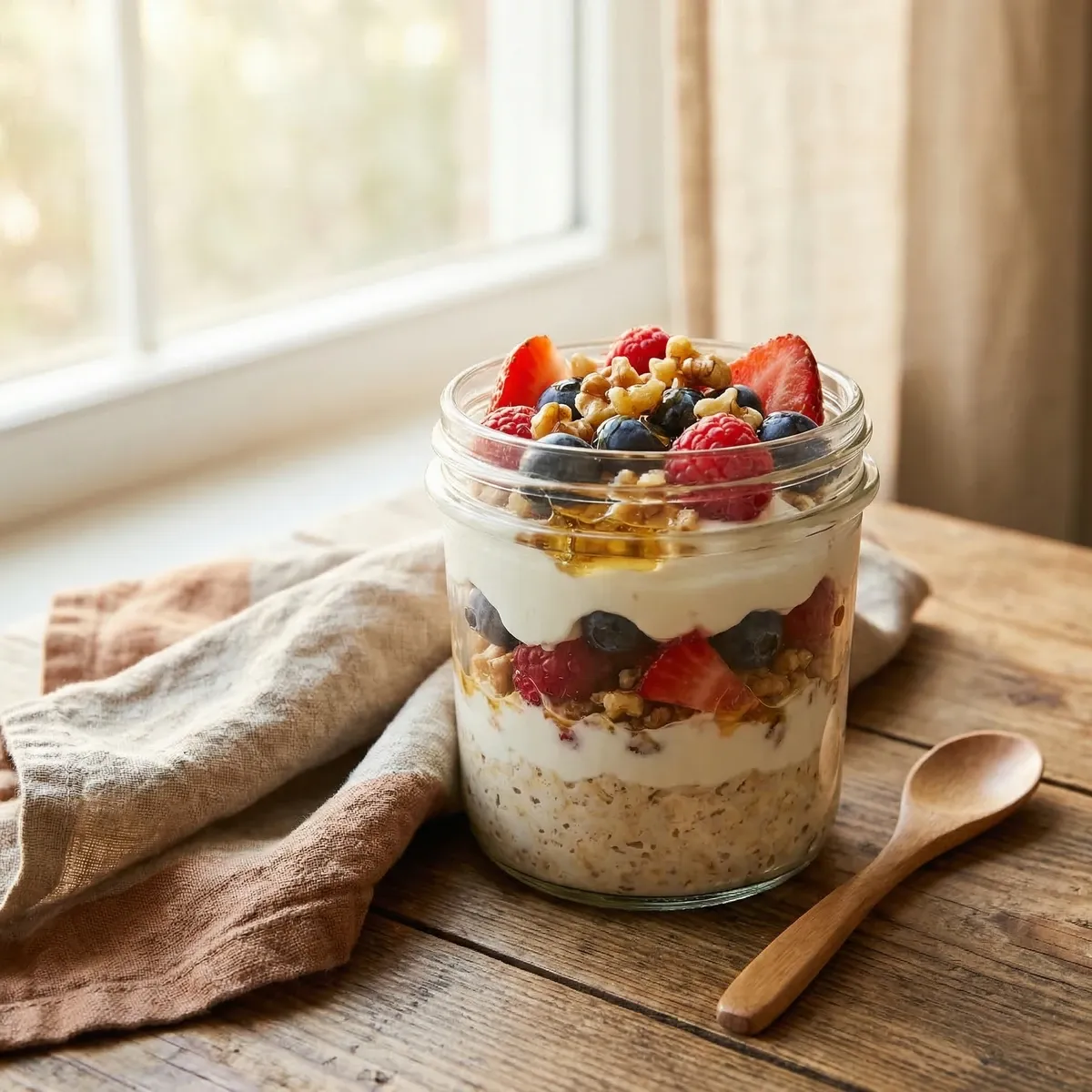
3. Overnight Oats With Protein
The night before: mix 40g rolled oats with 1 scoop vanilla protein powder, 1 tablespoon chia seeds, 150ml unsweetened almond milk, and a dollop of nut butter. By morning, it's thick, creamy, and ready to eat cold or warmed. About 30g protein and 8g fibre. I add cinnamon to mine — partly because I love the flavour, but also because research suggests cinnamon may improve insulin sensitivity in PCOS. A 2020 meta-analysis by Jamilian et al. found cinnamon supplementation significantly reduced HOMA-IR scores in women with PCOS.
4. Smoked Salmon and Cream Cheese Roll-Ups
No cooking required. Spread cream cheese on smoked salmon slices, add cucumber strips, roll up. Pair with a handful of cherry tomatoes and a few oatcakes. High in omega-3 (which helps reduce inflammation — one of PCOS's key drivers), around 24g protein. This is my go-to when I can't face cooking before 8am.
5. Spinach and Feta Scramble
Three eggs scrambled with a generous handful of spinach (rich in magnesium — often low in women with PCOS) and crumbled feta. Cook in butter or olive oil. Eat with half a sliced avocado. Under 8 minutes, about 28g protein. I recommend this one particularly for pcos breakfast ideas for weight loss — it's filling enough to keep you going until lunch without snacking.
Weekend PCOS Breakfast Recipes Worth the Extra Time
When you've got 20–30 minutes and want something that feels like a treat — these are the ones.
6. Sweet Potato and Black Bean Breakfast Hash
Dice one medium sweet potato and pan-fry in olive oil until golden (about 12 minutes). Add a tin of drained black beans, cumin, smoked paprika, and a handful of kale. Make two wells and crack eggs into them, cover, and cook until the whites set. Sweet potato is a brilliant low-GI carb — it releases energy slowly, keeping blood sugar stable. This is a favourite among my clients who find standard breakfast ideas for pcos too repetitive.
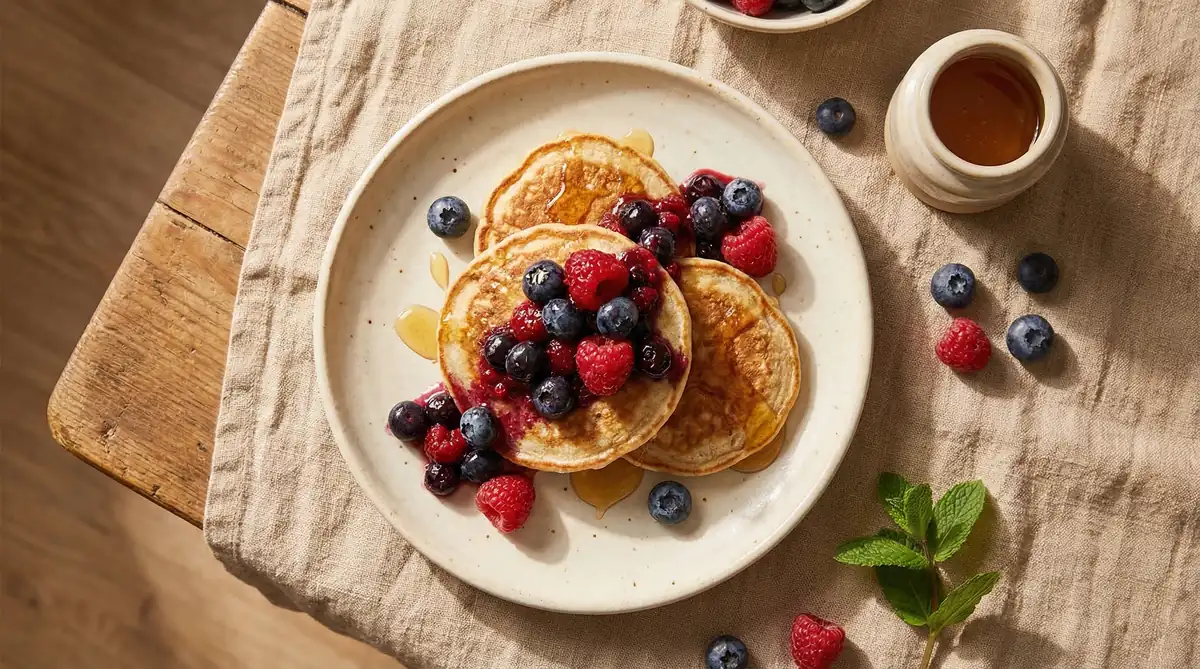
7. Protein Pancakes With Berry Compote
Blend 1 banana, 2 eggs, 30g oat flour, and 1 scoop protein powder. Cook in coconut oil like regular pancakes. For the compote: simmer frozen berries with a squeeze of lemon until they break down — no added sugar needed. These taste indulgent but deliver about 32g protein and far less sugar than traditional pancakes.
8. Shakshuka (North African Baked Eggs)
One of the most PCOS-friendly dishes that doesn't feel like "health food." Sauté onion, garlic, and red pepper in olive oil. Add a tin of chopped tomatoes, cumin, and smoked paprika. Simmer for 10 minutes, crack 3 eggs into the sauce, cover and bake or continue on the hob until eggs set. The tomato base is rich in lycopene (an antioxidant), and the eggs provide solid protein. Serve with sourdough for dipping. About 26g protein.

9. Cottage Cheese Breakfast Bowl
Cottage cheese has had a deserved comeback. 200g gives you around 24g protein with minimal sugar. Top with sliced peaches (or any seasonal fruit), a tablespoon of pumpkin seeds, a drizzle of honey, and a sprinkle of cinnamon. Simple, satisfying, and genuinely one of the healthiest pcos friendly breakfast ideas I recommend.
Three Common PCOS Breakfast Mistakes
I see these constantly, and they're easy to fix:
Mistake 1: Skipping breakfast entirely. I get the logic — "if I eat less, I'll lose weight." But for PCOS specifically, skipping breakfast often worsens insulin resistance. Your body's cortisol is naturally highest in the morning. Without food to stabilise blood sugar, cortisol stays elevated, insulin spikes, and cravings hit harder later. If you genuinely aren't hungry first thing, start small — even a handful of nuts and a boiled egg is better than nothing.
Mistake 2: Going for "healthy" granola or acai bowls. Most shop-bought granola is loaded with sugar — some brands pack 15–20g per serving. Acai bowls at cafés can contain 50–60g of sugar once you add the honey, banana, and granola toppings. That's the equivalent of a can and a half of Coke, hitting your bloodstream first thing in the morning. If you want granola, make your own with oats, nuts, seeds, and a small amount of maple syrup.
Mistake 3: Only eating carbs. Toast on its own. Cereal with skimmed milk. A banana. These aren't bad foods — but eaten alone, without protein or fat to slow digestion, they cause a rapid blood sugar spike followed by a crash. For women with PCOS, that spike triggers an outsized insulin response. Always pair your carbs with protein and fat.
🍎 Go Organic With the Dirty Dozen
These twelve fruits and vegetables carry the heaviest pesticide loads. I tell all my clients: if you can only afford to go organic on some things, make it these. The rest you can buy conventional and wash well.
The list: Strawberries, spinach, kale/collard/mustard greens, peaches, pears, nectarines, apples, grapes, bell & hot peppers, cherries, blueberries, green beans (EWG, 2025).
PCOS Breakfasts and Weight Loss: What Actually Helps
If you're looking for pcos diet breakfast ideas specifically for weight management, the principle stays the same — protein, fibre, healthy fat — but portion awareness matters more.
A Mediterranean dietary pattern consistently shows the best outcomes for PCOS weight management. Barrea et al. (2019) found that women with PCOS who had higher adherence to a Mediterranean diet showed significantly lower HOMA-IR, testosterone levels, and inflammatory markers (CRP) compared to low adherers. And a 2025 systematic review confirmed these benefits across multiple metabolic and hormonal markers.
My three best healthy pcos breakfast ideas for weight loss:
- Veggie-loaded omelette — 3 eggs, mushrooms, peppers, spinach, feta. High volume, high protein (~28g), low calorie (~350 kcal)
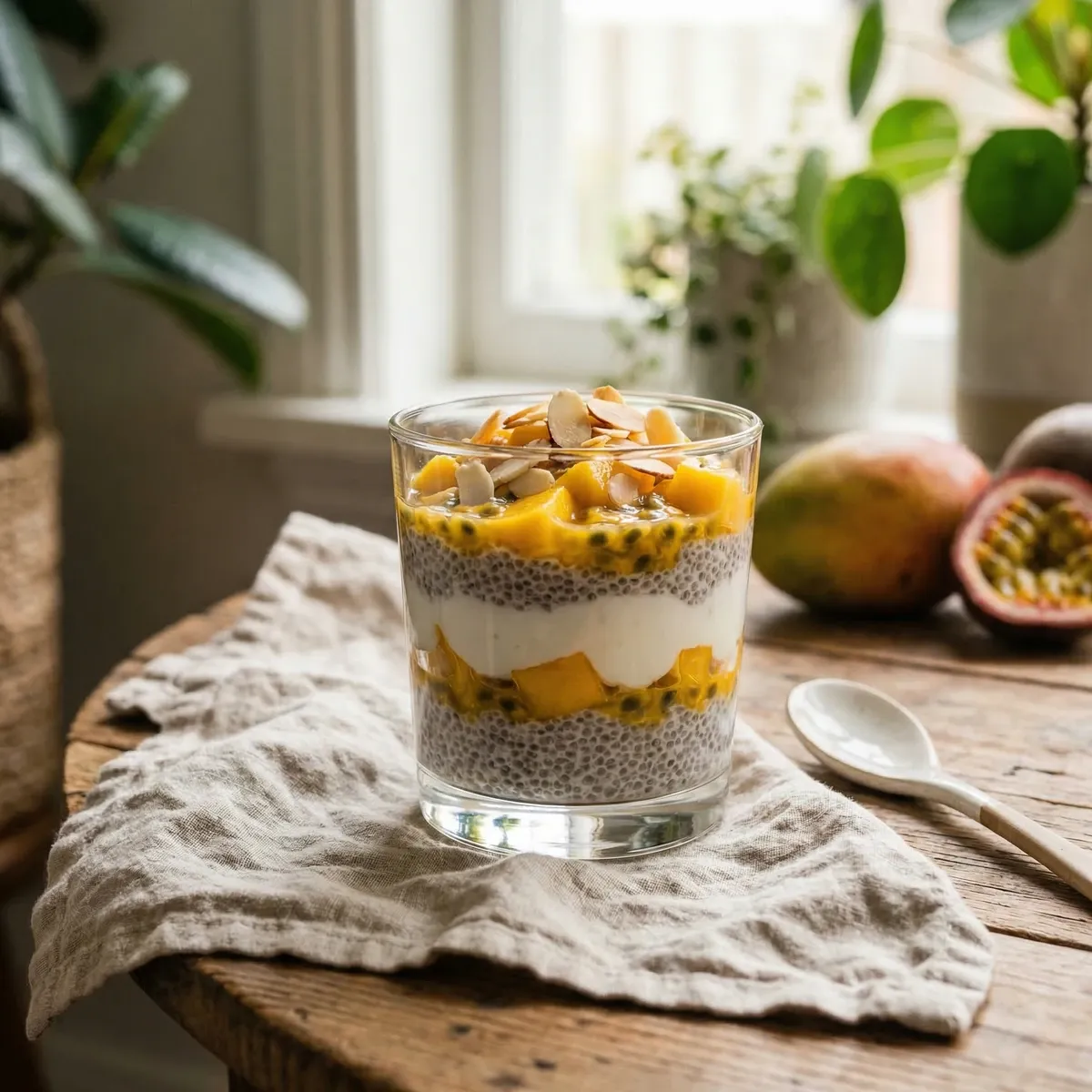
- Chia pudding — 3 tablespoons chia seeds soaked overnight in coconut milk, topped with 100g Greek yoghurt and berries. About 18g protein, 12g fibre, incredibly filling
- Turkey and avocado lettuce wraps — use large butter lettuce leaves instead of bread, fill with turkey slices, avocado, cucumber, and a smear of hummus. Around 22g protein, very low carb
The key is not restriction — it's composition. I've seen clients lose weight eating MORE food than before, simply because they swapped refined carbs for protein and fibre at breakfast. Your body processes these differently at a hormonal level.

The Bottom Line
PCOS breakfast doesn't need to be complicated, expensive, or time-consuming. What it does need is the right balance: protein to stabilise blood sugar and reduce insulin, fibre to slow digestion and feed your gut microbiome, and healthy fats to support hormone production.
The recipes above aren't just theoretical recommendations — they're what I eat, what I feed my clients, and what I've seen make a genuine difference to energy levels, cravings, cycle regularity, and long-term symptom management. Start with one or two that appeal to you and build from there. You don't have to overhaul everything at once.
And if you take one thing from this article: stop skipping breakfast. For PCOS specifically, it's one of the simplest and most effective changes you can make.
FAQ
▸What is the best breakfast for someone with PCOS?
A breakfast combining 20–30g protein with fibre and healthy fats — like eggs with avocado and vegetables, or Greek yoghurt with berries and seeds. This combination stabilises blood sugar and reduces the insulin spikes that worsen PCOS symptoms. Avoid high-sugar cereals, pastries, and fruit juice on their own.
▸Are oats good for PCOS?
Yes — rolled or steel-cut oats are a good source of soluble fibre, which slows digestion and helps regulate blood sugar. The key is pairing them with protein (like protein powder, eggs, or Greek yoghurt) and healthy fats (nut butter, seeds). Avoid instant oats with added sugar, and keep portions moderate (around 40g dry).
▸Should I skip breakfast if I have PCOS?
Generally, no. Research by Jakubowicz et al. (2013) found that women with PCOS who ate a substantial breakfast saw significant reductions in insulin and testosterone levels. Skipping breakfast when cortisol is naturally high can worsen insulin resistance. If you're not hungry in the morning, start small — even a handful of nuts and a boiled egg helps.
▸Is intermittent fasting good for PCOS?
The evidence is mixed. Some studies show benefits for insulin sensitivity, but others suggest that skipping meals can increase cortisol and worsen hormonal imbalances in women with PCOS. If you want to try a compressed eating window, consider making breakfast your largest meal rather than skipping it. Always discuss with your doctor or a registered nutritionist first.
▸How much protein should I eat at breakfast with PCOS?
Aim for 20–30g per meal. A 2024 meta-analysis in Nutrition & Diabetes found that higher-protein diets significantly reduced fasting insulin and insulin resistance in women with PCOS. Two eggs provide about 12g, so add Greek yoghurt, smoked salmon, or protein powder to hit the 20–30g target.
▸What should I eat for breakfast with PCOS?
Focus on protein and healthy fats with moderate complex carbs. Good options: eggs with avocado and vegetables, Greek yoghurt with nuts and berries, overnight oats with protein powder and nut butter, or a green smoothie with protein. Avoid high-sugar cereals and pastries.
▸Is intermittent fasting good for PCOS?
Evidence is mixed. Some women with PCOS find intermittent fasting helps with insulin resistance. However, skipping breakfast can increase cortisol and may worsen hormonal balance in some women. If you want to try it, discuss with your healthcare provider first.
▸Should I avoid carbs at breakfast with PCOS?
You don't need to eliminate carbs entirely — that can backfire on hormone production. Choose complex carbs (oats, sweet potato, sourdough) paired with protein and fat to slow glucose absorption. The combination matters more than eliminating any food group.
You might also find helpful:
References
- Jakubowicz, D., Barnea, M., Wainstein, J. et al. (2013). Effects of caloric intake timing on insulin resistance and hyperandrogenism in lean women with polycystic ovary syndrome. Clinical Science, 125(9), 423–432. doi:10.1042/CS20130071
- Yang, K., Zeng, L., Bao, T. et al. (2024). Effects of high-protein diets on the cardiometabolic factors and reproductive hormones of women with polycystic ovary syndrome: a systematic review and meta-analysis. Nutrition & Diabetes, 14, 9. doi:10.1038/s41387-024-00263-9
- Frontiers in Nutrition (2025). Optimizing carbohydrate quality: a path to better health for women with PCOS. Frontiers in Nutrition, 12, 1578459. doi:10.3389/fnut.2025.1578459
- Barrea, L., Arnone, A., Annunziata, G. et al. (2019). Adherence to the Mediterranean Diet, dietary patterns and body composition in women with polycystic ovary syndrome (PCOS). Nutrients, 11(10), 2278. doi:10.3390/nu11102278
- Jamilian, M., Kazemi, A., Talaee, R. et al. (2020). The effect of cinnamon supplementation on glycemic control in women with polycystic ovary syndrome: a systematic review and meta-analysis. Journal of Clinical Pharmacy and Therapeutics, 45(5), 865–874. doi:10.1111/jcpt.13209
- Kort, D.H. & Lobo, R.A. (2014). Preliminary evidence that cinnamon improves menstrual cyclicity in women with polycystic ovary syndrome. American Journal of Obstetrics and Gynecology, 211(5), 487.e1–6. doi:10.1016/j.ajog.2014.05.009
- Cutler, D.A., Pride, S.M. & Cheung, A.P. (2019). Low intakes of dietary fiber and magnesium are associated with insulin resistance and hyperandrogenism in polycystic ovary syndrome. Journal of Food Science, 84(8), 2195–2202. doi:10.1111/1750-3841.14710
This article is for informational purposes only and does not constitute medical advice. Always consult your GP or a registered healthcare professional before making changes to your diet or supplement routine, particularly if you have PCOS or any other medical condition.
⚕️ Medical Disclaimer
This article is for informational purposes only and does not constitute medical advice. Always consult a qualified healthcare professional before making decisions about your fertility or reproductive health.
Written by

Subscribe to Fertilitys
All my Free Resources. No spam. Unsubscribe anytime.