Recovery After Pregnancy Loss: Nutrition and Self-Care
A nutritionist's guide to the nutrients, foods, and self-care practices that support your body after pregnancy loss — written from personal experience.


💡 Quick Answer
After a miscarriage, your body needs iron (to replenish blood loss), folate, omega-3s, and protein to recover. There's no required waiting period before eating normally. Focus on gentle, nourishing meals — not restriction. Most physical recovery takes 1–2 weeks; nutritional rebuilding takes longer.
What's happening in your body right now
If you're reading this, I'm sorry. Truly. Whether your loss was at five weeks or fifteen, whether this was your first pregnancy or your third — the grief is real, and it matters. I've been where you are. I lost two pregnancies before my son arrived, and I remember how desperately I wanted someone to tell me something practical. Something I could actually do when everything else felt out of my control.
So that's what this article is — the nutrition and self-care guidance I wish I'd had, written by someone who's lived it. Not platitudes. Not a list of superfoods that'll magically fix everything. Just honest, evidence-based information about how to nourish your body through recovery and — when you're ready — prepare it for what comes next.
After a miscarriage, your body is doing an enormous amount of work. Hormone levels — particularly hCG and progesterone — are dropping rapidly, which can trigger mood swings, fatigue, and physical symptoms that feel bewildering when you're already grieving. Your uterus is contracting back to its pre-pregnancy size. If there was significant bleeding, your iron stores are likely depleted.
This isn't the time for a restrictive diet or an ambitious new eating plan. It's the time to be kind to yourself and focus on the nutrients that genuinely support healing. Research from a 2024 narrative review published in Obstetric Medicine confirmed that iron deficiency complicates nearly 50% of pregnancies globally, and blood loss from miscarriage can compound this significantly (Achebe & Gafter-Gvili, 2022).
The nutrients your body needs most right now
Recovery after pregnancy loss isn't just about waiting for your body to "go back to normal." It's an active process — and specific nutrients can make a real difference to how you feel, how quickly you heal, and how well your body prepares for a future pregnancy if that's something you want.

Iron — your most urgent priority
Iron after miscarriage is genuinely important, and it's the one most likely to catch you off guard. Even a relatively early loss involves blood loss, and if you were already low (many women are), you may now be properly deficient. The symptoms — crushing fatigue, brain fog, dizziness, feeling breathless walking upstairs — overlap with grief so perfectly that it's easy to assume you're just sad. You might be. But you might also need more iron.
A 2024 clinical review in Nutrients found that 20–40% of women are iron deficient postnatally, and the figure is likely similar after pregnancy loss involving significant bleeding (Garzon et al., 2024). Ask your GP for a full blood count and ferritin test. Ferritin below 30 μg/L suggests depleted stores even if your haemoglobin looks "normal."
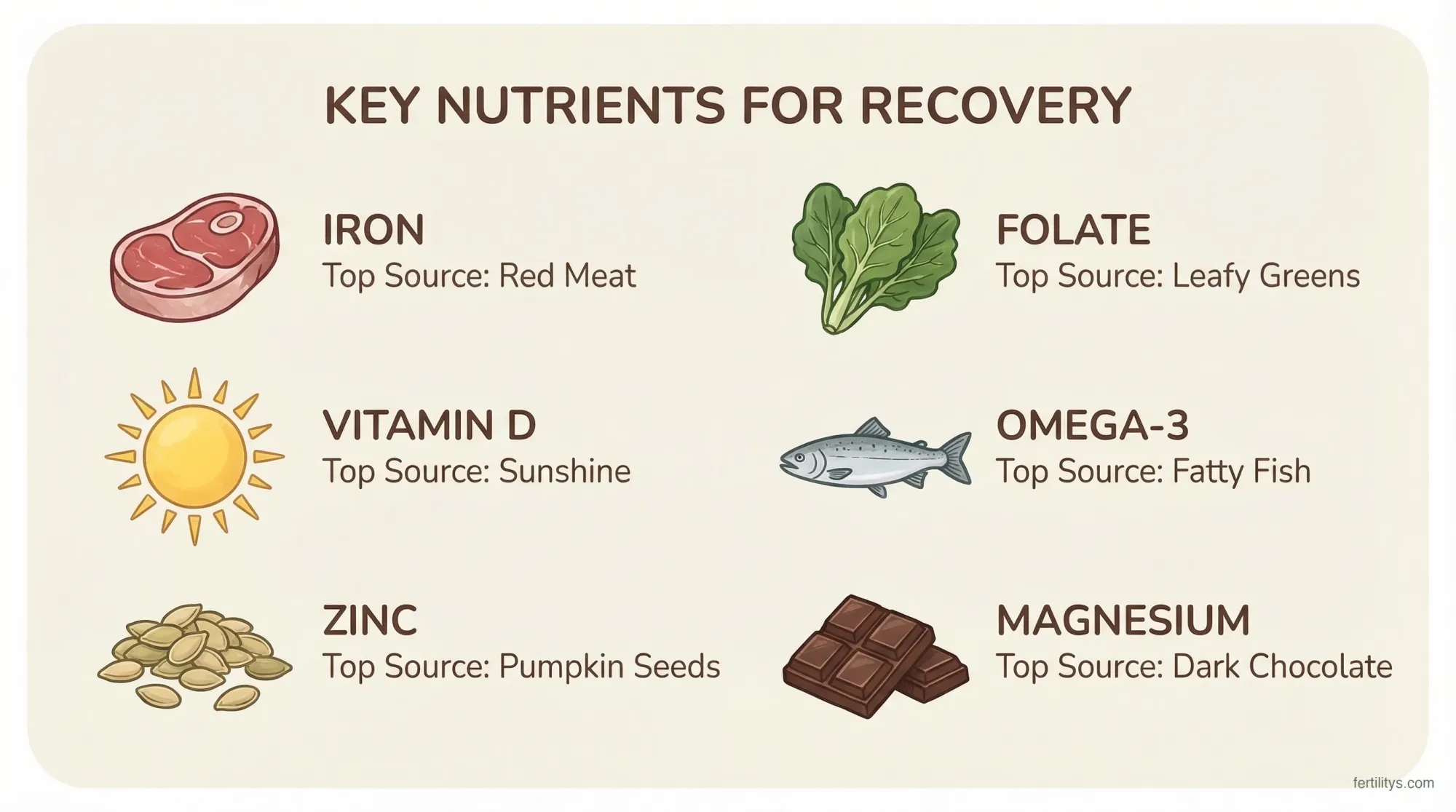
Best food sources: Red meat (the most bioavailable source), liver, sardines, lentils, chickpeas, dark leafy greens (spinach, kale), tofu, and fortified cereals. Pair plant-based iron with vitamin C — squeeze lemon over your lentils, have an orange with your porridge — to boost absorption by up to 300%.
What about supplements? If your ferritin is low, food alone won't cut it quickly enough. Your GP may recommend ferrous fumarate or ferrous sulphate (typically 65mg elemental iron daily). Take it on an empty stomach with vitamin C, away from tea, coffee, and calcium. If tablets cause stomach upset, try every-other-day dosing — a 2017 study in Blood found this can actually improve absorption (Stoffel et al., 2017).
Folate — beyond prevention
Most people know folate matters for preventing neural tube defects. What's less well known is that folate is critical for DNA repair and cell regeneration — both of which your body is actively doing right now as it heals. A Cochrane review of 40 trials covering over 276,000 women found that women taking folic acid alongside other nutrients had better pregnancy outcomes overall (Balogun et al., 2016).
Continue your prenatal vitamin if you can stomach it. If the smell or association is too painful right now — and I completely understand that — at minimum take a standalone 400mcg folic acid or, better yet, methylfolate (the active form that doesn't require conversion, which around 30–40% of the population struggles with due to MTHFR variations).
Food sources: Dark leafy greens, asparagus, broccoli, avocado, eggs, lentils, fortified breads and cereals, oranges.
Vitamin D — the one most people are low in
Vitamin D does far more than support your bones. It modulates your immune system, influences mood, and has a direct relationship with reproductive outcomes. A 2022 systematic review and meta-analysis in Fertility and Sterility — covering 4 studies and 3,674 women — found that vitamin D deficiency (below 50 nmol/L) was associated with a 94% increased risk of miscarriage compared to women with adequate levels (Tamblyn et al., 2022).
In the UK, vitamin D deficiency is extremely common — the NHS estimates that 1 in 5 adults has low levels, rising to 1 in 3 during winter. After a loss, it's worth asking your GP to check your 25(OH)D level. The NHS recommends 10mcg (400 IU) daily for everyone during autumn and winter, but many fertility specialists suggest higher doses of 25–50mcg (1,000–2,000 IU) for women trying to conceive, particularly after a loss.
I take 10mcg daily as a baseline and have done for years. It's one of the simplest things you can do — a small daily supplement that costs pennies.
Omega-3 fatty acids — for inflammation and mood
Omega-3s — particularly EPA and DHA — are potent anti-inflammatories, and after a miscarriage your body has inflammation to resolve. But they also matter for your mental health. A 2019 meta-analysis in Translational Psychiatry found that omega-3 supplementation (particularly formulations with ≥60% EPA) had a significant positive effect on depression symptoms (Liao et al., 2019).
This matters after pregnancy loss, when depression and anxiety are common. Up to 20% of women experience clinically significant depression following a miscarriage, according to a 2023 review in Frontiers in Medicine (Fernández-Basanta et al., 2023).
Best sources: Oily fish (salmon, mackerel, sardines — aim for 2 portions per week), walnuts, chia seeds, flaxseeds. If you don't eat fish, consider an algae-based DHA supplement — it's where the fish get theirs.
Zinc, magnesium, and B vitamins — the quiet workers
Zinc supports wound healing, immune function, and hormone production. Oysters are the richest source (by a long way), but red meat, pumpkin seeds, chickpeas, and dark chocolate all contribute. The RNI is 7mg daily for women.
Magnesium is worth mentioning because it affects sleep quality, muscle recovery, anxiety, and inflammation — all of which are likely disrupted right now. Research suggests higher dietary magnesium intake is associated with reduced depression risk, particularly in women (Tarleton et al., 2017). Magnesium glycinate tends to be the best tolerated form. Good food sources include dark chocolate, almonds, spinach, black beans, and avocado.
B vitamins — particularly B6 and B12 — support red blood cell production, energy metabolism, and nervous system function. If you're exhausted, a B-complex can make a noticeable difference within a couple of weeks. B12 is mainly found in animal products (meat, fish, eggs, dairy), so if you eat a plant-based diet, supplementation is essential.
What to eat after miscarriage — practical guidance
I know "eat well" is the last thing you want to hear when you can barely face getting out of bed. So here's what I tell my clients: don't overthink it. The goal isn't perfection. It's nourishment.
If you can only manage one thing: eat warm, simple foods. Soups, stews, porridge, scrambled eggs on toast. Things that are gentle on your stomach, easy to prepare (or easy for someone else to prepare for you), and comforting. Batch cook if you have a good day — future you will thank present you.
Foods to prioritise in the first two weeks:
- Iron-rich proteins: Red meat, liver, eggs, sardines, lentils
- Leafy greens: Spinach, kale, broccoli, Swiss chard (folate + iron + magnesium)
- Oily fish: Salmon, mackerel, sardines (omega-3 + vitamin D + protein)
- Whole grains: Oats, brown rice, quinoa (B vitamins + fibre + sustained energy)
- Vitamin C-rich fruit: Oranges, kiwi, strawberries, bell peppers (iron absorption)
- Healthy fats: Avocado, olive oil, nuts, seeds (hormone production + anti-inflammatory)
- Hydrating foods: Soups, broths, herbal teas, watermelon (especially important if you've had bleeding)
A typical recovery day might look like:
- Breakfast: Porridge with berries, walnuts, and a drizzle of honey — or scrambled eggs on sourdough with wilted spinach
- Lunch: A big bowl of lentil soup with crusty bread, or salmon and avocado on rye
- Dinner: Gentle one-pot — chicken thighs with sweet potato, kale, and chickpeas, or a slow-cooked beef stew with root vegetables
- Snacks: Hummus and oatcakes, a handful of almonds, Greek yoghurt with fruit, dark chocolate
What to limit or avoid during recovery
I'm not going to give you a long list of forbidden foods — that's the last thing you need right now. But a few things are worth being mindful of:
- Alcohol: Your liver is already processing hormonal changes. Alcohol depletes B vitamins, disrupts sleep, and can worsen low mood. I know a glass of wine might feel like the only comfort, but even a few weeks without can make a noticeable difference to your energy and mood.
- Caffeine: You don't need to eliminate it, but keep it moderate (under 200mg — about two cups of coffee). Caffeine can worsen anxiety and interfere with iron absorption if consumed with meals.
- Processed and ultra-processed foods: High in sodium, sugar, and inflammatory fats — all of which work against your recovery. The occasional ready meal is fine. A diet built on them isn't.
- Raw or undercooked foods: If you're still passing tissue or have any signs of infection, your immune system is working hard. Practice standard food safety.
Self-care after pregnancy loss — beyond nutrition
Nutrition matters, but recovery after pregnancy loss isn't just about what you eat. Your body and mind need care that goes beyond the plate.
Rest — properly. Not doom-scrolling in bed. Actual rest. Your body has been through a physical event, and the hormonal shift alone is exhausting. Sleep as much as you can. If sleep is hard (and it often is — progesterone withdrawal can wreck your sleep architecture), try magnesium glycinate before bed, keep screens out of the bedroom, and don't punish yourself for lying awake.
Move gently when you're ready. Not immediately. Not intensely. But when your body feels ready — and only you can judge that — gentle movement helps. A slow walk outside. Some stretching. Restorative yoga. Nothing that raises your heart rate significantly in the first couple of weeks. I'm a big believer in fresh air and daylight for healing — even 15 minutes outside can shift your cortisol patterns and improve your mood.
Talk to someone. The 2023 Frontiers in Medicine review I mentioned earlier found that pregnancy loss grief is "often underestimated by health professionals" and can lead to prolonged psychological effects in up to 20% of women. You don't have to process this alone. The Miscarriage Association (UK), Tommy's, and Sands all offer free support. If you're struggling with anxiety or depression beyond the first month, please speak to your GP — there's no prize for suffering in silence.
Let people help. This one is hard if you're used to being the capable one. But if someone offers to cook, clean, do a supermarket run, walk the dog — say yes. Recovery is not a solo sport.
When you're ready to try again — preparing your body
There is no universal timeline for when you should try again. The WHO previously recommended waiting six months after a miscarriage, but more recent evidence challenges this. A large 2017 study of over 1,000 women published in Obstetrics & Gynecology found no increased risk of adverse outcomes for women who conceived within three months of a loss, and some evidence of improved outcomes (Schliep et al., 2016).
The NICE guidelines (UK) state that women can try again as soon as they feel physically and emotionally ready. That might be one cycle. It might be six months. Both are valid.
When you are ready, this is where I'd start — and it's the same advice I give every client:
- Get your bloods done. Full blood count, ferritin, vitamin D, thyroid panel (TSH and free T4), and folate. You want to know where you stand before conceiving again.
- Continue prenatal vitamins — or restart them. Look for one with methylfolate (not just folic acid), iron, vitamin D, iodine, and omega-3.
- Prioritise protein. You need at least 1g per kg of bodyweight daily for tissue repair and hormone production. Most women I work with are eating about half this.
- Address any deficiencies before conceiving — particularly iron and vitamin D. Conceiving while depleted puts you and the pregnancy at a disadvantage from the start.
- Start at least three months before trying. Egg maturation takes roughly 90 days. What you eat and supplement now affects the egg that could become your baby three months from now. I tell all my clients to aim for a full year of preparation if possible — it gives your body the best possible foundation.
When to speak to your GP
Most miscarriages resolve without medical intervention, but contact your GP or early pregnancy unit if you experience:
- Heavy bleeding that soaks through a pad in an hour or less
- Fever above 38°C (100.4°F)
- Severe or worsening abdominal pain
- Foul-smelling discharge (possible infection)
- Persistent fatigue, dizziness, or breathlessness (possible anaemia)
- Symptoms of depression or anxiety lasting beyond 2–4 weeks
- Two or more consecutive miscarriages (qualifies for investigation under NICE guidelines)
You're not wasting anyone's time. And you deserve proper care.
The bottom line
Recovery after pregnancy loss is physical, emotional, and nutritional — and all three matter equally. Focus on replenishing what your body has lost: iron, folate, vitamin D, omega-3s, and rest. Eat warm, simple, nourishing food. Accept help. Be patient with yourself.
And know this: a miscarriage does not define your fertility story. Most women who experience a single loss go on to have a healthy pregnancy. Your body isn't broken. It's healing.
I know because I've been there. After two chemical pregnancies, I questioned everything. But the work I put into rebuilding my nutrition, addressing my deficiencies, and giving my body time — that's what carried me through to the other side. To Bowie. To the pregnancy that worked.
Be gentle with yourself. You deserve that.
📚 Related Reading
▸What should I eat immediately after a miscarriage?
Focus on warm, easy-to-digest foods that are rich in iron and nutrients: soups, stews, scrambled eggs, porridge, and gentle proteins. Prioritise hydration — especially if you've had significant bleeding. Don't pressure yourself into a perfect diet. The goal right now is nourishment, not optimisation.
▸How long does physical recovery take after miscarriage?
Physical recovery typically takes 1–4 weeks, depending on how far along the pregnancy was and whether any medical intervention was needed. Bleeding may continue for 7–14 days. However, hormonal recovery — particularly the return of regular ovulation — can take one to three menstrual cycles. Emotional recovery has no set timeline and is different for everyone.
▸Should I take iron supplements after a miscarriage?
It's worth asking your GP to check your ferritin levels (not just haemoglobin). If your ferritin is below 30 μg/L, iron supplementation is usually recommended. Ferrous fumarate or ferrous sulphate (around 65mg elemental iron) taken every other day with vitamin C can effectively rebuild stores while minimising stomach side effects.
▸Can I try to get pregnant again right away?
NICE guidelines say you can try again as soon as you feel physically and emotionally ready — there's no required waiting period. A 2017 study of over 1,000 women found no increased risk for those who conceived within three months of a loss. However, it's wise to check your iron and vitamin D levels first and address any deficiencies before conceiving again.
▸Is it normal to feel depressed after a miscarriage?
Yes. Research shows that up to 20% of women experience clinically significant depression after pregnancy loss, and anxiety rates may be even higher. Grief, sadness, anger, and numbness are all normal responses. If symptoms persist beyond 4 weeks, worsen over time, or significantly affect your daily life, please speak to your GP. The Miscarriage Association and Tommy's also offer free confidential support.
⚕️ Medical Disclaimer
This article is for informational purposes only and does not constitute medical advice. Always consult a qualified healthcare professional for guidance specific to your situation. If you are experiencing heavy bleeding, fever, or signs of infection after a miscarriage, contact your GP or nearest emergency department immediately.
References
- Achebe, M.M. & Gafter-Gvili, A. (2022). The incidence, complications, and treatment of iron deficiency in pregnancy. Current Opinion in Hematology, 29(6), 291–298. PubMed
- Garzon, S. et al. (2024). Iron Deficiency Anaemia in Pregnancy: A Narrative Review from a Clinical Perspective. Nutrients, 16(21), 3631. PMC
- Stoffel, N.U. et al. (2017). Iron absorption from oral iron supplements given on consecutive versus alternate days and as single morning doses versus twice-daily split doses. Blood, 130(21), 2282–2289. PubMed
- Balogun, O.O. et al. (2016). Vitamin supplementation for preventing miscarriage. Cochrane Database of Systematic Reviews, 5, CD004073. PMC
- Tamblyn, J.A. et al. (2022). Vitamin D and miscarriage: a systematic review and meta-analysis. Fertility and Sterility, 118(1), 111–122. PubMed
- Liao, Y. et al. (2019). Efficacy of omega-3 PUFAs in depression: a meta-analysis. Translational Psychiatry, 9, 190. PubMed
- Fernández-Basanta, S. et al. (2023). Pregnancy loss: Consequences for mental health. Frontiers in Medicine, 10, 1090762. PMC
- Tarleton, E.K. et al. (2017). Role of magnesium supplementation in the treatment of depression. PLoS One, 12(6), e0180067. PubMed
- Schliep, K.C. et al. (2016). Trying to conceive after an early pregnancy loss. Obstetrics & Gynecology, 127(2), 204–212. PubMed
- National Institute for Health and Care Excellence (NICE). (2021). Ectopic pregnancy and miscarriage: diagnosis and initial management. NG126. NICE
Written by

Subscribe to Fertilitys
All my Free Resources. No spam. Unsubscribe anytime.