Fertility and Exercise: How Much Is Too Much?
Moderate exercise supports fertility, but too much can disrupt ovulation. Here's how to find the right balance — based on the research and my personal experience.


📌 Key Takeaways
- Moderate exercise supports fertility by improving insulin sensitivity, reducing stress, and helping maintain a healthy weight — all of which positively affect ovulation.
- Over-exercising can actually harm fertility: intense, prolonged exercise may suppress ovulation and disrupt your menstrual cycle, especially if combined with low body fat.
- The sweet spot is around 150 minutes of moderate activity per week — think brisk walking, swimming, yoga, or cycling rather than marathon training.
- Strength training 2–3 times per week can improve hormone balance and metabolic health, making it a valuable addition to a fertility-friendly routine.
- Listen to your body — if your periods become irregular or stop altogether, it may be a sign to scale back and speak with your doctor.
When I was trying to conceive, I was doing HIIT four times a week. I felt strong, fit, and healthy. And I had absolutely no idea that my workout routine might be working against my fertility.
Nobody told me — and I see this same story with my clients all the time. My GP didn't mention it. The fertility articles I read talked about diet and supplements, but exercise was always a footnote — "stay active" — without any nuance about what kind, how much, or why it matters.
So let me be the one to tell you — and I always say this with care: exercise and fertility have a much more complex relationship than most people realise. And finding the right balance changed everything for me.
How Exercise Affects Your Fertility
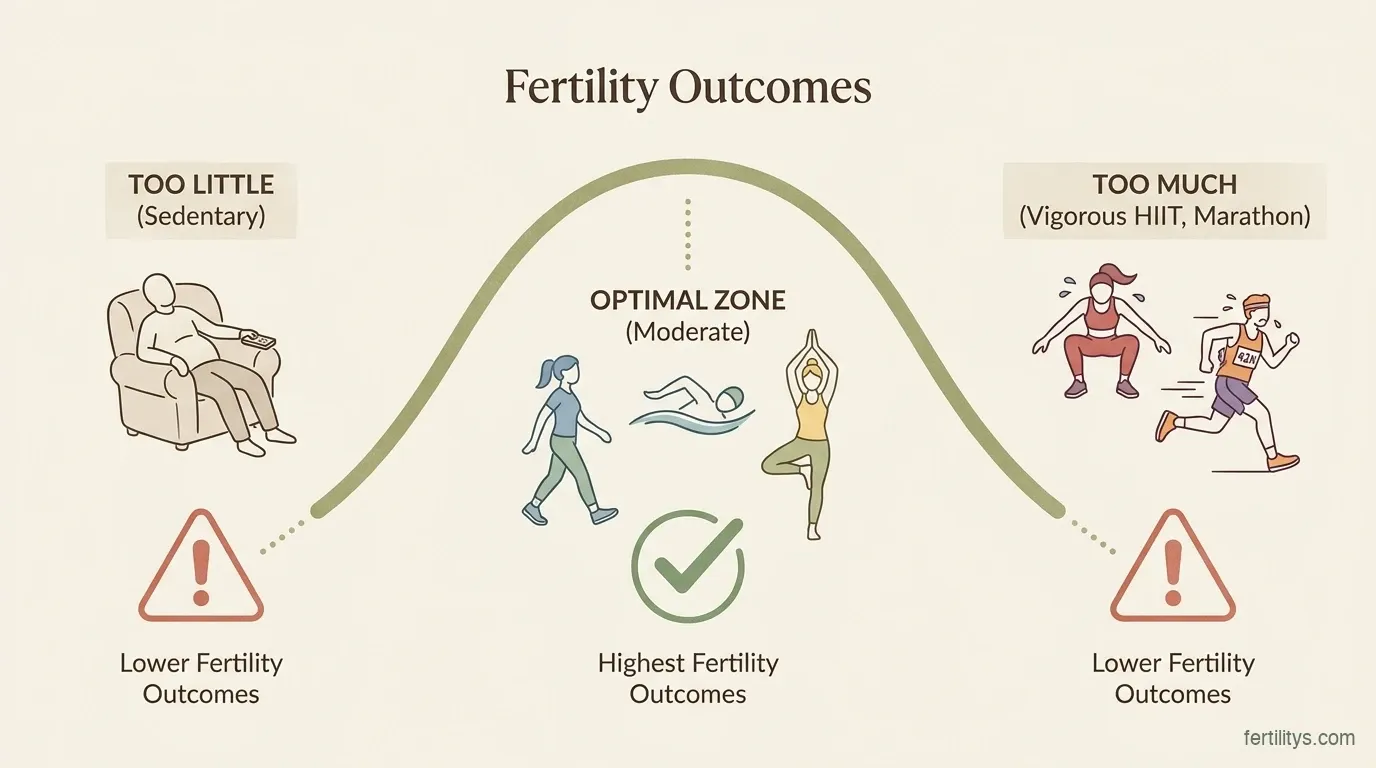
In my experience working with women trying to conceive, exercise isn't inherently good or bad for fertility — it's about dose, intensity, and type. The research consistently shows a J-shaped curve: moderate exercise improves fertility outcomes, while too much can impair them (Gudmundsdottir et al., 2009).
The good news: Regular moderate exercise (150 minutes per week of brisk walking, swimming, cycling, or similar) improves insulin sensitivity, reduces inflammation, helps maintain a healthy BMI, and lowers cortisol — all of which support ovulation and fertility (Hakimi & Cameron, 2017).
The complication: Vigorous exercise — especially when combined with a calorie deficit — can suppress the hypothalamic-pituitary-ovarian (HPO) axis, which controls ovulation. Your brain essentially decides your body is under too much stress to support a pregnancy, and it shuts down reproductive function (Loucks et al., 1989).
This isn't about being "too fit." It's about energy availability — whether your body has enough fuel left over after exercise to run all its other systems, including reproduction.
The Evidence: What Studies Actually Show
Let me walk you through the key findings from the research, because the picture is more nuanced than "exercise is good" or "exercise is bad."
Moderate exercise improves fertility: A large Danish cohort study found that women who did moderate exercise (walking, cycling, swimming) for 5 or more hours per week had a significantly shorter time to pregnancy compared to sedentary women — about 2.4 months faster (Gudmundsdottir et al., 2009).
Vigorous exercise can delay conception: The same study found that women doing more than 7 hours per week of vigorous exercise (running, aerobics, competitive sports) took longer to conceive — about 3 months longer on average.
IVF outcomes: A review in Fertility and Sterility Reports found that regular moderate exercise before and during IVF either had no effect on cycle success or a small beneficial effect (Morris et al., 2023). However, one earlier study found that women exercising more than 4 hours per week had slightly reduced IVF success rates (Morris et al., 2006).
Body fat matters: Women with very low body fat (under 17-22%) are more likely to experience amenorrhoea (absent periods) because they don't have enough energy reserves to sustain both exercise and reproduction. This is common in elite athletes, dancers, and women doing very intense training (Drinkwater et al., 1984).
Signs You Might Be Exercising Too Much
If you're trying to conceive, watch for these signals that your exercise routine may be affecting your hormones:
- Irregular or absent periods
- Short luteal phase (less than 10 days between ovulation and period)
- Feeling exhausted despite sleeping well
- Getting sick frequently (weakened immune system)
- Difficulty recovering from workouts
- Loss of libido
- Hair thinning or brittle nails
- Feeling cold all the time
If you have two or more of these, it's worth having a conversation with your GP about whether your exercise intensity is contributing to hormonal disruption.
The Sweet Spot: What to Do Instead
Based on the evidence, here's what I recommend to my clients who are trying to conceive:
Keep exercising. Don't stop moving — sedentary lifestyles carry their own fertility risks. The goal is to find the right intensity, not to stop.
Aim for 150-300 minutes per week of moderate activity. That's roughly 30-45 minutes most days. You should be able to hold a conversation while exercising — if you can only gasp a few words, you're probably too intense.
Prioritise low-impact activities:
- Walking — the most underrated fertility exercise. Twenty to thirty minutes outdoors lowers cortisol and improves blood flow to the reproductive organs.
- Swimming — full-body, low-impact, excellent for stress reduction.
- Yoga — particularly fertility-focused or restorative yoga. Studies show yoga reduces cortisol and anxiety in women undergoing fertility treatment (Domar et al., 2015).
- Pilates — builds core strength and pelvic floor health without high impact.
- Cycling — gentle to moderate cycling is fine. Avoid very intense spin classes.
Scale back high-intensity training. If you currently do HIIT, CrossFit, or competitive running, consider reducing frequency to 1-2 sessions per week and filling the rest with moderate alternatives. You don't have to give it up completely — just rebalance.
Exercise by Cycle Phase
Your hormonal environment changes throughout your cycle, and your exercise can adapt accordingly:
Follicular phase (day 1 to ovulation) — You have more energy and can handle slightly higher intensity. This is a good time for brisk walks, light jogging, strength training, or moderate circuit work.
Ovulation (around day 14) — Exercise is fine, but if you're tracking ovulation, be aware that very intense exercise on ovulation day could theoretically affect implantation. Keep it moderate.
Luteal phase (ovulation to period) — Progesterone is dominant and you'll naturally feel less energetic. This is the time for gentle movement: walking, restorative yoga, swimming. Avoid starting new intense programmes in this phase.
Two-week wait (after ovulation) — There's no evidence that moderate exercise affects implantation. But many women prefer to be gentle during this time, and that's absolutely fine. Listen to your body.
For Women Doing IVF
Exercise during IVF cycles requires extra consideration. Most fertility clinics advise:
- Continue light to moderate exercise during stimulation (walking, gentle yoga)
- Avoid strenuous exercise once follicles are growing — enlarged ovaries can be at risk of torsion with vigorous activity
- After egg retrieval, take it easy for a few days. Walking is fine, but avoid anything that jostles your abdomen
- After embryo transfer, most clinics advise returning to normal moderate activity. Bed rest has not been shown to improve outcomes (Bar-Hava et al., 2000)
Always follow your clinic's specific advice — protocols vary.
Dani Recommends: Gentle Morning Movement
The Bottom Line
Exercise is one of the most powerful tools you have for supporting fertility — but only when you get the dose right. Moderate, consistent movement improves insulin sensitivity, reduces stress, and supports a healthy weight. Too much intensity, too often, can send your body into survival mode and shut down reproduction.
I learned this the hard way. I went from four HIIT sessions a week to gentle walks and yoga, and my cycle normalised within two months. That doesn't mean HIIT is bad — it means it was too much for my body at that time. Listen to yours. If you're exhausted, irregular, or not conceiving despite everything else being in order, exercise intensity might be the missing piece.
Frequently Asked Questions
▸Can I still do HIIT while trying to conceive?
Yes, but reduce frequency and intensity. One to two HIIT sessions per week is probably fine for most women, as long as you're eating enough, sleeping well, and your periods are regular. If your periods are irregular or you've been trying to conceive for more than 6 months, consider swapping one or two sessions for moderate alternatives.
▸How many hours of exercise per week is safe for fertility?
The research suggests up to 4-5 hours per week of moderate exercise is beneficial. Vigorous exercise beyond 4 hours per week may begin to negatively affect fertility, particularly if combined with a calorie deficit. The key is "moderate" — activities where you can hold a conversation, not where you're gasping for breath.
▸Is running bad for fertility?
Moderate jogging (3-5 miles, 3-4 times per week) is generally fine. It becomes problematic when training intensity or volume is high — marathon training, daily fast runs, or long-distance running combined with restricted eating. If your periods are regular and you feel well, your running habit is probably fine. If you notice irregularity, consider scaling back.
▸Should I stop exercising completely during the two-week wait?
No. There's no evidence that moderate exercise during the two-week wait affects implantation. Some women prefer to be gentler during this time for peace of mind, and that's completely valid. But if you normally walk or swim, there's no medical reason to stop. Avoid introducing new, intense exercise during this time.
▸What exercise is best during IVF stimulation?
Walking, gentle yoga, and swimming are the most commonly recommended. As your follicles grow during stimulation, your ovaries enlarge and become more vulnerable to torsion (twisting) from vigorous movement. Avoid high-impact activities, heavy lifting, twisting movements, and anything that involves jumping or sudden changes in direction.
▸I lost my period from too much exercise — can I get it back?
Yes, in most cases. Functional hypothalamic amenorrhoea (period loss from energy deficit) is usually reversible with reduced exercise intensity, increased calorie intake, and stress management. Recovery typically takes 3-6 months. See your GP for blood tests and consider working with a nutritionist who specialises in female health. The key is giving your body enough fuel and rest.
References
- Gudmundsdottir SL, Flanders WD, Augestad LB. Physical activity and fertility in women. Scand J Med Sci Sports. 2009;19(6):816-825. PubMed
- Hakimi O, Cameron LC. Effect of exercise on ovulation: a systematic review. Sports Med. 2017;47(8):1555-1567. PubMed
- Loucks AB, Mortola JF, Girton L, Yen SS. Alterations in the hypothalamic-pituitary-ovarian and the hypothalamic-pituitary-adrenal axes in athletic women. J Clin Endocrinol Metab. 1989;68(2):402-411. PubMed
- Morris SN, Missmer SA, Cramer DW, Powers RD, McShane M, Hornstein MD. Effects of lifetime exercise on the outcome of in vitro fertilization. Fertil Steril. 2006;86(4):974-981. PubMed
- Domar AD, Meshay I, Kelliher M, Alper M, Mahfoud Z. The impact of a group mind/body intervention on pregnancy rates in IVF patients. Fertil Steril. 2015;103(5):1345-1349. PubMed
- Drinkwater BL, Nilson K, Chesnut CH 3rd, et al. Bone mineral content of amenorrheic and eumenorrheic athletes. N Engl J Med. 1984;311(5):277-281. PubMed
- Bar-Hava I, Kerner R, Yoeli R, Ashkenazi J, Shalev Y, Orvieto R. Immediately initiated intravenous progesterone does not impair pregnancy rates after in vitro fertilization and embryo transfer. Fertil Steril. 2000;74(4):824-825. PubMed
- Morris SN, Missmer SA, Cramer DW, et al. Maternal physical activity and sedentary behaviour before and during in vitro fertilization. Fertil Steril. 2020;114(5):1070-1078. PubMed
One thing I've noticed when speaking with people on their fertility journey is that exercise often becomes a source of guilt — either they feel they're not doing enough, or they're worried they're doing too much. The reality is that movement should feel supportive, not stressful. When exercise becomes another thing to "get right," it can add to the emotional burden that already comes with trying to conceive. I always encourage finding an activity you genuinely enjoy, because consistency comes from pleasure, not pressure.
It's also worth considering how exercise affects your sleep and stress levels — two factors that are deeply connected to fertility. Regular moderate activity helps regulate your circadian rhythm, which in turn supports the hormonal cascade needed for healthy ovulation. On the flip side, late-night high-intensity workouts can spike cortisol and interfere with sleep quality, creating a counterproductive cycle. I've found that morning or early afternoon exercise tends to work best for most people trying to balance activity with rest.
<2 id="exercise-during-ivf-and-fertility-treatment">Exercise During IVF and Fertility TreatmentIf you're going through IVF or other fertility treatments, your exercise routine may need adjusting. During ovarian stimulation, your ovaries are enlarged and more sensitive, so high-impact activities like running, jumping, or heavy lifting can increase the risk of ovarian torsion — a rare but serious complication. Most fertility specialists recommend switching to gentle walking, light stretching, or prenatal yoga during this time. After embryo transfer, listen to your clinic's guidance, but gentle movement is generally encouraged and can help with stress management during the two-week wait.
Medical Disclaimer
This article is for informational purposes only and does not constitute medical advice. If you have concerns about how your exercise routine may be affecting your fertility, please consult with your GP or a fertility specialist. Individual needs vary based on age, health conditions, and fertility history.
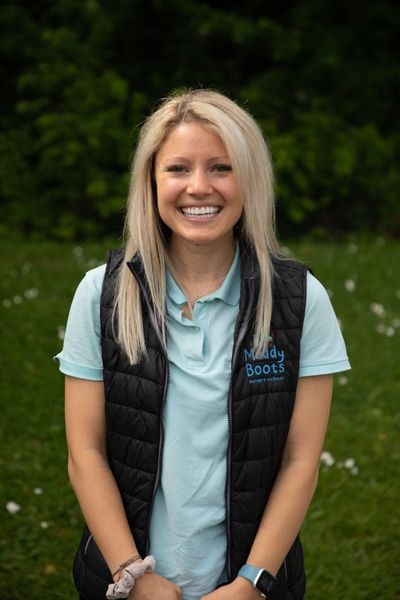
Written by
Subscribe to Fertilitys
All my Free Resources. No spam. Unsubscribe anytime.