How to Balance Hormones Naturally: A Nutritionist's Guide
A nutritionist's step-by-step guide to supporting your hormones through diet, stress management, sleep, and key nutrients.


📌 Key Takeaways
- Hormonal balance is the foundation of fertility — oestrogen, progesterone, FSH, LH, and testosterone all need to work in harmony for regular ovulation and conception.
- Nutrition plays a huge role: eating enough healthy fats, fibre, and protein while reducing refined sugar and processed foods can positively influence your hormone levels.
- Stress management is not optional — chronic stress elevates cortisol, which directly suppresses reproductive hormones and can disrupt your cycle.
- Sleep quality matters more than most people realise; aim for 7–9 hours of consistent, restorative sleep to support your body's natural hormone rhythms.
- Always work with a healthcare professional before starting supplements — what works for one person may not be right for another, especially when trying to conceive.
When I first started learning about hormones, I imagined them as little messengers carrying instructions around my body. What I didn't realise was how interconnected they are — how one hormone being off can knock all the others sideways. It's like pulling one thread from a jumper and watching the whole thing unravel.
As a nutritionist, I see hormone imbalance in nearly every woman who walks through my door. It's one of the most common things I work with. The symptoms aren't always dramatic — it might be tiredness that won't shift, periods that arrive when they feel like it, or weight that creeps up despite eating well. These are the quiet signals your hormones are sending, and they're worth listening to.
Signs Your Hormones Might Be Out of Balance
Hormone imbalance doesn't always announce itself with a dramatic symptom. Sometimes it whispers. Here are the signals I look for in my clients:
Period-related signs: Irregular cycles, heavy bleeding, painful periods, PMS that feels like it takes over your life, short luteal phases (less than 10 days between ovulation and your period).
Energy and mood: Fatigue that sleep doesn't fix, anxiety that comes from nowhere, mood swings that feel disproportionate to what's happening, difficulty concentrating.
Body changes: Unexplained weight gain (especially around the middle), hair thinning or loss, adult acne (particularly along the jawline), dry skin, low libido.
Sleep and stress: Waking at 3am and not being able to get back to sleep, feeling wired but tired, sugar cravings that feel impossible to resist.
If several of these resonate, it doesn't automatically mean you have a clinical hormone disorder — but it does suggest your hormones could use some support. Blood tests (which your GP can order) can confirm whether there's a measurable imbalance.
The Hormones That Matter Most
There are over 50 hormones in your body, but for fertility and general wellbeing, these are the ones I focus on with my clients:
Cortisol — your stress hormone. Produced by the adrenal glands, cortisol is essential for survival (it wakes you up, keeps you alert during danger). But chronic stress keeps cortisol elevated, and that disrupts everything downstream: it suppresses progesterone, raises blood sugar, and can halt ovulation altogether (Whirledge & Cidlowski, 2010).
Insulin — regulates blood sugar. When you eat refined carbohydrates or sugar, insulin spikes. Chronically high insulin drives inflammation, can lead to oestrogen dominance, and is central to PCOS (Dunaif, 2012).
Oestrogen and progesterone — the two main female sex hormones. They need to be in balance with each other. Oestrogen dominance (too much oestrogen relative to progesterone) is incredibly common and causes PMS, breast tenderness, heavy periods, and fibroids.
Thyroid hormones (T3 and T4) — control your metabolism. An underactive thyroid causes fatigue, weight gain, and can affect ovulation. Thyroid issues are more common in women and often go undiagnosed for years.
Step 1: Stabilise Blood Sugar
This is where I always start. Blood sugar instability drives insulin dysregulation, which affects every other hormone. If you're someone who gets shaky between meals or crashes hard after lunch, that's your blood sugar on a rollercoaster — spiking after meals, crashing an hour later — your hormones will follow.
What to do:
Eat protein with every meal. Protein slows the release of glucose into your bloodstream. Aim for 20-30g of protein at each meal. Think eggs at breakfast, chicken or fish at lunch, beans or lentils at dinner. Even a handful of nuts alongside a piece of fruit makes a difference.
Don't skip breakfast. I know, I know — intermittent fasting is everywhere. But for women with hormone imbalance, skipping breakfast can spike cortisol and worsen insulin resistance. A protein-rich breakfast within an hour of waking sets your metabolic tone for the day (Jakubowicz et al., 2013).
Eat fibre before carbs. This one makes a real difference. Having vegetables or salad before your pasta or rice slows glucose absorption. A study published in Diabetes Care found that eating vegetables before carbohydrates reduced post-meal glucose spikes by up to 73% (Shukla et al., 2015).
Swap refined for whole. White bread, white rice, and sugary cereals cause rapid glucose spikes. Wholegrain versions release energy more slowly and keep insulin steadier.
Step 2: Support Your Liver
I always tell my clients: your liver is the unsung hero of hormone balance. It's responsible for metabolising and clearing excess hormones — particularly oestrogen. If your liver is sluggish or overloaded, oestrogen can recirculate and build up.
Cruciferous vegetables — broccoli, cauliflower, Brussels sprouts, kale, cabbage — contain compounds called indole-3-carbinol (I3C) and sulforaphane that support oestrogen detoxification (Higdon et al., 2007). I aim for at least one portion of cruciferous veg every day.
Lemon water — I start most mornings with warm lemon water. It's not a miracle cure, but the citric acid supports bile production, which helps your liver process and eliminate used hormones. Plus it's a gentle way to hydrate before coffee.
Reduce alcohol — Alcohol directly impairs liver function and can increase oestrogen levels. Even moderate drinking (2-3 drinks per week) can affect hormone clearance (Rinaldi et al., 2006). If you're trying to rebalance your hormones, cutting back or going alcohol-free for a few months makes a measurable difference.
Step 3: Manage Cortisol
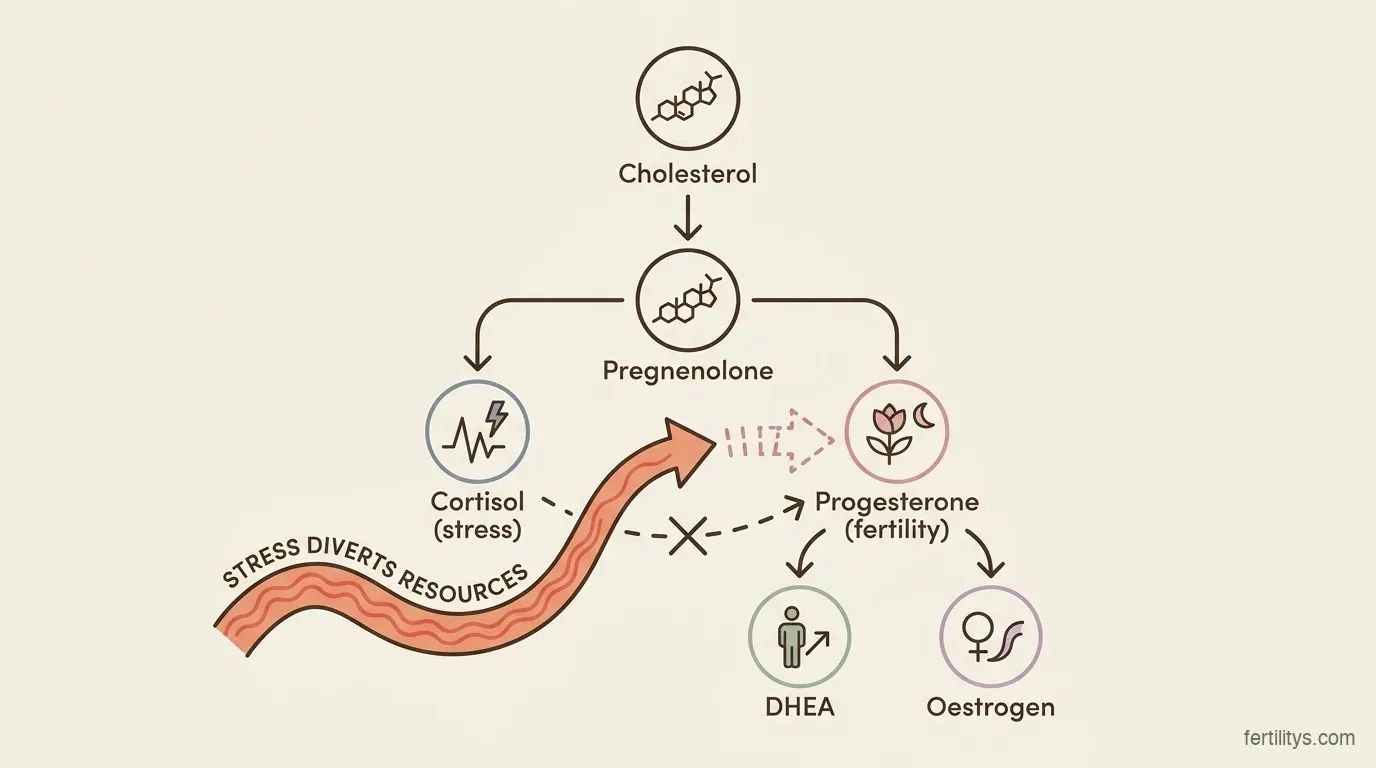
In my practice, cortisol is the domino that knocks everything else over. I see this constantly — when it's chronically high, your body diverts resources away from making progesterone (the "calm, fertile" hormone) toward making more cortisol. This is sometimes called the "pregnenolone steal" — pregnenolone is a precursor hormone that can be used to make either cortisol or progesterone, and stress favours cortisol.

Practical cortisol management:
Sleep. I'm a broken record about this with my clients, but it's non-negotiable. Aim for 7-9 hours. Poor sleep raises cortisol, which raises blood sugar, which raises insulin, which disrupts oestrogen. It's all connected. If you do one thing, make it protecting your sleep.
Breathwork. I recommend the 4-7-8 technique to my clients: breathe in for 4 counts, hold for 7, exhale for 8. Do this 3-4 times, twice a day. It activates your parasympathetic nervous system and measurably reduces cortisol (Ma et al., 2017).
Walk in nature. I walk every lunchtime, and I notice my stress levels are measurably lower on the days I do. Twenty minutes of walking outdoors lowers cortisol. It doesn't need to be intense. A gentle walk around the park after lunch does more for your hormones than a HIIT class.
Set boundaries. I know this isn't a "nutrition" tip, but it matters — and I see the impact of poor boundaries on my clients' hormones every week. Saying yes to everything, taking on everyone else's stress, never switching off — all of this keeps cortisol elevated. Your body doesn't distinguish between work stress and a genuine threat.
Step 4: Feed Your Gut
This is the area I'm most excited about in current research. Your gut microbiome plays a direct role in hormone metabolism — something we're only beginning to fully understand. An enzyme called beta-glucuronidase, produced by certain gut bacteria, can reactivate oestrogen that your liver was trying to eliminate. This means gut health directly affects oestrogen levels (Ervin et al., 2019).
What to eat:
Fermented foods — yoghurt, kefir, sauerkraut, kimchi, miso. These provide beneficial bacteria that support a diverse microbiome.
Prebiotic fibre — onions, garlic, leeks, asparagus, bananas, oats. These feed the good bacteria already in your gut.
Limit sugar and artificial sweeteners — both can disrupt gut bacteria composition. You don't need to eliminate sugar entirely, but being aware of how much you're eating helps.
Step 5: Key Nutrients for Hormone Production
Specific vitamins and minerals are essential for making and metabolising hormones. If you're deficient in any of these, your hormone pathways won't function properly:
Magnesium — involved in over 300 enzymatic reactions, including those that make and break down hormones. Magnesium deficiency is common (roughly 50% of UK adults don't meet the RNI) and contributes to PMS, anxiety, and poor sleep (Boyle et al., 2017). Food sources: dark leafy greens, dark chocolate, almonds, avocado.
Vitamin D — acts more like a hormone than a vitamin. Low vitamin D is associated with irregular periods, PCOS, and reduced fertility (Lerchbaum & Obermayer-Pietsch, 2012). Food sources are limited — oily fish, eggs, fortified foods — so supplementation (1000-2000 IU daily) is usually needed in the UK.
Zinc — essential for progesterone production and thyroid function. Deficiency is more common than most people realise, particularly in vegetarians and vegans. Food sources: oysters, red meat, pumpkin seeds, chickpeas.
B vitamins — particularly B6 (supports progesterone production) and B12 (essential for methylation, a liver detoxification pathway). Found in whole grains, eggs, meat, and leafy greens.
Omega-3 fatty acids — reduce inflammation and support cell membrane health, which affects hormone receptor function. Aim for 2 portions of oily fish per week, or supplement with 1000-2000mg of quality fish oil daily.
Things to Reduce or Avoid
Plastic food containers and water bottles — BPA and other plasticisers are xenoestrogens — they mimic oestrogen in your body. Use glass or stainless steel where possible, and never microwave food in plastic containers.
Conventional cleaning products — many contain endocrine-disrupting chemicals. Switch to natural alternatives where you can. Vinegar and bicarb handle most household cleaning.
Excessive caffeine — more than 2-3 cups of coffee per day can raise cortisol and oestrogen levels. If you're a coffee lover, aim to keep it under 200mg caffeine daily and don't drink it on an empty stomach.
Refined sugar — not because sugar is "toxic" (it's not), but because large amounts spike insulin and drive inflammation. Reduce gradually — your taste buds adjust within about two weeks.
Dani Recommends: The 4-7-8 Breathing Reset
The Bottom Line
Hormone balance isn't about one magic food or supplement. It's about the daily choices that support your body's natural systems — stabilising blood sugar, giving your liver what it needs, managing stress, sleeping well, and avoiding the things that disrupt your endocrine system.
Start with one or two changes from this list and build from there. I always tell my clients: you don't have to do everything at once. Trying to overhaul everything at once just adds more stress — which, ironically, makes your hormones worse. Be patient with your body. It's been doing its best under sometimes impossible conditions.
Frequently Asked Questions
▸How long does it take to balance hormones naturally?
Most women start noticing changes within 4-8 weeks of consistent dietary and lifestyle changes. However, full hormone rebalancing typically takes 3-6 months. Your menstrual cycle is a useful indicator — if your cycles become more regular, PMS improves, and energy returns, you're heading in the right direction. Be patient and track your symptoms.
▸Can supplements alone fix hormone imbalance?
Supplements can support hormone balance, but they work best alongside dietary and lifestyle changes. Taking magnesium without addressing poor sleep or chronic stress is putting a plaster on the problem. I always recommend food-first, supplements-second — use targeted supplementation to fill specific gaps identified by blood tests, rather than taking everything in the wellness aisle.
▸Does seed cycling actually work for hormone balance?
Seed cycling (eating specific seeds during different phases of your cycle) is popular but has limited clinical evidence. The theory — that flax and pumpkin seeds support oestrogen metabolism in the follicular phase, while sesame and sunflower seeds support progesterone in the luteal phase — is plausible based on nutrient content. The seeds themselves are nutritious and worth eating. Just don't expect them to single-handedly rebalance your hormones.
▸Should I get my hormones tested before making changes?
It depends. The dietary and lifestyle changes in this article are beneficial for most people regardless — eating well, sleeping enough, and managing stress won't hurt anyone. But if you have specific symptoms (absent periods, severe PMS, suspected PCOS or thyroid issues), getting blood tests first can be really valuable. It gives you a baseline so you can measure progress. Ask your GP for a hormone panel including FSH, LH, oestradiol, progesterone (day 21), thyroid (TSH, T4), and testosterone.
▸Is intermittent fasting good for hormone balance?
It depends on your situation. Intermittent fasting can be helpful for insulin sensitivity in some women. However, for women with existing hormone imbalance — particularly those with high cortisol, irregular periods, or thyroid issues — extended fasting can worsen things by raising cortisol and suppressing thyroid function. If you're already stressed and not sleeping well, eating regularly (3 meals, no snacking) is a better starting point than skipping meals.
▸Can hormone imbalance affect fertility?
Yes, significantly. Ovulation depends on a precise hormonal cascade — if cortisol is chronically elevated, if insulin is dysregulated, or if your thyroid is underactive, ovulation can be disrupted or absent. The good news is that many hormone imbalances respond well to dietary and lifestyle changes, and restoring balance can improve fertility outcomes. If you've been trying to conceive for 12 months (or 6 months if over 35), speak to your GP about fertility testing.
References
- Whirledge S, Cidlowski JA. Glucocorticoids, stress, and fertility. Minerva Endocrinol. 2010;35(2):109-125. PubMed
- Dunaif A. Insulin resistance and the polycystic ovary syndrome: mechanism and implications for pathogenesis. Endocr Rev. 1997;18(6):774-800. PubMed
- Jakubowicz D, Barnea M, Wainstein J, Froy O. High caloric intake at breakfast vs. dinner differentially influences weight loss of overweight and obese women. Obesity. 2013;21(12):2504-2512. PubMed
- Shukla AP, Iliescu RG, Thomas CE, Aronne LJ. Food order has a significant impact on postprandial glucose and insulin levels. Diabetes Care. 2015;38(7):e98-e99. PubMed
- Higdon JV, Delage B, Williams DE, Dashwood RH. Cruciferous vegetables and human cancer risk: epidemiologic evidence and mechanistic basis. Pharmacol Res. 2007;55(3):224-236. PubMed
- Ma X, Yue ZQ, Gong ZQ, et al. The effect of diaphragmatic breathing on attention, negative affect and stress in healthy adults. Front Psychol. 2017;8:874. PubMed
- Boyle NB, Lawton C, Dye L. The effects of magnesium supplementation on subjective anxiety and stress — a systematic review. Nutrients. 2017;9(5):429. PubMed
- Lerchbaum E, Obermayer-Pietsch B. Vitamin D and fertility: a systematic review. Eur J Endocrinol. 2012;166(5):765-778. PubMed
- Ervin SM, Li H, Lim L, et al. Gut microbial β-glucuronidases reactivate estrogens as components of the estrobolome that reactivate estrogens. J Biol Chem. 2019;294(49):18586-18599. PubMed
- Rinaldi S, Peeters PHM, Bezemer ID, et al. Relationship of alcohol intake and sex steroid concentrations in blood in pre- and post-menopausal women. Br J Cancer. 2006;95(1):108-111. PubMed
Medical Disclaimer
This article is for informational purposes only and does not constitute medical advice. If you suspect you have a hormone disorder, please consult with your GP or an endocrinologist. Dietary and lifestyle changes should complement, not replace, medical treatment.
Written by

Subscribe to Fertilitys
All my Free Resources. No spam. Unsubscribe anytime.