Egg Freezing: The Complete Guide to What It Involves
The full process, real success rates, UK costs, and honest advice on whether egg freezing is right for you


I'm seeing more and more of my clients ask about egg freezing. It's gone from a last-resort medical procedure to a mainstream conversation in the space of about a decade. Tech companies offer it as a workplace perk. Celebrities talk about it openly. But behind the hype, there are real questions: How does it actually work? What are the success rates? Is it right for you? And what does it cost — really?
I'm going to give you the honest, evidence-based picture — the same one I give my clients when they sit across from me. Not a sales pitch, not a scare piece. Just what the research says, what it costs, and what you should consider before making this decision.
🔑 Key Takeaways
- Age at freezing is the single biggest factor — eggs frozen at 35 perform much better than eggs frozen at 38. Earlier is almost always better.
- The ASRM removed the "experimental" label in 2012 — vitrification (flash-freezing) technology has made egg survival rates over 90%.
- Plan for 15-20 eggs for a reasonable chance of one live birth if you're under 35. This usually requires 2-3 retrieval cycles.
- UK costs: £3,000-£5,000 per cycle, plus £150-£400/year for storage. Medication adds £1,000-£2,000 per cycle. Total investment for 2-3 cycles: £8,000-£15,000+.
- It's not a guarantee — think of it as fertility insurance, not a certainty. It improves your options, but doesn't guarantee a baby.
How Egg Freezing Works: The Full Process
I explain the timeline to my clients like this: the egg freezing process takes about 2-3 weeks from start to retrieval, followed by the freezing itself. Here's what happens at each stage:
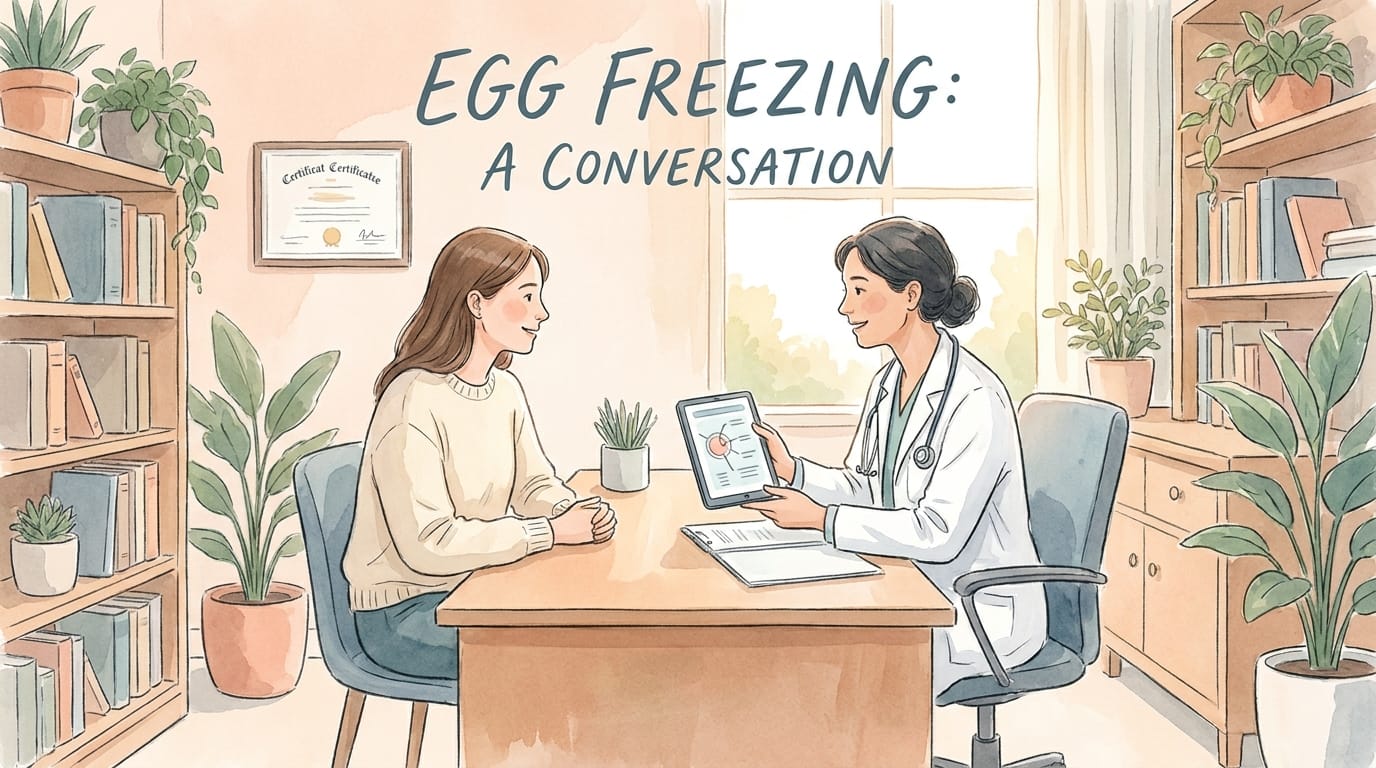
Before the injections start, your clinic will run a baseline assessment. This typically includes a transvaginal ultrasound to count your antral follicles (the small follicles visible on each ovary at the start of your cycle), blood tests for AMH (anti-Müllerian hormone) and FSH, and sometimes a pelvic scan to check for any structural issues. These results together give your doctor a picture of your ovarian reserve — essentially, how many eggs your ovaries have left to work with. This assessment is crucial because it determines the stimulation protocol they'll use and gives you a realistic expectation of how many eggs you might retrieve.
Step 1: Ovarian Stimulation (10-14 days)
You'll inject yourself daily with gonadotropins (FSH and/or LH hormones) to stimulate your ovaries to produce multiple eggs — instead of the single egg your body would naturally release. During this time, you'll have 3-4 monitoring appointments (transvaginal ultrasound and blood tests) to track follicle growth.
I always warn my clients about the side effects: common ones include bloating, mood swings, fatigue, and breast tenderness. Most women continue working and carrying on with normal life during stimulation.
During the stimulation phase, you'll visit the clinic every 2-3 days for blood tests and ultrasounds. They're monitoring your oestrogen levels and follicle growth to track how your body is responding to the medication. If your response is too strong (too many follicles growing, high oestrogen), they may reduce your dose. If the response is sluggish, they may increase it. The trigger shot is carefully timed based on these monitoring visits — typically when at least 3 follicles have reached 17-18mm. Getting this timing right is one of the most important parts of the whole process.
Step 2: Trigger Shot
When your follicles reach the right size (usually 18-20mm), you'll take a "trigger shot" — an injection of hCG or a GnRH agonist — to finalise egg maturation. The timing of this is critical: egg retrieval happens exactly 34-36 hours after the trigger.
Step 3: Egg Retrieval (20-30 minutes)
Under sedation or light anaesthesia, a doctor uses an ultrasound-guided needle, passed through the vaginal wall, to aspirate the fluid (and eggs) from each follicle. You'll go home the same day, usually within 1-2 hours. Expect cramping and bloating for 2-3 days.
Step 4: Vitrification (Freezing)
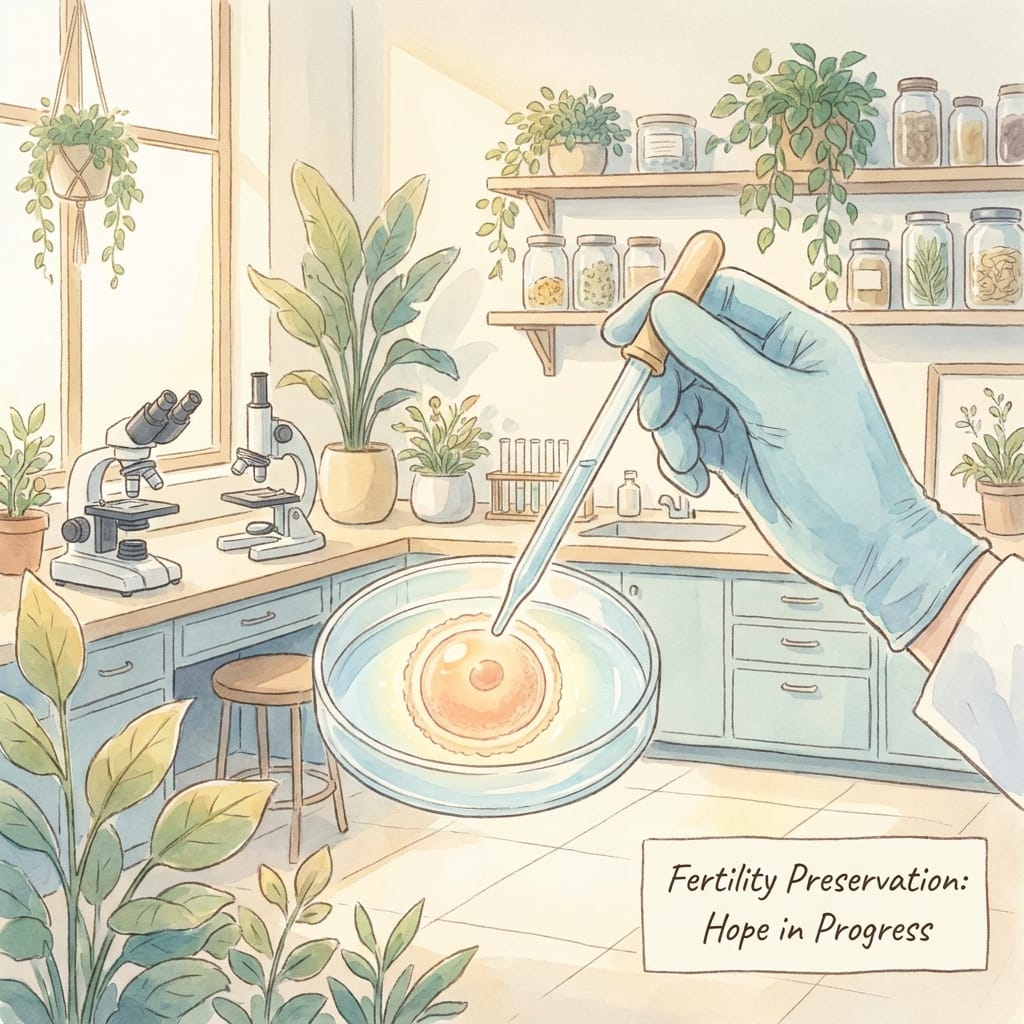
Embryologists assess the retrieved eggs under a microscope. Mature eggs (those in metaphase II) are selected for freezing. The vitrification process uses ultra-rapid cooling to flash-freeze eggs in liquid nitrogen, preventing ice crystal formation that could damage the cell. Survival rates after thawing with vitrification are over 90% — a dramatic improvement over the older slow-freeze method.
Not all retrieved eggs will be mature enough to freeze — typically about 80-85% of retrieved eggs are at the right stage (metaphase II) for vitrification. And when you eventually thaw them for IVF, the survival rate is around 90-95% with modern vitrification techniques, which is a significant improvement over the older slow-freeze method. From there, each surviving egg will be fertilised with ICSI (intracytoplasmic sperm injection), and you'd expect roughly 70-80% to fertilise normally. Not every fertilised egg becomes a viable embryo, and not every viable embryo results in a pregnancy — which is why the number of eggs you freeze matters so much.
Success Rates: The Honest Picture
This is where I need to be straightforward with you, because the fertility industry sometimes presents optimistic numbers without full context.
The key variables:
- Age at freezing — the most important factor by far. Egg quality declines with age, and frozen eggs don't "improve" while stored.
- Number of eggs frozen — more eggs = more chances. Not every egg will survive thaw, fertilise, develop into a viable embryo, and result in a pregnancy.
- Age at thaw and transfer — your uterine health at the time of transfer matters too.
Cil et al. (2013) published cumulative success rate data showing that:
- A woman under 35 freezing 10 eggs has roughly a 50-60% cumulative chance of at least one live birth
- Freezing 15-20 eggs under 35 pushes this to approximately 70-80%
- Over 35, you need more eggs to achieve the same probabilities
- Over 38, the numbers drop significantly — fewer eggs retrieved per cycle, lower survival rates, lower euploid rates
The HFEA (Human Fertilisation and Embryology Authority) publishes UK-specific data. Their latest figures show that egg freezing cycles in the UK have a live birth rate of approximately 18-23% per transfer using frozen eggs — but this doesn't capture cumulative rates across multiple attempts or the benefit of having banked multiple eggs.
UK Costs: What You'll Actually Pay
Here's a reality check that clinics don't always spell out: the average number of eggs retrieved per cycle is 8-14 for women under 35, and this drops to 5-8 for women over 38. If you're freezing at 38 and retrieve 7 eggs, after accounting for maturity, survival, fertilisation, and blastocyst development, you might end up with 1-2 viable embryos. That's not a guarantee of a baby — it's a chance. Most fertility specialists recommend freezing at least 15-20 eggs for a reasonable chance of one future live birth, which often means 2-3 cycles for women over 35. I'm not saying this to discourage you — I'm saying it because informed decisions are better decisions.
Egg freezing costs in the UK vary by clinic but typically include:
- Stimulation and monitoring: £2,500-£4,000 per cycle
- Medication: £1,000-£2,000 per cycle (varies by protocol)
- Egg retrieval procedure: included in the cycle fee at most clinics
- Annual storage: £150-£400 per year
- Thawing and fertilisation (when you use them): £2,000-£3,500, plus ICSI (£1,000-£1,500) and embryo transfer (£1,500-£2,500)
Total estimated cost for 2-3 freezing cycles + storage for 5 years + eventual use: £10,000-£20,000+. Some clinics offer package deals that reduce per-cycle costs.
In the UK, egg freezing for social reasons is not covered by the NHS. It may be funded if you're about to undergo treatment that could damage your fertility (e.g., chemotherapy) — this is called fertility preservation and is available on the NHS in many areas.
Some employers in the UK and US now offer egg freezing as part of their benefits package — companies like Meta, Google, and several NHS trusts have started covering one or two cycles for employees. If you work for a larger company, it's worth checking your employee benefits before paying out of pocket. Some clinics also offer payment plans or financing options, which can spread the cost over 12-24 months. It's a significant investment either way, and there's no shame in deciding the cost isn't worth it for your situation.
Who Is Egg Freezing Right For?
Egg freezing may be a good option if:

- You're under 38 and not ready to have children now but want to preserve your options
- You're about to undergo medical treatment that could affect your fertility (cancer treatment, certain surgeries)
- You haven't found the right partner and are aware of the age-related decline in egg quality
- You have a condition that may lead to premature ovarian insufficiency
- You're transgender and planning gender-affirming treatment that could affect fertility
It may NOT be the best option if:
- You're over 40 — the success rates are significantly lower, and the cost-per-success is very high
- You have very low AMH or poor ovarian reserve — you may not retrieve enough eggs per cycle to make it worthwhile (discuss with your specialist)
- You're viewing it as a guaranteed backup plan — it's a chance, not a certainty
What I Tell My Clients
I don't push egg freezing on anyone, and I'm wary of the way it's sometimes marketed as a simple solution to a complex biological reality. But I also think it's a genuinely valuable option for the right person at the right time.
If you're thinking about it, start by getting your AMH tested. This gives you a baseline picture of your ovarian reserve. Then talk to a fertility clinic — most offer free or low-cost initial consultations. Go in informed, with realistic expectations, and make the decision that's right for you.
The Bottom Line
Egg freezing is a real, viable technology that can preserve your fertility options. The science is solid — vitrification has made freezing and thawing remarkably effective. But it's not a guarantee, success rates depend heavily on age and egg numbers, and the costs are significant. If you're considering it, the best time to act is in your early 30s when egg quality is highest and you'll need fewer cycles to bank enough eggs.
There's also an emotional dimension that rarely gets discussed. Egg freezing can feel empowering — you're taking action, buying yourself time, creating options. But it can also feel like pressure: pressure to freeze before it's too late, pressure to justify the cost, pressure to explain your decision to well-meaning family members who think you should just 'find someone and have a baby the normal way.' All of those feelings are valid. If you're considering egg freezing, I'd encourage you to talk to a counsellor who specialises in fertility — most clinics offer this as part of the process. It's not a sign of weakness; it's a sign of taking the decision seriously.
Frequently Asked Questions
▸What is the best age to freeze your eggs?
Most specialists recommend between 30-35 as the optimal window. At this age, egg quality is still high, you'll likely retrieve more eggs per cycle, and you'll need fewer cycles to bank enough. Freezing at 25-28 is technically even better but rarely practical. Freezing after 37 is possible but success rates decline significantly.
▸How many eggs should I freeze?
For women under 35, aim for 15-20 mature eggs for a reasonable cumulative chance of one live birth. This typically requires 2-3 retrieval cycles. Women over 35 may need more, because a higher percentage of eggs will be chromosomally abnormal. Your clinic will give you a personalised target based on your age and ovarian reserve.
▸Is egg freezing painful?
The stimulation injections cause mild discomfort (similar to insulin injections). The retrieval itself is done under sedation, so you won't feel it. After retrieval, expect period-like cramping and bloating for 2-3 days. Most women take 1-2 days off work but feel back to normal within a week.
▸Can frozen eggs be stored indefinitely?
In the UK, the standard storage limit is 10 years, but this can be extended to 55 years in certain circumstances (e.g., premature infertility). The 10-year rule has been criticised and may be updated. From a biological perspective, eggs don't "expire" while frozen — the vitrification process effectively pauses biological time.
▸Does egg freezing affect my natural fertility?
No — the stimulation uses eggs that would have been lost that cycle anyway (your body recruits multiple follicles each month but only one matures naturally; the stimulation allows the others to mature too). Egg freezing doesn't deplete your overall egg reserve or affect your ability to conceive naturally in the future.
References
- Cil, A.P., et al. (2013). Cumulative birth rates with linked assisted reproductive technology cycles. New England Journal of Medicine, 368(12), 1085–1094.
- ASRM. (2022). Mature oocyte cryopreservation: a guideline. Fertility and Sterility.
- HFEA. (2024). UK fertility treatment data. HFEA.gov.uk
Medical Disclaimer: The information in this article is for educational purposes only. Egg freezing is a medical procedure that should be discussed with a fertility specialist who can assess your individual circumstances, including ovarian reserve and overall health.
Written by

Subscribe to Fertilitys
All my Free Resources. No spam. Unsubscribe anytime.