What Is a Good AMH Level to Get Pregnant?
A fertility nutritionist's guide to understanding your AMH number, what it means for natural conception and IVF, and what the latest research says about fertility at every level.


If you've just had your AMH tested and you're staring at a number wondering whether it's "good enough" to get pregnant, I understand that feeling completely. When my AMH came back at around 3 pmol/L at age 32 — a level more typical of someone a decade older — I felt the ground shift under me. The clinics told me egg freezing was my only real option.
But here's what I wish someone had told me that day: your AMH number is one piece of a much bigger picture. It doesn't define your fertility, and it definitely doesn't predict whether you'll have a baby.
So let me walk you through what the research actually says about AMH levels and pregnancy — because the answer is more hopeful than most clinics let on.
What AMH Actually Measures (and What It Doesn't)
Anti-Müllerian Hormone is produced by the small follicles in your ovaries — specifically the granulosa cells surrounding your developing eggs. Your AMH level reflects the size of your remaining egg pool, which doctors call your ovarian reserve.
Here's what trips most people up: AMH tells you about quantity, not quality. You could have a low AMH and still be ovulating perfectly healthy eggs every month. Or you could have a high AMH and face other challenges entirely.
The American Society for Reproductive Medicine (ASRM) confirmed in their 2020 committee opinion that AMH remains relatively consistent within and between menstrual cycles — which is why it's become the go-to blood test for assessing ovarian reserve. Unlike FSH, you can test it any day of your cycle.
But — and this is where it gets really important — the ASRM also acknowledges that AMH is better at predicting how you'll respond to IVF stimulation than whether you'll actually conceive. There's a meaningful difference between those two things.
Good AMH Level by Age: What the Numbers Mean
AMH naturally declines as you get older. That's completely normal biology. What counts as a "good" level depends entirely on your age, so comparing your number to a friend's without context is misleading.
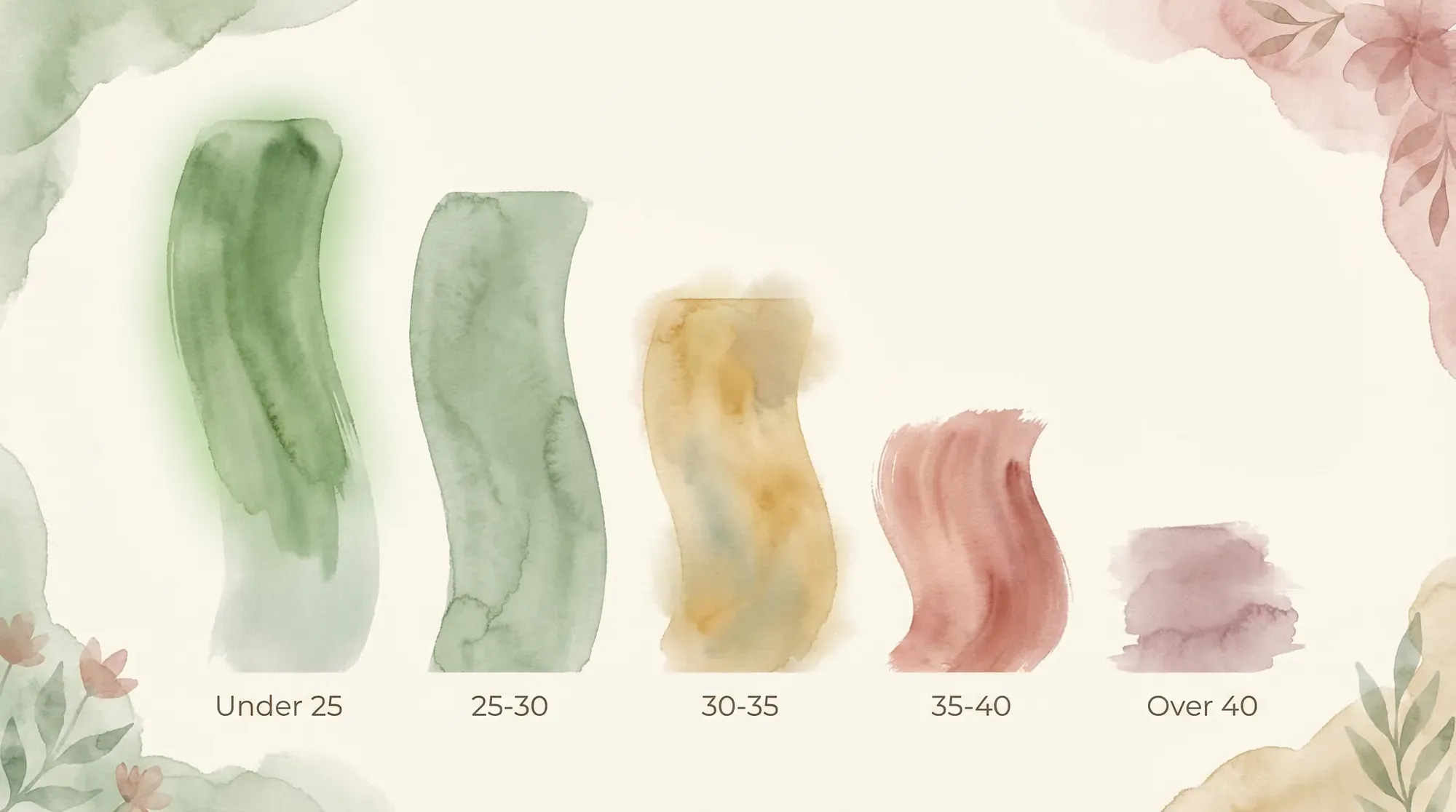
Here are the general reference ranges, with the conversion (1 ng/mL = 7.14 pmol/L) since UK labs typically report in pmol/L while US labs use ng/mL:
| Age | Typical AMH (ng/mL) | Typical AMH (pmol/L) | What It Suggests |
|---|---|---|---|
| Under 25 | 3.0–7.0+ | 21.4–50.0+ | High ovarian reserve |
| 25–30 | 2.5–6.0 | 17.9–42.8 | Healthy reserve |
| 30–35 | 1.5–4.0 | 10.7–28.6 | Normal for age |
| 35–38 | 1.0–3.0 | 7.1–21.4 | Declining but still viable |
| 38–40 | 0.5–2.0 | 3.6–14.3 | Reduced reserve |
| Over 40 | 0.1–1.0 | 0.7–7.1 | Low reserve; quality matters more |
An AMH below 1.0 ng/mL (7.1 pmol/L) is generally considered low, and below 0.5 ng/mL (3.6 pmol/L) is very low. The North Bristol NHS Trust uses 6.5–19.8 pmol/L (roughly 0.9–2.8 ng/mL) as the range predicting a normal response to controlled ovarian stimulation for IVF.
But I want to be clear about something: "low" doesn't mean "can't conceive." My AMH was around 3 pmol/L — well below what anyone would call adequate — and I'm writing this with my son Bowie asleep in the next room.
Can You Get Pregnant With Low AMH?
Yes. And the evidence backing this up is stronger than most people realise.
Steiner et al. (2017) published a landmark study in JAMA that followed 750 women aged 30–44 who were trying to conceive naturally. The results surprised a lot of people in the fertility world: women with low AMH (below 0.7 ng/mL) had a 65% probability of conceiving within 6 cycles — compared to 62% for women with normal AMH. After 12 cycles, the low-AMH group actually had a slightly higher cumulative probability (84% vs 75%), though the difference wasn't statistically significant.
Read that again. Women with diminished ovarian reserve conceived at essentially the same rate as women with normal reserves.
This doesn't mean AMH is meaningless. It matters enormously for IVF planning — a low AMH means fewer eggs will likely be retrieved during stimulation, which can affect the number of embryos available. La Marca et al. (2015) confirmed that in younger IVF patients, AMH doesn't predict pregnancy outcomes, but in women over 36, it becomes a more useful prognostic marker.
The distinction matters: AMH predicts your ovarian response to fertility drugs, not your ability to conceive a baby.
What AMH Level Is Too Low for IVF?
Clinics vary, but most fertility specialists become cautious when AMH drops below 0.5 ng/mL (3.6 pmol/L). A study in Reproductive BioMedicine Online (Bertone-Johnson et al., 2022) examined women with very low AMH (≤0.3 ng/mL) undergoing IVF and found that while live birth rates decreased with age, they were still comparable to national averages when adjusted for the women's age group.
In practical terms, here's what most UK and US clinics use as rough benchmarks for IVF:
| AMH Level | Expected IVF Response | Typical Protocol |
|---|---|---|
| Above 3.5 ng/mL (25 pmol/L) | High — risk of overstimulation | Low-dose, careful monitoring |
| 1.0–3.5 ng/mL (7–25 pmol/L) | Normal response expected | Standard protocol |
| 0.5–1.0 ng/mL (3.6–7 pmol/L) | Reduced — fewer eggs | Higher-dose stimulation |
| Below 0.5 ng/mL (3.6 pmol/L) | Poor response likely | Aggressive protocol or mini-IVF |
Some clinics will decline IVF treatment when AMH is undetectable (below 0.16 ng/mL), but others specialise in poor responders and achieve meaningful success rates. If you've been turned away by one clinic, a second opinion from a clinic experienced with low ovarian reserve is worth pursuing.
What AMH Level Indicates PCOS?
On the other end of the spectrum, unusually high AMH can be a marker for polycystic ovary syndrome. Women with PCOS often have AMH levels two to three times higher than expected for their age — typically above 5 ng/mL (35 pmol/L).
Dewailly et al. (2011) found that an AMH threshold above 5 ng/mL was more sensitive and specific for diagnosing polycystic ovarian morphology than ultrasound follicle counts alone. A later meta-analysis in the European Journal of Endocrinology (2023) suggested the diagnostic cutoff may sit between 3.8 and 5 ng/mL, depending on the assay used and the population studied.
High AMH in PCOS isn't necessarily bad news for fertility — PCOS-related anovulation is treatable, and many women with PCOS conceive with ovulation induction or lifestyle changes alone. The challenge tends to be irregular ovulation rather than egg supply.
What You Can Actually Do About Your AMH
When I got my results at 32, I was told nothing could change them. The clinics were definitive: AMH doesn't go up. I proved them wrong — my levels rose from around 3 to 6.43 pmol/L over two years. Whether the protocol I followed directly caused that rise or whether it was natural fluctuation, I can't say with scientific certainty. But what I can say is that the research supports every single thing I did to support my egg quality.
My approach centred on four things:
- Antioxidant support: CoQ10 at 200mg daily (ubiquinol form), plus vitamin D, omega-3, and a diet packed with berries, leafy greens, and colourful vegetables. Ben-Meir et al. (2015) showed CoQ10 supplementation restored age-related decline in oocyte quality in animal models, and clinical trials in women undergoing IVF have shown improved egg quality and embryo development.
- Blood sugar and inflammation: I switched to a Mediterranean-style diet, cut refined sugar, and focused on anti-inflammatory whole foods. Vujkovic et al. (2010) found that a preconception Mediterranean diet increased IVF pregnancy rates by 40%.
- Stress and cortisol: I stopped HIIT — which was driving my cortisol through the roof — and switched to gentle yoga, walks, and fertility acupuncture. Chronic stress directly suppresses reproductive hormones.
- Toxin reduction: Organic food where possible (especially the Dirty Dozen), no alcohol, no plastics for food storage, clean personal care products. Endocrine disruptors like BPA have been linked to reduced ovarian reserve in multiple studies.
The key belief I share with every client: start at least one year before you plan to conceive, not three months. Egg maturation takes approximately 90 days, but the cellular environment those eggs develop in reflects months of cumulative choices.

The Bottom Line
A "good" AMH level for getting pregnant is a range, not a single number — and it shifts with your age. Between 1.0 and 4.0 ng/mL is generally considered healthy for natural conception, while IVF clinics like to see at least 1.0 ng/mL for a standard protocol response.
But the most important thing I want you to take from this article is that AMH is a measure of ovarian reserve, not fertility destiny. The JAMA evidence is clear: low AMH doesn't reduce your chances of conceiving naturally. It tells your fertility clinic how many eggs to expect from stimulation, which matters if you're doing IVF — but it doesn't tell you whether you'll be a mum.
If your number is lower than you hoped, take a breath. Talk to a fertility specialist who understands the nuance. And if you want to support your egg quality proactively — whether your AMH is low, normal, or high — the evidence says nutrition, lifestyle, and reducing oxidative stress all make a real difference.
Frequently Asked Questions
▸Is an AMH of 1.0 ng/mL too low to get pregnant?
Not at all. An AMH of 1.0 ng/mL indicates a reduced ovarian reserve, but Steiner et al. (2017) found that women with AMH below 0.7 ng/mL conceived naturally at the same rate as women with normal levels. Your egg quality — influenced by age, nutrition, and lifestyle — matters more than the number of eggs remaining.
▸Can AMH levels increase naturally?
AMH can fluctuate — my own levels more than doubled from around 3 to 6.43 pmol/L over two years. While the medical consensus is that ovarian reserve can't be restored, antioxidant support (especially CoQ10), stress reduction, and an anti-inflammatory diet may help stabilise levels and improve the quality of existing eggs. Starting at least a year before conception gives you the best window.
▸What is a good AMH level for IVF?
Most IVF clinics consider 1.0–3.5 ng/mL (7–25 pmol/L) the ideal range for a standard stimulation protocol. Above 3.5 ng/mL increases the risk of ovarian hyperstimulation syndrome (OHSS), while below 0.5 ng/mL typically means fewer eggs retrieved. That said, some clinics specialise in low-AMH protocols and achieve good results — don't let one number rule out the possibility.
▸Does high AMH mean I'm more fertile?
Not necessarily. Very high AMH (above 5 ng/mL or 35 pmol/L) can indicate PCOS, which often causes irregular ovulation. While women with PCOS typically have a larger egg supply, the ovulation irregularity can make timing conception harder. Treatment with ovulation induction is usually straightforward and effective.
▸Should I get my AMH tested before trying to conceive?
It depends on your situation. If you're under 35, have regular cycles, and have no known fertility risk factors, routine AMH testing isn't typically recommended — it can cause unnecessary anxiety without changing your approach. If you're over 35, have irregular cycles, a family history of early menopause, or have had ovarian surgery, testing gives you useful information for planning. In the UK, your GP can arrange this on the NHS if there's clinical indication, or you can get an at-home test for £40–80.
▸Can you get pregnant with a low AMH?
Yes. AMH reflects egg quantity, not quality. Many women with low AMH conceive naturally. My own AMH was 3 ng/mL and I became pregnant without IVF. Low AMH may mean fewer eggs per cycle, but you only need one.
▸What AMH level do I need for IVF?
There's no minimum AMH for IVF, but levels above 1.0 ng/mL generally predict a better response to stimulation. Women with very low AMH may produce fewer eggs per cycle, sometimes requiring modified protocols or multiple cycles.
▸Does a high AMH mean good fertility?
Not necessarily. Very high AMH (above 5.0 ng/mL) can indicate PCOS, which comes with its own fertility challenges including irregular ovulation. A 'normal' AMH for your age, combined with regular cycles, is a better indicator.
You might also find helpful:
References
- Steiner AZ, Pritchard D, Stanczyk FZ, et al. Association Between Biomarkers of Ovarian Reserve and Infertility Among Older Women of Reproductive Age. JAMA. 2017;318(14):1367-1376. doi:10.1001/jama.2017.14588
- ASRM Practice Committee. Testing and interpreting measures of ovarian reserve: a committee opinion. Fertility and Sterility. 2020;114(6):1151-1157. doi:10.1016/j.fertnstert.2020.09.134
- La Marca A, Sighinolfi G, Radi D, et al. The influence of AMH on IVF success. Archives of Gynecology and Obstetrics. 2015;292(4):891-895. PubMed: 26449238
- Dewailly D, Gronier H, Poncelet E, et al. Diagnosis of polycystic ovary syndrome (PCOS): revisiting the threshold values of follicle count and of serum AMH level. Human Reproduction. 2011;26(11):3123-3129. doi:10.1093/humrep/der297
- Ben-Meir A, Burstein E, Borber-Morel A, et al. Coenzyme Q10 restores oocyte mitochondrial function and fertility during reproductive aging. Aging Cell. 2015;14(5):887-895. doi:10.1111/acel.12368
- Vujkovic M, de Vries JH, Lindemans J, et al. The preconception Mediterranean dietary pattern in couples undergoing IVF/ICSI treatment increases the chance of pregnancy. Fertility and Sterility. 2010;94(6):2096-2101. doi:10.1016/j.fertnstert.2009.12.079
- Gonzales GF. Ethnobiology and ethnopharmacology of Lepidium meyenii (maca), a plant from the Peruvian highlands. Evidence-Based Complementary and Alternative Medicine. 2012;2012:193496. doi:10.1155/2012/193496
Medical Disclaimer: This article is for informational purposes only and does not constitute medical advice. AMH interpretation requires clinical context — always discuss your results with a qualified healthcare professional. Individual circumstances vary, and treatment decisions should be made with your fertility specialist.
Written by

Subscribe to Fertilitys
All my Free Resources. No spam. Unsubscribe anytime.