FSH Levels: What They Mean for Your Fertility
What is FSH, what do your results mean, and how does it affect your chances of getting pregnant? A clear guide to reading your fertility blood tests.


📌 Key Takeaways
- FSH (Follicle-Stimulating Hormone) is a key hormone that helps regulate your menstrual cycle and egg production — it's one of the most important markers in fertility testing.
- Normal FSH levels on cycle day 3 are typically between 3–10 mIU/mL; levels above 10–15 may indicate declining ovarian reserve.
- A single FSH result isn't the whole picture — your doctor will usually combine it with AMH, estradiol, and antral follicle count for a complete assessment.
- High FSH doesn't mean pregnancy is impossible, but it may mean you'll need to explore fertility treatment options sooner rather than later.
- Lifestyle factors like stress, weight, and sleep can influence FSH levels, so a healthy foundation matters regardless of your numbers.
Getting your FSH results back can feel like waiting for exam grades. You know it matters, you know the number means something, but what exactly? And more importantly — what does it mean for your fertility?
I've been there myself. When I first had my fertility hormones checked, I didn't really understand what FSH was or why it mattered. Let me break it down properly so you can walk into your next appointment knowing what's what.
What Is FSH?
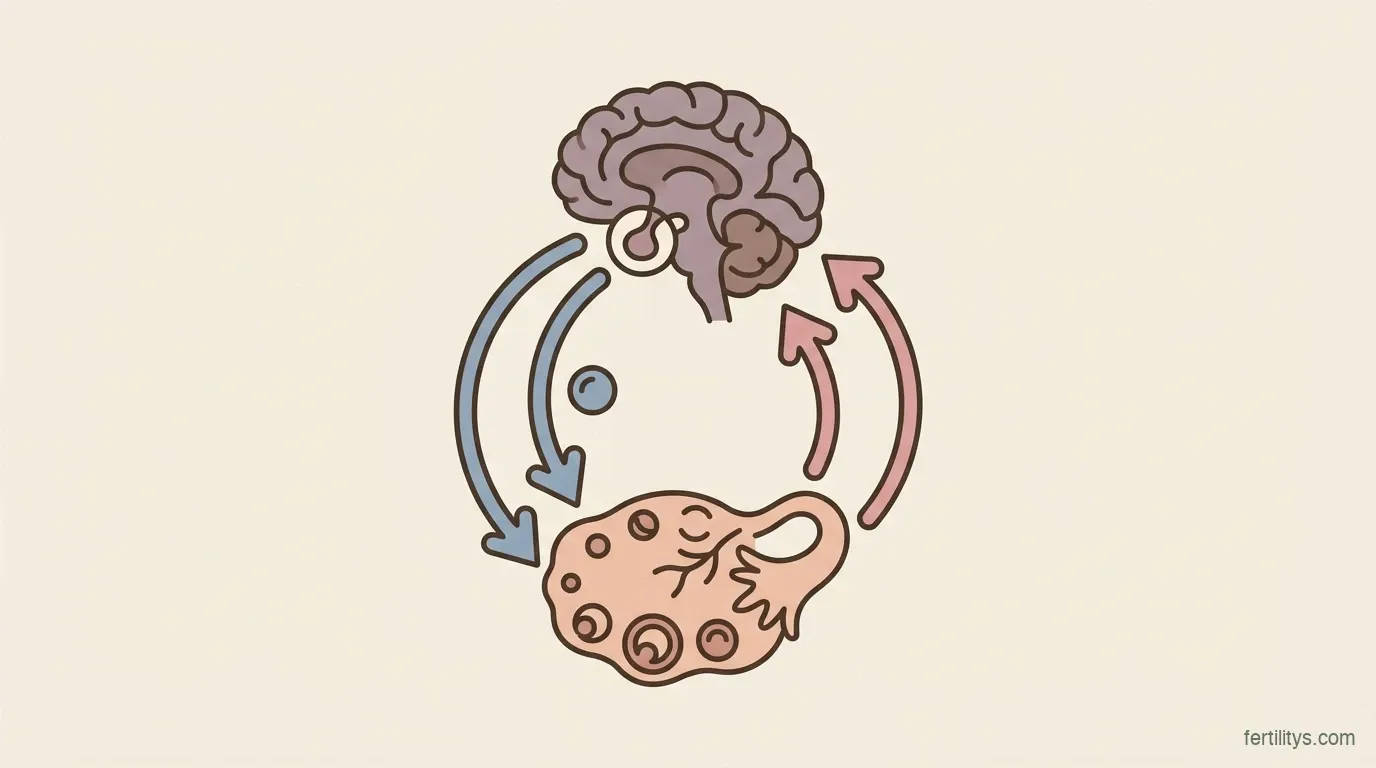
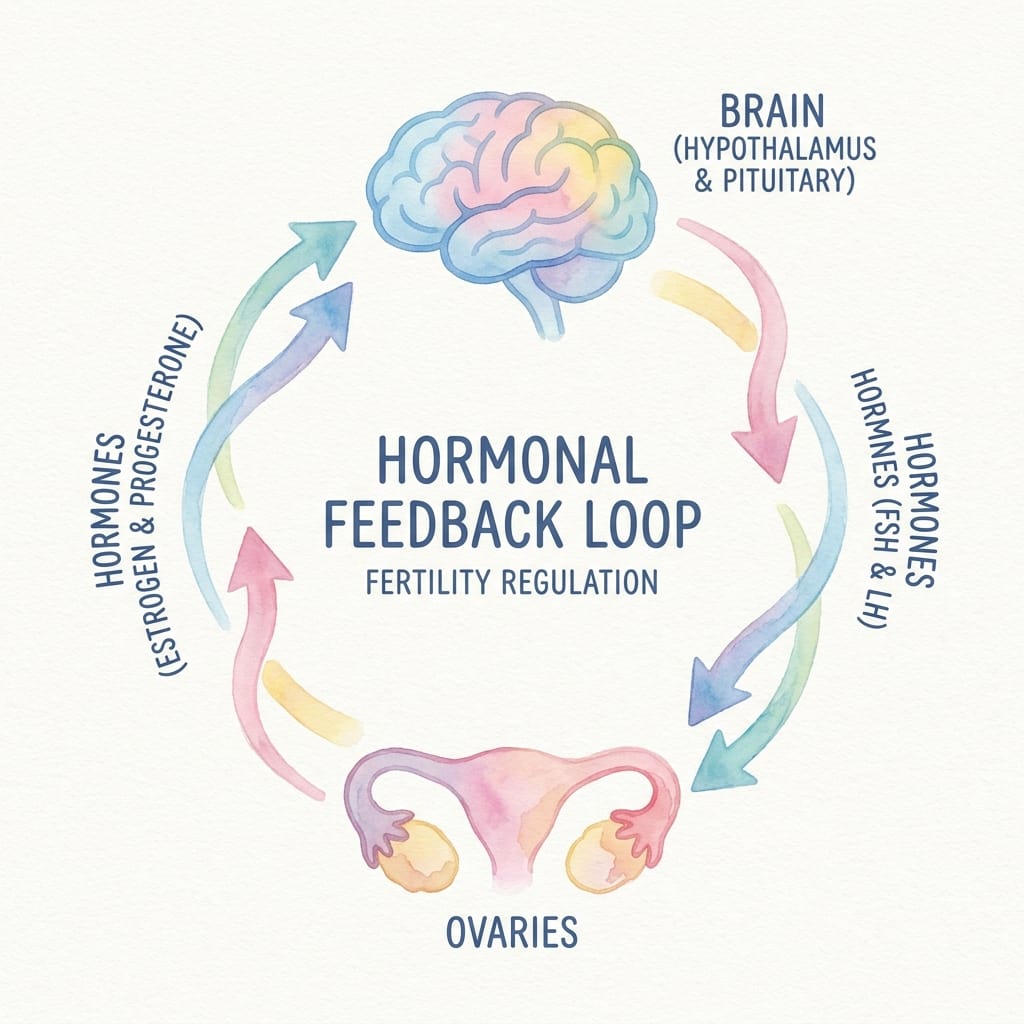
I explain FSH to my clients like this: FSH stands for follicle stimulating hormone. It's produced by your pituitary gland — a pea-sized structure at the base of your brain — and its job is to tell your ovaries to start growing follicles (the fluid-filled sacs that each contain an egg) at the beginning of each menstrual cycle.
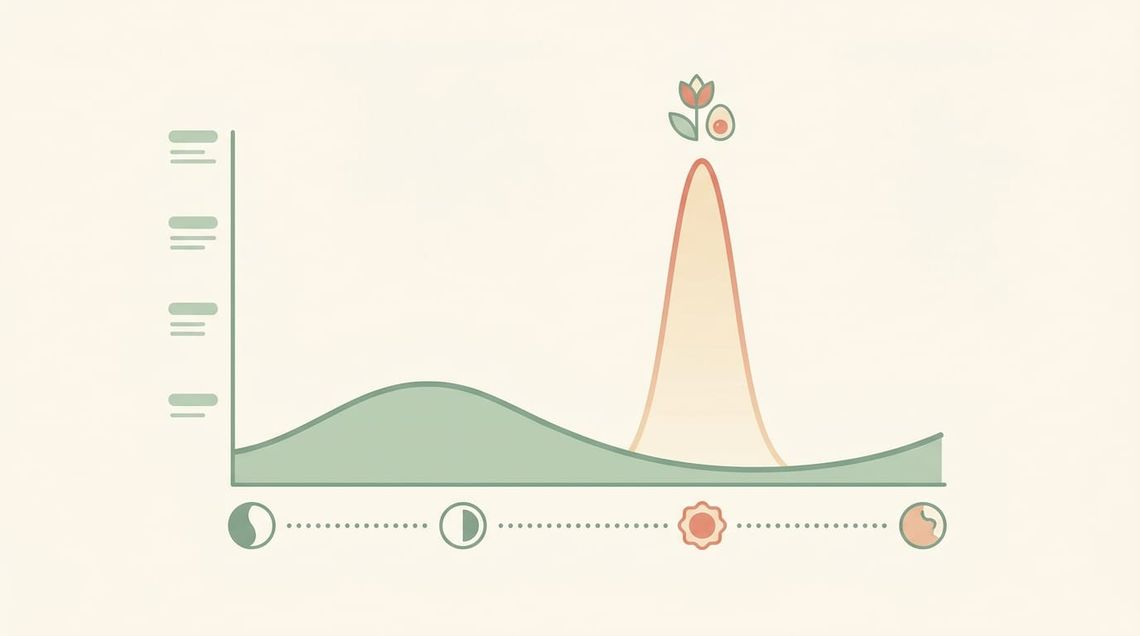
Think of FSH as the starting signal for ovulation. At the start of your cycle, FSH rises to kick things off. As follicles grow, they produce oestrogen, which tells the pituitary to ease off FSH production. It's a feedback loop — when everything's working smoothly, FSH rises, follicles grow, oestrogen rises, FSH falls, and one dominant follicle releases its egg.
When fewer follicles are available — either because of age or ovarian reserve decline — the pituitary has to work harder to get things going. That's why FSH levels tend to rise as you get older. The ovaries aren't responding as efficiently, so the brain shouts louder.
Why Is FSH Tested for Fertility?
I always include FSH in a fertility workup — it is one of the standard fertility hormones your doctor will check as part of an ovarian reserve assessment. Ovarian reserve is essentially how many eggs you have left and how well your ovaries are responding to hormonal signals.
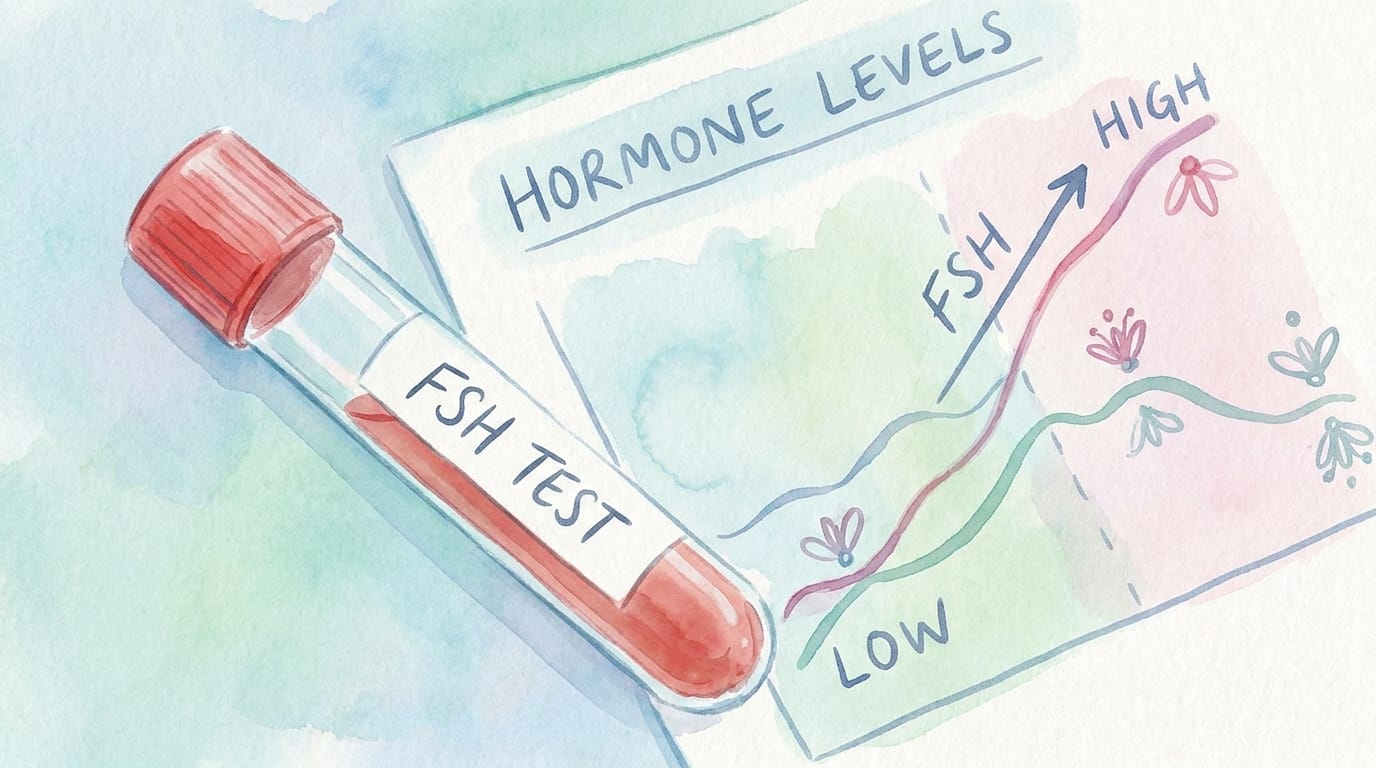
Your doctor will typically check FSH alongside:
- AMH (anti-Müllerian hormone) — gives a snapshot of remaining egg supply
- Oestradiol (oestrogen) — checked with FSH to ensure the reading isn't being artificially suppressed
- LH (luteinising hormone) — the LH:FSH ratio can indicate PCOS
- Antral follicle count (AFC) — a transvaginal ultrasound counting visible follicles
Together, these give your doctor a much clearer picture of your fertility than any single test alone. AMH and AFC measure quantity. FSH tells you something about quality and responsiveness.
When Is the Day 3 FSH Test Done?
FSH is measured on day 2 to 4 of your menstrual cycle — usually day 3, which is why you'll hear it called the "day 3 blood test." This timing matters because FSH fluctuates throughout your cycle, and the early days give the most accurate baseline reading.
You'll have a blood test, usually at your GP surgery or a fertility clinic. Results typically come back within a few days. Some clinics will also check oestradiol at the same time to make sure it's not suppressing your FSH reading.
Important: FSH can vary from month to month. A single high reading doesn't necessarily mean your ovaries are failing — it could be a temporary fluctuation. Most doctors will repeat the test on a subsequent cycle if the first result is concerning.
What Are Normal FSH Levels?
There's no single "normal" number — it depends on your age, the phase of your cycle, and the lab doing the testing. But here are the general reference ranges for day 3 FSH that most fertility clinics use:
| Age Range | Normal FSH (mIU/mL) | What It Suggests |
|---|---|---|
| Under 33 | Under 7 | Good ovarian reserve |
| 33–37 | Under 7 | Normal for age |
| 38–40 | 7–10 | Expected range |
| 41–45 | 10–15 | Declining reserve |
| Over 45 | 15–20+ | Perimenopause likely |
A rough rule of thumb: FSH under 10 is generally favourable for fertility treatment. Between 10 and 15, response to IVF stimulation may be reduced. Above 15 to 20, clinics may discuss alternative approaches like donor eggs (Nargund et al., 2015).
But here's the critical thing: FSH must be interpreted alongside your age. An FSH of 12 at age 28 is much more concerning than 12 at age 42. The same number means very different things at different ages.
What Causes High FSH?
High FSH means your pituitary gland is working overtime to try to stimulate your ovaries. It's not a cause — it's a signal. The underlying reasons include:
Natural ageing — As you approach menopause, FSH naturally rises. This is the most common cause and is completely normal.
Diminished ovarian reserve (DOR) — Fewer eggs remaining means the ovaries respond less, so the pituitary increases FSH production. This can happen at any age but becomes more common after 35.
Premature ovarian insufficiency (POI) — When ovarian function declines before age 40. POI affects roughly 1 in 100 women under 40 (Webber et al., 2016). FSH is typically above 25 to 30 mIU/mL.
Turner syndrome — A genetic condition affecting 1 in 2,500 female births where one X chromosome is partially or completely missing. FSH is very high because the ovaries don't develop properly.
Previous ovarian surgery or damage — Chemotherapy, radiation, or surgical removal of ovarian tissue can reduce ovarian reserve.
Autoimmune conditions — Some autoimmune conditions can affect ovarian function and raise FSH.
Can You Lower High FSH?
This is the question I hear most often, and I want to be honest with you. There is no proven way to permanently lower your FSH level. FSH rises because your ovaries have fewer follicles — and you can't grow more eggs. The supply you were born with is the supply you have.
That said, there are things that may help optimise your fertility despite higher FSH:
- CoQ10 supplementation — Some evidence suggests CoQ10 may improve egg quality and IVF response, particularly in women over 35 (Bentov et al., 2014). I take 200mg daily myself and recommend it to my clients.
- DHEA supplementation — Used in some fertility clinics to improve ovarian response, particularly before IVF. Evidence is mixed, and it should only be taken under medical supervision (Barad et al., 2007).
- Diet and lifestyle changes — Anti-inflammatory diets, reducing stress, optimising sleep, and avoiding toxins may support overall egg health. These won't lower your FSH, but they can improve your body's fertility environment.
- Acupuncture — Some small studies suggest it may improve IVF outcomes in women with high FSH, though the evidence base is still limited.
What I tell my clients: FSH tells you about quantity, not quality. I've worked with women whose FSH was high but whose egg quality — supported by targeted nutrition and supplementation — was better than expected. Don't let a number define your entire fertility picture.
FSH vs AMH: Which Test Matters More?
They measure different things, and you really need both.
FSH tells you how hard your body is working to stimulate your ovaries. It's an indirect measure — high FSH suggests low reserve, but it can fluctuate month to month.
AMH tells you roughly how many eggs you have left. It's produced by the small follicles in your ovaries and stays relatively stable throughout your cycle, so it can be tested on any day.
Key differences:
| Feature | FSH | AMH |
|---|---|---|
| What it measures | Ovarian responsiveness | Remaining egg count |
| When to test | Day 2-4 only | Any day of cycle |
| Stability | Can fluctuate month to month | Relatively stable |
| Higher values mean | Lower reserve (concerning) | Higher reserve (good) |
AMH is generally considered a more reliable predictor of ovarian reserve (Broer et al., 2013). But FSH gives information AMH can't — it shows how your ovaries are actually responding to stimulation, which matters for IVF planning.
The best approach? Get both tested, and let your doctor interpret them together.
What to Do After Getting Your Results
If your FSH comes back higher than expected, take a breath. Here's what I recommend:
Don't panic over a single reading. FSH fluctuates. One elevated result isn't a diagnosis — it's a flag. Ask your doctor to repeat the test in the next cycle.
Get the full panel. FSH alone doesn't tell you everything. Request AMH, oestradiol, LH, and an antral follicle count. The combination gives a much clearer picture.
Consider your timeline. If you're under 35 and have been trying for 12 months (or over 35 and trying for 6 months), it's time to see a fertility specialist regardless of your FSH result.
Don't self-supplement without guidance. I know the temptation to Google "lower FSH naturally" and start taking everything you find. But DHEA, in particular, should only be used under medical supervision — it can have side effects and may not be appropriate for everyone.
Ask about age-adjusted interpretation. Some clinics use universal FSH cut-offs (like "anything under 15 is normal") without accounting for age. An FSH of 12 at 28 deserves a different conversation than 12 at 42. Ask your doctor what your result means for your age.
The Bottom Line
FSH is one piece of your fertility puzzle — important, but not the whole picture. It tells your doctor how hard your ovaries are being pushed to respond, and a high result can be concerning. But it's not a verdict. It's a data point that should be interpreted alongside AMH, AFC, your age, and your full medical history.
If your FSH is higher than expected, it doesn't mean you can't get pregnant. It means your doctor needs to factor it into your treatment plan. Many women with elevated FSH go on to have healthy pregnancies — sometimes naturally, sometimes with a little help.
Frequently Asked Questions
▸What FSH level is too high to get pregnant?
Most fertility clinics consider FSH under 10 mIU/mL on day 3 to be favourable. Between 10 and 15, IVF response may be reduced. Above 15 to 20, clinics may discuss alternative approaches like donor eggs. However, these are guidelines — women with higher FSH have conceived naturally and through IVF. The number needs context with your age and other hormones.
▸Can high FSH go back to normal?
FSH can fluctuate month to month, so a single high reading might not be repeated. However, a consistently elevated FSH generally doesn't return to "normal" because it reflects a genuine decline in ovarian reserve. Some supplements (like DHEA) have shown promise in temporarily improving IVF response, but there's no evidence they permanently lower FSH levels.
▸Does high FSH mean I'm going through menopause?
Not necessarily. While high FSH is a hallmark of menopause (FSH above 25 to 30 consistently), elevated FSH in younger women usually indicates diminished ovarian reserve rather than menopause. Premature ovarian insufficiency (POI) — ovarian decline before 40 — is different from menopause. Some women with POI still ovulate occasionally and can conceive, though fertility is significantly reduced.
▸Should I get my FSH tested if I'm not trying to conceive yet?
If you're considering freezing your eggs or planning to delay pregnancy past 35, a baseline fertility panel (including FSH, AMH, and AFC) can give you useful information about your current ovarian reserve. It's not essential for everyone, but it can help with family planning decisions. Talk to your GP about what's right for your situation.
▸What's the difference between FSH and LH?
Both are produced by the pituitary gland, but they do different things. FSH stimulates follicle growth in the first half of your cycle. LH triggers ovulation mid-cycle (the LH surge). The LH:FSH ratio can also be informative — in PCOS, LH is often significantly higher than FSH (ratio above 2:1), which can be a diagnostic clue.
▸Can stress affect my FSH levels?
Chronic stress can affect the hypothalamic-pituitary-gonadal axis, which controls FSH production. Severe stress or rapid weight loss can suppress FSH, leading to absent periods (hypothalamic amenorrhoea). However, everyday stress is unlikely to cause a clinically significant FSH change. If your periods are irregular and your FSH is abnormal, your doctor will investigate other causes first.
References
- Nargund G, Cheng WC, Parsons J. Is diminished ovarian reserve (DOR) an egg problem? Reprod Biomed Online. 2015;31(6):727-729. PubMed
- Bentov Y, Yavorska T, Esfandiari N, Jurisicova A, Casper RF. Mitochondrial nutrients and reproductive ageing. Fertil Steril. 2014;101(2):497-503. PubMed
- Barad DH, Gleicher N. Effect of dehydroepiandrosterone on oocyte and embryo yields, embryo grade and cell number in IVF. Hum Reprod. 2007;22(6):1668-1673. PubMed
- Webber L, Davies M, Anderson R, et al. ESHRE Guideline: management of women with premature ovarian insufficiency. Hum Reprod. 2016;31(5):926-937. PubMed
- Broer SL, Broekmans FJ, Laven JS, Fauser BC. Anti-Müllerian hormone: ovarian reserve testing and its potential clinical implications. Hum Reprod Update. 2014;20(5):688-701. PubMed
- Lobo RA. Early ovarian ageing: a hypothesis. What is early ovarian ageing? Hum Reprod. 2003;18(9):1762-1764. PubMed
- NHS. Fertility Tests — Blood Tests. NHS
- Cleveland Clinic. Follicle-Stimulating Hormone (FSH). Cleveland Clinic

Medical Disclaimer
This article is for informational purposes only and does not constitute medical advice. Always consult with a qualified healthcare professional for interpretation of your fertility test results. If you have concerns about your FSH levels or fertility, please speak with your GP or a fertility specialist.
Written by

Subscribe to Fertilitys
All my Free Resources. No spam. Unsubscribe anytime.