Foods to Avoid in Pregnancy: The Complete List
The complete, evidence-based list of foods to avoid during pregnancy — and which ones are actually safe despite what you might read online.

📌 Key Takeaways
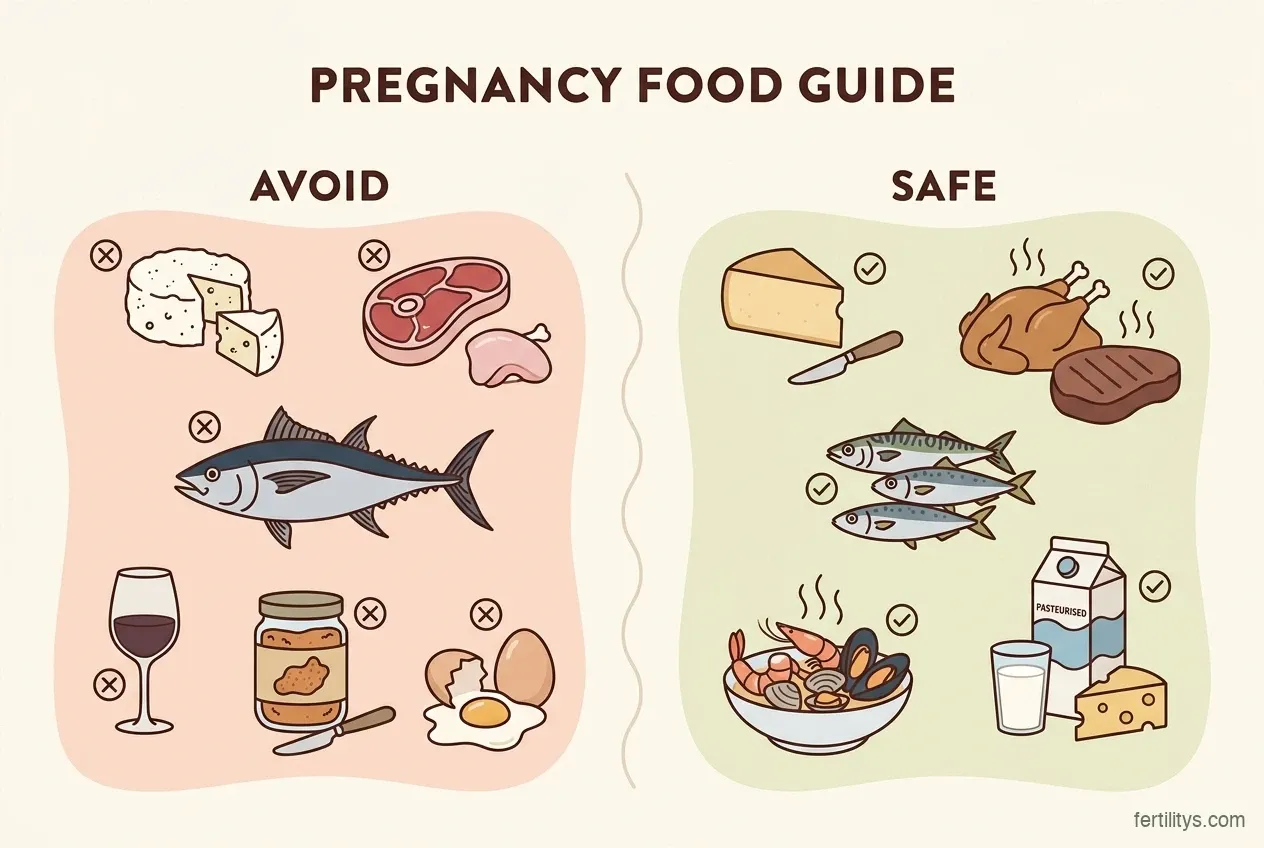
- Raw or undercooked meats, eggs, and fish carry a risk of salmonella, listeria, and toxoplasmosis — all of which can seriously harm your developing baby.
- Soft cheeses made from unpasteurised milk (like brie, camembert, and blue-veined varieties) should be avoided unless the label confirms they're pasteurised.
- High-mercury fish such as shark, swordfish, king mackerel, and tilefish should be eliminated; stick to low-mercury options like salmon, sardines, and cod.
- Alcohol should be completely avoided during pregnancy — there is no known safe amount, according to current medical guidelines.
- When in doubt about a food, check with your midwife or doctor — it's always better to ask than to worry in silence.
The moment you see those two lines, your brain splits into two versions of you. One is glowing, dreaming about tiny socks. The other is frantically googling "can I eat brie" at midnight. I've been there — and I get it.
I always tell my clients this good news: the list of foods to actually avoid in pregnancy is shorter than you think. And most of the reasoning is clear once you understand why each item is on the list. Let me walk you through it properly, so you can stop second-guessing every meal.
Why Certain Foods Are Off-Limits
I explain to my clients that it's not about being fussy. There are three main reasons certain foods are restricted during pregnancy:
1. Listeria — This is the big one. Listeria monocytogenes is a bacterium that thrives in cold, moist environments — exactly the kind of places certain soft cheeses and deli meats live. What makes listeria particularly dangerous in pregnancy is that your immune system is naturally suppressed to protect the developing baby. This means you're more susceptible to infection, and listeria can cross the placenta. It can cause miscarriage, stillbirth, or severe infection in a newborn (Silk et al., 2012).
2. Toxoplasma — A parasite found in undercooked meat, cat faeces, and contaminated soil. If you catch toxoplasmosis for the first time during pregnancy, it can affect your baby's brain and eyes (Montoya & Liesenfeld, 2004).
3. Mercury and pollutants — High levels of mercury in certain fish can damage your baby's developing nervous system. Mercury accumulates up the food chain, which is why larger predatory fish are higher risk.
Understanding the "why" makes the list feel less arbitrary. These aren't random rules — they're about protecting you and your baby from specific, well-documented risks.
The Complete List: Foods to Avoid
Unpasteurised Dairy and Soft Cheeses
Avoid: Mould-ripened soft cheeses like brie, camembert, and chèvre (unless cooked until steaming hot). Soft blue-veined cheeses like gorgonzola, Danish blue, and Roquefort. Unpasteurised milk, cream, and ice cream.
Why: These cheeses have high moisture content and a surface where listeria can grow — particularly if made with unpasteurised milk. The NHS advises avoiding both pasteurised and unpasteurised mould-ripened soft cheeses because the white rind provides an environment for bacterial growth even after pasteurisation (NHS, 2024).
Safe alternatives: Cheddar, parmesan, stilton, cottage cheese, mozzarella, feta (if pasteurised), halloumi, cream cheese, and ricotta are all fine. Hard cheeses and cooked soft cheeses are safe.
Raw and Undercooked Meat
Avoid: Rare or medium-rare steak, raw cured meats (prosciutto, salami, carpaccio, parma ham), undercooked poultry and pork.
Why: Risk of toxoplasmosis (from raw meat) and salmonella. While toxoplasmosis is rare in the UK (roughly 350 cases per year in pregnant women), the consequences for the baby can be serious.
Safe alternative: Cook all meat until there's no pink inside and juices run clear. Cured meats are safe if cooked — like pepperoni on a pizza that's been properly baked.
High-Mercury Fish
Avoid: Shark, swordfish, and marlin. Limit tuna to no more than 4 medium cans (140g each) per week, or 2 fresh tuna steaks per week.
Why: Mercury accumulates in large predatory fish and can damage your baby's developing nervous system. The Food Standards Agency (FSA) sets these limits based on mercury levels found in UK fish stocks.
Safe alternatives: Salmon, sardines, mackerel, trout, anchovies, herring — these are actually excellent during pregnancy because they're rich in omega-3 fatty acids (DHA), which support your baby's brain and eye development. Aim for 2 portions of fish per week, including 1 oily fish.
Raw Shellfish
Avoid: Raw oysters, raw mussels, raw clams.
Why: Risk of bacterial and viral contamination including norovirus and vibrio. Shellfish can also carry toxins from algal blooms.
Safe alternative: Cooked shellfish is fine — just make sure it's thoroughly cooked and served hot.
Liver and Liver Products
Avoid: Liver pâté (including vegetable pâté), liver sausage, liver-based products.
Why: Liver contains very high levels of retinol (preformed vitamin A). Too much vitamin A during pregnancy can cause birth defects. A single portion of liver can contain 3-4 times the recommended daily limit of vitamin A for pregnant women (FSA, 2023).
Safe alternative: Beta-carotene from vegetables (carrots, sweet potatoes, spinach) converts to vitamin A in your body as needed — there's no upper limit for plant-based vitamin A.
Raw or Partially Cooked Eggs
Avoid: Raw eggs, homemade mayonnaise, homemade mousse, soft-boiled eggs (unless British Lion stamped — see below).
Why: Risk of salmonella. In the UK, eggs produced under the British Lion Code of Practice (stamped with a red lion) are safe to eat runny or raw because the hens have been vaccinated against salmonella. Check for the stamp.
Safe alternative: British Lion eggs can be eaten soft-boiled or in homemade mayonnaise. If the eggs don't have the lion stamp, cook them until both white and yolk are solid.
Alcohol
Avoid: There is no known safe amount of alcohol during pregnancy. The Chief Medical Officers for the UK recommend avoiding alcohol completely (NHS, 2024).
Why: Alcohol crosses the placenta and can affect your baby's development. Foetal alcohol spectrum disorders (FASD) are the most common preventable cause of developmental disability in the UK.
Surprising Foods That Need Attention
Some items on the "avoid" list catch people off guard:
Pâté — All types, including vegetable pâté, because they can contain listeria. Even refrigerated pâté is a risk.
Smoothies and fresh juices — Only if freshly made and consumed immediately. Pre-packaged unpasteurised juices can harbour bacteria.
Pre-made salads — Bagged salads, deli salads, and salad bars can carry listeria and other bacteria. Wash salad thoroughly at home, and avoid pre-made salads from delis.
Liquorice — Excessive liquorice consumption during pregnancy has been linked to developmental issues in some studies. The NHS advises limiting intake (NHS, 2024).
Herbal teas — Most are fine in moderation, but some (like liquorice root tea) should be limited. Avoid excessive consumption of raspberry leaf tea until the third trimester, as it can stimulate the uterus.
Foods That Are Actually Safe (Despite What You Might Read)
The internet is full of scare stories. Let me clear up some common myths:
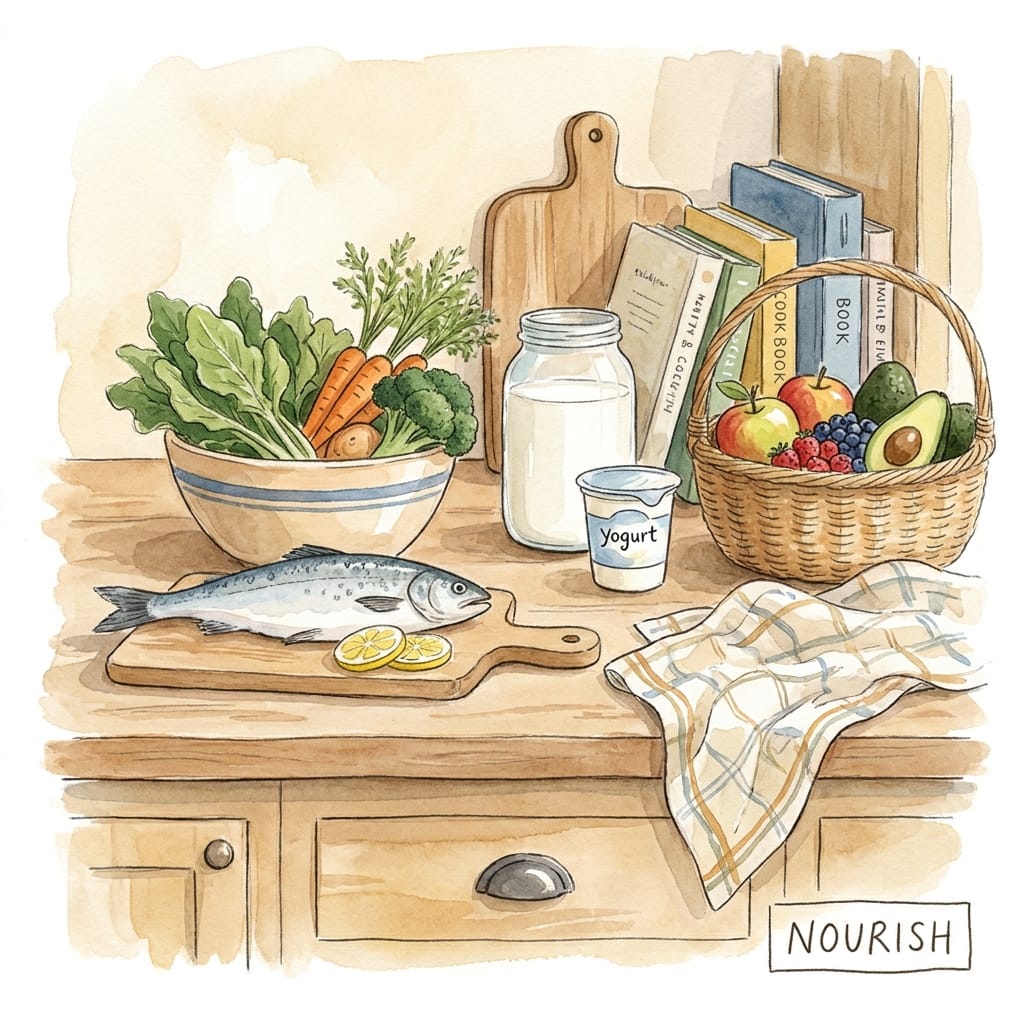
Hard cheese — Cheddar, stilton, parmesan, and gouda are all perfectly safe, even if unpasteurised. The low moisture content prevents bacterial growth.
Mozzarella — Safe whether cooked or raw (as long as it's pasteurised). Pizza mozzarella is fine.
Peanuts — Unless you have a peanut allergy, there's no need to avoid them during pregnancy. The old advice to avoid peanuts during pregnancy has been updated (NHS, 2024).
Coffee — You don't need to give it up entirely. Limit caffeine to 200mg per day (roughly 2 mugs of instant coffee or 1 mug of brewed).
Sushi — Vegetarian sushi is fine. Fish-based sushi is safe if the fish has been previously frozen (which it usually is in UK restaurants). Raw fish that hasn't been frozen should be avoided.
Dani Recommends: Pregnancy-Safe Snack Box
Food Safety Rules for Pregnancy
Beyond the specific foods to avoid, there are general food safety habits that matter more during pregnancy:
- Wash your hands before preparing food and after handling raw meat
- Store food properly — keep your fridge below 5°C, separate raw and cooked foods
- Reheat leftovers thoroughly — until steaming hot, and don't reheat more than once
- Check use-by dates — don't take risks with food that's close to expiry
- Wash fruit and vegetables thoroughly, especially if you're buying pre-washed salads
- Be cautious at buffets and salad bars — food that's been sitting out is a listeria risk
The Bottom Line
Most of the foods on the "avoid" list are on there for specific, well-documented reasons — mostly listeria and mercury. The good news is that the safe list is much longer than the unsafe one. You can still eat delicious, varied food throughout your pregnancy without stressing over every bite.
Focus on the high-risk items (unpasteurised dairy, raw meat, high-mercury fish, alcohol) and don't worry about the rest. And if you accidentally eat something you shouldn't have — don't panic. The risk from a single exposure is low. Mention it to your midwife at your next appointment, and they'll advise if any monitoring is needed.
Frequently Asked Questions
▸Can I eat brie if it's cooked?
Yes. Mould-ripened soft cheeses like brie and camembert are safe to eat during pregnancy if they've been cooked until steaming hot throughout. Baked brie, pizza with camembert, or any dish where the cheese has been fully heated is fine. The heat kills listeria.
▸I ate something I shouldn't have — should I be worried?
Don't panic. The risk from a single accidental exposure to any restricted food is very low. Listeria is rare (roughly 150-200 cases per year in the UK population), and most exposures don't result in infection. If you develop flu-like symptoms (fever, muscle aches, chills) within a few days, contact your GP. Otherwise, mention it at your next midwife appointment.
▸Is sushi safe during pregnancy?
Vegetarian sushi is completely safe. Fish-based sushi is safe if the fish has been previously frozen (which virtually all UK restaurant sushi is — raw fish served in restaurants must be frozen first to kill parasites). Avoid raw fish that hasn't been frozen, and steer clear of shellfish sushi. Smoked salmon sushi is also fine.
▸Do I need to avoid peanuts during pregnancy?
No. The old advice to avoid peanuts during pregnancy has been updated. Unless you have a peanut allergy yourself, there's no need to avoid them. In fact, eating nuts during pregnancy may actually reduce the risk of your child developing nut allergies (Frazier et al., 2014). They're also an excellent source of protein, healthy fats, and folate.
▸How much caffeine can I have while pregnant?
The NHS recommends limiting caffeine to 200mg per day during pregnancy. That's roughly 2 mugs of instant coffee, 1 mug of brewed filter coffee, or 4 cups of tea. Remember that caffeine is also in chocolate, energy drinks, and some medications (like some cold and flu tablets). High caffeine intake has been linked to low birth weight and increased miscarriage risk.
▸Is honey safe during pregnancy?
Yes, honey is safe during pregnancy. Honey can contain spores of Clostridium botulinum, but an adult's digestive system prevents these spores from growing. (The restriction on honey applies only to babies under 12 months, whose gut flora isn't mature enough to handle the spores.)
References
- Silk BJ, Date KA, Jackson KA, et al. Invasive listeriosis in the Foodborne Diseases Active Surveillance Network, USA, 2004-2009. Clin Infect Dis. 2012;54(Suppl 5):S391-S398. PubMed
- Montoya JG, Liesenfeld O. Toxoplasmosis. Lancet. 2004;363(9425):1965-1976. PubMed
- Frazier AL, Camargo CA Jr, Malspeis S, Willett WC, Young MC. Prospective study of peripregnancy consumption of peanuts or tree nuts by mothers and the risk of peanut or tree nut allergy in their offspring. JAMA Pediatr. 2014;168(2):156-162. PubMed
- NHS. Foods to Avoid in Pregnancy. NHS
- Food Standards Agency. Eating While You're Pregnant. FSA
- Tommy's. Foods to Avoid in Pregnancy. Tommy's
- Consumer Reports. Foods to Avoid While Pregnant to Reduce Listeria Risk. Consumer Reports
Medical Disclaimer
This article is for informational purposes only and does not constitute medical advice. Always consult with your midwife or GP for personalised dietary guidance during pregnancy. If you have a food allergy, intolerance, or specific health condition, your dietary needs may differ from the general guidance provided here.
Written by
Subscribe to Fertilitys
All my Free Resources. No spam. Unsubscribe anytime.