5 Weeks Pregnant: Symptoms, Baby Size, and What to Expect
What's happening at 5 weeks and what to expect next


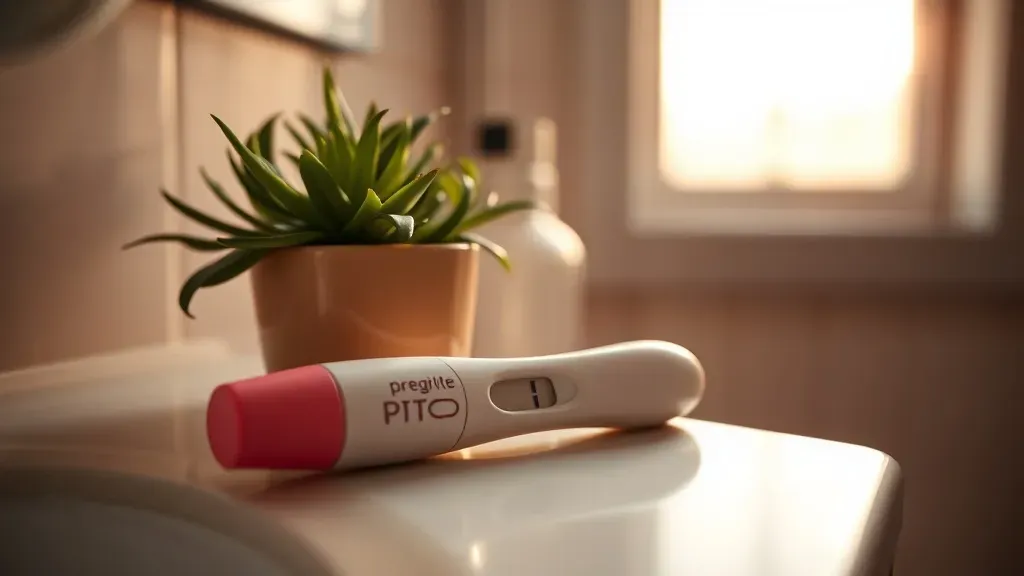
Five weeks. You might have only just found out — maybe your period was a few days late, maybe the test line was so faint you stood under four different lights squinting at it. However you got here, this is real. You're pregnant.
I remember this week vividly. After two chemical pregnancies, I was terrified to feel excited. Every twinge sent me spiralling. If you're feeling a complicated mix of hope and fear right now, that's completely normal — and you're not alone in it.
Your Baby at 5 Weeks
At five weeks, your baby — technically still an embryo — is about 2mm long, roughly the size of a sesame seed. It doesn't look like much yet, but what's happening inside is extraordinary.

The embryo has implanted into your uterine wall and is now receiving nutrients and oxygen through the developing placenta. Three distinct layers of cells are forming that will become every organ, tissue, and system in your baby's body:
Ectoderm (outer layer) — will become the brain, spinal cord, nerves, and skin. The neural tube, which develops into the brain and spine, is already starting to form. This is exactly why folate is so critical right now — it supports neural tube closure, which happens between weeks 4 and 6.
Mesoderm (middle layer) — will become the heart, muscles, bones, kidneys, and blood vessels. The heart is actually one of the first organs to develop, and by the end of week 5, it may already be beating — a tiny flutter at around 80–100 beats per minute (Doubilet & Benson, 2005, Radiology).
Endoderm (inner layer) — will become the lungs, liver, pancreas, and digestive system.
Symptoms at 5 Weeks Pregnant
Some women feel distinctly different by week 5. Others feel absolutely nothing. Both are normal — the presence or absence of symptoms at this stage says very little about how your pregnancy is progressing.
Fatigue — often the first symptom women notice. Progesterone levels are climbing rapidly, and this hormone has a sedative effect. If you feel like you could sleep for 14 hours straight, that's your hormones doing their job. Don't fight it — rest when you can.
Breast tenderness — your breasts may feel sore, swollen, or heavy. The areolae may darken slightly. This is caused by rising oestrogen and progesterone preparing breast tissue for eventual milk production.
Mild cramping — light period-like cramping is common and usually caused by your uterus stretching and the embryo bedding in. It should be mild and intermittent. If cramping is severe or one-sided, contact your GP or early pregnancy unit.
Frequent urination — your kidneys are already filtering more blood (blood volume increases by up to 50% during pregnancy), and the growing uterus puts pressure on your bladder. Yes, already at 5 weeks.
Nausea — morning sickness can start as early as week 5, though it's more common from week 6 onwards. Despite the name, it can strike at any time of day. Rising hCG levels are the primary trigger (Niebyl, 2010, BMJ).
No symptoms at all — perfectly normal. I've worked with plenty of women who felt nothing until week 7 or 8. Symptom intensity doesn't correlate with pregnancy viability.
hCG Levels at 5 Weeks
Human chorionic gonadotropin (hCG) is the hormone your body produces after implantation — it's what pregnancy tests detect. At 5 weeks, typical hCG levels range from about 200 to 7,000 mIU/mL, though there's enormous variation between healthy pregnancies.
What matters more than a single hCG number is the doubling time. In early pregnancy, hCG should roughly double every 48–72 hours. A study by Barnhart et al. (2004) in Obstetrics & Gynecology found that the minimum expected rise for a viable intrauterine pregnancy is 53% over 48 hours.
If you've had hCG blood tests and you're obsessively tracking the numbers — I've been there. Try to focus on the trend rather than the absolute value. A single measurement tells you very little.
What to Do This Week
Book your first midwife appointment — in the UK, contact your GP surgery to self-refer to midwifery services. Your booking appointment usually happens between weeks 8–12. In the US, call your OB-GYN to schedule your first prenatal visit.
Start prenatal vitamins if you haven't already — a good prenatal with at least 400mcg folate (or methylfolate if you have MTHFR variants) is the single most important supplement right now. I personally took Wild Nutrition's Fertility supplement throughout my pregnancy.
Avoid alcohol, smoking, and recreational drugs — from this point forward. The neural tube is forming now, and these substances can interfere with that development. No amount of alcohol has been proven safe in pregnancy (RCOG, 2015).
Continue moderate exercise — if you were active before pregnancy, it's safe and beneficial to continue. Walking, swimming, yoga, and light strength training are all excellent. Avoid contact sports, overheating, and lying flat on your back for extended periods.
Eat well — focus on folate-rich foods (dark leafy greens, lentils, citrus), iron (lean red meat, beans, spinach), and omega-3 fatty acids (salmon, sardines, walnuts). If nausea is already hitting, eat small frequent meals and keep plain crackers nearby.
When to Worry
Most cramping and mild discomfort at 5 weeks is completely normal. But contact your GP or early pregnancy unit if you experience:
Heavy bleeding — soaking a pad in an hour, bright red, with clots. Light spotting (brown or pink) is common and often harmless, but heavy bleeding needs assessment.
Severe one-sided pain — could indicate an ectopic pregnancy, where the embryo implants outside the uterus (usually in a fallopian tube). This affects about 1 in 80 pregnancies (NICE, 2019) and needs urgent medical attention.
Fainting or dizziness with pain — especially combined with shoulder tip pain. This can indicate internal bleeding from an ectopic pregnancy and is a medical emergency.
I had a lot of anxiety in early pregnancy, especially after my chemical pregnancies. If you're feeling overwhelmed by fear, it's worth talking to your midwife or GP about early reassurance scans. Some early pregnancy units offer them from week 6 onwards.
The Bottom Line
Week 5 is a week of quiet, powerful beginnings. Your baby's heart is forming, neural development is underway, and your body is already adapting in dozens of invisible ways. Whether you're overjoyed, terrified, or somewhere in between — that's all valid.
Take your folate, get some rest, and try to be patient with yourself. The first few weeks are the hardest to get through emotionally, especially if you've experienced loss before. You'll know more as the weeks progress.
References
- Sapra KJ, et al. (2017). Signs and symptoms of early pregnancy loss: a systematic review. Reproductive Sciences, 24(5), 681-694. PubMed
- Gnoth C & Johnson S (2014). Strips of Hope: accuracy of home pregnancy tests and new developments. Geburtshilfe und Frauenheilkunde, 74(7), 661-669. DOI
- NICE (2021). Antenatal care: routine care for healthy pregnant women. Clinical guideline NG201. NICE
▸Is it normal to have no symptoms at 5 weeks pregnant?
Yes, completely normal. Many women don't notice symptoms until weeks 6–8. Symptom intensity doesn't indicate pregnancy health — some perfectly viable pregnancies have minimal early symptoms.
▸Can you see anything on an ultrasound at 5 weeks?
A transvaginal ultrasound may show a gestational sac at 5 weeks, but it's often too early to see an embryo or heartbeat. Most clinicians wait until 6–7 weeks for a viability scan to avoid unnecessary worry.
▸Is cramping at 5 weeks normal?
Mild, intermittent cramping is very common and usually caused by the uterus expanding and the embryo implanting. Severe, one-sided, or persistent pain should be assessed by a healthcare professional to rule out ectopic pregnancy.
▸What should hCG be at 5 weeks?
hCG at 5 weeks typically ranges from 200 to 7,000 mIU/mL, but there's huge variation. The doubling time (should roughly double every 48–72 hours) matters more than a single number.
References
- Doubilet PM, Benson CB (2005). First, do no harm... to early pregnancies. Journal of Ultrasound in Medicine, 24(5), 583-585.
- Barnhart KT, et al. (2004). Symptomatic patients with an early viable intrauterine pregnancy: hCG curves redefined. Obstetrics & Gynecology, 104(1), 50-55.
- Niebyl JR (2010). Nausea and vomiting in pregnancy. New England Journal of Medicine, 363(16), 1544-1550.
- NICE (2019). Ectopic pregnancy and miscarriage: diagnosis and initial management. NG126.
- RCOG (2015). Alcohol and pregnancy. Patient information leaflet. Royal College of Obstetricians and Gynaecologists.
⚕️ Medical Disclaimer
This article is for informational purposes only and does not constitute medical advice. Always consult a qualified healthcare professional about your pregnancy care.
Written by

Subscribe to Fertilitys
All my Free Resources. No spam. Unsubscribe anytime.