Omega-3 for Fertility and Pregnancy: The Evidence-Based Guide
How omega-3 fatty acids support egg quality, sperm health, and pregnancy outcomes — plus the best food sources, supplement dosages, and what to look for on the label.


Why omega-3 matters more than you think
If I had to pick one supplement that most of my clients aren't getting enough of, it would be omega-3. Not because it's a miracle cure — there isn't one — but because the gap between what most people consume and what the research suggests is optimal for fertility is genuinely large.
The modern Western diet is heavy in omega-6 fatty acids (from vegetable oils, processed foods, grain-fed meat) and light on omega-3s. The ideal ratio is roughly 1:1 to 4:1 omega-6 to omega-3. Most people in the UK eat closer to 15:1 or even 20:1. That imbalance promotes chronic, low-grade inflammation — and inflammation is bad news for every aspect of reproductive health, from egg quality to implantation to maintaining a pregnancy.
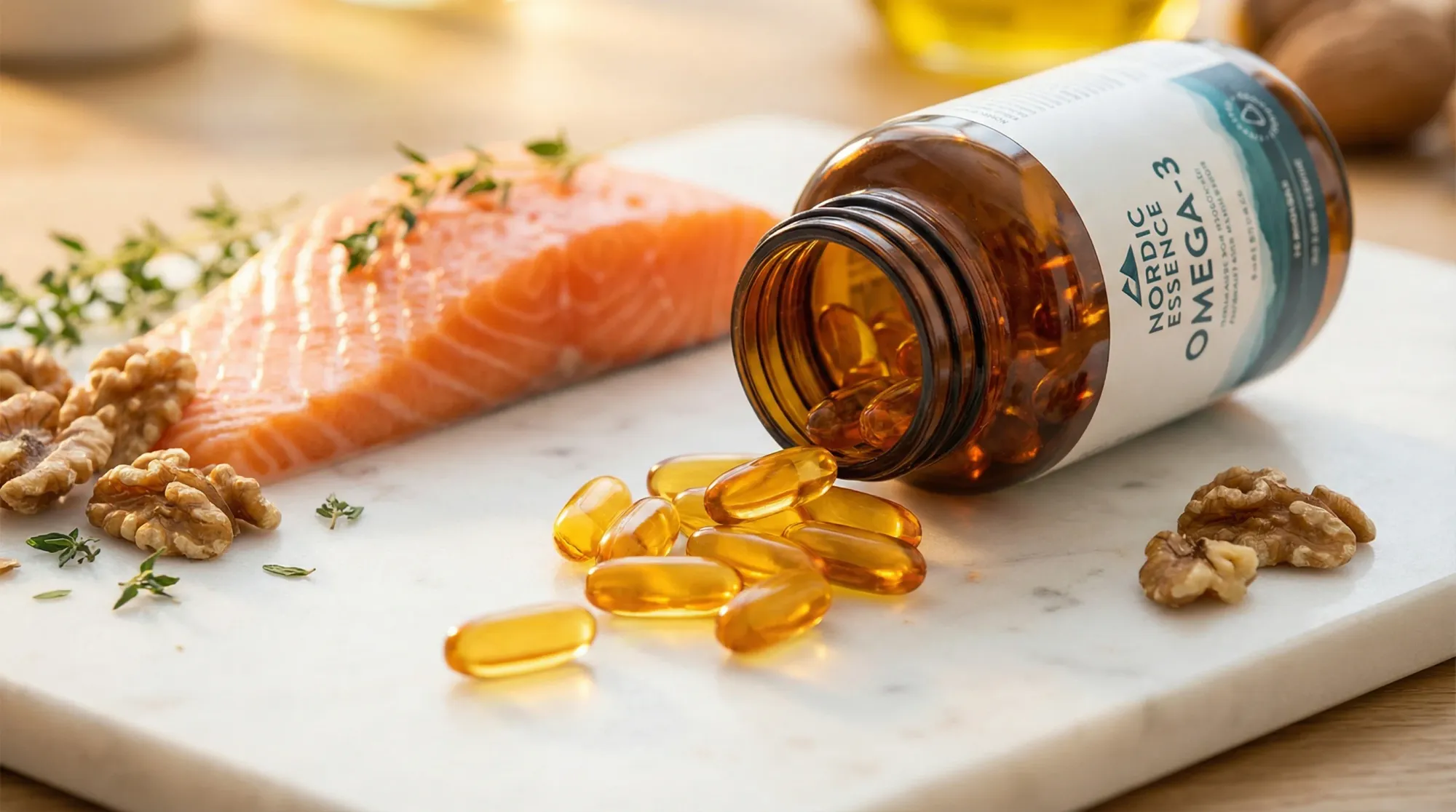
I think the reason omega-3 gets overlooked is that it doesn't have the "fertility supplement" branding. It's not marketed with pictures of babies on the bottle. It's just… fish oil. But when you look at the breadth of evidence — egg quality, sperm health, pregnancy outcomes, baby's brain development — it touches more bases than almost any other single nutrient. And most people I see in clinic are running on empty.
What I find encouraging is how achievable this is to fix. You don't need a radical diet overhaul. Two portions of oily fish a week and a decent supplement will close the gap for most people. The research is clear, the practical steps are simple, and the benefits extend well beyond fertility into your overall health. So let's break it down properly.
EPA, DHA, and ALA — what's the difference?
Not all omega-3s are equal, and this is where a lot of confusion lives. There are three main types, and understanding the distinction will save you money and help you make better choices:
| Type | Full Name | Best Sources | Fertility Relevance |
|---|---|---|---|
| DHA | Docosahexaenoic acid | Oily fish, algae oil | Egg quality, embryo development, baby's brain and eye development during pregnancy |
| EPA | Eicosapentaenoic acid | Oily fish, algae oil | Anti-inflammatory, hormonal balance, uterine blood flow, sperm quality |
| ALA | Alpha-linolenic acid | Flaxseeds, chia seeds, walnuts | Precursor to EPA/DHA, but conversion rate in the body is very low (5–10%) |
DHA and EPA are the forms your body can use directly. ALA from plant sources needs conversion, which is inefficient.
This distinction matters because a lot of people tell me they're "getting plenty of omega-3" because they put chia seeds on their porridge or cook with rapeseed oil. And those are good habits — genuinely. But chia seeds provide ALA, and your body converts ALA to the usable DHA and EPA at a rate of roughly 5–10%. For some people, particularly those with certain genetic variants, it's even lower.
So 2,500mg of ALA from a tablespoon of flaxseed might give you 125–250mg of usable DHA+EPA. That's not nothing, but it's a fraction of what you'd get from a single portion of salmon. If you eat fish, prioritise that. If you don't — and plenty of people don't — you need a direct DHA+EPA supplement from either fish oil or algae. Relying on ALA conversion alone is like trying to fill a bath with a slow drip.
The evidence for female fertility
A 2024 meta-analysis in Reproductive BioMedicine Online reviewed the effect of omega-3 supplementation and dietary intake on fertility outcomes in women. The findings were encouraging across several areas (Bender et al., 2024):
Egg quality. Omega-3 fatty acids are a structural component of cell membranes — including the membranes of your eggs. DHA in particular helps maintain membrane fluidity, which sounds like a minor technical detail but is actually crucial. A more fluid membrane allows for better cellular signalling, proper chromosome division during meiosis, and smoother fertilisation. Think of it like this: a stiff, inflexible membrane makes everything harder for the cell. A fluid, omega-3-rich membrane lets the cell function as it should.
A 2022 systematic review in the European Journal of Obstetrics & Gynecology found that women with higher omega-3 intake had improved oocyte quality and fertilisation rates during IVF. This is consistent with what we see in animal studies, where omega-3 supplementation improves follicular fluid quality and oocyte maturation.
Hormonal balance. EPA helps regulate prostaglandin production — the hormone-like compounds that influence inflammation, blood flow, and uterine contractions. The body produces different types of prostaglandins depending on whether it has more omega-6 or omega-3 available. Omega-6-derived prostaglandins tend to be more pro-inflammatory; omega-3-derived ones are anti-inflammatory.
By shifting the prostaglandin balance, omega-3s can help create a more favourable uterine environment for implantation. This is especially relevant if you have conditions driven by inflammation — endometriosis, adenomyosis, or PCOS. It doesn't replace medical treatment, but it creates a better baseline.
Ovarian reserve and age-related decline. Some animal studies suggest omega-3 supplementation may slow age-related decline in egg quality. A 2022 mouse study found that DHA supplementation improved oocyte quality in older mice and reduced mitochondrial dysfunction during egg maturation. Human evidence is still limited, but the biological mechanism is plausible — omega-3s support mitochondrial function, and mitochondrial energy production is one of the key factors in egg quality decline with age. If you're 35+, this is another reason omega-3 deserves a place in your protocol.
IVF outcomes. A 2022 cohort study from the EARTH study (one of the largest prospective studies on diet and fertility) found that women and men with higher intakes of long-chain omega-3 fatty acids — primarily from seafood — had better assisted reproduction outcomes, including higher clinical pregnancy rates (Mínguez-Alarcón et al., 2022). What I find notable about this study is that it measured dietary intake, not just supplementation — suggesting that food-based omega-3 is genuinely effective, not just supplement-based.
The inflammation connection
I want to spend a moment on this because it's central to why omega-3 matters for fertility specifically — not just general health.
Chronic low-grade inflammation is increasingly recognised as a factor in subfertility. It doesn't show up on standard blood tests. You don't feel "inflamed." But at a cellular level, inflammatory markers can impair follicle development, disrupt implantation, and contribute to early pregnancy loss. Conditions like endometriosis, PCOS, and adenomyosis all have inflammation as a core feature.
Omega-3s work on this directly. EPA is a precursor to resolvins and protectins — molecules that actively switch off inflammatory pathways. This isn't about suppressing your immune system (you need that working well for a healthy pregnancy). It's about helping your body resolve inflammation efficiently rather than letting it smoulder.
The practical takeaway: omega-3 isn't just adding something good. It's actively counterbalancing something harmful that's built into modern diets. Reducing your omega-6 intake (fewer processed foods, less vegetable oil, less fried food) while increasing omega-3 creates a genuine shift in your body's inflammatory baseline. And that shift takes about 8–12 weeks to fully establish — another reason to start well before you begin trying.
The evidence for male fertility
Omega-3 isn't just for women. The evidence for male fertility is actually quite strong — and it's something I always raise when I see couples, because so often the focus falls entirely on the woman's diet while the man's contribution goes unexamined.
A systematic review and meta-analysis found that omega-3 supplementation significantly increased sperm motility — one of the most important measures of sperm health (Salas-Huetos et al., 2018). DHA is a major structural component of sperm cell membranes — particularly in the tail, where it influences the whip-like movement that allows sperm to swim. Lower DHA in sperm membranes is associated with reduced motility and poorer morphology.
A randomised controlled trial in infertile men found that omega-3 supplementation (1,840mg over 32 weeks) improved sperm concentration, total count, and motility, while also increasing seminal antioxidant capacity (Safarinejad, 2011). That antioxidant effect matters because oxidative stress is one of the main drivers of sperm DNA damage.
If your partner is involved in your fertility journey — and I'd gently suggest he should be — this is one of the simplest, most evidence-backed things he can do. Two portions of oily fish a week, or a fish oil supplement providing 1,000mg DHA+EPA. No dramatic lifestyle change required. Just consistency over 3 months (the time it takes for new sperm to mature).
Omega-3 during pregnancy
The evidence for omega-3 supplementation during pregnancy is strong enough that major health bodies now explicitly recommend it. This isn't a "nice to have" — it's a "should be doing."
Baby's brain development. DHA is the predominant omega-3 in the brain and retina. Your baby accumulates DHA rapidly during the third trimester — drawing from your stores. If you're not consuming enough, your levels drop, potentially affecting your baby's neurological development. The recovery of maternal DHA stores can take months postpartum, which is part of the reason some women experience postnatal depletion (brain fog, mood changes, fatigue that feels disproportionate even accounting for sleep deprivation).
This is something I feel strongly about: looking after your omega-3 status during pregnancy isn't just about the baby. It's about protecting yourself too. Depleted DHA levels are associated with increased risk of postnatal depression. Taking care of your nutritional stores is taking care of your mental health.
Preterm birth risk. A Cochrane review — the gold standard of evidence synthesis — found that omega-3 supplementation during pregnancy reduced the risk of preterm birth by 11% and early preterm birth (before 34 weeks) by 42% (Middleton et al., 2018). That early preterm birth figure is remarkable. A 2023 review in the American Journal of Clinical Nutrition confirmed these findings and recommended routine omega-3 supplementation as a public health measure (Koletzko et al., 2023). The NIH now explicitly endorses omega-3 supplementation during pregnancy.
Preeclampsia. Some evidence suggests omega-3s may modestly reduce preeclampsia risk, though this is less conclusive than the preterm birth data.
How much during pregnancy:
- International consensus: at least 250mg DHA+EPA daily, with an additional 100–200mg DHA during pregnancy
- Several NHS trusts now recommend 500mg DHA+EPA daily from 12 weeks
- The American Pregnancy Association recommends 300mg DHA minimum daily during pregnancy
- If you've already been supplementing while TTC, you're ahead — just maintain or increase your DHA slightly
Best food sources
Food first — always. The advantage of getting omega-3 from food rather than supplements is that whole foods come with a package of other nutrients: protein, vitamin D, selenium, iodine (in the case of oily fish). These work together in ways that isolated supplements don't fully replicate.
Oily fish (DHA + EPA):
- Salmon (wild or responsibly farmed) — roughly 1,500–2,000mg omega-3 per 140g serving. This is my go-to. I eat it 2–3 times a week — baked with lemon and herbs, in salads, or flaked into rice bowls. It's one of those ingredients that's genuinely hard to make taste bad
- Mackerel — around 2,600mg per 140g serving. Incredibly rich, affordable, and versatile. Smoked mackerel on sourdough with beetroot is one of my favourite lunches — it takes about 3 minutes to put together and keeps me full for hours
- Sardines — about 1,400mg per 100g. Tinned is perfectly fine — the omega-3 content is preserved. I keep tins in the cupboard at all times for those days when cooking feels like too much effort. On toast with lemon juice and black pepper: done
- Anchovies — small but mighty. Great stirred into pasta sauces where they dissolve completely and add savoury depth without tasting "fishy"
- Herring and trout — excellent sources, often overlooked. Smoked trout is beautiful in salads
Plant sources (ALA — less effective but still valuable):
- Ground flaxseeds — 1 tablespoon daily in smoothies, porridge, or yoghurt. Must be ground — whole seeds pass through your digestive system undigested and you get nothing from them
- Chia seeds — similar to flax, good as a topping or in puddings. Soak them for best absorption
- Walnuts — a handful (30g) daily gives about 2,500mg ALA. Good as a snack, brilliant in salads and baking
- Hemp seeds — versatile, mild flavour, good ALA content. I sprinkle these on almost everything
If you eat oily fish twice a week and add a daily tablespoon of ground flaxseed, you're likely meeting your needs without supplementing. If you don't eat fish regularly — and many people don't — read the supplement section below.
Choosing a supplement
Not everyone eats fish. And even among fish-eaters, intake is often inconsistent — you might manage two portions one week but none the next. A good omega-3 supplement fills the gap reliably, and a reliable baseline is more valuable than occasional perfection.
What to look for:
- DHA + EPA content per capsule — this is the number that matters, not "total fish oil." Many cheap supplements contain 1,000mg fish oil but only 300mg combined DHA+EPA. The rest is other fats that don't have the same benefits. Always check the back label, not the front
- Aim for 1,000–2,000mg combined DHA+EPA daily for fertility support. During pregnancy, ensure at least 300mg of that is DHA
- Triglyceride form — better absorbed than the cheaper ethyl ester form. Look for "rTG" or "triglyceride form" on the label. It's worth paying slightly more for this — the difference in absorption is significant
- Third-party tested — for heavy metals (mercury, lead) and oxidation. Look for IFOS (International Fish Oil Standards) certification. Oxidised fish oil may actually be harmful, so freshness matters
- Sustainability — MSC certification or Friend of the Sea. Good for the planet, and generally indicates a higher-quality manufacturer that cares about their product
If you're vegetarian or vegan: Algae-derived DHA+EPA supplements are the direct equivalent of fish oil — fish get their omega-3 from algae in the first place, so you're just cutting out the middle step. They're slightly more expensive but equally effective. Look for algae oil supplements providing at least 250mg DHA per capsule.
Mercury concerns. This comes up a lot, and the worry is understandable. High-quality fish oil supplements are molecularly distilled and purified, removing mercury and other contaminants to levels far below any safety threshold. They're actually safer than eating large predatory fish (swordfish, shark, marlin) regularly. The oily fish I recommend — salmon, mackerel, sardines — are low-mercury species and safe to eat 2–3 times per week during pregnancy. Don't let mercury fear stop you from eating fish; just avoid the big predators.
Common mistakes I see:
- Buying the cheapest fish oil and assuming it's equivalent — it usually isn't. Check DHA+EPA content, not total fish oil
- Taking capsules that have been sitting in a warm cupboard for months — omega-3 oxidises. Store in the fridge after opening
- Starting omega-3 the week you begin trying — ideally start 3 months before, to allow your cell membranes to incorporate the fatty acids fully
- Forgetting the partner — male fertility benefits just as much, and it's an easy addition to any routine
🌿 Dani Recommends
A weekly omega-3 power bowl
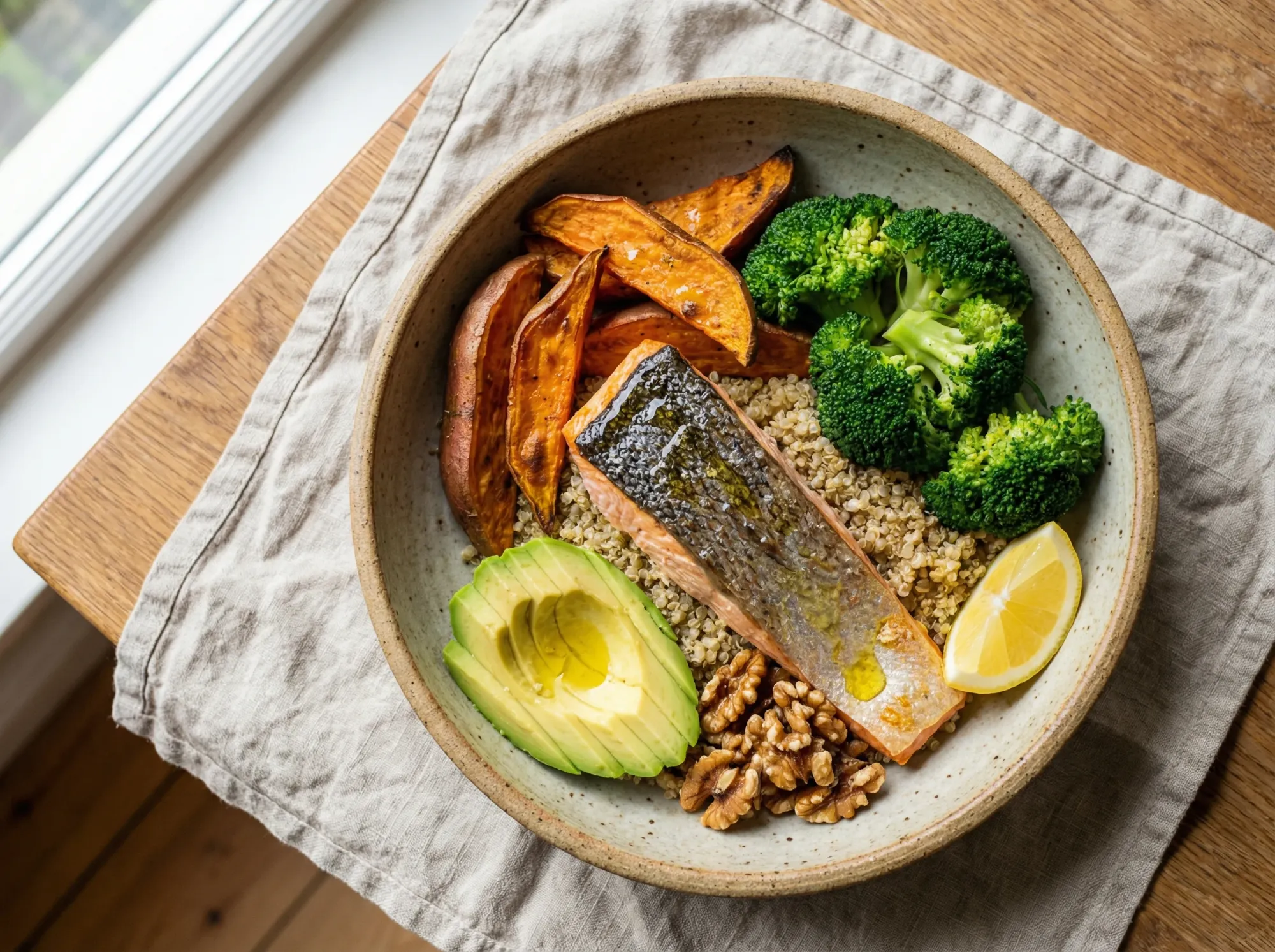
This is one of my actual weeknight dinners, and it's become a ritual at this point — every Wednesday, without fail. Baked salmon fillet on a bed of quinoa, with roasted sweet potato, steamed broccoli, avocado, and a handful of toasted walnuts. Dress with extra virgin olive oil and a good squeeze of lemon. One bowl gives you DHA from the salmon, ALA from the walnuts, anti-inflammatory fats from the olive oil and avocado, and folate from the broccoli. It takes 25 minutes, it costs less than a takeaway, and it genuinely makes me feel like I've done something good for myself. If you don't eat fish, swap the salmon for a generous portion of edamame, drizzle with hemp seed oil, and add extra walnuts. The principle is the same: a single bowl, multiple sources, no stress.
How much you need — a practical summary
| Stage | Minimum DHA+EPA | Ideal Range | How to Get It |
|---|---|---|---|
| Trying to conceive | 250mg/day | 1,000–2,000mg/day | 2 portions oily fish/week + daily flaxseed, or supplement |
| During pregnancy | 450mg/day (min 300mg DHA) | 500–1,000mg/day | 2 portions oily fish/week + pregnancy omega-3 supplement |
| Male fertility support | 250mg/day | 1,000–1,840mg/day | 2 portions oily fish/week, or fish oil supplement |
Dosages based on international guidelines and research cited in this article. Always check with your healthcare provider before starting supplements.
When to start and what to expect
Start as early as possible — ideally 3 months before you plan to conceive. It takes approximately 8–12 weeks for omega-3 fatty acids to fully incorporate into your cell membranes and shift your inflammatory profile. You won't feel a dramatic difference overnight, but the cellular changes are happening.
What you might notice after 4–8 weeks of consistent intake:
- Skin and hair improvements — less dryness, more suppleness (not a fertility marker, but a visible sign that your fatty acid status is improving)
- Better mood stability — omega-3s support serotonin function, and some women report feeling more emotionally even
- Reduced period pain — if yours is inflammation-driven, the anti-inflammatory effect of EPA can help
- Less joint stiffness — especially in the morning
These aren't guaranteed — everyone's different. But they're signals that the omega-3 is doing what it should at a systemic level, which gives you confidence that it's working at a reproductive level too.
The bottom line
Omega-3 fatty acids — particularly DHA and EPA — are among the most well-evidenced nutrients for reproductive health. They support egg quality, sperm motility, hormonal balance, and a healthy uterine environment for implantation. They actively counter the pro-inflammatory state that modern diets create. During pregnancy, DHA is essential for your baby's brain development and may significantly reduce your risk of preterm birth. And they protect your own health — brain, mood, energy — during one of the most demanding periods of your life.
The best source is oily fish, eaten twice a week. If that's not realistic for you, a quality fish oil or algae supplement closes the gap. Start 3 months before you plan to conceive, get your partner on board, and be consistent. It's one of the simplest, most evidence-backed things you can add to your fertility toolkit — and unlike so much in this journey, it's completely within your control.
How much omega-3 should I take for fertility?
Aim for at least 250mg combined DHA+EPA daily, ideally 1,000–2,000mg for active fertility support. You can get this from two portions of oily fish per week plus daily flaxseed, or from a fish oil or algae supplement. Check the DHA+EPA content specifically — not just the total fish oil amount on the front label.
Can I get enough omega-3 from plant sources alone?
Plant sources like flaxseeds, chia seeds, and walnuts provide ALA, which your body converts to DHA and EPA — but the conversion rate is only 5–10%. For optimal fertility support, vegetarians and vegans should consider an algae-derived DHA+EPA supplement rather than relying solely on ALA-rich foods. The algae supplements are equally effective — fish get their omega-3 from algae in the first place.
Does omega-3 help male fertility?
Yes — and the evidence is strong. Research shows omega-3 supplementation significantly improves sperm motility, concentration, and morphology. DHA is a major structural component of sperm cell membranes, particularly in the tail. Studies have shown improvements with 1,000–1,840mg DHA+EPA daily over 3+ months. It's one of the simplest changes a male partner can make.
Is fish oil safe during pregnancy?
Yes — high-quality, purified fish oil supplements are safe and explicitly recommended during pregnancy by the NIH and many NHS trusts. They're molecularly distilled to remove mercury and contaminants. Choose a supplement that's third-party tested (IFOS certified) and provides at least 300mg DHA. Oily fish like salmon, mackerel, and sardines are also safe to eat 2–3 times per week during pregnancy — just avoid large predatory fish like swordfish and shark.
What's the best omega-3 supplement for fertility?
Look for a supplement in triglyceride (rTG) form providing at least 500mg combined DHA+EPA per serving. It should be third-party tested for purity (IFOS or equivalent), sustainably sourced (MSC certified), and stored in the fridge after opening. During pregnancy, ensure it provides at least 300mg DHA specifically. Algae-based supplements are equally effective for vegetarians and vegans.
References
- Bender, R.K. et al. (2024). Effect of omega-3 supplements or diets on fertility in women: A meta-analysis. Reproductive BioMedicine Online. PMC
- Mínguez-Alarcón, L. et al. (2022). Women's and men's intake of omega-3 fatty acids and their food sources and assisted reproductive technologies outcomes. Fertility and Sterility. PMC
- Salas-Huetos, A. et al. (2018). The Effect of Omega-3 Fatty Acids, EPA, and/or DHA on Male Infertility: A Systematic Review and Meta-analysis. Nutrients, 10(9). PubMed
- Safarinejad, M.R. (2011). Effect of omega-3 polyunsaturated fatty acid supplementation on semen profile and enzymatic anti-oxidant capacity of seminal plasma in infertile men. Andrologia, 43(1), 38–47. PubMed
- Middleton, P. et al. (2018). Omega-3 fatty acid addition during pregnancy. Cochrane Database of Systematic Reviews, 11. Cochrane
- Koletzko, B. et al. (2023). Omega-3 fatty acid supply in pregnancy for risk reduction of preterm and early preterm birth. American Journal of Clinical Nutrition. ScienceDirect
Medical disclaimer: This article is for informational purposes only and does not constitute medical advice. Supplement dosages discussed are based on published research and international guidelines but may not be appropriate for everyone. Always consult your GP, midwife, or fertility specialist before starting any new supplement, particularly during pregnancy.
Written by

Subscribe to Fertilitys
All my Free Resources. No spam. Unsubscribe anytime.