Seed Cycling: Does It Actually Work for Hormones?
Separating evidence from hype — what seed cycling can and can't do.

💡 Quick Answer
Seed cycling probably works — but not for the reasons most wellness influencers claim. The individual seeds (especially flaxseeds and sesame seeds) have genuine hormonal effects backed by clinical trials. Whether the timing of eating them matters more than just eating all four daily? That part hasn't been proven yet.
Key Takeaways
- The seeds themselves have real, studied effects on hormones — this isn't pseudoscience
- Flaxseeds eliminated anovulatory cycles in a 1993 clinical study and improved oestrogen metabolism in multiple trials
- A 2023 trial of 90 women with PCOS showed seed cycling improved FSH and LH levels over 12 weeks
- The "cycling" part — eating specific seeds at specific cycle times — hasn't been isolated in any study
- Worst case: you eat nutritious seeds for a few months. Best case: genuine hormonal support
Every few months, seed cycling trends again on social media. Someone posts their seed cycling protocol, claims it fixed their hormones, and the comments split predictably: half the people want to try it, the other half call it pseudoscience.
As a nutritionist who recommends seed cycling to clients regularly, I find both sides frustrating. The dismissers haven't read the actual research. The evangelists oversell it. And the people in the middle — the ones actually trying to balance their hormones — get caught between hype and cynicism.
So here's my honest, evidence-based breakdown of what seed cycling for hormones can and can't do.
What Is Seed Cycling? (30-Second Version)
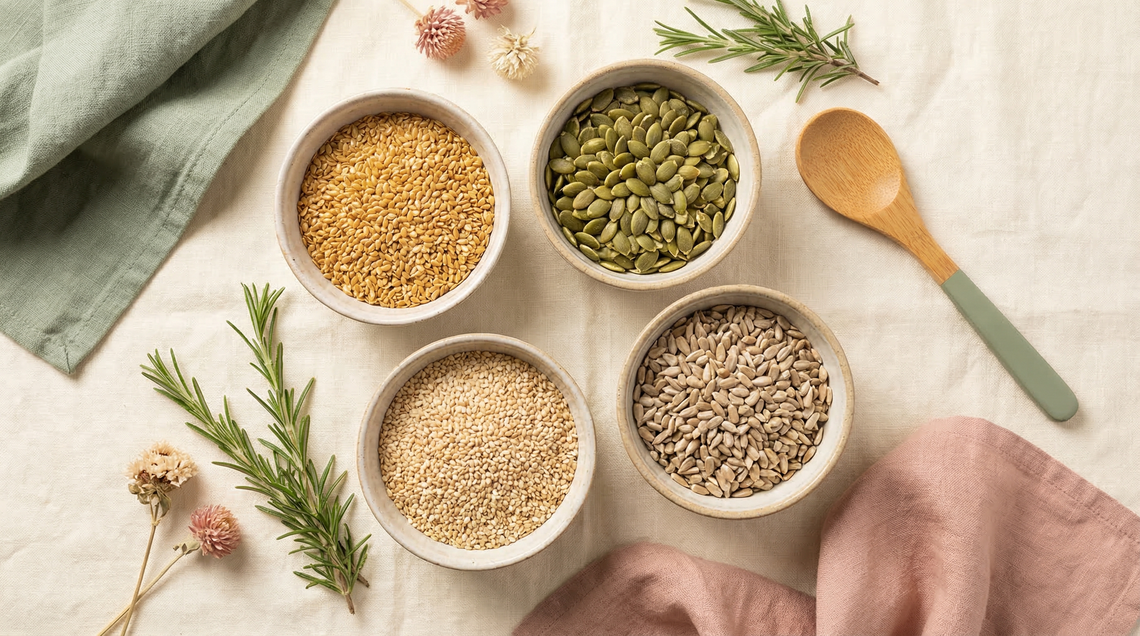
You eat two specific seed combinations matched to the two phases of your menstrual cycle:
- Follicular phase (days 1–14): 1 tablespoon each of ground flaxseeds + pumpkin seeds daily
- Luteal phase (days 15–28): 1 tablespoon each of ground sesame seeds + sunflower seeds daily
The theory: flax and pumpkin support oestrogen balance during the phase where oestrogen should rise, while sesame and sunflower support progesterone during the phase where progesterone should dominate.
For the full protocol, dosages, and how-to, see my complete seed cycling guide.
Myth #1: "There's No Evidence for Seed Cycling"
Verdict: Mostly false.
This is the claim I hear most often from sceptics, and it's outdated. There IS evidence — it's just more nuanced than either side admits.
Phipps et al. (1993) published in the Journal of Clinical Endocrinology & Metabolism what remains one of the cleanest studies on flaxseed and menstrual cycles. Eighteen women were tracked across multiple cycles. During cycles where they ate one tablespoon of ground flaxseed daily, there were zero anovulatory cycles out of 36 — compared to three anovulatory cycles in the control group. Their luteal phases also lengthened significantly.
Wu et al. (2006) ran a randomised crossover study with sesame seeds in postmenopausal women. After five weeks, SHBG (sex hormone-binding globulin) increased by 15% and the oestrogen metabolite 2-hydroxyestrone rose by 72%. Both markers indicate improved hormonal metabolism.
And in 2023, Rasheed et al. published the first proper clinical trial of combined seed cycling in 90 women with PCOS. Over 12 weeks, the seed cycling group showed significant improvements in FSH and LH levels — outperforming even the metformin-only group on several markers.
A 2025 systematic review in Cureus pulled together 10 studies with 635 participants and concluded that seed cycling was associated with improved menstrual regularity and hormonal balance, while calling for larger trials.
Is this a mountain of evidence? No. Is it "no evidence"? Absolutely not.
Myth #2: "Seed Cycling Balances All Your Hormones"
Verdict: Overstated.
This is where the wellness influencer crowd goes too far. Seed cycling doesn't "balance all your hormones" like flipping a switch. Your endocrine system is extraordinarily complex — thyroid, adrenals, insulin, cortisol, sex hormones — and two tablespoons of seeds aren't overriding all of that.
What the evidence does support is that specific seeds modulate specific pathways:
- Flaxseed lignans modulate oestrogen metabolism through enterolactone conversion — they can gently dampen excess oestrogen or mildly support low oestrogen
- Pumpkin seed zinc supports pituitary FSH/LH production
- Sesame seed lignans increase SHBG, which binds excess hormones
- Sunflower seed vitamin E supports corpus luteum function and progesterone production
These are real mechanisms — and they're the reason seed cycling hormones like oestrogen, progesterone, and SHBG show measurable shifts in clinical trials. But they're gentle, gradual, and work best as part of a broader nutrition strategy. If you have a serious hormonal imbalance — diagnosed PCOS, thyroid dysfunction, premature ovarian insufficiency — seed cycling alone isn't going to fix it. It may support your treatment. It won't replace it.
Myth #3: "The Timing Doesn't Matter — Just Eat Seeds"
Verdict: We genuinely don't know.
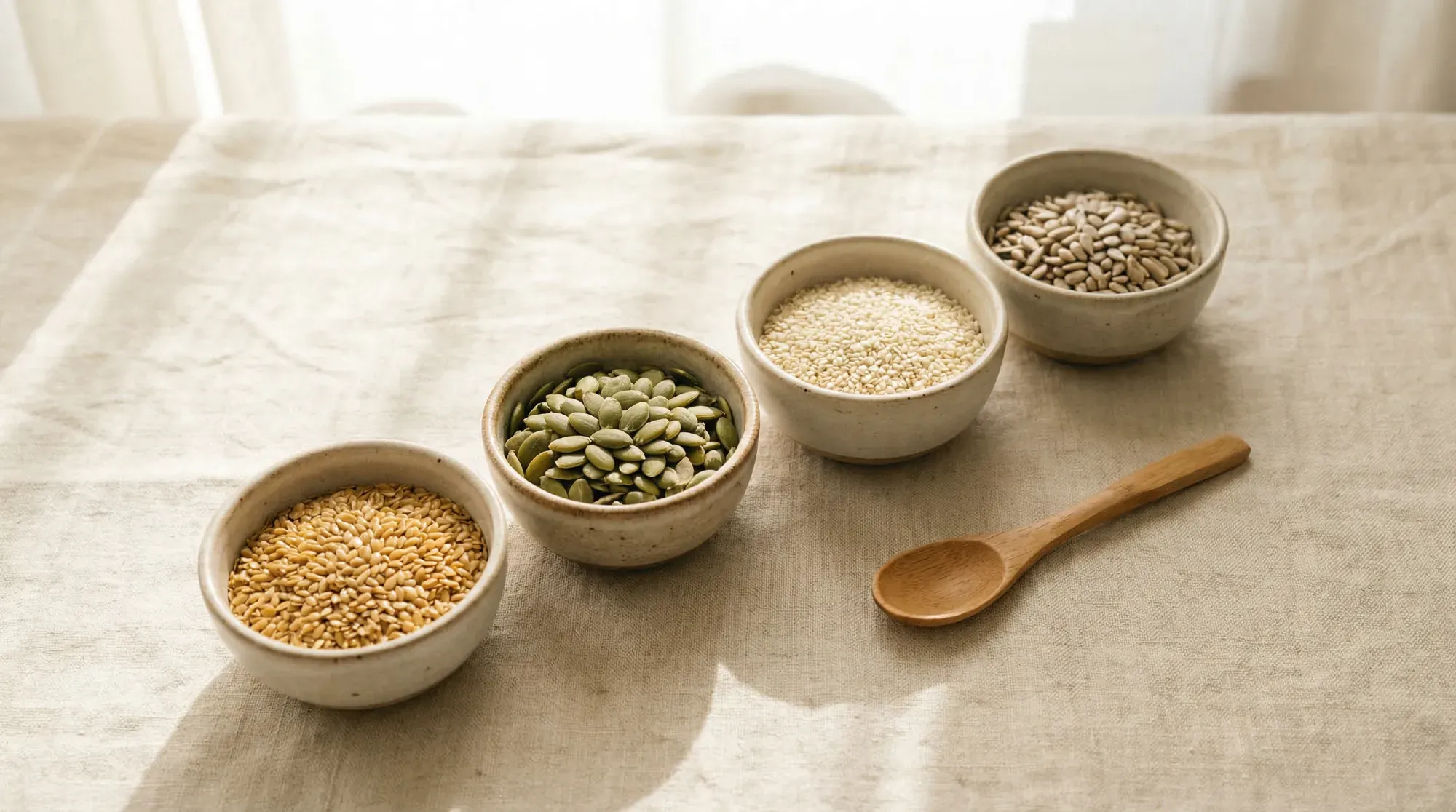
This is the most intellectually honest answer I can give. No study has directly compared "seeds cycled by phase" versus "all four seeds eaten daily." The 2023 Rasheed trial used the cycling protocol, but it didn't include a group eating the same seeds without cycling.
The theoretical logic makes sense: provide oestrogen-supporting nutrients when oestrogen should rise, and progesterone-supporting nutrients when progesterone should dominate. But "makes theoretical sense" and "proven to matter" are different things.
My practical take? Follow the cycling protocol because it's how the successful trials were structured, and it costs you nothing extra. But if you forget which phase you're in and just eat a mix of all four seeds daily, you're still getting the nutritional benefits. Don't let perfect be the enemy of good.
Myth #4: "Seed Cycling Works in a Few Days"
Verdict: False.
If anyone tells you they felt their hormones shift after three days of eating pumpkin seeds, that's placebo. And I say that as someone who believes seed cycling works.
Hormonal changes from dietary shifts happen over cycles, not days. The Rasheed trial measured changes at 12 weeks (about three menstrual cycles). The Phipps flaxseed study tracked across multiple cycle pairs. Even the sesame study by Wu ran for five weeks.
I tell every client the same thing: commit to three full menstrual cycles minimum before evaluating. Track your symptoms — cycle length, PMS severity, skin, energy, mood — so you have data, not just feelings. If after three cycles nothing has changed, it's reasonable to conclude it's not making a meaningful difference for you specifically.
Myth #5: "Seed Cycling Can Replace PCOS Medication"
Verdict: Dangerous oversimplification.
This one genuinely worries me because I've seen it repeated on social media. Yes, the 2023 Rasheed trial showed seed cycling improved hormonal markers in PCOS patients — and on some measures it outperformed metformin alone. But that study used seed cycling alongside a structured diet plan, and the participants were being medically monitored throughout.
PCOS is a metabolic and hormonal condition that affects insulin sensitivity, ovulation, cardiovascular risk, and mental health. Managing it often requires a combination of medication, dietary changes, exercise, and sometimes fertility treatment. Seed cycling fits beautifully into the dietary component. It does not replace the rest.
What I tell my PCOS clients: add seed cycling to your existing plan. Track your cycles and symptoms. Share the data with your doctor at your next appointment. Let them adjust your treatment based on results — not based on an Instagram post.
A 2025 case study documented a woman with PCOS-related infertility who combined seed cycling with myo-inositol supplementation over six months. Her BMI dropped from 29 to 24, her cycles regularised, and she achieved pregnancy through ICSI. But notice: it was seed cycling plus supplementation plus medical treatment. Not seed cycling alone.
Does Seed Cycling Work for Menopause?
This deserves its own section because the evidence here is actually quite interesting.
The Wu et al. sesame study was conducted specifically in postmenopausal women — and found significant improvements in hormonal markers, antioxidant status, and cholesterol. Flaxseed studies in postmenopausal populations have shown improved oestrogen metabolism (Brooks et al., 2004) and potential benefits for hot flushes, though the evidence on hot flushes specifically is mixed.
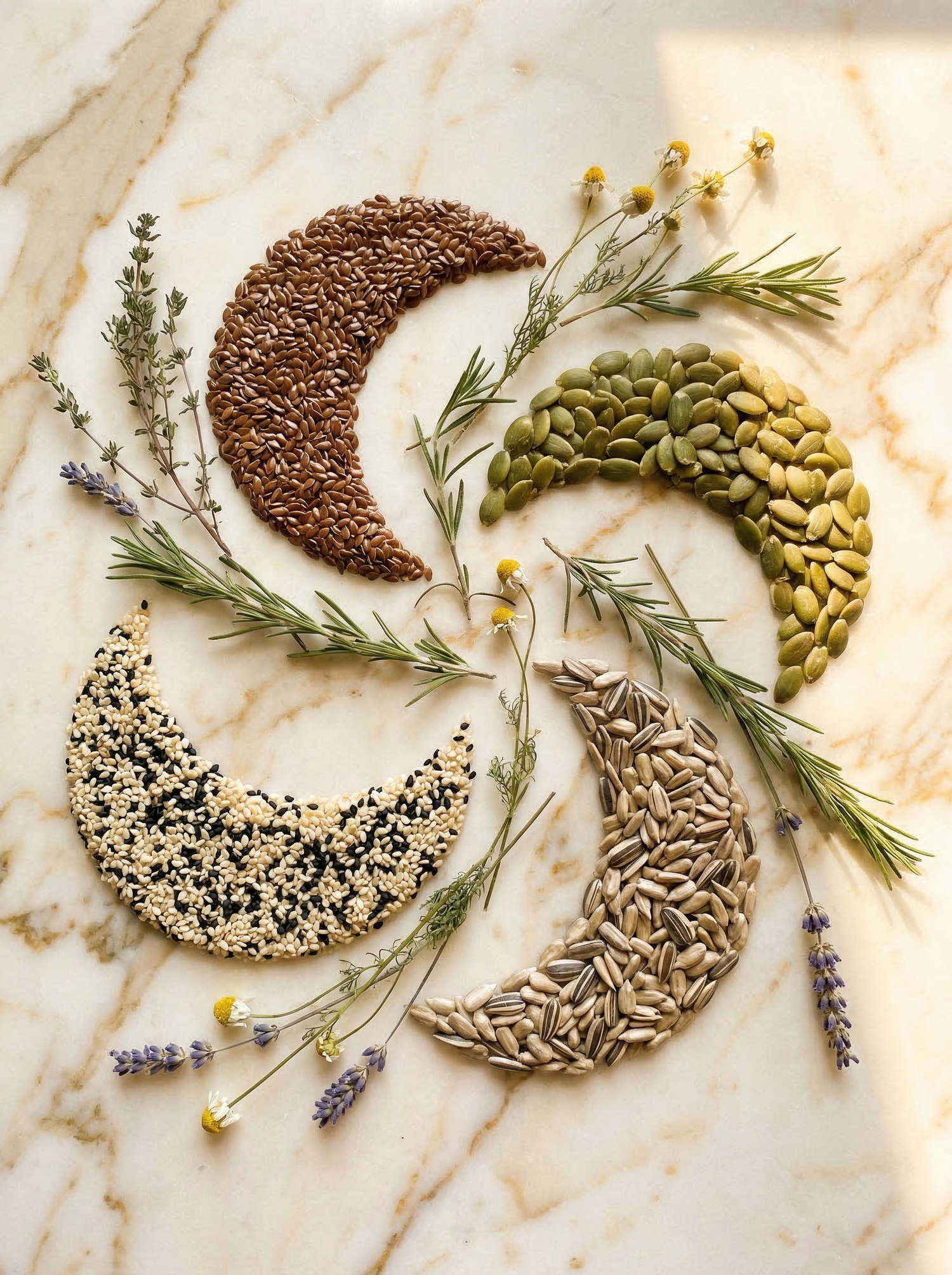
Since there's no menstrual cycle to track during menopause, most practitioners recommend using the moon cycle as a timing guide (new moon = follicular seeds, full moon = luteal seeds). It sounds unconventional, but it provides a consistent rhythm for the protocol.
For seed cycling for menopause, the honest answer is: the individual seed nutrients (lignans, vitamin E, zinc, omega-3s) are genuinely beneficial during menopause regardless of timing. The cycling aspect adds structure. Whether that structure adds clinical benefit beyond just eating seeds daily — we don't have that data yet.
The Bottom Line: My Honest Take
After years of recommending seed cycling and watching the research evolve, here's where I land:
What I'm confident about:
- Flaxseeds and sesame seeds have genuine, replicated effects on oestrogen metabolism
- The nutrient profile of all four seeds supports reproductive health
- The 2023 and 2025 studies show the combined protocol has measurable effects, particularly for PCOS
- The risk is essentially zero — these are common foods at normal dietary doses
What I'm honest about:
- We need larger trials (500+ participants) to be definitive
- The timing component hasn't been isolated — we don't know if cycling matters more than just eating all four daily
- It won't replace medical treatment for serious hormonal conditions
- Social media dramatically oversells the speed and scale of results
The seed cycling benefits are real but modest. It's a gentle, food-based approach that supports your body's hormonal rhythm. It's not a miracle cure, and anyone selling it as one is doing you a disservice. But it's also not pseudoscience, and anyone dismissing it entirely hasn't read the research published in the last three years.
Try it for three cycles. Track your data. See what happens. That's the most honest recommendation I can give.
Frequently Asked Questions
Does seed cycling actually work for hormones?
Yes, with caveats. The individual seeds — particularly flaxseeds and sesame seeds — have clinically demonstrated effects on oestrogen metabolism, SHBG levels, and ovulatory function. A 2023 trial showed the combined protocol improved hormonal markers in PCOS patients. The effects are real but gradual (expect 3+ months), and seed cycling works best as part of a broader nutrition strategy rather than a standalone fix.
What are the benefits of seed cycling?
Documented benefits include: improved menstrual regularity, reduced anovulatory cycles, better oestrogen-to-progesterone balance, increased SHBG (which helps clear excess hormones), improved cholesterol profiles, and better antioxidant status. Additional nutritional benefits include increased omega-3 intake, zinc, vitamin E, selenium, and dietary fibre — all of which support overall reproductive health regardless of the cycling effect.
Is seed cycling good for menopause?
The evidence is promising. The strongest sesame seed study (Wu et al., 2006) was conducted specifically in postmenopausal women and showed improved SHBG, oestrogen metabolism, and lipid profiles. Flaxseed lignans may also help with hot flushes, though evidence is mixed. Since there's no menstrual cycle to follow, most practitioners recommend using the moon cycle for timing. The seed nutrients are genuinely beneficial during menopause regardless of whether the cycling aspect adds extra value.
References
- Phipps WR, et al. Effect of flax seed ingestion on the menstrual cycle. J Clin Endocrinol Metab. 1993;77(5):1215-1219.
- Rasheed N, et al. Effectiveness of combined seeds as adjacent therapy to treat PCOS in females. Food Sci Nutr. 2023;11(6):3385-3393.
- Systematic review: Seed Cycling for PMS and PCOS. Cureus. 2025.
- Wu WH, et al. Sesame ingestion affects sex hormones, antioxidant status, and blood lipids in postmenopausal women. J Nutr. 2006;136(5):1270-1275.
- Brooks JD, et al. Flaxseed alters estrogen metabolism more than soy. Am J Clin Nutr. 2004;79(2):318-325.
Medical Disclaimer: This article is for informational purposes only and does not constitute medical advice. Always consult your healthcare provider before making dietary changes, especially if you have hormone-sensitive conditions or are taking medication. The research cited reflects evidence available as of March 2026.
Written by

Subscribe to Fertilitys
All my Free Resources. No spam. Unsubscribe anytime.