Seed Cycling for Fertility: A Nutritionist's Complete Guide
A nutritionist's complete guide to using seeds for hormonal balance and fertility.

💡 Quick Answer
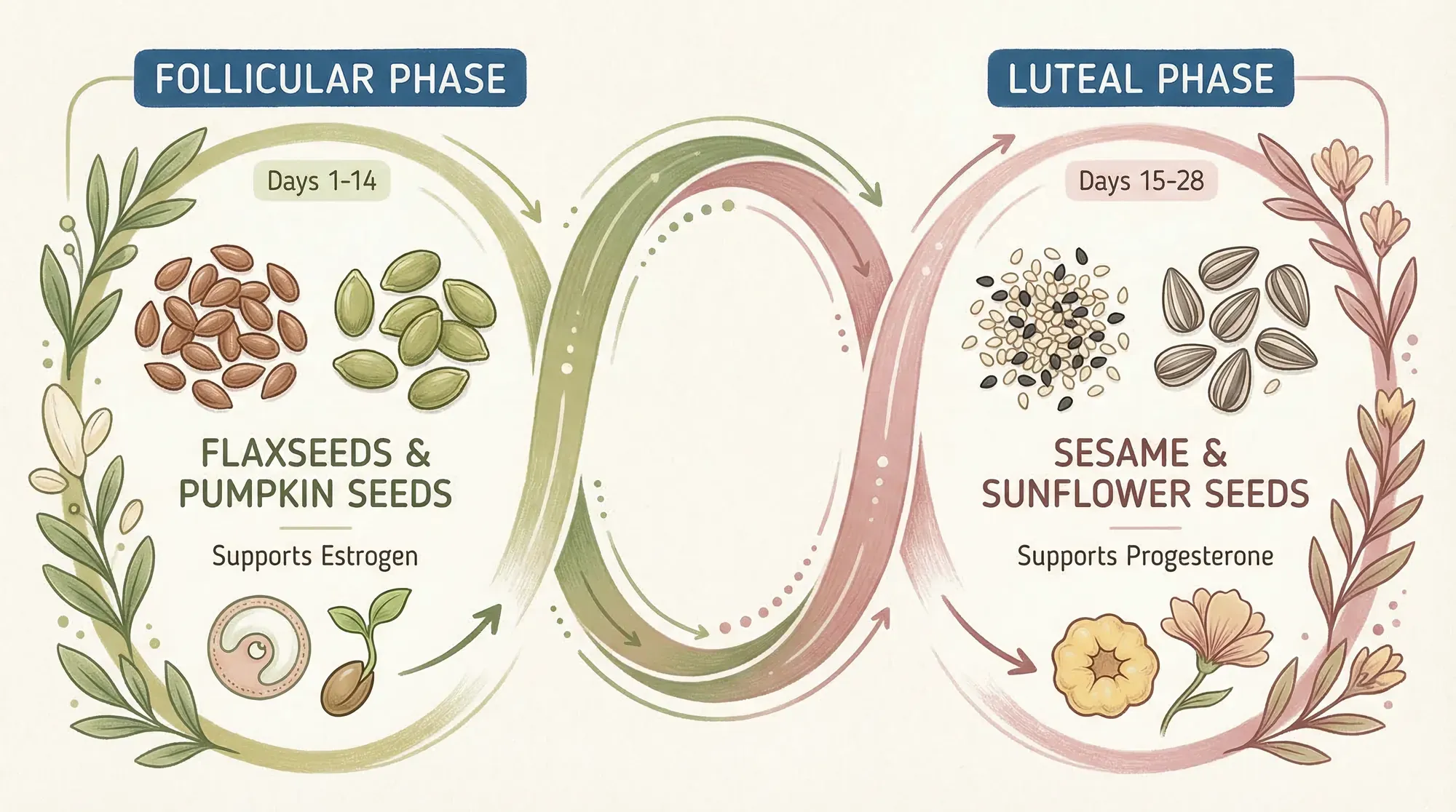
Seed cycling involves eating 1 tablespoon each of ground flaxseeds and pumpkin seeds during your follicular phase (days 1–14), then switching to sesame and sunflower seeds during your luteal phase (days 15–28). A 2025 systematic review of 10 studies found improvements in menstrual regularity and hormone levels, though larger trials are still needed.
Key Takeaways
- Seed cycling rotates four specific seeds across two phases of your menstrual cycle to support oestrogen and progesterone balance
- The strongest evidence exists for flaxseeds — a 1993 study found zero anovulatory cycles in women eating daily flaxseed, compared to three in the control group
- A 2023 clinical trial with 90 women showed seed cycling improved hormonal markers (FSH, LH) and BMI in women with PCOS over 12 weeks
- Results typically take 3–6 months of consistent daily use — this isn't a quick fix
- Seeds are nutritious regardless of timing, so even if the cycling aspect doesn't work perfectly for you, you're still getting genuine health benefits
If you've spent any time in fertility forums or wellness spaces, you've probably come across seed cycling. It sounds almost too simple — eat specific seeds at specific times in your cycle, and watch your hormones balance themselves out.
And honestly? I was sceptical too. But when I actually dug into the research — particularly the newer studies from 2023 and 2025 — the picture turned out to be more nuanced than "it's just a wellness trend." There's genuine science behind the individual seeds, even if the cycling protocol itself is still catching up in clinical trials.
Here's everything you need to know about seed cycling for hormone balance: what it is, what the evidence actually says, how to do it properly, and who it's best suited for.
What Is Seed Cycling?
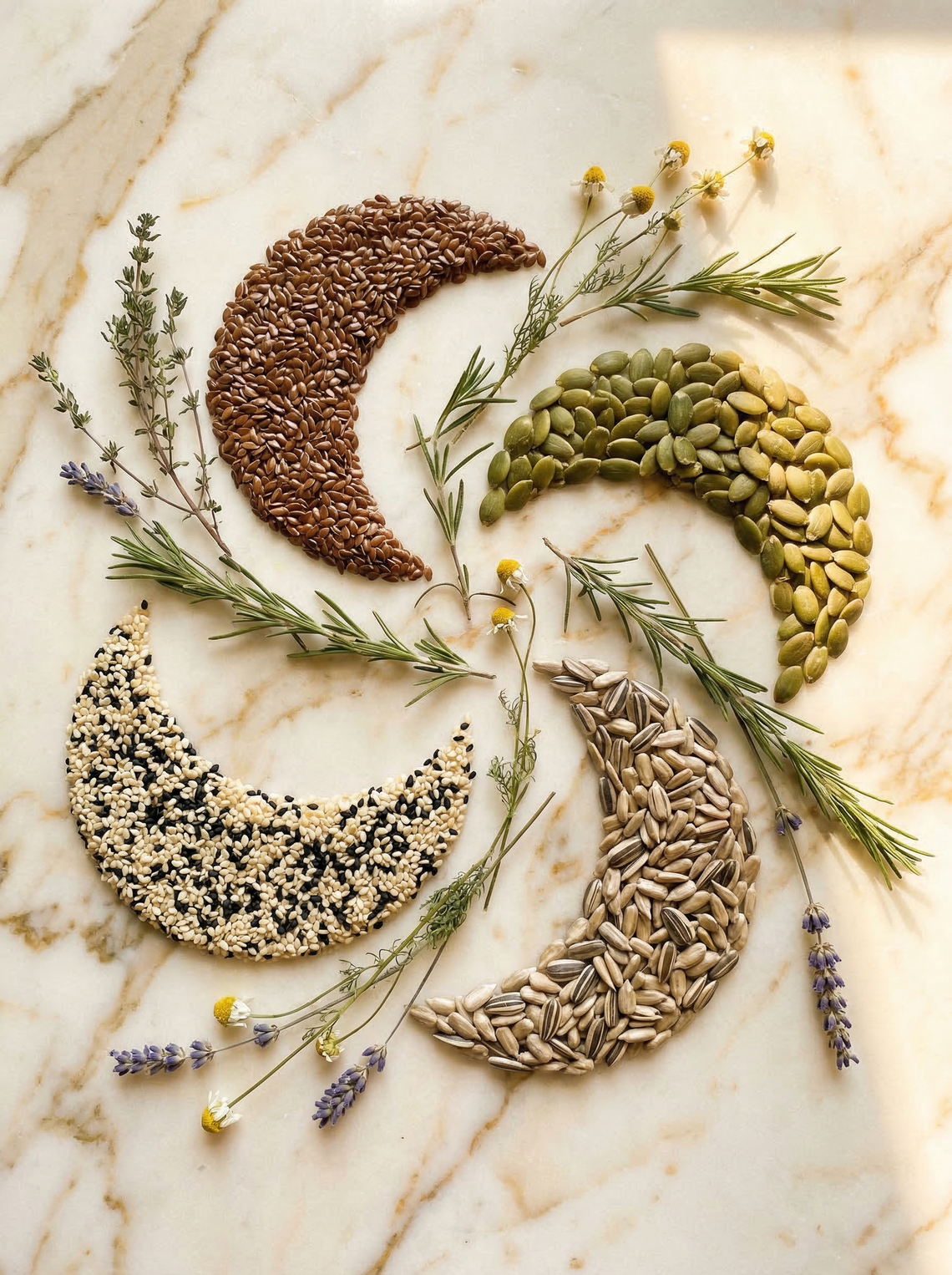
Seed cycling is a dietary practice where you eat two different combinations of seeds during the two main phases of your menstrual cycle. The idea is straightforward: specific nutrients in these seeds support the hormones that dominate each phase.
Phase 1: Follicular Phase (Days 1–14)
From the first day of your period until ovulation, you eat 1 tablespoon each of:
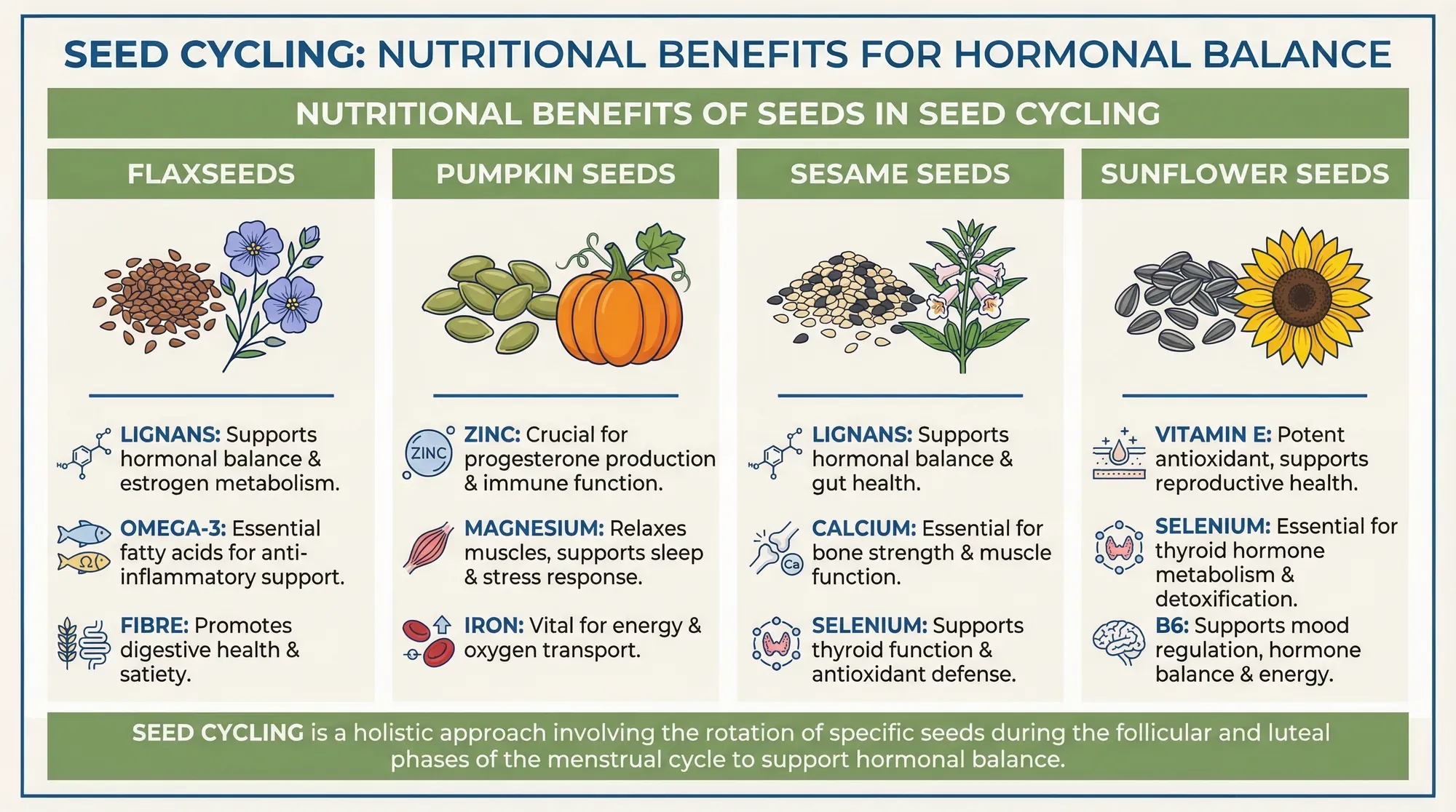
- Ground flaxseeds — rich in lignans (phytoestrogens that help modulate oestrogen metabolism) and omega-3 fatty acids (ALA)
- Pumpkin seeds — high in zinc (7.6 mg per ounce, about 69% of your daily value), which supports FSH and LH production from the pituitary gland
Phase 2: Luteal Phase (Days 15–28)
After ovulation until your next period starts, you switch to 1 tablespoon each of:
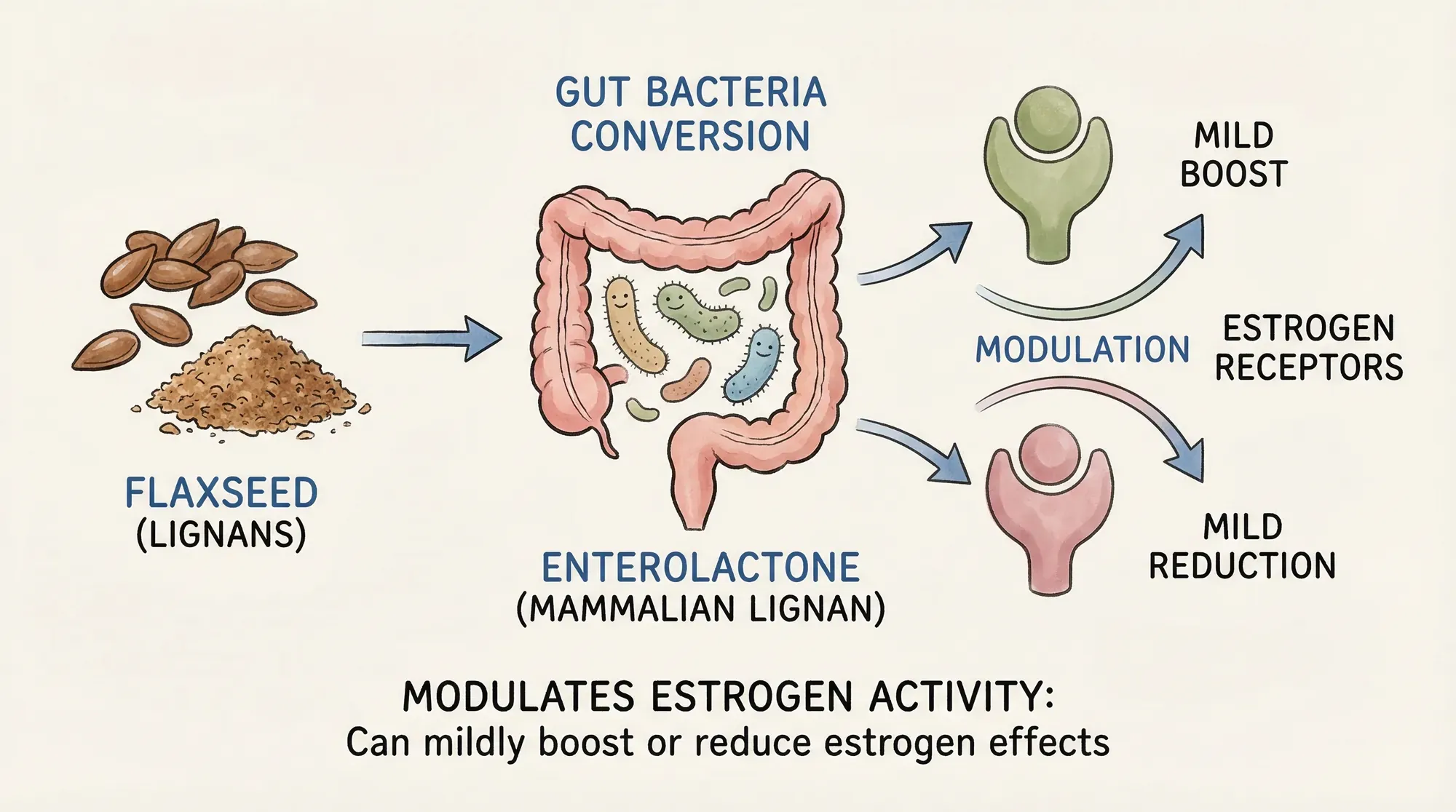
- Sesame seeds — contain lignans (sesamin) that are converted to enterolactone by gut bacteria, helping modulate oestrogen levels when progesterone should be dominant
- Sunflower seeds — packed with vitamin E (7.4 mg per ounce, 49% of your daily value) and selenium (18.6 mcg per ounce), both of which support corpus luteum function and progesterone production
I recommend seed cycling to so many of my clients because it gives them something practical they can start today. It's not a magic bullet — nothing is — but it's a gentle, food-based approach that supports your body's own hormonal rhythm. And when you're deep in the fertility journey, having something simple and nourishing to focus on can be genuinely helpful.
Seed-by-Seed Nutrient Breakdown
| Seed | Phase | Key Nutrients (per 1 tbsp) | Hormonal Role |
|---|---|---|---|
| Flaxseed | Follicular (Days 1–14) | Lignans (85mg), ALA omega-3 (2.3g), fibre (2.8g) | Modulates oestrogen metabolism via enterolactone conversion; supports healthy oestrogen-to-progesterone ratio |
| Pumpkin seed | Follicular (Days 1–14) | Zinc (2.5mg), magnesium (46mg), iron (2.5mg) | Supports pituitary FSH/LH production; zinc is essential for ovulation and follicle development |
| Sesame seed | Luteal (Days 15–28) | Sesamin lignans, calcium (88mg), zinc (0.7mg) | Converted to enterolactone; modulates oestrogen levels when progesterone should dominate; raises SHBG |
| Sunflower seed | Luteal (Days 15–28) | Vitamin E (7.4mg), selenium (18.6mcg), B6 (0.2mg) | Supports corpus luteum function and progesterone production; selenium supports thyroid health |
Why Ground Seeds?
This matters more than you'd think. Whole flaxseeds pass through your digestive system largely intact — your body can't access the lignans or omega-3s locked inside the hard outer shell. Grinding them (a coffee grinder works brilliantly) breaks them open. Sesame seeds are small enough that some absorption happens whole, but grinding still improves it.
Store ground seeds in the fridge or freezer. The oils in flaxseeds especially go rancid quickly once exposed to air — grind a week's worth at a time, max.
What Does the Research Actually Say?
Here's where it gets interesting. Most articles on seed cycling either dismiss it entirely ("no evidence!") or oversell it ("miracle hormone cure!"). The truth sits firmly in the middle — and the research has actually moved on quite a bit since the last time most of those articles were updated.
The Flaxseed Evidence (Strongest)
Flaxseeds are by far the most studied seed in the protocol. Phipps et al. (1993) published a pivotal study in the Journal of Clinical Endocrinology & Metabolism that tracked 18 women over multiple menstrual cycles. During control cycles, three anovulatory cycles occurred out of 36 total. During cycles where women ate one tablespoon of ground flaxseed daily? Zero anovulatory cycles out of 36. The flaxseed group also had significantly longer luteal phases — which matters enormously for fertility, since a short luteal phase is one of the most common (and most overlooked) causes of difficulty conceiving.
More recently, Brooks et al. (2004) found that flaxseed supplementation altered oestrogen metabolism in postmenopausal women more effectively than an equivalent amount of soy — specifically shifting the ratio towards 2-hydroxyestrone, a less potent oestrogen metabolite associated with lower breast cancer risk.
And a 2024 randomised controlled trial published in Reproductive BioMedicine Online found that flaxseed oil supplementation improved metaphase II oocyte rates in women with diminished ovarian reserve undergoing IVF — suggesting the omega-3 content (ALA) may directly support egg quality.
The Sesame Evidence
Wu et al. (2006) conducted a randomised, placebo-controlled crossover study with 24 postmenopausal women. After five weeks of consuming 50g of sesame seed powder daily, sex hormone-binding globulin (SHBG) increased by 15%, urinary 2-hydroxyestrone increased by 72%, and LDL cholesterol dropped by 10%. SHBG is relevant because it binds excess oestrogen and testosterone — higher levels generally mean better hormonal balance.
The mechanism? Sesamin (a sesame lignan) gets converted by gut bacteria into enterolactone — the same compound produced from flaxseed lignans. Both seeds, through different pathways, end up supporting similar oestrogen-modulating effects.
The Seed Cycling Protocol Evidence
Until recently, there was almost no research on the full four-seed cycling protocol as a package. That changed in 2023 and 2025:
Rasheed et al. (2023) published in Food Science & Nutrition the first proper clinical trial of combined seed cycling in 90 women with PCOS. Over 12 weeks, the seed cycling group (combined with a portion-controlled diet) showed significant improvements in FSH and LH levels compared to both the control group and a metformin-only group. LH levels dropped by 1.5–2%, and ovarian morphology improved on ultrasound. Three patients' before-and-after ultrasound images showed visible reduction in polycystic ovarian appearance.
A 2025 systematic review published in Cureus analysed 10 studies (635 participants total) and concluded that seed cycling — particularly flax and sesame seeds — was associated with improved menstrual regularity, reduced PMS severity, favourable hormone modulation, and better metabolic profiles. The authors noted the evidence was "low to medium risk of bias" but called for larger randomised controlled trials. There's also an active trial registered on ClinicalTrials.gov (NCT07052500) specifically studying seed cycling's impact on menstrual regularity.
The Honest Gaps
The evidence isn't perfect, and pretending otherwise would be irresponsible. Here's what we don't have yet:
- No large-scale (500+ participant) randomised controlled trial on the full four-seed protocol
- No studies directly measuring fertility outcomes (time to pregnancy, live birth rates) from seed cycling alone
- Limited evidence on the timing component — we know the individual seeds have hormonal effects, but whether eating them specifically in phase 1 vs phase 2 matters more than just eating all four daily hasn't been isolated
- Most existing studies are 8–12 weeks — we don't know much about effects beyond 3 months
That said, the seeds themselves are genuinely nutritious. Even in a worst-case scenario where the cycling timing adds nothing beyond placebo, you're still consuming seeds rich in omega-3s, lignans, zinc, vitamin E, selenium, magnesium, and fibre. There's no downside.
How Seed Cycling May Support Fertility
The fertility connection is the part most people searching for this topic actually care about, so let's be specific about the mechanisms.
Oestrogen Modulation (Follicular Phase)
Flaxseed lignans don't simply "boost" oestrogen — they're more like oestrogen regulators. In women with excess oestrogen (common in PCOS, endometriosis, and oestrogen dominance), the lignans compete for oestrogen receptors, effectively dampening the signal. In women with low oestrogen, the mild phytoestrogenic activity provides a gentle nudge upward. This bidirectional effect is why flaxseeds show benefits across different hormonal profiles.
Zinc from pumpkin seeds supports the pituitary gland's production of both FSH and LH — the two hormones that orchestrate follicle development and trigger ovulation. A zinc deficiency (more common than you'd expect, especially in plant-heavy diets) can directly impair ovulation.
Progesterone Support (Luteal Phase)
After ovulation, the collapsed follicle becomes the corpus luteum, which produces progesterone. Vitamin E from sunflower seeds supports corpus luteum function — a 2019 animal study found that vitamin E and selenium injections significantly improved pregnancy rates as measured by progesterone assay. Selenium also supports thyroid function, which is tightly linked to progesterone production and menstrual regularity.
Sesame lignans during this phase help prevent oestrogen from creeping back up and competing with progesterone — important because oestrogen dominance in the luteal phase is associated with PMS symptoms, spotting, and implantation difficulties. The goal is to help balance hormones naturally by supporting healthy progesterone levels during the window that matters most for conception.
How to Start Seed Cycling: A Step-by-Step Guide
Ready to try it? Here's exactly how to get started.
What You Need
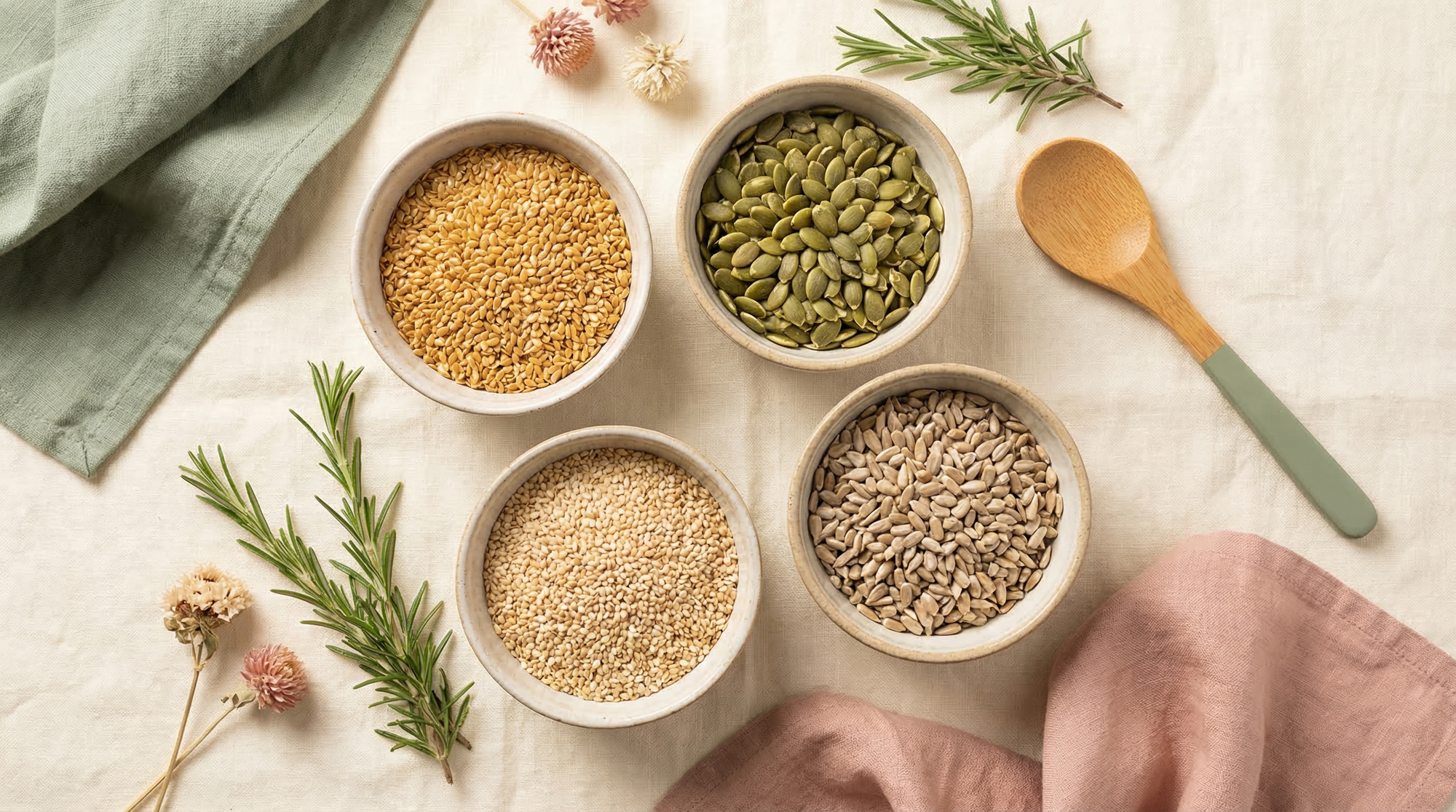
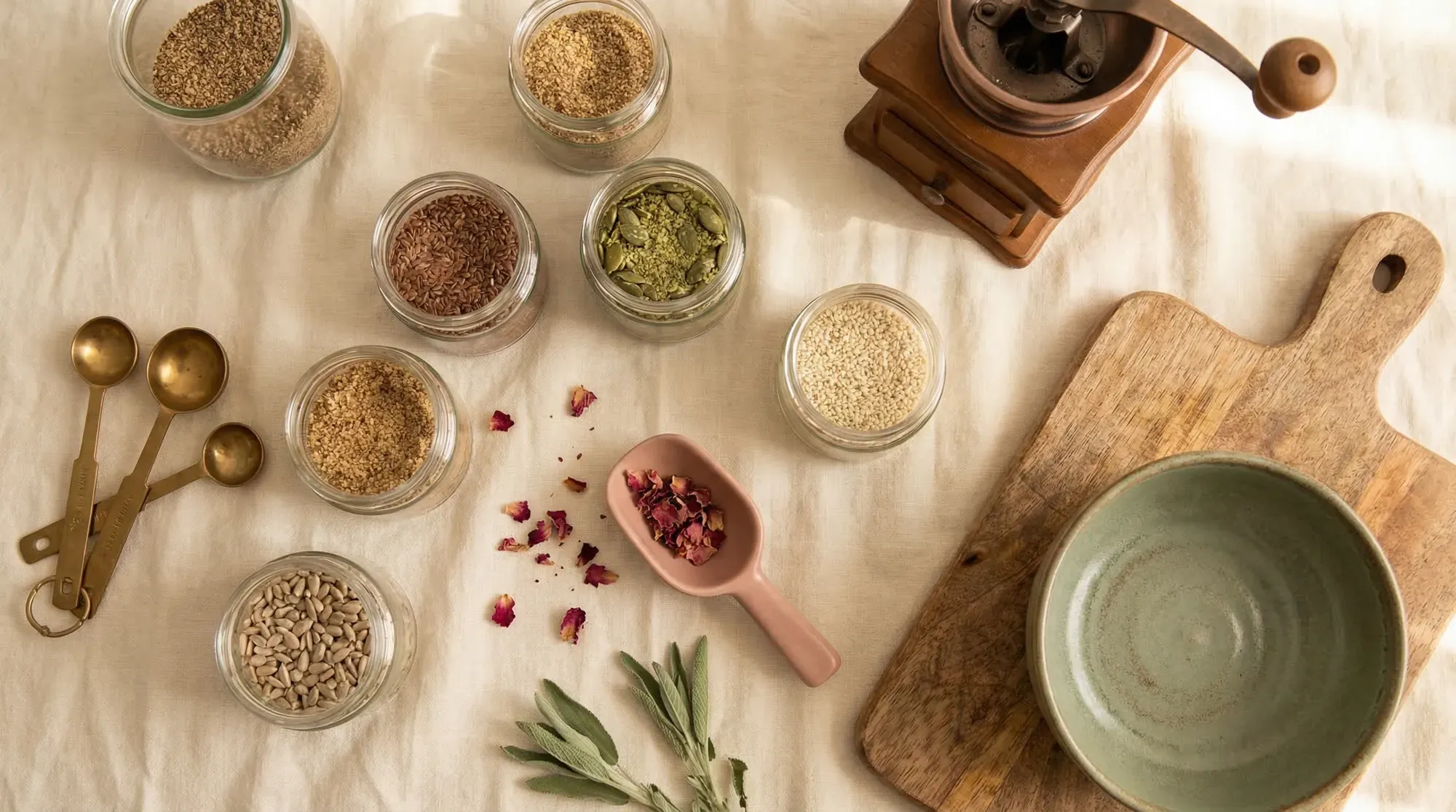
- Raw, organic flaxseeds (brown or golden — both work). Buy whole, grind at home. Pre-ground flaxseed (flax meal) loses potency quickly.
- Raw pumpkin seeds (also called pepitas). Green, hulled ones are fine.
- Raw sesame seeds (unhulled contain more lignans, but hulled/tahini works too)
- Raw sunflower seeds (unsalted, shelled)
- A coffee grinder or small food processor
- Small airtight containers or glass jars for storage
The Protocol
Days 1–14 (follicular phase — starts with day 1 of your period):
- 1 tablespoon ground flaxseeds + 1 tablespoon pumpkin seeds daily
Days 15–28 (luteal phase — starts after ovulation):
- 1 tablespoon ground sesame seeds + 1 tablespoon sunflower seeds daily
If Your Cycle Isn't 28 Days
Most cycles aren't exactly 28 days, and that's completely normal. Here's how to adapt:
- Regular cycle (21–35 days): Switch seeds at ovulation, not at a fixed day 14. Use ovulation predictor kits, basal body temperature, or cervical mucus tracking to identify when you ovulate.
- Irregular or absent periods (common with PCOS): Use the new moon as day 1 and the full moon as the switch point. Yes, it sounds a bit "woo" — but it gives you a consistent 14/14 framework to work with. The seeds are doing the heavy lifting, not the moon.
- Perimenopause/menopause: Same moon cycle approach. New moon = start follicular seeds. Full moon = switch to luteal seeds.
- On hormonal contraception: Some practitioners suggest following the pill pack (active pills = follicular seeds, placebo week = luteal seeds). There's no research on this specific approach, though.
Easy Ways to Eat Your Seeds
Two tablespoons of seeds isn't much, but it can feel awkward at first. Here are ways to work them in without it feeling like homework:
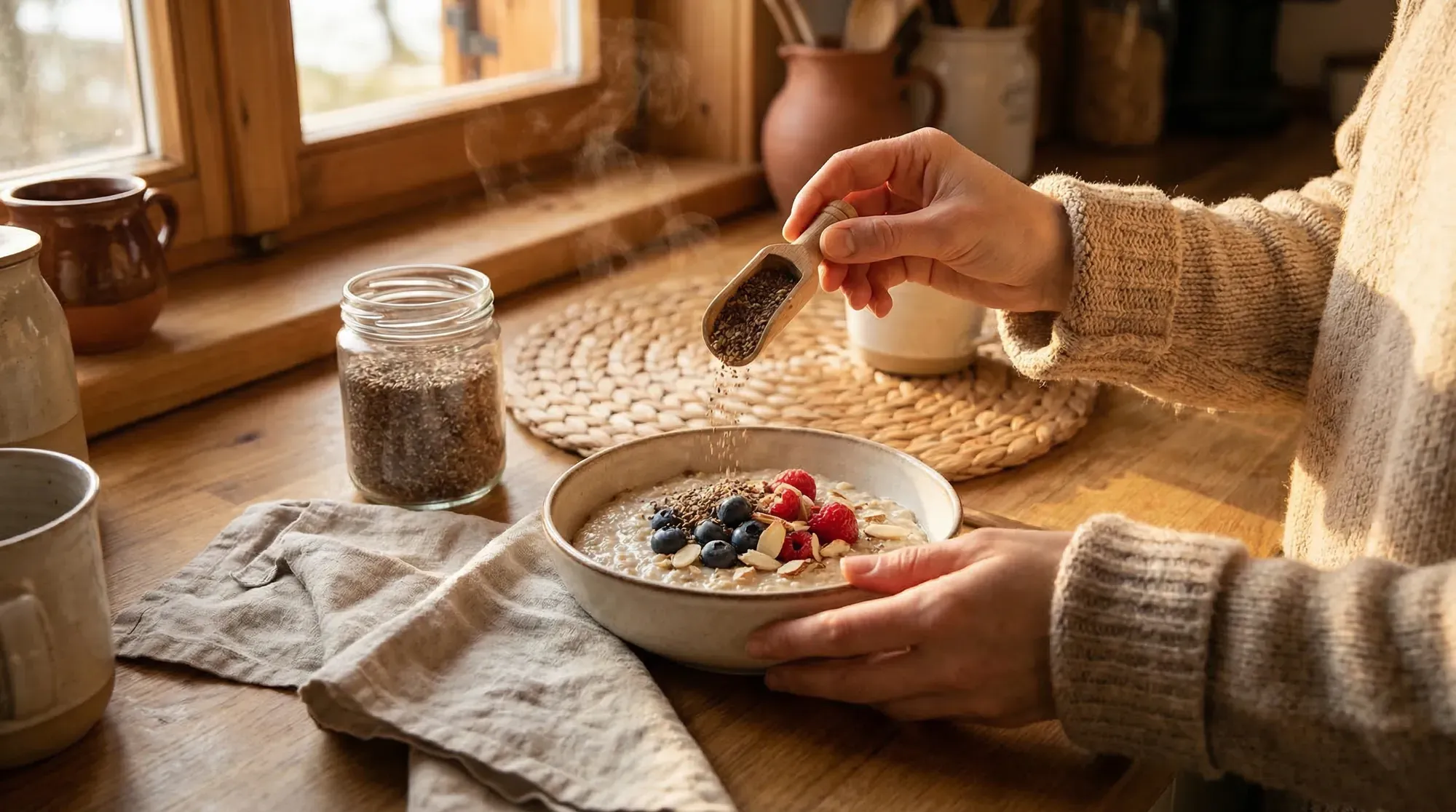
- Stir into porridge or overnight oats
- Blend into smoothies (you won't taste ground flax in a banana smoothie)
- Sprinkle over yoghurt, salads, or soups
- Mix into nut butter on toast
- Add to homemade energy balls or granola bars
- Make tahini dressing (sesame phase) or pumpkin seed pesto (follicular phase)
Seed Cycling for PCOS
PCOS affects approximately 7–10% of women of reproductive age worldwide, and it's one of the conditions where seed cycling has the most promising (though still early) evidence.
The 2023 Rasheed et al. trial specifically studied women with PCOS and found that seed cycling combined with dietary management outperformed metformin alone on several hormonal markers over 12 weeks. A separate case study published in 2025 documented a 29-year-old woman with PCOS-related infertility who combined seed cycling with myo-inositol supplementation — after 6 months, her BMI dropped from 29 to 24, her menstrual cycles regularised, her LH:FSH ratio normalised, and she achieved a clinical pregnancy through ICSI with high-quality embryos.
Is seed cycling a standalone treatment for PCOS? No. Should it replace medication your doctor has prescribed? Absolutely not. But as an adjunct — something you do alongside your existing treatment plan — the risk is essentially zero and the potential benefits, based on emerging evidence, are real.
What I find with my PCOS clients is that seed cycling often becomes the gateway into paying closer attention to nutrition as a whole. Someone starts with two tablespoons of seeds a day, and within a month they're thinking more carefully about zinc intake, omega-3 balance, blood sugar management. The seeds themselves matter, but the mindset shift they trigger — from feeling helpless about your hormones to actively supporting them — that's where the real change starts.
Seed Cycling While Trying to Conceive (TTC)
If you're actively trying to get pregnant, seed cycling fits neatly into a fertility-supportive lifestyle. The follicular phase seeds (flax and pumpkin) support healthy follicle development and ovulation, while the luteal phase seeds (sesame and sunflower) support the progesterone production needed for implantation and early pregnancy maintenance.
One important note: some sources raise concerns about flaxseed phytoestrogens during early pregnancy. The research here is mostly from animal studies using very high doses. At one tablespoon daily (about 7–10g), you're well within normal dietary intake. However, many practitioners recommend stopping seed cycling once you get a positive pregnancy test, or at minimum switching to just the luteal phase seeds. Discuss this with your healthcare provider — they can advise based on your specific situation.
Seed Cycling for Menopause and Perimenopause
Seed cycling isn't just for women with active menstrual cycles. During perimenopause, when oestrogen and progesterone fluctuate unpredictably, the phytoestrogens in flaxseeds and sesame seeds may help smooth out some of those hormonal swings.
Wu et al. (2006) specifically studied postmenopausal women and found that sesame seed consumption improved SHBG levels, antioxidant status, and cholesterol profiles — all relevant concerns during and after menopause. And since declining oestrogen increases cardiovascular risk, the cholesterol-lowering effects of both flaxseeds and sesame seeds offer an added benefit beyond hormone balance.
Without a period to track, use the moon cycle as your guide: new moon = day 1 (start flax and pumpkin seeds), full moon = day 15 (switch to sesame and sunflower). It gives you a consistent rhythm. Some women in perimenopause report that seed cycling helps with hot flushes, sleep disruption, and mood swings, though formal clinical trials specifically testing this are still lacking.
What to Buy: A Practical Shopping Guide
You don't need expensive "seed cycling kits" — despite what Instagram might suggest. Here's what to look for:
- Flaxseeds: Buy whole (brown or golden), organic if possible. A 500g bag costs £2-4 / $3-5 and lasts about a month. Grind at home — pre-ground loses potency within days of opening.
- Pumpkin seeds: Raw, hulled (green pepitas). About £3-5 / $4-6 for 500g. No need for organic — pumpkin seeds have low pesticide residue.
- Sesame seeds: Unhulled contain more lignans and calcium. About £2-3 / $2-4 for 500g. Tahini (sesame paste) counts too — 1 tablespoon of tahini ≈ 1 tablespoon of whole seeds.
- Sunflower seeds: Raw, shelled, unsalted. About £2-3 / $2-4 for 500g. The cheapest seed in the protocol.
Total cost: roughly £10-15 / $12-18 per month. That's less than a single supplement bottle, and you're getting whole-food nutrition rather than isolated compounds.
A coffee grinder (£15-20 / $15-25) is the only equipment you need. Grind a week's worth at a time, store in a glass jar in the fridge. Some people use a dedicated grinder just for seeds to avoid coffee-flavoured flaxseed — not a bad idea.
Common Seed Cycling Mistakes
After working with clients on this protocol, a few patterns come up repeatedly:
- Not grinding flaxseeds. This is the biggest one. Whole flaxseeds pass through you undigested. You're getting fibre but missing the lignans entirely. Grind them fresh.
- Using roasted or salted seeds. Heat damages the delicate omega-3 fatty acids in flaxseeds and alters the lignan profile of sesame seeds. Raw is non-negotiable for flax and sesame. Pumpkin and sunflower are more forgiving, but raw is still best.
- Expecting overnight results. Hormonal changes happen over cycles, not days. Most women report noticing differences after 3–4 cycles (about 3–6 months). If you quit after 2 weeks because "nothing happened," you haven't given it a fair trial.
- Being inconsistent. Eating seeds three days a week isn't seed cycling — it's snacking. The potential hormonal benefits come from daily, consistent intake throughout each phase.
- Skipping the switch. Some people find a combination they like and just eat those seeds all month. The whole point of cycling is to provide different nutrients at different times. If you're going to eat seeds randomly, that's fine — you'll get nutritional benefits — but it's not seed cycling.
- Storing ground seeds at room temperature. Ground flaxseeds oxidise within days at room temperature. Fridge for up to a week, freezer for up to three months.
The one I see most often in clinic? Women who tried seed cycling for three weeks, saw no change, and concluded it doesn't work. Hormonal shifts don't happen on that timeline. I always tell my clients: commit to three full cycles minimum before you evaluate. Track your symptoms — cycle length, PMS severity, skin changes, energy levels — so you have actual data to compare, not just a feeling.
Who Should Be Cautious With Seed Cycling
Seed cycling is generally very safe — these are common foods, not supplements. But a few groups should check with their healthcare provider first:
- People with seed or nut allergies — obvious, but worth stating
- Those on blood thinners — flaxseeds have mild blood-thinning properties due to their omega-3 content. At one tablespoon daily this is unlikely to cause issues, but mention it to your doctor
- Women with hormone-sensitive conditions (certain breast cancers, fibroids) — the phytoestrogen content is mild, and some research actually suggests protective effects, but get personalised medical advice
- People with diverticulitis or bowel obstructions — seeds can be irritating. Ground seeds are gentler than whole, but check with your gastroenterologist
- Pregnant or breastfeeding women — the evidence suggests normal dietary amounts are fine, but high doses of phytoestrogens haven't been studied in pregnancy. Most practitioners recommend pausing during pregnancy
The Bottom Line
Seed cycling won't fix a severe hormonal imbalance on its own, and anyone telling you it will is overselling it. But the research — particularly the newer studies from 2023 and 2025 — shows genuine promise, especially for PCOS and menstrual regularity. The individual seeds have well-documented effects on oestrogen metabolism, SHBG levels, and hormonal markers.
What I like most about seed cycling is the harm-to-benefit ratio. The worst-case scenario is that you eat nutritious seeds for a few months and get extra omega-3s, zinc, vitamin E, and fibre. The best case is that you genuinely support your hormonal health and notice improvements in your cycle, your skin, or your fertility. That's a bet worth taking.
If you take one thing from this article, let it be this: seed cycling works best as part of a bigger picture. It pairs beautifully with cycle tracking, anti-inflammatory eating, stress management, and adequate sleep. No single food or supplement will fix a complex hormonal issue on its own — but the right combination of small, consistent changes can make a surprising difference over time. Give it at least three full cycles. Be consistent. Grind your flax. And track your symptoms so you have actual data, not just a vague feeling.
Frequently Asked Questions
Does seed cycling actually work for fertility?
The evidence is promising but still emerging. The strongest data comes from flaxseed specifically — Phipps et al. (1993) found it eliminated anovulatory cycles in a small study. A 2025 case study documented pregnancy in a PCOS patient using seed cycling alongside myo-inositol. No study has directly measured time-to-pregnancy from seed cycling alone, so it's best viewed as a supportive dietary practice rather than a fertility treatment. It won't replace medical intervention if you need it, but it's a safe, nutritious addition to your fertility toolkit.
What are the 4 seeds used in seed cycling?
Flaxseeds and pumpkin seeds during the follicular phase (days 1–14 of your cycle), then sesame seeds and sunflower seeds during the luteal phase (days 15–28). You eat 1 tablespoon of each seed per day — so 2 tablespoons total daily. Flaxseeds must be ground for your body to access the beneficial lignans. All seeds should be raw and unsalted for maximum benefit.
How long does seed cycling take to work?
Most practitioners and women who've tried it report noticing changes after 3–4 menstrual cycles, which is about 3–6 months. Hormonal changes happen gradually — your body needs time to respond to the consistent nutrient input. Some women notice improvements in PMS symptoms or skin within the first cycle or two, while changes to cycle regularity or ovulation patterns typically take longer. The 2023 Rasheed et al. clinical trial saw measurable hormonal changes at 12 weeks (about 3 cycles).
Can I do seed cycling if I have irregular periods?
Yes — and irregular periods are actually one of the most common reasons people try seed cycling. If your cycle is unpredictable, use the moon cycle as your guide: start follicular seeds (flax + pumpkin) at the new moon, switch to luteal seeds (sesame + sunflower) at the full moon. This gives you a consistent 14/14 day framework. As your cycle starts to regulate, you can switch to tracking your actual menstrual cycle and ovulation instead.
Is seed cycling safe during pregnancy?
The seeds themselves are common foods and generally considered safe in normal dietary amounts. However, there's limited research on the phytoestrogenic effects of daily flaxseed consumption during pregnancy. Most fertility nutritionists recommend stopping seed cycling once you get a positive pregnancy test, or at minimum transitioning to just the luteal phase seeds (sesame and sunflower). Always discuss dietary changes during pregnancy with your healthcare provider.
What are common seed cycling mistakes to avoid?
The most frequent mistake is not grinding flaxseeds — whole flaxseeds pass through your body undigested, so you miss the lignans entirely. Other common errors include using roasted or salted seeds (heat damages beneficial compounds), expecting results within days rather than months, being inconsistent with daily intake, and storing ground seeds at room temperature where they quickly oxidise. Grind a week's worth at a time and keep them in the fridge.
References
- Phipps WR, Martini MC, Lampe JW, Slavin JL, Kurzer MS. Effect of flax seed ingestion on the menstrual cycle. Journal of Clinical Endocrinology & Metabolism. 1993;77(5):1215-1219. PubMed
- Rasheed N, et al. Effectiveness of combined seeds (pumpkin, sunflower, sesame, flaxseed): As adjacent therapy to treat polycystic ovary syndrome in females. Food Science & Nutrition. 2023;11(6):3385-3393. DOI
- Systematic review: Efficacy of Seed Cycling as an Integrative Therapy for Premenstrual Syndrome and Polycystic Ovary Syndrome in Reproductive-Aged Women. Cureus. 2025. PMC
- Wu WH, Kang YP, Wang NH, Jou HJ, Wang TA. Sesame ingestion affects sex hormones, antioxidant status, and blood lipids in postmenopausal women. Journal of Nutrition. 2006;136(5):1270-1275. PubMed
- Case study: Seed Cycling and Hormonal Balance: A Case Study of Successful Fertility Intervention in Polycystic Ovarian Syndrome. Journal of Pharmacy and BioAllied Sciences. 2025. PMC
- Brooks JD, Ward WE, Lewis JE, et al. Supplementation with flaxseed alters estrogen metabolism in postmenopausal women to a greater extent than does supplementation with an equal amount of soy. American Journal of Clinical Nutrition. 2004;79(2):318-325. Oregon State University
- Flaxseed oil supplementation improves metaphase II oocyte rates in IVF cycles with decreased ovarian reserve: a randomized controlled trial. Reproductive BioMedicine Online. 2024. PMC
- Flaxseed supplementation and metabolic status in women with polycystic ovary syndrome: a randomized open-labeled controlled clinical trial. 2020. PMC
Medical Disclaimer: This article is for informational purposes only and does not constitute medical advice. Seed cycling is a dietary practice, not a medical treatment. Always consult your healthcare provider before making changes to your diet, especially if you have PCOS, endometriosis, hormone-sensitive conditions, or are pregnant, breastfeeding, or trying to conceive. The information presented here reflects current research as of March 2026 — the science is evolving, and recommendations may change as new evidence emerges.
Written by

Subscribe to Fertilitys
All my Free Resources. No spam. Unsubscribe anytime.