Metformin for PCOS: How It Works, Side Effects, and Fertility Benefits


Quick Answer: Metformin is a commonly prescribed medication for PCOS that helps improve insulin resistance, regulate menstrual cycles, and may support ovulation. While not a fertility drug per se, it is frequently used alongside fertility treatments to improve outcomes. The best metformin for PCOS depends on tolerability, with extended-release forms often preferred for fewer side effects.
Key Takeaways
- Metformin treats the insulin resistance that underlies many PCOS symptoms, including irregular ovulation and difficulty conceiving.
- Extended-release metformin (metformin ER) is generally better tolerated than immediate-release, with fewer gastrointestinal side effects.
- Metformin is most effective for PCOS fertility when combined with lifestyle changes such as diet and exercise modifications.
- Common side effects include nausea, diarrhoea, and stomach upset - these often improve over time or with dose adjustments.
- Always take metformin under medical supervision; it requires monitoring of kidney function and vitamin B12 levels.
What Is Metformin and Why Is It Used for PCOS?
If you've been diagnosed with PCOS and your doctor has mentioned metformin, you probably have a lot of questions. I work with women managing PCOS every single day, and metformin comes up in almost every conversation. It's not a magic fix - but for many women, it can be a genuinely helpful part of a bigger picture.
Metformin belongs to a class of drugs called biguanides. It works primarily by reducing glucose production in the liver and improving your body's sensitivity to insulin. Now, you might be wondering: what does insulin have to do with PCOS?
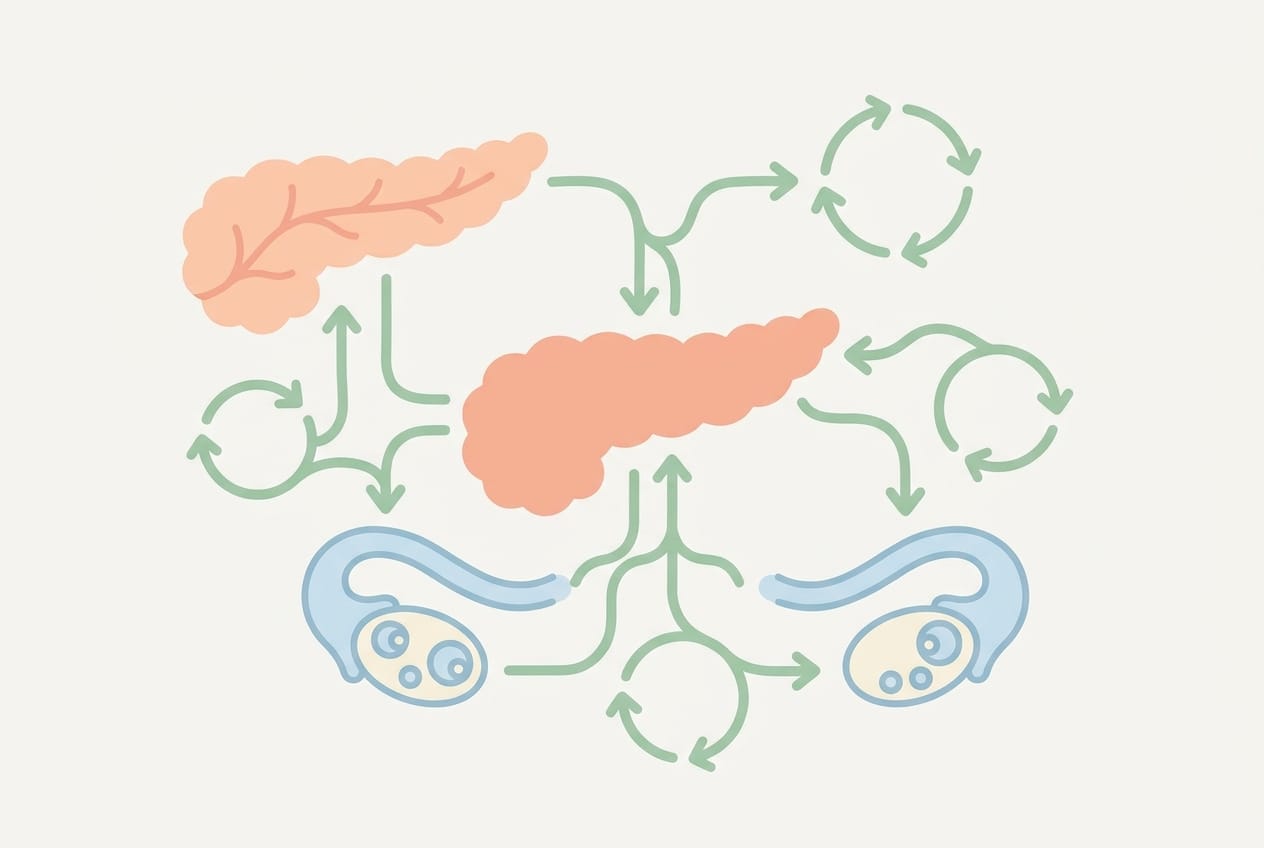
Quite a lot, actually. Insulin resistance is a core feature of PCOS, affecting an estimated 50-70% of women with the condition, regardless of body weight (Stepto et al., 2013). When your body becomes resistant to insulin, your pancreas produces more of it to compensate. Those elevated insulin levels then stimulate the ovaries to produce excess androgens (male hormones like testosterone), which disrupts ovulation, causes acne and excess hair growth, and makes it harder to conceive.
By targeting insulin resistance, metformin addresses one of the root causes of PCOS symptoms rather than just managing individual symptoms in isolation.
How Metformin Helps with PCOS Fertility
When I look at the research on metformin for PCOS-related fertility, I think it's important to be both hopeful and realistic. Metformin isn't a magic fertility drug - but for many women with PCOS, it can make a meaningful difference.
Restoring Ovulation
The primary way metformin supports fertility is by helping to restore regular ovulation. In PCOS, the hormonal imbalance - high insulin, high androgens, disrupted LH/FSH ratio - often prevents the ovaries from releasing an egg each month. By lowering insulin levels, metformin helps reduce androgen production and restore the hormonal balance needed for ovulation.
Lord et al. (2003) conducted a Cochrane review and found that metformin significantly improved ovulation rates in women with PCOS. Women taking metformin were approximately four times more likely to ovulate compared to those taking a placebo.
I want to note, though, that restoring ovulation doesn't automatically mean you'll get pregnant. Ovulation is just one piece of the fertility puzzle - but it's a big piece, and for women with anovulatory PCOS, it's often the starting point.
Improving IVF Outcomes
Metformin is frequently prescribed alongside IVF treatment for women with PCOS. The reason? PCOS patients often respond poorly to ovarian stimulation - they either produce too many eggs (putting them at risk of ovarian hyperstimulation syndrome, or OHSS) or produce eggs of inconsistent quality.
Tso et al. (2014) conducted a meta-analysis showing that metformin co-treatment during IVF reduced the risk of OHSS by approximately 70% in women with PCOS. It also appeared to improve clinical pregnancy rates, though the evidence was moderate.
Reducing Miscarriage Risk
Some research has suggested that metformin may reduce the risk of early miscarriage in women with PCOS. Zheng et al. (2021) found that continued metformin use during the first trimester was associated with a lower miscarriage rate compared to discontinuation. However, this remains somewhat controversial, and more research is needed.
Which Metformin Is Best for PCOS?
This is one of the most common questions I see, and the answer depends on tolerability rather than efficacy. There are two main formulations:
Immediate-Release (IR) Metformin
This is the original formulation. It's absorbed quickly, which means higher peak concentrations in your blood - and more gastrointestinal side effects. Common brand names include Glucophage and various generics.
Extended-Release (ER) Metformin
Extended-release metformin is designed to release the medication slowly over time. Schwartz et al. (2006) found that ER metformin caused significantly fewer GI side effects than IR metformin while maintaining similar efficacy for glucose and insulin management.
In my experience hearing from women with PCOS, the ER formulation is generally preferred. The stomach upset that makes many women want to stop taking metformin is often much more manageable with the extended-release version. Common brand names include Glucophage XR and Fortamet.
A newer option worth knowing about: metformin with extended-release (delayed-release) formulations like Riomet XR, which uses a gastric-retentive technology to reduce GI side effects further. However, availability and prescribing patterns vary by country.
Does Brand vs. Generic Matter?
For metformin, the generic versions are considered therapeutically equivalent to brand-name products. The active ingredient is the same. What can sometimes differ is the inactive ingredients (fillers, coatings), which might affect tolerability for sensitive individuals. If one generic brand doesn't agree with your stomach, it's worth trying a different manufacturer's version before giving up on metformin entirely.
Metformin Dosage for PCOS
Metformin dosing for PCOS typically follows a gradual increase protocol, which I think is one of the most important practical points for anyone starting this medication.
- Starting dose: 500mg once daily, taken with your evening meal
- Week 2: 500mg twice daily (morning and evening meals)
- Week 3-4: 500mg three times daily OR increase to 1000mg twice daily (for ER formulation)
- Target dose: Typically 1000-2000mg daily, depending on your doctor's assessment and your tolerance
The gradual increase is important because starting at a high dose is almost guaranteed to cause stomach upset. I've heard from women who were started on 1500mg on day one and were so nauseous they stopped immediately - which is a shame because with a slower titration, they might have done fine.
Always take metformin with food. This reduces stomach upset and is non-negotiable. A full meal is better than a snack.
Common Side Effects and How to Manage Them
I'd be doing you a disservice if I didn't address the elephant in the room: metformin's gastrointestinal side effects are real, and for some women, they're significant.
Short-Term Side Effects (First 2-4 Weeks)
- Nausea: Taking metformin with food and starting at a low dose are the best defences. Some women find ginger tea helpful.
- Diarrhoea: Very common initially. Usually improves as your body adjusts. The ER formulation is less likely to cause this.
- Stomach cramps and bloating: Can be managed by eating smaller, more frequent meals and avoiding high-sugar foods (which can worsen GI symptoms when combined with metformin).
- Metallic taste: Some women report a strange taste in their mouth. This typically fades within a few weeks.
Long-Term Considerations
- Vitamin B12 deficiency: Metformin can reduce B12 absorption over time. Aroda et al. (2016) found that long-term metformin use was associated with a significant decrease in B12 levels. I always make sure to check B12 levels annually with my clients, and supplementation may be recommended.
- Lactic acidosis: This is a rare but serious complication, more common in people with kidney problems. It's why metformin is contraindicated in severe renal impairment. In my practice, we always check kidney function before starting metformin and periodically thereafter.
Tips from Women Who've Been Through It
Based on what I've heard from women in the PCOS community:
- Take metformin with your largest meal of the day
- Avoid high-carb, high-sugar meals when taking metformin - they can worsen GI symptoms
- If ER metformin still causes issues, ask about the brand you're using - switching manufacturers can sometimes help
- Give it at least 4-6 weeks before deciding it's not for you (unless side effects are severe)
- Some women find that taking a probiotic alongside metformin helps with GI symptoms
Dani Recommends
If your doctor has prescribed metformin for PCOS, I'd strongly recommend asking about the extended-release formulation from the start. The evidence shows it's equally effective for the metabolic and hormonal effects, and significantly better tolerated. There's no reason to suffer through unnecessary GI distress when ER metformin exists.
Also - and this is something I wish more doctors mentioned upfront - consider asking for a vitamin B12 level check at your baseline appointment. This gives you a starting point to compare against at your annual check. B12 deficiency can sneak up on you, and the symptoms (fatigue, brain fog, tingling) are easy to dismiss as "just PCOS things."
Metformin vs. Other PCOS Fertility Treatments
Metformin isn't the only option for PCOS-related fertility. Here's how it compares to other common approaches.
Metformin vs. Letrozole
Letrozole (Femara) is an aromatase inhibitor that's become the first-line ovulation induction drug for PCOS in many countries. Legro et al. (2007) showed that letrozole was more effective than metformin for achieving live births in women with PCOS trying to conceive.
However, this doesn't mean metformin is useless - many fertility specialists prescribe both together, as they work through different mechanisms. Metformin addresses the underlying insulin resistance, while letrozole directly stimulates ovulation.
Metformin vs. Clomiphene Citrate
Clomiphene (Clomid) was traditionally the first-line ovulation induction drug for PCOS. Lord et al. (2003) found that metformin alone was less effective than clomiphene for achieving pregnancy, but the combination of metformin plus clomiphene was more effective than either drug alone.
Metformin as Adjunct Therapy
Where metformin really shines is as a supporting medication rather than a standalone fertility treatment. It prepares the body - improves insulin sensitivity, reduces androgens, potentially improves egg quality - and then other interventions can work more effectively.

Lifestyle Changes That Enhance Metformin's Effectiveness
One thing I've learned from researching PCOS management is that metformin works best when combined with lifestyle modifications. The medication and the lifestyle changes address insulin resistance through different pathways, creating a more comprehensive approach.
Dietary Considerations
A low-glycaemic index (GI) diet is one of the most evidence-based dietary approaches for PCOS. Marsh et al. (2010) found that a low-GI diet improved menstrual regularity and insulin sensitivity in women with PCOS, independent of weight loss.
Practical tips:
- Swap white bread, white rice, and sugary cereals for wholegrain alternatives
- Pair carbohydrates with protein and healthy fats to slow glucose absorption
- Don't skip meals - blood sugar dips can trigger cravings and overeating
- Focus on adding rather than restricting - more vegetables, more fibre, more protein
Exercise
Regular physical activity improves insulin sensitivity independently of weight loss. Harrison et al. (2011) showed that even moderate exercise (150 minutes per week of brisk walking) significantly improved metabolic markers in women with PCOS.
The type of exercise matters less than consistency. Resistance training, walking, swimming, cycling - whatever you enjoy and can sustain is the right choice.
Metformin and Diane-35: A Common Combination
I see this question a lot, particularly from women outside the UK: "Can I take metformin and Diane-35 (cyproterone acetate/ethinylestradiol) together?"
Diane-35 is a combined oral contraceptive pill that's sometimes prescribed for PCOS symptoms like acne and hirsutism (excess hair growth) when pregnancy is not the goal. Some doctors prescribe both metformin and Diane-35 together, as metformin addresses the metabolic aspects while Diane-35 manages the androgen-driven symptoms.
Elsedeek (2014) found that the combination of metformin and Diane-35 improved both metabolic parameters and clinical PCOS symptoms more than either treatment alone. However, if you're trying to conceive, you would discontinue Diane-35 (as it's a contraceptive) while continuing metformin as preparation for pregnancy.
When to Consider Metformin for PCOS
I typically suggest considering metformin for PCOS if:
- You have confirmed PCOS with insulin resistance
- You're trying to conceive and have irregular or absent ovulation
- You're preparing for fertility treatment (IVF or ovulation induction)
- You have prediabetes or are at elevated risk of type 2 diabetes
- You want to manage PCOS symptoms while not trying to conceive (metformin can be taken long-term)
Metformin may not be the best choice if:
- You have significant kidney impairment
- You have liver disease
- You have a history of lactic acidosis
- You drink excessive alcohol (which also increases lactic acidosis risk)
- You can't tolerate GI side effects even at the lowest dose with ER formulation
Frequently Asked Questions
How long does metformin take to work for PCOS?
Most women notice improvements in their menstrual cycle regularity within 2-3 months of reaching their target dose. However, the full metabolic benefits (improved insulin sensitivity, reduced androgens) may take 3-6 months to become apparent. Be patient - this isn't a quick fix, but it's a sustained one.
Can metformin help me lose weight with PCOS?
Metformin can support modest weight loss (typically 2-5% of body weight) in women with PCOS, primarily through reduced insulin levels and appetite changes. However, it's not a weight loss drug, and the effect is usually modest. The most significant weight and metabolic benefits come from combining metformin with dietary changes and regular exercise.
Is metformin safe during pregnancy?
Yes, metformin is generally considered safe during pregnancy, and many women with PCOS continue taking it in the first trimester (and sometimes throughout pregnancy) to reduce miscarriage risk. butalways follow your doctor's specific advice - this is something I stress with every client, as dosing and duration may be adjusted during pregnancy.
Can I take metformin if I'm not diabetic?
Yes. Metformin is prescribed off-label for PCOS in many countries. While it's officially licensed for type 2 diabetes, its use for PCOS - particularly for insulin resistance and ovulation induction - is well-supported by clinical evidence and is standard practice in reproductive medicine.
What happens if I stop taking metformin?
If you stop taking metformin, your insulin levels may return to their previous state, and PCOS symptoms (irregular periods, high androgens) may return. Metformin manages PCOS symptoms but doesn't cure the underlying condition. Some women find that lifestyle changes they made while on metformin continue to provide benefits even after stopping.
Can metformin cause hair loss?
Hair loss is not a common side effect of metformin. by reducing androgen levels, metformin may actually improve hair-related PCOS symptoms. If you're experiencing hair loss while taking metformin, it's more likely related to the PCOS itself or another cause - bring it up with your doctor - I always encourage open conversations.
Should I take metformin with or without food?
Always take metformin with food. Taking it on an empty stomach significantly increases the risk of gastrointestinal side effects. A full meal is better than a small snack.
The Bottom Line
Metformin remains one of the most valuable medications in the PCOS management toolkit. It's not perfect - the side effects can be frustrating, and it doesn't work for everyone - but for the majority of women with PCOS, it offers meaningful benefits for both metabolic health and fertility.
In my experience, if you're considering metformin, or you've just been prescribed it, my advice is simple: start low, go slow, take it with food, give your body time to adjust, and make sure your doctor monitors your B12 levels. With the right approach, metformin can be a powerful ally in your PCOS journey.
Cite This Page
Bowen, D. (2026). Metformin for PCOS: How It Works, Side Effects, and Fertility Benefits. Fertilitys. Retrieved from https://fertilitys.com/metformin-for-pcos
References
- Aroda, V.R., et al. (2016). Long-term metformin use and vitamin B12 deficiency in the Diabetes Prevention Program Outcomes Study. Journal of Clinical Endocrinology and Metabolism, 101(4), 1754-1761.
- Elsedeek, M.S. (2014). Metformin and Diane-35 combination for treatment of polycystic ovary syndrome. Gynecological Endocrinology, 30(3), 226-229.
- Harrison, C.L., et al. (2011). Exercise improves metabolic parameters in PCOS. Human Reproduction, 26(3), 630-638.
- Legro, R.S., et al. (2007). Letrozole versus clomiphene for infertility in the polycystic ovary syndrome. New England Journal of Medicine, 356(6), 551-564.
- Lord, J.M., et al. (2003). Insulin-sensitising drugs (metformin, troglitazone, rosiglitazone, pioglitazone, D-chiro-inositol) for polycystic ovary syndrome. Cochrane Database of Systematic Reviews, 3.
- Marsh, K.A., et al. (2010). Effect of a low glycemic index diet on reproductive outcomes in PCOS. American Journal of Clinical Nutrition, 92(5), 1320-1327.
- Schwartz, S., et al. (2006). Effects of metformin extended-release vs immediate-release on gastrointestinal tolerability. Diabetes, Obesity and Metabolism, 8(6), 722-725.
- Stepto, N.K., et al. (2013). Women with polycystic ovary syndrome have intrinsic insulin resistance on euglycaemic-hyperinsulaemic clamp. Human Reproduction, 28(3), 777-784.
- Tso, L.O., et al. (2014). Metformin treatment before and during IVF or ICSI in women with PCOS. Human Reproduction Update, 20(1), 85-94.
- Zheng, J., et al. (2021). Metformin for miscarriage prevention in PCOS: a systematic review and meta-analysis. Endocrine Connections, 10(3), 293-302.
Medical Disclaimer: This article is for informational purposes only and does not constitute medical advice. Always consult a qualified healthcare professional before starting or changing any medication. Never adjust your metformin dose without medical guidance.
Written by

Subscribe to Fertilitys
All my Free Resources. No spam. Unsubscribe anytime.