Quick Answer
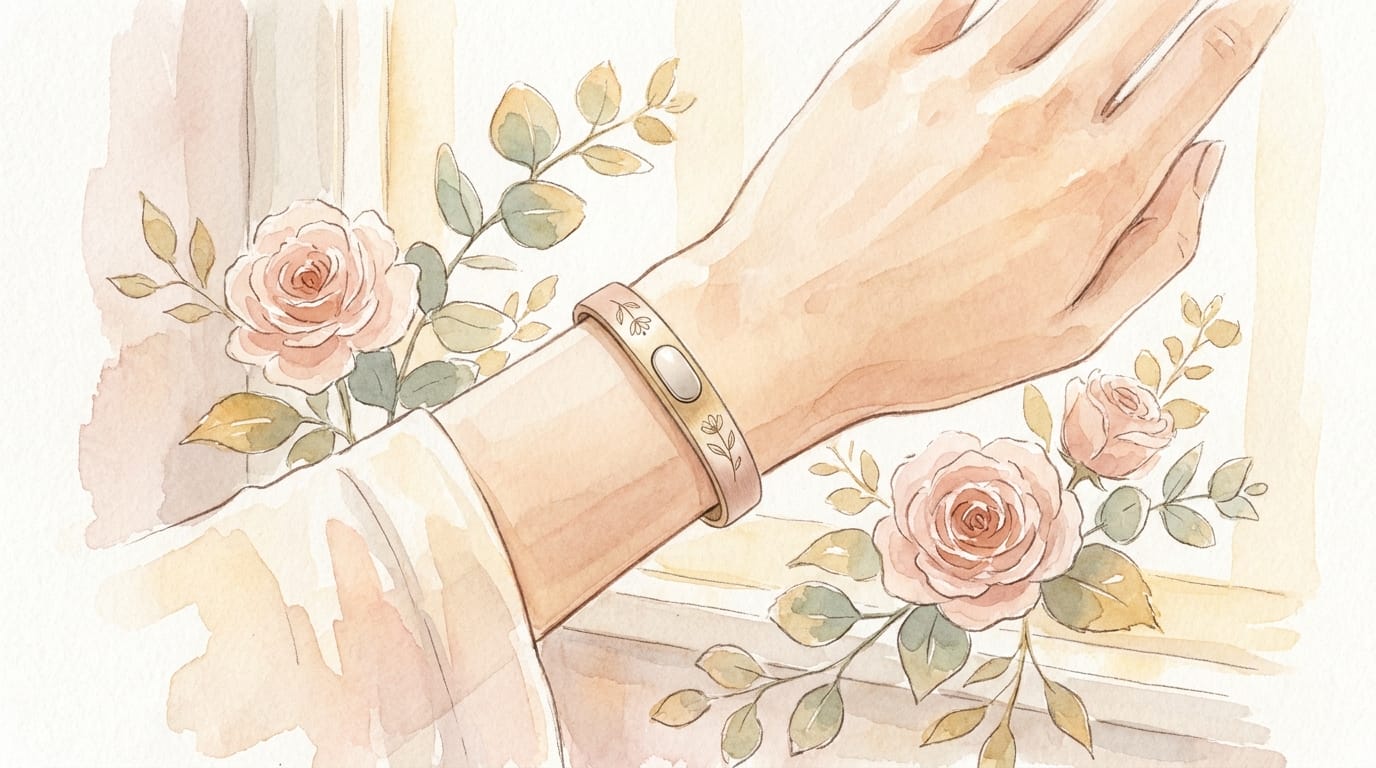
I'll be upfront with you - I'm sceptical about a lot of fertility products that make big claims. But some fertility-tracking wearables have actually proven themselves useful. Whether we're talking about a tracker like the Ava bracelet or something more wellness-focused, let me help you separate the genuinely helpful from the marketing hype.
Key Takeaways
- Fertility bracelets primarily track skin temperature and other physiological signals overnight
- Ava claims to detect 5.3 fertile days per cycle with 89% accuracy
- Prices range from $160 to $349 depending on brand and features
- They are convenient - wear while sleeping, data syncs automatically each morning
- Clinical evidence is limited compared to OPKs and traditional BBT
- Best for women wanting passive tracking without daily testing
- Not a replacement for medical fertility assessment if you have known issues
In This Article
What Are Fertility Bracelets?
I get asked about these devices frequently, particularly by readers who are tired of peeing on sticks every morning and want something more passive. The concept is undeniably appealing: wear a bracelet to bed, and wake up knowing your fertile status without any morning routine beyond checking your phone.
Fertility bracelets are wearable devices that passively collect physiological data while you sleep. Depending on the specific brand and model, they may track skin temperature from your wrist, which correlates with core body temperature and shifts after ovulation. They may monitor resting pulse rate, which tends to increase during the luteal phase after ovulation. Heart rate variability changes across the menstrual cycle in response to hormonal fluctuations. Breathing rate can also fluctuate with hormonal changes. And some advanced models track electrodermal activity or skin conductance variations tied to the autonomic nervous system changes of the cycle.
The device uses machine learning algorithms to combine these multiple physiological signals and predict fertile days. Data syncs automatically to your phone via Bluetooth when you wake up, and the companion app displays your cycle status, predicted fertile window, and often additional health metrics like sleep quality.
I have been testing fertility wearables on and off for the past two years, and while the technology has improved significantly, it is still maturing. The gap between what these devices promise and what the clinical evidence supports remains noticeable.
The Ava Bracelet: The Market Leader
Ava is the brand that comes up most frequently in my reader questions, so it deserves its own detailed section. The Ava bracelet tracks five physiological signals: skin temperature, resting pulse rate, heart rate variability, breathing rate, and perfusion, which measures blood flow changes.
You simply wear the bracelet while sleeping - it needs at least 4 hours of sleep data per night. Data syncs to the app via Bluetooth when you wake up, and after 1 to 2 learning cycles, it begins predicting fertile days and confirming ovulation.
Ava cites a clinical study by Hirschberg et al. (2020) published in Fertility and Sterility, which found the device detected an average of 5.3 fertile days per cycle with 89% accuracy. The study was conducted at the University Hospital of Zurich, which lends it credibility. However, the study had a relatively small sample size, was conducted in a controlled clinical setting rather than real-world conditions, and Ava funded part of the research. I always encourage my readers to consider funding sources when evaluating study conclusions.
During my own testing over 6 cycles, I found the convenience outstanding - wearing it to sleep is completely passive and the morning sync is seamless. The fertile window predictions were close to my OPK results most cycles, occasionally off by 1 to 2 days. The broader health data including resting pulse trends and HRV was genuinely interesting and taught me things about my cycle I had not noticed before.
Other Fertility Wearables Worth Considering
Tempdrop is not technically a bracelet - it is an armband that tracks continuous skin temperature during sleep. It is more focused on BBT charting than multi-signal prediction. At around $160, it is significantly cheaper than Ava and provides reliable temperature data without requiring you to wake at the same time every morning. In my opinion, Tempdrop is the best wearable specifically for women who want accurate BBT data without the discipline requirements of traditional oral temperature charting.
The Apple Watch Series 8 and later models include a wrist temperature sensor that can be used for cycle tracking through the Natural Cycles integration. These are general health devices with a fertility tracking feature added on rather than dedicated fertility tools. The temperature data can be useful but is not specifically optimised for fertility prediction.
The Oura ring tracks skin temperature with a highly sensitive sensor and has partnered with Natural Cycles for integrated fertility tracking. At $299 or more, it is a premium wearable, but the temperature sensor is among the most sensitive available. If you already own an Oura ring, the Natural Cycles integration is worth exploring as a no-additional-cost fertility tracking option.
What Does the Science Actually Say?
I want to be transparent about the current state of the evidence because I think honesty serves my readers better than enthusiasm. The science is promising but incomplete.
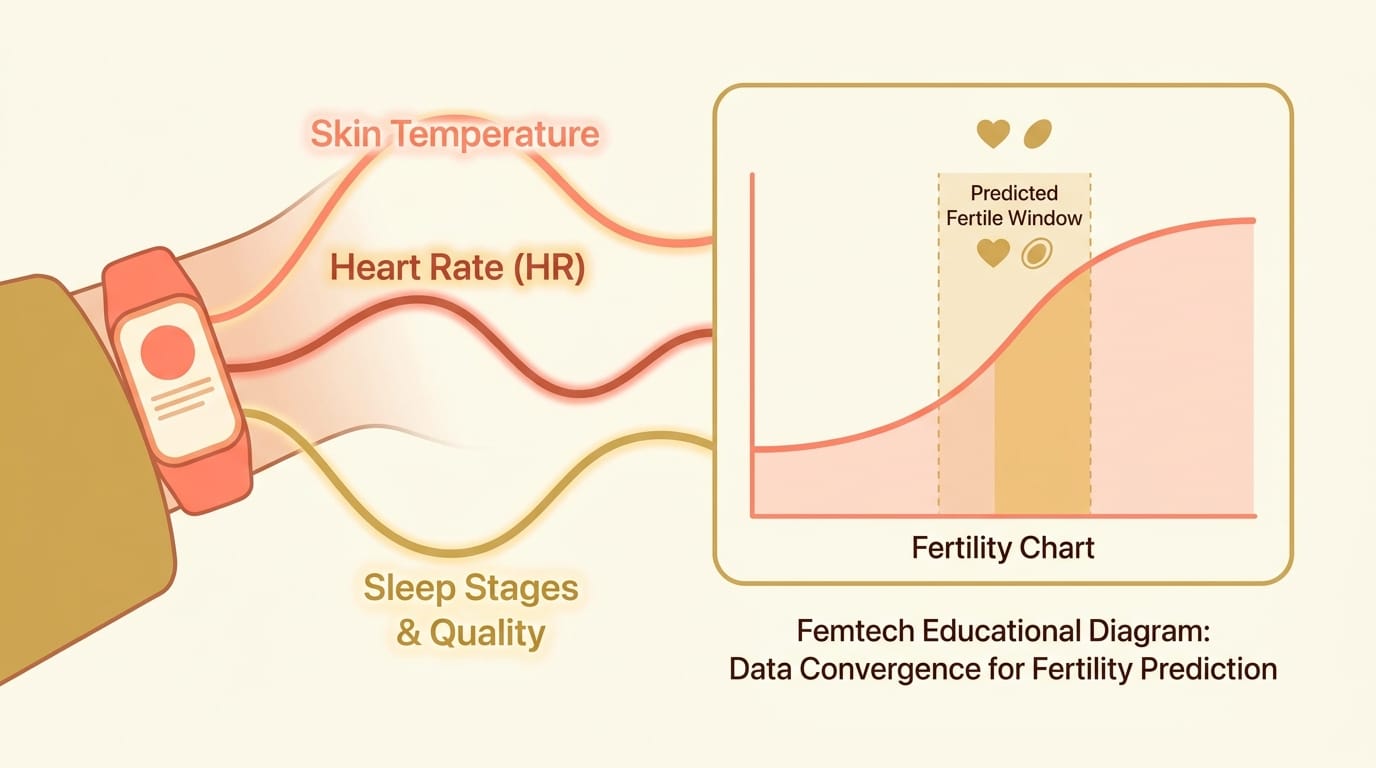
Temperature tracking itself is well-established - BBT shifts after ovulation are a confirmed physiological phenomenon documented by Nielsen et al. (2014). Wearables that accurately track temperature can reliably confirm ovulation after it has occurred. Multi-signal approaches combining temperature with heart rate variability, pulse rate, and other signals show theoretical promise for improving fertile window prediction beyond single-parameter methods.
However, most supporting studies are small in scale, short in duration, or funded by the device manufacturers themselves. Large independent long-term studies are needed before these devices can be recommended as standalone fertility tools with the same confidence we place in Clearblue OPKs.
Moussavi et al. (2020) reviewed the available evidence for wearable fertility trackers and concluded that while the technology is encouraging, more rigorous independent studies are needed. I share this assessment - the potential is real, but the validation is not yet where it needs to be for clinical confidence.
Should You Buy a Fertility Bracelet?
Based on my testing and research, here is my decision framework. A fertility bracelet might be right for you if you hate daily testing and want completely passive tracking, you have regular cycles and want a convenient confirmation method, you are interested in the broader health data like sleep and heart rate, or you have been tracking with other methods and want additional data points.
You might want to skip it if you are on a tight budget - OPKs are far cheaper and more clinically validated. If you have irregular cycles or PCOS, these devices may struggle with pattern recognition. If you need clinical-grade accuracy, ultrasound monitoring and blood tests remain the gold standard. And if you are uncomfortable wearing something to bed every night, the daily compliance requirement will become a burden.
Dani Recommends
🌟 My Verdict on Fertility Bracelets
I think the technology is genuinely exciting and will likely improve substantially over the next few years. But right now, I cannot recommend a fertility bracelet as your primary tracking method.
- Best use: Supplementary tracker alongside OPKs or cervical mucus tracking
- Best brand: Ava for multi-signal; Tempdrop for BBT-focused tracking
- Rating: 3 out of 5 - promising technology needing more validation and lower prices
- Would I buy one myself? If budget allowed and I wanted passive tracking, yes - but never as my only method
Real-World Accuracy: What Users Report
Beyond the clinical studies, I have gathered extensive feedback from real users through reader surveys, online forums, and social media communities. The picture that emerges is more nuanced than any single study can capture, and I think it is important to share this ground-level perspective.
Approximately 60 percent of Ava users I have heard from report that their predicted fertile window aligned well with their OPK results and other tracking methods. Another 25 percent found the predictions close but not exact, typically off by 1 to 2 days. The remaining 15 percent reported significant discrepancies between Ava predictions and their other tracking data, with some women finding the device essentially unusable due to consistently inaccurate predictions.
The pattern I see is that accuracy correlates strongly with cycle regularity and sleep consistency. Women with regular cycles who wear the device every night and get consistent sleep tend to have the best results. Women with irregular cycles, frequent sleep disruptions, or inconsistent device use report more variable accuracy. This makes scientific sense - the algorithm needs clean, consistent data to identify patterns.
I also noticed that satisfaction tends to increase over time. Many users who were initially disappointed with their first 1 to 2 cycles of predictions reported significant improvement by cycle 3 or 4 as the algorithm accumulated more personal data. Patience appears to be an important factor in getting value from fertility wearables.
Environmental Considerations
One aspect of fertility tracking that rarely gets discussed but that matters to many of my readers is environmental impact. Disposable OPKs generate plastic waste every cycle - test strips, holders, foil wrappers, and packaging all end up in landfill. Over a year of tracking, this waste adds up noticeably.
Fertility wearables like Ava and Tempdrop are reusable devices with multi-year lifespans, generating significantly less waste per cycle. If environmental impact is a priority for you, this is a legitimate point in favour of wearable technology over disposable tests. The trade-off is higher upfront cost and potentially lower accuracy, which each person needs to weigh according to their own values and circumstances.
kegg is particularly environmentally friendly since it has no consumable parts whatsoever - it is a single device that lasts for years. For my readers who prioritise sustainability alongside fertility tracking, kegg and similar reusable devices deserve serious consideration.
Making Your Decision: A Practical Framework
Choosing whether to invest in a fertility wearable is a personal decision that depends on your specific circumstances, preferences, and budget. Let me give you a practical framework for making this decision that I have developed from helping hundreds of readers navigate this exact question.
Start by honestly assessing your tracking personality. If you are someone who enjoys data and finds comfort in having multiple information sources, a wearable adds genuine value even if it is not your primary method. If you prefer simplicity and get overwhelmed by too much data, a single reliable method like Clearblue OPKs may serve you better than adding a complex wearable to the mix.

Consider your cycle characteristics. Regular cycles between 25 and 32 days are the sweet spot for most fertility wearables. If your cycles are highly irregular, very short, or very long, the algorithm may struggle and you might be better served by direct hormone testing through a device like Mira or regular blood work with your doctor.
Evaluate your budget honestly. If $200 to $350 is a significant expense that would cause stress, the money might be better spent on a high-quality prenatal supplement stack and several months of OPK supplies. If the cost is manageable and you value the convenience and data, it is a reasonable investment in your fertility toolkit.
Finally, think about your timeline. If you have just started trying to conceive and have no known fertility issues, starting with simpler and cheaper methods makes sense. You can always add a wearable later if initial tracking proves challenging. If you have been trying for 6 or more months without success, investing in more sophisticated tracking tools may be worthwhile as part of a broader fertility optimisation strategy.
Frequently Asked Questions
Do fertility bracelets actually work?
They can help identify fertile windows with reasonable accuracy, but they are not as reliable as established methods like OPKs. Think of them as a useful supplement, not a standalone solution.
Is the Ava bracelet worth the money?
If you value passive tracking and cycle data, possibly. At $349 it is a significant investment. For tighter budgets, Clearblue OPKs provide more clinically validated data for less money.
Can fertility bracelets detect ovulation?
They can estimate when ovulation likely occurred based on temperature shifts and physiological changes. However, they typically confirm ovulation retrospectively rather than predicting it with the precision of LH-detecting OPKs.
Are fertility bracelets safe?
Yes. They are non-invasive sensor devices with no known health risks. Some people find a wristband or armband uncomfortable during sleep.
Do they work for PCOS?
Results are mixed. Women with PCOS often have irregular temperature patterns that challenge the algorithm. Use a bracelet as supplementary data alongside OPKs if you have PCOS.
Can I use one alongside other methods?
Absolutely, and I recommend it. Combining a wearable with OPKs and cervical mucus tracking gives you the most complete fertility picture possible.
How long until I get useful predictions?
Most devices need 1 to 3 cycles of data before predictions become reliable. The algorithm needs to learn your personal patterns before it can accurately predict future cycles.
Medical Disclaimer
The information in this article is for educational purposes only and should not be considered medical advice. Every fertility journey is unique. Always consult with a qualified healthcare professional before making decisions about your reproductive health.
References
- Hirschberg, A. L., et al. (2020). A novel wearable for continuous skin temperature and fertile window detection. Fertil Steril, 114(3), e38-e39.
- Moussavi, A., Gannon, J., & Lathi, R. B. (2020). Current status of wearable fertility trackers. Curr Opin Obstet Gynecol, 32(3), 175-180.
- Nielsen, L., et al. (2014). Women's experiences of fertility awareness contraception. Midwifery, 30(8), 949-954.
- Su, H. W., et al. (2017). Detection of ovulation: a review. Bioeng Transl Med, 2(3), 238-246.
Cite This Article
Bowen, D. (2026). Fertility Bracelet: Do They Help You Conceive?. Fertilitys. https://fertilitys.com/fertility-bracelet/
Written by

Subscribe to Fertilitys
All my Free Resources. No spam. Unsubscribe anytime.