Environmental Toxins and Fertility: What to Actually Avoid
Which everyday chemicals genuinely affect fertility? An evidence-based guide to BPA, phthalates, and endocrine disruptors — plus practical swaps that actually make a difference.

⚡ Quick Answer
Certain environmental chemicals — particularly BPA, phthalates, and pesticides — are proven endocrine disruptors that can affect fertility in both women and men. You can't eliminate all exposure, but high-impact swaps (glass over plastic, fragrance-free products, organic produce) meaningfully reduce your toxic load while trying to conceive.
🔑 Key Takeaways
- BPA, phthalates, and parabens are proven endocrine disruptors with direct evidence linking them to reduced fertility
- Exposure is everywhere — plastics, cosmetics, receipts, cleaning products, food packaging, and tap water
- The goal isn't to go "toxic-free" (impossible and anxiety-inducing) — it's to make high-impact swaps that meaningfully reduce exposure
- Both male and female fertility are affected — this is a couple's issue, not just a woman's concern
- Small, practical changes to daily products can significantly reduce your chemical exposure without creating stress
📑 Table of Contents
When I first started learning about environmental toxins and fertility, my reaction was the same as most people's: panic. Suddenly everything in my kitchen was trying to kill me, every receipt was a hormone bomb, and my shampoo was apparently sabotaging my ovaries.
But here's what I want to tell you straight away: that panic is not helpful. The goal isn't to go fully "toxic-free" — that's expensive, impractical, and for most people, impossible. The goal is to understand which chemicals have real evidence behind them, identify where your biggest exposures are, and make targeted swaps that meaningfully reduce your toxic load.
I didn't overhaul my entire life. I focused on the high-impact changes — the ones backed by solid research — and let the rest go. In this article, I'll share that approach with you.
What Are Endocrine Disruptors?
Endocrine disruptors are chemicals that interfere with your hormonal system. They can mimic natural hormones, block hormone receptors, or alter hormone production and metabolism. For fertility, the relevant disruptors are those that affect the reproductive hormones — oestrogen, progesterone, testosterone, FSH, and LH.
The RIVM (Netherlands National Institute for Public Health and the Environment) published a comprehensive review in 2024 confirming that endocrine-disrupting chemicals (EDCs) are associated with reduced fertility, earlier menopause, altered puberty timing, and decreased sperm quality.
The key ones you need to know about are:
- BPA (bisphenol A) — found in plastic containers, can linings, and thermal receipt paper
- Phthalates — found in fragranced products, vinyl, and soft plastics
- Parabens — used as preservatives in cosmetics and personal care products
- Pesticides — particularly organophosphates and glyphosate, found on non-organic produce
- PFAS (forever chemicals) — found in non-stick cookware, waterproof clothing, and some tap water
- Triclosan — an antibacterial agent in some soaps and toothpaste
Not all chemicals on TikTok's "toxin" list have strong evidence. Essential oils, EMFs, and "detox teas" are not where the science is. Let me focus on what's actually proven.
BPA and Fertility
BPA is probably the most well-studied endocrine disruptor, and the evidence is concerning. Bloom et al. (2011) studied women undergoing IVF and found that those with higher urinary BPA levels had significantly fewer oocytes retrieved and lower peak oestradiol levels. The dose-response relationship was clear — more BPA exposure meant worse outcomes.
BPA mimics oestrogen in the body, binding to oestrogen receptors and disrupting the delicate hormonal feedback loop that controls ovulation. It also appears to affect egg maturation, sperm quality, and embryo development.
Li et al. (2011) published one of the largest human studies on BPA and male fertility, measuring urinary BPA levels in 514 men in a fertility clinic setting. They found that higher BPA concentrations were associated with decreased sperm concentration, decreased sperm motility, and altered sperm morphology. The effect was dose-dependent — meaning the more BPA in a man's system, the worse his semen parameters tended to be. A separate study by Mok-Lin et al. (2010) found similar patterns in women undergoing IVF: higher urinary BPA levels were linked to fewer retrieved oocytes and lower peak oestradiol levels, suggesting reduced ovarian response to stimulation.
Where BPA hides:
- Plastic food containers, especially old or scratched ones
- The lining of canned foods and drinks
- Thermal receipt paper (the shiny kind) — this is a major and often overlooked source
- Some water bottles (look for recycling code 7)
- Dental sealants and some medical devices
The good news: reducing BPA exposure is one of the easiest and most impactful changes you can make. Switching to glass food containers, declining receipts, and choosing BPA-free cans makes a measurable difference in urinary BPA levels within days.
A key point that often gets missed: BPA exposure isn't just about what you eat or drink from. Thermal receipt paper — the shiny kind you get at supermarkets, ATMs, and petrol stations — is one of the largest sources of dermal BPA absorption. Handling receipts transfers BPA to your skin, and if you've just applied hand cream (which increases skin permeability), the absorption is even higher. A study by Hormann et al. (2012) showed that BPA from receipt paper can be absorbed through the skin and detected in blood and urine within hours. The simple fix: decline receipts when possible, or wash your hands after handling them, especially before eating.
Phthalates and Fertility
Phthalates are a group of chemicals used to make plastics flexible and to help fragrances stick to skin. Hauser et al. (2006) found that higher urinary phthalate metabolites were associated with reduced semen quality — specifically lower sperm concentration, motility, and morphology.
For women, phthalate exposure has been linked to:
- Reduced antral follicle count
- Altered menstrual cycle length
- Lower oocyte yield in IVF
- Increased risk of endometriosis
The sneaky thing about phthalates is that they're in almost everything with a fragrance. Your perfume, scented candles, air fresheners, body lotion, shampoo — if it smells like something, it probably contains phthalates. They're also in soft PVC plastic (think: shower curtains, inflatable toys, some food packaging).
Other Chemicals to Be Aware Of
Beyond BPA and phthalates, a few more chemicals deserve your attention:
Parabens
Used as preservatives in cosmetics, moisturisers, and some foods. Parabens have weak oestrogenic activity and have been detected in human breast tissue and urine. The fertility evidence is less robust than for BPA, but multiple studies suggest parabens may affect ovarian reserve and menstrual regularity. Look for products labelled "paraben-free" — this is one swap that's easy and widely available.
Pesticides
A meta-analysis by Jurewicz and Hanke (2017) found that occupational and dietary pesticide exposure was associated with reduced fertility, increased miscarriage risk, and altered semen parameters. The most concerning are organophosphates, found on conventionally grown fruits and vegetables. Choosing organic for the "Dirty Dozen" produce list is a practical approach.
PFAS (Forever Chemicals)
These are found in non-stick cookware (Teflon), waterproof clothing, stain-resistant fabrics, and some drinking water supplies. PFAS take decades to break down in the body and the environment. Research suggests they may affect thyroid function and reduce fertility, though the evidence is still developing. Switching to cast iron or stainless steel cookware is a simple change.
High-Impact Practical Swaps
This is the part I care most about. I didn't go toxic-free — that's unrealistic and anxiety-inducing. Here are the swaps I made personally and recommend to my clients, prioritised by impact:
Think of this as a tiered approach. Tier one changes — the ones that matter most — are food storage, water quality, and the products you put directly on your skin. These account for roughly 80% of your daily chemical exposure. Tier two changes are nice-to-haves: upgrading cookware, switching cleaning products, choosing organic produce selectively. Don't overwhelm yourself trying to do everything at once. Three swaps done consistently will make more difference than fifteen swaps abandoned after a week.
When I say 'high-impact,' I mean changes that reduce your exposure by the largest amount with the least disruption to your daily life. Research from the National Health and Nutrition Examination Survey (NHANES) in the US shows that diet accounts for the majority of BPA exposure, and personal care products are the primary source of phthalate exposure. So the swaps below are prioritised by source — kitchen and food storage first, then personal care, then home environment.
Kitchen
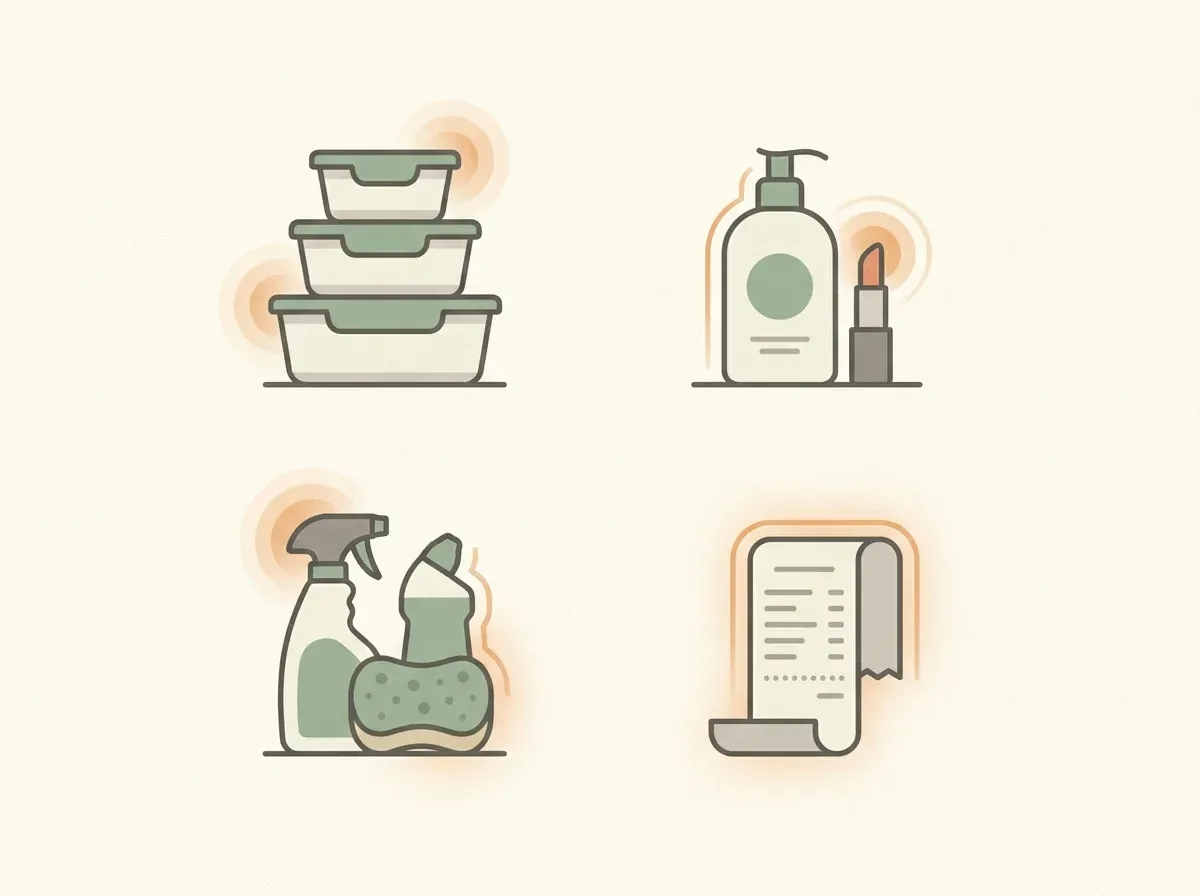
- Glass or stainless steel food containers instead of plastic — especially don't microwave food in plastic
- Cast iron or stainless steel pans instead of non-stick
- Filtered water (a good carbon filter removes most contaminants)
- Fresh or frozen food instead of canned when possible
Personal Care
- Fragrance-free products — this single change reduces phthalate exposure dramatically
- Paraben-free moisturiser and cleanser (widely available now)
- Natural or mineral-based makeup instead of conventional
- Decline thermal receipts — or wash your hands after handling them
Home
- Natural cleaning products (vinegar, bicarb, castile soap) or fragrance-free commercial options
- Open windows for ventilation instead of air fresheners
- Choose organic for high-pesticide produce: strawberries, spinach, grapes, apples, peppers
I tell my clients: pick three swaps from this list and do them this week. Don't try to do everything at once. Sustainable change beats perfect change every time.

How Toxins Affect Male Fertility
This isn't just a women's issue. Hauser et al. (2006) showed that phthalate exposure directly affects sperm quality. Bloom et al. (2011) found BPA affects male reproductive hormones. A meta-analysis by Li et al. (2011) confirmed that environmental chemical exposure is associated with declining sperm counts across populations.
The evidence on male fertility is particularly striking because men continuously produce new sperm — a process called spermatogenesis that takes about 74 days. This means that reducing exposure can lead to measurable improvements in sperm quality within just a few months. Swan et al. (2005) demonstrated that men with higher phthalate metabolites in their urine had significantly lower sperm concentration, motility, and morphology. The relationship held even after controlling for age, smoking, abstinence period, and other confounders. For male partners, this is actually encouraging news: the rapid turnover of sperm means that lifestyle changes today can show up in a semen analysis three months from now.
If you're trying to conceive as a couple, reducing chemical exposure benefits both partners. I always involve the male partner in these conversations — his sperm quality is half the equation, and many environmental toxins affect spermatogenesis (sperm production) directly.
Practical tips for male partners:
- Avoid storing food or drinks in plastic, especially heated
- Choose fragrance-free personal care products
- Minimise exposure to pesticides (gardening, occupational)
- Consider a water filter
- Avoid overheating the testicular area — no hot tubs, tight synthetic underwear, or laptops on the lap for extended periods
One thing I always emphasise: men's fertility is often overlooked in the toxin conversation. Most of the research and media focus is on women's exposure during pregnancy, but male reproductive health is equally affected by environmental chemicals. Studies consistently show that male factor infertility accounts for roughly 40-50% of infertility cases, and chemical exposure is a modifiable risk factor that couples can address together. Making these changes as a team — not as one partner policing the other — tends to be more effective and sustainable.
🌿 Dani Recommends
Toxin Audit Journal
Spend one afternoon doing a "toxin audit" of your kitchen and bathroom. Write down everything in plastic that touches food, every product with fragrance, and every non-stick pan. Don't throw anything away yet — just observe. Then each week, replace one item with a cleaner alternative. I did this over two months and it felt manageable, not overwhelming. The act of writing it down made me aware without making me anxious.
Frequently Asked Questions
Can toxins in everyday products really affect fertility?
Yes. There is strong evidence from multiple studies that common chemicals like BPA, phthalates, and certain pesticides act as endocrine disruptors, interfering with reproductive hormones. Bloom et al. (2011) showed measurable effects on IVF outcomes linked to BPA levels, and Hauser et al. (2006) found phthalate metabolites associated with reduced sperm quality. The evidence is real and growing.
How long does it take to reduce chemical exposure?
Surprisingly quickly. Studies measuring urinary BPA levels show significant drops within 3-5 days of switching from plastic to glass food containers. Phthalate levels decrease within days of switching to fragrance-free products. Your body eliminates these chemicals relatively fast — the challenge is avoiding ongoing exposure.
Should I throw away all my plastic containers?
Not necessarily. Hard, clear plastic containers (like those made from polypropylene or Tritan) are generally safer than soft, cloudy, or scratched plastics. But if you're trying to conceive, the simplest approach is to gradually replace plastic with glass or stainless steel. Don't microwave food in plastic ever — this is the highest-risk use.
Is organic food really necessary for fertility?
You don't need everything organic. Focus on the Environmental Working Group's "Dirty Dozen" list — the produce with the highest pesticide residues: strawberries, spinach, grapes, apples, nectarines, peaches, cherries, pears, tomatoes, celery, potatoes, and peppers. Buying organic for these items makes a meaningful difference. For items with thick skins (avocados, bananas, onions), conventional is fine.
What about BPA-free plastics — are they safe?
Not necessarily. Many BPA-free plastics contain BPS or BPF (bisphenol S or F), which have similar endocrine-disrupting properties. A 2017 review found that BPS may actually be more potent as an endocrine disruptor than BPA. Glass and stainless steel are the safest options.
Does this apply to both partners?
Absolutely. Environmental toxins affect both male and female fertility. Phthalates and BPA directly impact sperm quality and count. If you're trying to conceive, reducing chemical exposure should be a shared effort. Both partners benefit from the same practical swaps.
Should I do a heavy metals test or toxin panel?
Unless you have specific occupational exposure concerns (working with chemicals, living near industrial sites), routine toxin testing isn't typically recommended. Focus on the practical environmental swaps listed in this article — they address the most common exposures without the anxiety of testing. If you have specific concerns, discuss them with your GP or a specialist in environmental medicine.
⚕️ Medical Disclaimer
This article is for informational purposes only and does not constitute medical advice. Environmental health is a complex field, and individual exposures vary greatly. If you have specific concerns about chemical exposure, please consult with your GP or a specialist in occupational/environmental medicine. This article does not replace professional guidance on environmental health assessment.
📚 Cite This Page
Dani, Fertilitys. "Environmental Toxins and Fertility: What to Actually Avoid." Fertilitys.com, 20 Jul. 2026, https://fertilitys.com/environmental-toxins-fertility/
References
- Bloom, M.S. et al. (2011) 'Bisphenol A and ovarian outcomes among women undergoing IVF', Fertility and Sterility, 95(5), pp. 1672-1676.
- Hauser, R. et al. (2006) 'Phthalate exposure and semen quality', Epidemiology, 17(5), pp. 530-537.
- RIVM (2024) 'Endocrine disruptors: effects on human health and the environment', Netherlands National Institute for Public Health and the Environment.
- Jurewicz, J. and Hanke, W. (2017) 'Exposure to pesticides and quality of semen', International Journal of Occupational Medicine and Environmental Health, 21(4), pp. 319-331.
- Li, D.K. et al. (2011) 'Urine bisphenol-A level in relation to semen quality', Fertility and Sterility, 95(5), pp. 1872-1877.
- Gore, A.C. et al. (2015) 'EDC-2: The Endocrine Society's second scientific statement on endocrine-disrupting chemicals', Endocrine Reviews, 36(6), pp. E1-E150.
Written by

Subscribe to Fertilitys
All my Free Resources. No spam. Unsubscribe anytime.