Quick Answer

If you're looking into this, I want to acknowledge something first: male fertility doesn't get talked about nearly enough. I see couples where the focus is entirely on the woman, when actually, male factor issues contribute to about 40% of fertility challenges. So if you're here taking steps to improve your sperm health, that's genuinely a great move.
Key Takeaways
- A full sperm maturation cycle takes about 74 days - give lifestyle changes 3 months minimum
- Excessive heat from hot tubs, laptops, or tight underwear can significantly reduce sperm production
- Smoking, heavy alcohol use, and recreational drugs are among the most damaging factors
- Moderate exercise improves sperm parameters; excessive exercise may not
- Targeted supplements have genuine clinical evidence for improving sperm quality
- A healthy BMI of 20 to 25 is one of the most impactful changes men can make
- About 40 to 50 percent of infertility cases involve male factor contribution
In This Article
- Understanding Sperm Count
- Lifestyle Changes
- Targeted Supplements
- When to See a Doctor
- Dani Recommends
- FAQ
- References
Understanding Sperm Count and Male Fertility
I write about this topic because I hear from so many couples where the fertility focus is entirely on the woman, and the man's contribution is treated as a given that does not need attention. That assumption is wrong and potentially costly in terms of time and emotional energy.
Male factor contributes to roughly 40 to 50 percent of all infertility cases, according to the World Health Organization (Agarwal et al., 2015). This is not a minor side issue - it is nearly half of the fertility equation. Yet men are far less likely to get tested, change their lifestyle, or take supplements targeted at reproductive health.
When we discuss sperm count, we are actually referring to several distinct parameters that collectively determine fertility potential. Concentration is the number of sperm per millilitre of semen, with the WHO reference value being at least 15 million per millilitre. Total count is the number in the entire ejaculate, with a reference of at least 39 million. Motility measures the percentage that are actively moving, with a reference of at least 40 percent total motility. Morphology assesses the percentage with normal shape, with a reference of at least 4 percent normal forms. And volume measures the total ejaculate, with a reference of at least 1.5 millilitres.
A normal semen analysis meets all of these thresholds simultaneously. Below-threshold values do not mean natural conception is impossible, but they do reduce the probability per cycle. Multiple parameters below threshold compound the effect.
Worryingly, a major meta-analysis by Levine et al. (2017) found that sperm counts in Western men have declined by approximately 50 to 60 percent over the past 40 years. Environmental factors, lifestyle changes, endocrine-disrupting chemicals, obesity, and increasing sedentary behaviour are all suspected contributors. This trend makes proactive male fertility care more important than ever.
Evidence-Based Lifestyle Changes
Maintain a Healthy Weight
This is the single most impactful change many men can make, and the science behind it is clear. Excess body fat increases oestrogen levels through the aromatase enzyme, which converts testosterone to oestrogen in fat tissue. Higher BMI is directly associated with lower sperm concentration, reduced motility, and poorer morphology according to Sermondade et al. (2013). Obesity also increases scrotal temperature due to fat insulation around the groin.
I always tell my male readers: if you make only one change, make it this one. Getting to a healthy BMI between 20 and 25 can improve multiple semen parameters simultaneously. Even a 5 to 10 percent reduction in body weight can produce measurable improvements in hormonal balance and sperm quality.
Keep the Testes Cool
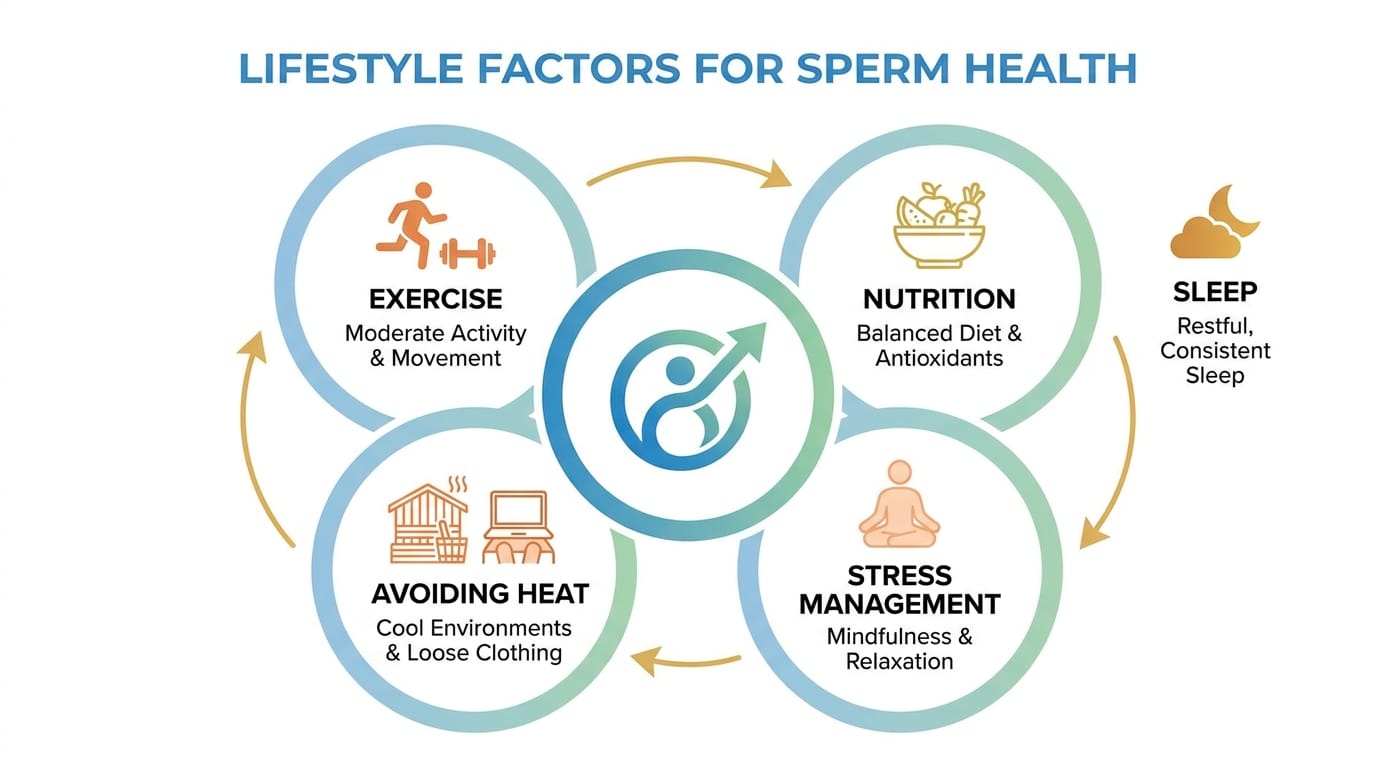
Sperm production requires a temperature 2 to 4 degrees Celsius below core body temperature, which is precisely why the testes are external rather than internal organs. Anything that raises scrotal temperature can impair the delicate process of spermatogenesis.
Hot tubs and saunas are obvious culprits - even occasional use can temporarily reduce sperm count for weeks afterward. Sapra et al. (2016) showed that frequent hot bath use was associated with lower sperm parameters, and that stopping improved them within 3 to 6 months. Laptops placed directly on the lap raise scrotal temperature by 2 to 3 degrees even with a pad underneath, according to Sheynkin et al. (2005). Tight-fitting underwear elevates scrotal temperature compared to looser styles. And prolonged sitting in any context - office work, driving, cycling - raises groin temperature. Take regular breaks and stand up.
Quit Smoking
Smoking is one of the most well-established negative factors for male reproductive health. A comprehensive meta-analysis by Li et al. (2011) found that smoking reduces sperm concentration by 13 to 17 percent, reduces motility by 5 to 10 percent, increases sperm DNA fragmentation, and produces dose-dependent effects - meaning more cigarettes per day leads to worse outcomes. The good news is that quitting can reverse much of this damage within 3 to 6 months.
Moderate Alcohol Consumption
Heavy drinking exceeding 14 units per week is clearly associated with reduced sperm quality. Jensen et al. (2014) found that even moderate intake of 5 or more units per week correlated with lower sperm concentration. Binge drinking appears more harmful than consistent moderate intake. My recommendation while trying to conceive: limit to 1 to 4 drinks per week maximum.
Exercise - But Not Too Much
Moderate consistent exercise improves sperm parameters significantly. However, the relationship is not linear - excessive endurance training at marathon or triathlon levels may actually decrease sperm quality through heat generation and hormonal stress. Cycling more than 5 hours weekly has been associated with lower sperm concentration from scrotal compression and heat, according to Wise et al. (2011). Aim for 150 to 300 minutes of moderate mixed exercise weekly.
Manage Stress and Sleep
Psychological stress affects the hypothalamic-pituitary-gonadal axis that regulates testosterone and sperm production. Li et al. (2016) found perceived stress associated with lower sperm concentration and motility. Prioritise regular physical activity, 7 to 9 hours of sleep nightly, and stress management techniques.
Avoid Endocrine Disruptors
Everyday chemicals can interfere with hormonal function. BPA in plastics, phthalates in fragranced products, pesticides on produce, and PFAS in non-stick cookware are all identified endocrine disruptors. Gore et al. (2015) classified these as a significant concern for human reproductive health. Simple changes like using glass food containers and choosing fragrance-free products can reduce exposure.
Targeted Supplements for Sperm Health
Based on clinical evidence, the most effective supplements for male fertility are CoQ10 at 200 to 300 mg for sperm motility, zinc at 25 to 50 mg for testosterone and sperm formation, selenium at 55 to 100 mcg for antioxidant protection, vitamin C at 500 to 1,000 mg for oxidative stress reduction, L-carnitine at 1 to 3g for sperm energy metabolism, and folic acid at 400 mcg combined with zinc. Start this stack at least 3 months before wanting results.
When to See a Doctor
Lifestyle changes are powerful but have limits. See a urologist or reproductive endocrinologist if you have been trying for 12 or more months without success, your semen analysis shows very low values under 5 million per millilitre, you have a history of undescended testicles or testicular surgery, you experience erectile or ejaculatory dysfunction, or you have a varicocele that may be treatable.
Dani Recommends
🌟 My Priority List for Improving Sperm Count
- Get to a healthy BMI - this alone makes a measurable difference
- Ditch the heat - no hot tubs, no laptop on lap, loose underwear
- Start CoQ10 plus zinc plus selenium - the evidence-based trio
- Quit smoking - the single most damaging controllable factor
- Get a semen analysis - you need data before you can measure improvement
Nutrition for Optimal Sperm Health
Beyond specific supplements, overall dietary patterns have a measurable impact on sperm quality. A Mediterranean-style diet rich in fruits, vegetables, whole grains, fish, and olive oil has been consistently associated with better semen parameters in multiple studies. This dietary pattern provides a wide spectrum of antioxidants, healthy fats, and micronutrients that collectively support reproductive health.
Specific foods that have shown positive associations with sperm quality include walnuts, which Salas-Huetos et al. (2019) found improved sperm vitality, motility, and morphology when consumed daily. Dark leafy greens provide folate and other B vitamins essential for DNA synthesis in developing sperm. Fatty fish like salmon and sardines supply omega-3 fatty acids that form part of the sperm cell membrane. And colourful fruits and vegetables deliver the diverse antioxidant compounds that protect developing sperm from oxidative damage.
Foods to limit or avoid include processed meats, which have been associated with lower sperm counts in several observational studies. Trans fats found in many processed and fried foods may impair sperm concentration. Excessive sugar and refined carbohydrates contribute to insulin resistance and obesity, both of which negatively affect sperm production. And soy products in very large amounts contain phytoestrogens that may theoretically affect hormonal balance, though moderate consumption appears safe based on current evidence.
I always tell my male readers that nutrition is the foundation upon which supplements build. No amount of CoQ10 can fully compensate for a diet dominated by fast food and processed snacks. Getting the dietary basics right first, then adding targeted supplements, is the approach most likely to produce meaningful improvements.
Occupational and Environmental Factors
Your workplace environment can significantly affect sperm health in ways you might not expect. Jobs involving regular exposure to pesticides, heavy metals, solvents, or radiation carry known risks to sperm production and quality. Agricultural workers, painters, welders, and laboratory technicians may all face elevated occupational exposures.

Even office environments present risks. Prolonged sitting raises scrotal temperature, as I discussed earlier. Working with a laptop on your lap is particularly problematic. And stress from demanding work environments can suppress the reproductive hormonal axis. If your occupation involves any of these risk factors, proactive lifestyle changes and targeted supplementation become even more important.
Electromagnetic radiation from mobile phones carried in trouser pockets has been studied as a potential risk factor, with some research suggesting negative effects on nearby sperm. While the evidence is not yet conclusive, I recommend keeping your phone out of your front pocket when possible, using a belt holster or jacket pocket instead.
Frequently Asked Questions
How long does it take to increase sperm count?
Because sperm take approximately 74 days to mature, lifestyle changes and supplements need at least 2.5 to 3 months for measurable improvements. Most studies show significant changes after 3 to 6 months.
Can you increase sperm count naturally?
Yes. Many cases of low count relate to modifiable lifestyle factors. Weight loss, heat avoidance, smoking cessation, exercise, and supplements can all help. Structural issues require medical intervention.
Do boxers or briefs affect sperm count?
There is some evidence that tight underwear raises scrotal temperature and impairs production. Switching to looser underwear is an easy change with potential benefit, though the effect is modest compared to smoking or obesity.
Does frequent ejaculation lower sperm count?
Frequent ejaculation temporarily reduces sperm numbers per ejaculate but does not lower overall production. Regular ejaculation every 2 to 3 days keeps sperm fresh and reduces DNA fragmentation.
Can stress lower sperm count?
Yes. Chronic stress elevates cortisol, which suppresses testosterone production and can impair sperm development. Studies show correlations between perceived stress and lower sperm parameters.
Should I get a semen analysis?
Yes - I recommend it to every couple trying to conceive. It is simple, non-invasive, and provides data you cannot get any other way. Many men avoid it due to embarrassment, but early testing saves time and emotional energy.
Can supplements fix very low sperm count?
Supplements can help mild to moderate cases by addressing oxidative stress and nutritional deficiencies. Very low counts under 5 million per millilitre may require medical treatment including hormone therapy or assisted reproduction.
Medical Disclaimer
The information in this article is for educational purposes only and should not be considered medical advice. Every fertility journey is unique. Always consult with a qualified healthcare professional before making decisions about your reproductive health.
References
- Agarwal, A., et al. (2015). Male infertility around the globe. Reprod Biol Endocrinol, 13, 37.
- Ebisch, I. M., et al. (2006). Folate, zinc and antioxidants in subfertility. Hum Reprod Update, 13(2), 163-174.
- Gore, A. C., et al. (2015). EDC-2: Endocrine-disrupting chemicals. Endocr Rev, 36(6), E1-E150.
- Greco, E., et al. (2005). Antioxidant treatment and sperm DNA fragmentation. J Androl, 26(3), 349-353.
- Jensen, T. K., et al. (2014). Alcohol consumption and semen quality. Hum Reprod, 29(8), 1719-1729.
- Levine, H., et al. (2017). Temporal trends in sperm count. Hum Reprod Update, 23(6), 646-659.
- Li, Y., et al. (2011). Socio-psycho-behavioral factors and semen quality. Fertil Steril, 95(1), 116-123.
- Safarinejad, M. R., & Safarinejad, S. (2009). Selenium and NAC for semen. J Urol, 181(2), 741-751.
- Sapra, A., et al. (2016). Scrotal heat and male fertility. Int J Reprod Biomed, 14(10), 609-616.
- Sermondade, N., et al. (2013). Obesity and sperm quality. Hum Reprod, 28(4), 1079-1087.
- Sheynkin, Y., et al. (2005). Scrotal temperature from laptop use. Hum Reprod, 20(2), 452-455.
- Wise, L. A., et al. (2011). Physical activity and semen quality. Fertil Steril, 95(3), 1025-1030.
- Zhou, X., et al. (2017). L-carnitine for male infertility. Asia Pac J Clin Nutr, 16(S1), 383-390.
Cite This Article
Bowen, D. (2026). How to Increase Sperm Count: Evidence-Based Methods. Fertilitys. https://fertilitys.com/how-to-increase-sperm-count/
Written by

Subscribe to Fertilitys
All my Free Resources. No spam. Unsubscribe anytime.