First Signs of Pregnancy: The Earliest Symptoms Before a Missed Period
The earliest pregnancy symptoms before a missed period — and which ones actually mean something.


💡 Quick Answer
The earliest signs of pregnancy before a missed period include implantation spotting (6–12 days after ovulation), breast tenderness, unusual fatigue, and heightened sense of smell. Most women notice their first symptoms between 8 and 12 DPO (days past ovulation), though many feel nothing at all until after their period is late.
Key Takeaways
- True pregnancy symptoms can't begin until implantation — typically 8–10 days after ovulation (Wilcox et al., 1999)
- Symptoms at 1–5 DPO are progesterone effects, not pregnancy — the embryo hasn't implanted yet
- Implantation bleeding occurs in roughly 25% of pregnancies and lasts 1–2 days
- The earliest reliable sign is a positive pregnancy test, not a symptom
- Up to 80% of pregnant women experience nausea, but most don't feel it until weeks 6–8
You're somewhere between ovulation and your expected period, and your body feels… different. Maybe your breasts are sore. Maybe you're suddenly exhausted by 3pm. Maybe food smells hit you differently this morning. And now you're lying awake at 2am, searching for the first signs of pregnancy before a missed period.
I get it. That two-week wait is brutal — you're hyperaware of every twinge, every cramp, every wave of nausea, and you can't stop wondering: is this a pregnancy symptom, or is my period about to start?
Here's the honest truth: most early pregnancy symptoms are identical to PMS symptoms. That's not what you want to hear, but it's the reality your body is working with. Both are driven by progesterone, which rises after ovulation regardless of whether you've conceived. So trying to spot early pregnancy symptoms before a missed period means looking for the subtle differences — and being honest about what you can and can't know yet.
But there are differences — in timing, intensity, and a few symptoms that genuinely lean more towards pregnancy than PMS. Let me walk you through what the research actually says, day by day, so you can interpret your own body's signals without spiralling.
Table of Contents
Why Early Pregnancy Symptoms Are So Confusing
The reason you can't distinguish early pregnancy from PMS by symptoms alone comes down to one hormone: progesterone.
After ovulation, your corpus luteum (the structure left behind when the egg is released) pumps out progesterone regardless of whether fertilisation happened. This progesterone causes breast tenderness, bloating, mood changes, fatigue, and mild cramping — the exact same symptoms in both scenarios.
If you've conceived, the embryo won't implant into your uterine lining until approximately 8–10 days after ovulation. That's according to the landmark Wilcox et al. study published in the New England Journal of Medicine in 1999, which tracked 189 women using daily urine samples. They found that 84% of successful implantations occurred between days 8 and 10 post-ovulation.
Until implantation happens, your body doesn't know you're pregnant. It's producing the same hormones at the same levels whether an embryo exists or not. This means any symptoms you feel at 1 DPO, 3 DPO, or even 5 DPO are progesterone effects — not pregnancy signs.
The real pregnancy-specific changes only begin once the embryo implants and starts producing hCG (human chorionic gonadotropin). That's the hormone pregnancy tests detect, and it's the trigger for the symptoms that genuinely differentiate pregnancy from a normal luteal phase.
The First Signs of Pregnancy: What Can Actually Happen Before Your Period
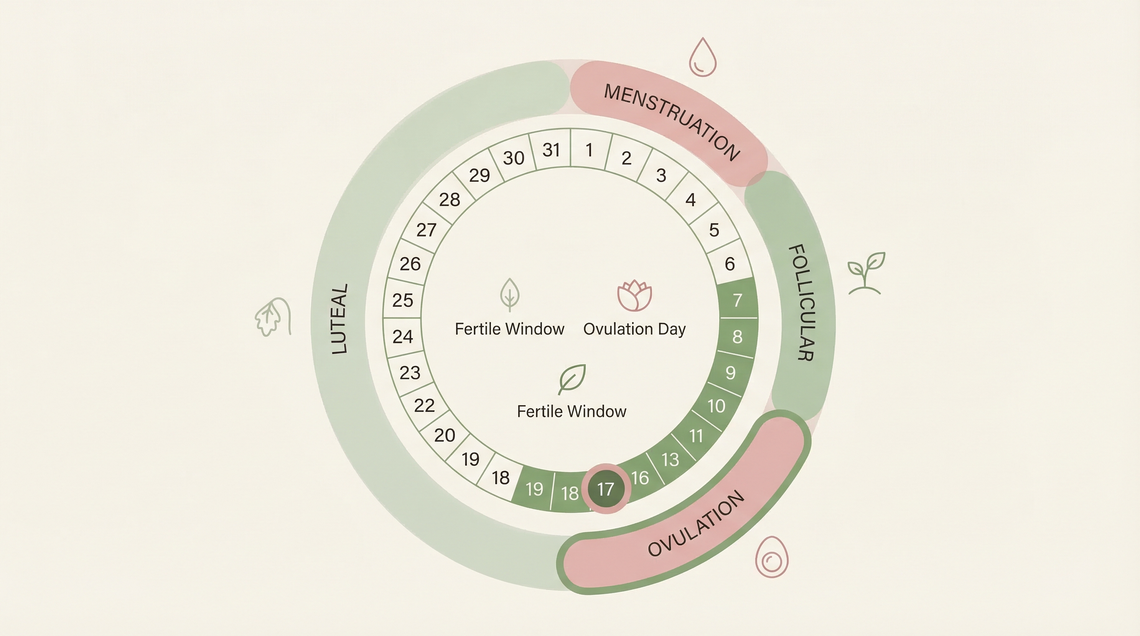
Let me be clear about what "before a missed period" actually means in practice. If you have a 28-day cycle, you ovulate around day 14, and your period is due around day 28. That gives you roughly 14 days between ovulation and your expected period. True pregnancy symptoms can only begin after implantation — so we're talking about a window of roughly 4–6 days where you might notice something different.
That said, here are the earliest signs of pregnancy that have genuine physiological explanations.
Implantation Bleeding or Spotting
Implantation bleeding is one of the few symptoms that's genuinely pregnancy-specific — it doesn't happen in non-pregnant cycles.
When the embryo burrows into the uterine lining, it can disrupt small blood vessels. This causes light spotting — typically pink or brownish, much lighter than a period, lasting 1–2 days. The American Pregnancy Association estimates that roughly 25–33% of pregnant women experience it.
A 2003 study by Harville et al. in the Annals of Epidemiology prospectively tracked vaginal bleeding in early pregnancy and found that 9% of women recorded at least one day of bleeding in the first 8 weeks. Importantly, 12 of those 14 pregnancies continued to live birth — so implantation bleeding doesn't indicate a problem.
How to tell it apart from your period:
- Timing: 6–12 days after ovulation (often a few days before your period is due)
- Colour: Light pink or brown, not bright red
- Flow: Spotting only — you won't need a pad or tampon
- Duration: 1–2 days maximum (periods typically last 3–7 days)
- Cramping: Mild or absent (period cramps tend to build over time)
The tricky part: some women experience light spotting before their period anyway. If it's your first time noticing pre-period spotting, it's more likely to be relevant. If you always spot a day or two before your period, it's harder to interpret.
Breast Changes and Tenderness
This is the symptom women most commonly report as their "first clue" — and the one most likely to mislead you, because progesterone causes breast tenderness whether you're pregnant or not.
However, there's a nuance. In a normal luteal phase, breast tenderness typically peaks a few days before your period and resolves once bleeding starts. In early pregnancy, the tenderness intensifies rather than fading, because progesterone and hCG keep rising instead of dropping.
What some women describe as different about pregnancy breast tenderness:
- Feels deeper or more persistent than usual PMS soreness
- Nipples specifically become more sensitive or painful
- The sides and undersides of breasts feel tender (not just the front)
- Tenderness doesn't ease up as your expected period date approaches
I want to be honest: for many women, there's no perceptible difference. Don't read too much into breast tenderness alone. It's a supporting clue, not a diagnostic one.
Unusual Fatigue
Fatigue in early pregnancy is different from just being tired. Women describe it as a bone-deep exhaustion — the kind where you could fall asleep at your desk at 2pm, even after a full night's rest.
This is driven by the rapid rise in progesterone after implantation, combined with your body's increased metabolic demands as it begins building the placenta and increasing blood volume. Your heart rate rises, your blood pressure drops slightly, and your body is burning energy on a project you can't see yet.
According to Johns Hopkins Medicine, fatigue is one of the four most common early pregnancy symptoms, alongside missed period, breast tenderness, and nausea. It can appear as early as one week after conception — which puts it in the 7–10 DPO window.
The catch: fatigue is also a common PMS symptom and a common sign of stress, poor sleep, or a busy week. On its own, it means very little. Combined with other symptoms, it starts to paint a picture.
Heightened Sense of Smell
This one is genuinely useful because it's not a typical PMS symptom.
Many women report that their sense of smell becomes noticeably sharper in very early pregnancy — sometimes within days of implantation. Common descriptions include suddenly finding your partner's cologne overwhelming, being unable to tolerate cooking smells, or noticing odours that wouldn't normally register.
A 2004 study by Cameron in Chemical Senses found that pregnant women demonstrated heightened olfactory sensitivity across multiple scent types, though the mechanism isn't fully understood. The leading theory links it to rising oestrogen and hCG levels.
If you suddenly can't stand the smell of coffee and you were fine with it last week, pay attention. It's one of the earliest signs of pregnancy that doesn't easily overlap with PMS.
Nausea (Morning Sickness)
Despite its reputation as the classic pregnancy symptom, nausea rarely appears before a missed period. Most women don't experience it until weeks 6–8 of pregnancy (that's 4–6 weeks after ovulation).
When it does appear early, it's usually a vague queasiness rather than actual vomiting. The American College of Obstetricians and Gynaecologists (ACOG) estimates that up to 80% of pregnant women experience nausea at some point during the first trimester, but the timing varies enormously.
If you're feeling nauseous at 8 or 9 DPO, it's more likely progesterone-related (which happens every cycle) than pregnancy-related. True pregnancy nausea is driven by rapidly rising hCG levels, and at that early stage, hCG is barely detectable.
That said, a small percentage of women do report nausea before their missed period. If it's accompanied by other symptoms on this list, it adds to the overall picture. On its own, don't give it too much weight.
Cramping Without a Period
Mild cramping around 8–12 DPO is often called "implantation cramping," though the scientific evidence for this specific mechanism is limited. What we do know is that many women experience lower abdominal cramping in early pregnancy, distinct from period cramps.
The difference women commonly describe:
- Implantation cramps: Brief twinges or pulling sensations, often one-sided, lasting minutes to hours
- Period cramps: Dull aching that builds progressively, typically central/bilateral, lasting hours to days
If you're experiencing cramping that feels different from your usual pre-period pattern — lighter, more localised, or more intermittent — it could be pregnancy-related. But many women cramp before their period in exactly this way, so it's far from definitive.
Frequent Urination
Needing to wee more often can begin surprisingly early in pregnancy — sometimes before a missed period. This is driven by increased blood flow to the kidneys (your blood volume starts rising almost immediately after implantation) and the effect of hCG on kidney function.
If you notice you're getting up at night to use the loo when you normally don't, or you're going more frequently during the day without drinking more, it's worth noting — especially if it coincides with other symptoms.
Mood Changes
Feeling unusually emotional, irritable, or tearful? That's progesterone again — and it happens in both pregnancy and PMS. Some women report that early pregnancy mood changes feel more extreme or "different" than their normal PMS pattern, but this is highly subjective and impossible to use as a reliable indicator.
Food Aversions or Cravings
Sudden food aversions — particularly to foods you normally enjoy — are more common in early pregnancy than food cravings. If the thought of chicken suddenly makes your stomach turn, or your morning coffee tastes metallic, these are signs worth noting.
A metallic taste in the mouth (dysgeusia) is a well-documented early pregnancy symptom linked to oestrogen fluctuations, though it's not universal.
First Signs of Pregnancy After Ovulation: The DPO Timeline
Here's what's actually happening in your body day by day, based on the biology — not on wishful thinking.
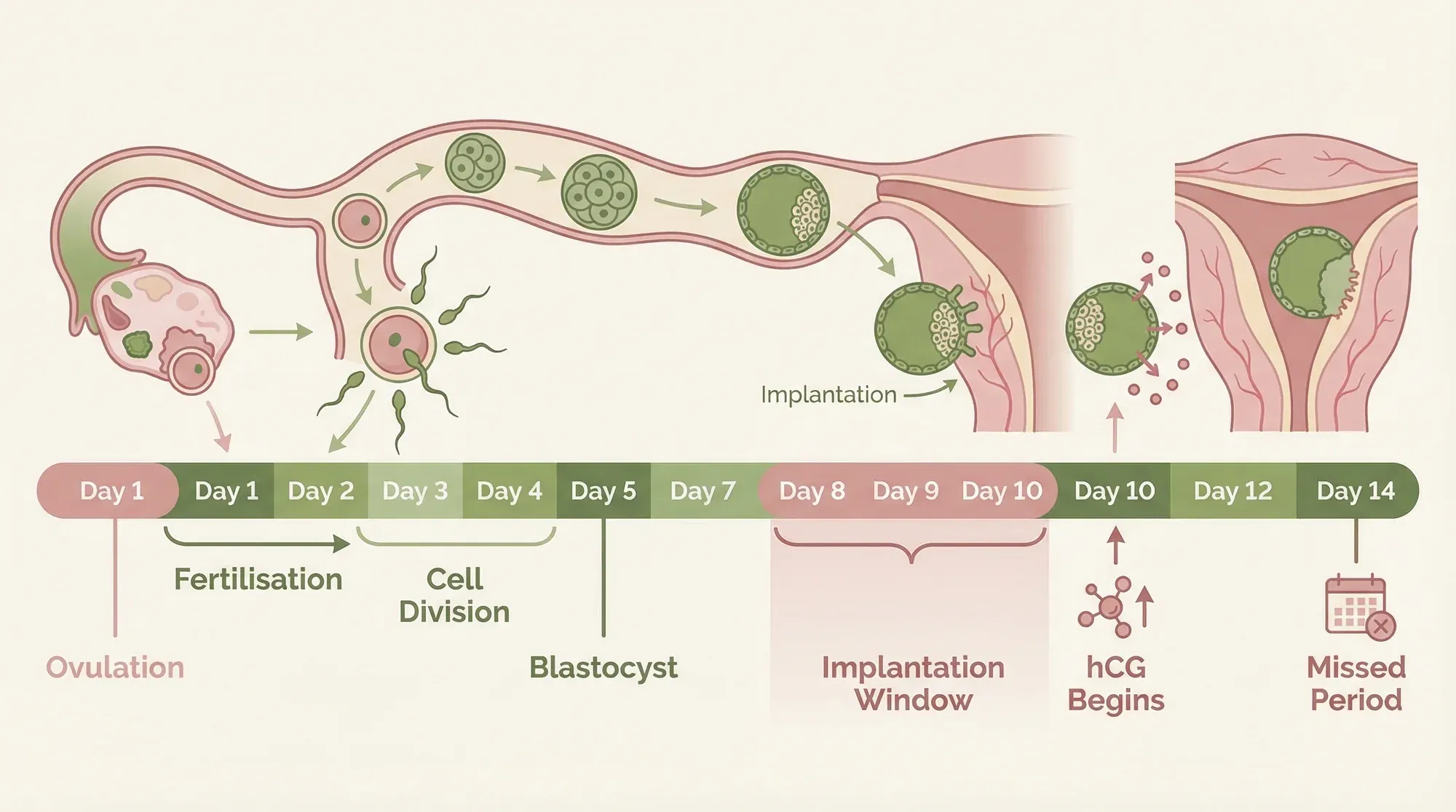
1–5 DPO: The fertilised egg (if conception occurred) is travelling through the fallopian tube. Your body has no way of knowing it exists. Any symptoms you feel are normal progesterone effects from ovulation. Genuine pregnancy symptoms are biologically impossible at this stage.
6–7 DPO: The earliest possible implantation window opens. Most embryos haven't implanted yet, but a small percentage do. You might notice very faint spotting if you're in this minority. Most women feel nothing different.
8–10 DPO: The peak implantation window. This is when 84% of successful implantations occur (Wilcox et al., 1999). hCG production begins at implantation but levels are still extremely low — too low for most pregnancy tests and too low to cause significant symptoms. You might notice: implantation spotting, very mild cramping, or the earliest hints of breast tenderness that's slightly different from your usual pattern.
11–12 DPO: hCG is now doubling roughly every 48–72 hours. Some women begin noticing: heightened smell, deeper fatigue, breast tenderness that doesn't ease, mild nausea or queasiness. This is also when early-detection pregnancy tests (those sensitive to 10-25 mIU/mL) may start showing very faint lines.
13–14 DPO: If you haven't started your period, symptoms may become more noticeable. hCG levels are typically between 10–50 mIU/mL by now. A standard pregnancy test should be able to detect pregnancy from the day your period is due.
First Signs of Pregnancy Discharge: What to Look For
Vaginal discharge changes are one of the very early signs of pregnancy that most guides underplay, but that many women notice before anything else.
In a normal cycle, cervical mucus dries up after ovulation under progesterone's influence. In early pregnancy, many women notice that their discharge doesn't dry up as expected — instead, it remains creamy, white, or slightly yellow and increases in volume.
This is called leukorrhea, and it's caused by rising oestrogen levels and increased blood flow to the cervical and vaginal area. The discharge is typically:
- White or milky in colour
- Mild-smelling or odourless
- Thin to slightly thick in consistency
- More abundant than your usual post-ovulation discharge
When to be concerned: If discharge is green, grey, has a strong odour, or is accompanied by itching or burning, see your GP. These suggest infection rather than pregnancy.
I want to mention cervical position too, because some women track it. In early pregnancy, the cervix typically rises, softens, and closes. But cervical position varies enormously between women and cycles, so it's not a reliable indicator unless you've been tracking it consistently for several months and know your personal baseline.
Symptoms That Mean Very Little (Despite What the Internet Says)
Let me save you some anxiety. These symptoms get constantly listed as "early pregnancy signs" but have virtually no diagnostic value before a missed period:
- Bloating — progesterone causes this every single cycle
- Constipation — same mechanism (progesterone slows gut motility)
- Headaches — hormonal fluctuation, dehydration, stress, or a dozen other causes
- Lower back pain — common in both PMS and early pregnancy
- Dizziness — blood pressure fluctuations happen in the luteal phase regardless
- "Just knowing" — intuition isn't a medical symptom (though I won't dismiss it entirely — some women genuinely do sense something different, and that's valid)
These become more meaningful after a missed period and a positive test. Before that, they're just noise.
When to Take a Pregnancy Test
No amount of symptom analysis replaces a pregnancy test. If you're trying to conceive, here's the evidence-based timing:
- Earliest meaningful result: 10–12 DPO with an early-detection test (sensitivity 10–25 mIU/mL). But expect a very faint line — and a significant false-negative rate at this stage.
- Most reliable result: The day your period is due (14 DPO for a 28-day cycle). Standard tests detect hCG at 25–50 mIU/mL.
- Definitive result: One week after your missed period. By this point, hCG levels in a viable pregnancy are typically 200+ mIU/mL — well within detection range of any test.
First morning urine gives the most concentrated hCG sample. If you get a negative test but your period still hasn't arrived, wait 48 hours and test again — hCG doubles roughly every 2–3 days in early pregnancy.
Very Early Signs of Pregnancy at 1 Week
I want to address this directly because it's one of the most searched queries: "very early signs of pregnancy 1 week."
If "1 week" means 1 week after ovulation (7 DPO) — you're in the implantation window but most embryos haven't implanted yet. Any symptoms you're feeling are overwhelmingly likely to be normal luteal phase progesterone effects. True pregnancy-specific symptoms at 7 DPO are possible but uncommon.
If "1 week" means 1 week after your missed period — that's a completely different situation. By 5 weeks of pregnancy (which is what "1 week late" roughly translates to), hCG levels are climbing rapidly and genuine pregnancy symptoms are well underway. At this stage, a pregnancy test will be definitive. Take one.
The confusion comes from how pregnancy is dated. Doctors count from the first day of your last period, so "4 weeks pregnant" actually means roughly 2 weeks after ovulation. "1 week pregnant" in medical terms is the week of your period — before ovulation even happens. It's confusing by design, and it catches people out constantly.
The Bottom Line
The two-week wait is one of the hardest parts of trying to conceive. You want answers your body isn't ready to give yet, and the internet is full of lists promising you can know at 3 DPO if you just pay close enough attention to your body. You can't — and telling you otherwise would be dishonest.
What I can tell you: if you're experiencing symptoms that feel genuinely different from your normal pre-period pattern — especially a combination of implantation spotting, heightened smell, persistent breast tenderness, and unusual fatigue appearing at 8 DPO or later — those are worth paying attention to. They're not proof, but they're reasonable clues.
The only way to confirm pregnancy is a test. And the only way to get an accurate test is to wait long enough for hCG to build. I know that's not what you want to hear. But it's the truth, and you deserve the truth more than you deserve false reassurance.
If you're reading this at 2am during your two-week wait: you're going to be okay. Whatever the test shows, you're not alone in this, and the waiting doesn't last forever — even when it feels like it will.
Frequently Asked Questions
What are the first signs of pregnancy before a missed period?
The most common first signs of pregnancy before a missed period include implantation spotting (light pink or brown bleeding 6–12 days after ovulation), breast tenderness that intensifies rather than fading, unusual fatigue, and heightened sense of smell. These symptoms can only appear after implantation, which typically occurs 8–10 days after ovulation. Many women experience no symptoms at all before their missed period — that's equally normal.
Can you have pregnancy symptoms at 1 week?
At 1 week after ovulation (7 DPO), true pregnancy symptoms are unlikely because most embryos haven't implanted yet. Symptoms you feel at this stage are almost certainly normal progesterone effects from ovulation. The earliest possible pregnancy-specific symptoms begin at 6–8 DPO (when implantation can occur), but most women don't notice anything pregnancy-related until 10–14 DPO. A pregnancy test won't be reliable until at least 10–12 DPO with an early-detection test.
What does first signs of pregnancy discharge look like?
Early pregnancy discharge (leukorrhea) is typically white or milky, thin to slightly thick, and mild-smelling or odourless. The key difference from normal post-ovulation discharge: instead of drying up as it usually does after ovulation, it remains creamy and increases in volume. This is caused by rising oestrogen and increased blood flow. If discharge is green, grey, strongly odorous, or accompanied by itching, see your GP — that suggests infection, not pregnancy.
What's the difference between PMS and early pregnancy symptoms?
Most early pregnancy symptoms are identical to PMS because both are driven by progesterone. The key differences: pregnancy breast tenderness tends to intensify over time rather than resolving before your period; heightened sense of smell is more pregnancy-specific; implantation spotting (light, brief, 6–12 days after ovulation) doesn't occur in non-pregnant cycles; and pregnancy fatigue is often described as deeper and more persistent than typical PMS tiredness. The only definitive way to distinguish the two is a pregnancy test.
How soon after ovulation can you feel pregnancy symptoms?
The earliest biologically possible pregnancy symptoms begin at implantation, which occurs 6–12 days after ovulation (most commonly 8–10 days). Before implantation, your body produces the same hormones whether conception occurred or not, so symptoms at 1–5 DPO are progesterone effects, not pregnancy signs. Most women who do experience pre-period pregnancy symptoms notice them between 10 and 14 DPO.
Is it worth testing before your missed period?
Early-detection pregnancy tests (sensitive to 10–25 mIU/mL hCG) can sometimes show a faint positive from 10–12 DPO, but the false-negative rate at this stage is significant. Testing on the day your period is due gives much more reliable results. If you get a negative before your period is due but your period doesn't arrive, wait 48 hours and test again. First morning urine gives the highest hCG concentration.
References
- Wilcox AJ, Baird DD, Weinberg CR. Time of implantation of the conceptus and loss of pregnancy. N Engl J Med. 1999;340(23):1796-1799. doi:10.1056/NEJM199906103402304
- Harville EW, et al. Vaginal bleeding in very early pregnancy. Hum Reprod. 2003;18(9):1944-1947.
- Sapra KJ, et al. Characteristics of prospectively measured vaginal bleeding among women trying to conceive. Paediatr Perinat Epidemiol. 2012;26(S1):88-97.
- Cameron EL. Pregnancy and olfaction: a review. Front Psychol. 2014;5:67.
- American College of Obstetricians and Gynecologists. Morning sickness: nausea and vomiting of pregnancy. ACOG Practice Bulletin. 2018.
- Johns Hopkins Medicine. 10 Early Signs of Pregnancy. 2026. hopkinsmedicine.org
- Gnoth C, Johnson S. Strips of hope: accuracy of home pregnancy tests and new developments. Geburtshilfe Frauenheilkd. 2014;74(7):661-669.
Medical Disclaimer: This article is for informational purposes only and does not constitute medical advice. Always consult your healthcare provider if you think you may be pregnant or have concerns about your symptoms. The research cited reflects evidence available as of March 2026.
Written by

Subscribe to Fertilitys
All my Free Resources. No spam. Unsubscribe anytime.