Quick Answer

If you've noticed changes in your discharge and you're wondering what it means, you're definitely not alone. This is one of the most common things women ask me about. Your cervical mucus actually tells you a lot about where you are in your cycle - and once you know what to look for, it's like having a built-in fertility indicator.
Key Takeaways
- Creamy white discharge before a period is normal and driven by progesterone
- Thick, clumpy, or itchy discharge may signal a yeast infection
- Thin, grey, fishy-smelling discharge is a hallmark of bacterial vaginosis
- White discharge can be an early pregnancy sign if your period does not arrive
- Normal discharge is odourless to mildly odorous, white to clear, non-irritating
- Changes in colour, consistency, or smell warrant a doctor visit
In This Article
- Normal Discharge
- Cycle Changes
- Pregnancy Sign?
- When Abnormal
- Fertility Connection
- Vaginal Health
- Dani Recommends
- FAQ
- References
What Normal White Discharge Looks Like
I get asked about this topic constantly, and I completely understand why. Discharge can feel like a real mystery when you are not sure what counts as normal. Let me walk you through it clearly.
Normal vaginal discharge, medically called leukorrhoea, varies throughout your menstrual cycle in response to hormonal fluctuations. In the days before your period, progesterone is the dominant hormone, and it causes your discharge to become thicker, creamier, and more noticeable than at other points in your cycle.
The typical characteristics of normal pre-period discharge include a white or off-white colour that may appear pale yellow when dried on your underwear. The consistency is thick, creamy, or slightly sticky - quite different from the clear, stretchy mucus you see at mid-cycle during ovulation. The volume is moderate, enough to notice but not enough to soak through clothing or require frequent liner changes. And critically, the smell should be odourless to mildly musky.
According to Owen and Katz (1999), normal vaginal discharge production ranges from 1 to 4 millilitres per day, with a pH of 3.8 to 4.5. This acidic environment is maintained by lactobacilli, the healthy bacteria that colonise your vagina, and it serves as a natural defence system against pathogenic infections. When this bacterial ecosystem is disrupted, problems can and do arise.
When I first started researching this topic for my readers, I was struck by how little accurate, non-alarmist information exists online. Most articles either scare people into thinking any discharge signals a problem, or they dismiss genuine concerns that deserve medical attention. The reality is nuanced: most pre-period white discharge is your reproductive system functioning exactly as designed, but knowing the warning signs helps you catch actual problems early.
How Discharge Changes Through Your Cycle
Understanding the complete cycle pattern helps you recognise when something is genuinely off. I recommend my readers pay attention to these distinct phases throughout their cycle.
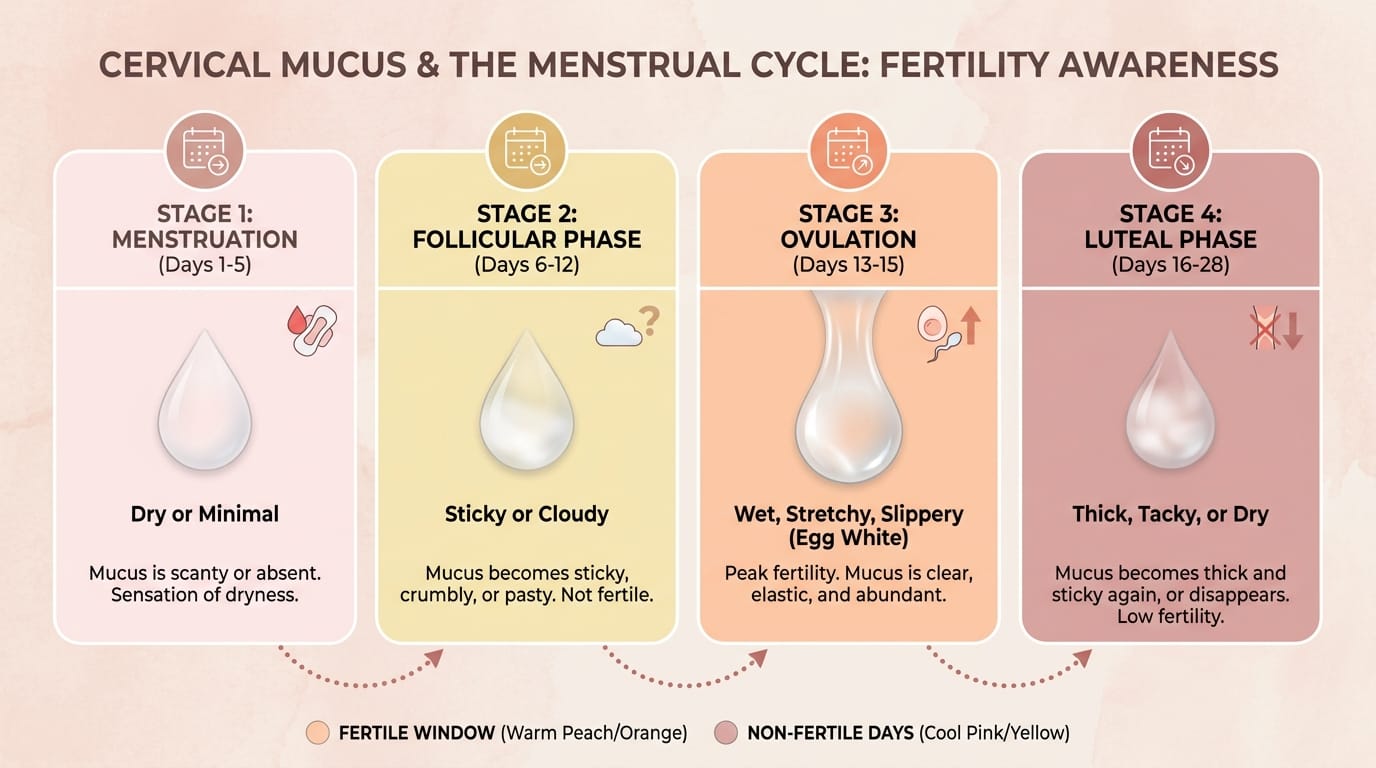
During menstruation, discharge is mixed with blood and not really visible as a separate entity. After your period ends, there are typically several dry days with minimal discharge as oestrogen levels are still low. This is completely normal and does not indicate any problem.
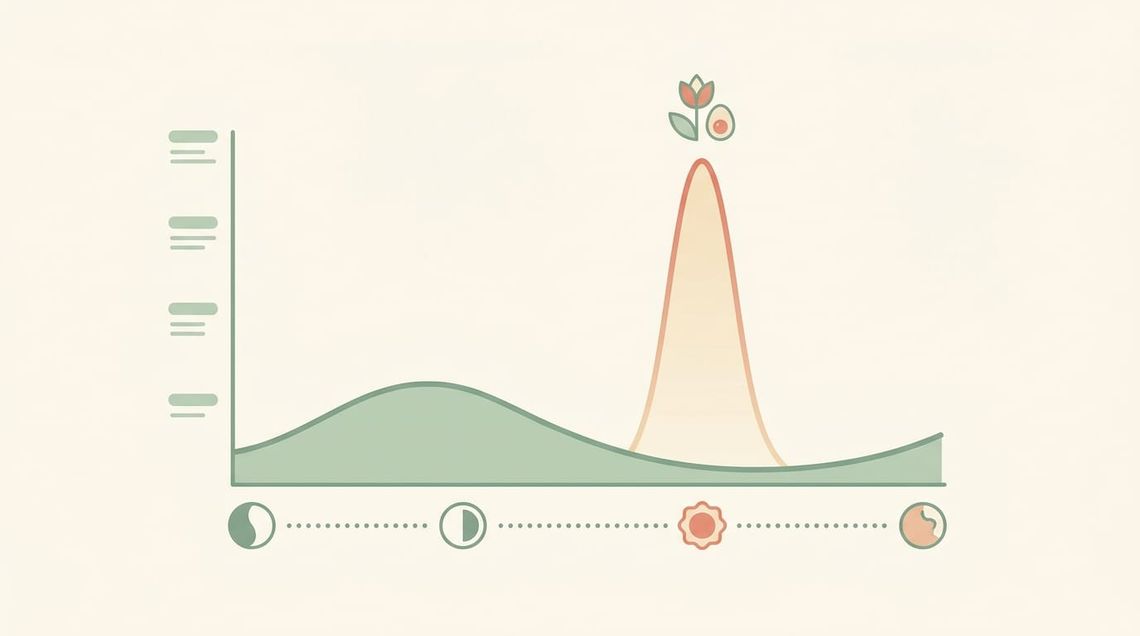
As you approach ovulation around days 10 to 14, rising oestrogen triggers the production of clear, wet, stretchy cervical mucus - the famous egg-white consistency that signals peak fertility. This is the most fertile type of discharge and the one I tell my readers to watch for if they are trying to conceive.
After ovulation, progesterone takes over and the discharge transitions to the thicker, creamier, white consistency that most people notice in the second half of their cycle. This persists through the entire luteal phase until your period begins. Fehring et al. (2006) demonstrated that self-observation of these cervical mucus patterns correlates strongly with ultrasound-confirmed ovulation, validating this cycle-based approach to monitoring.
I have tracked my own discharge patterns for years and strongly encourage every reader to do the same. Knowing your personal baseline makes it much easier to identify when something genuinely needs medical attention versus when your body is simply doing its normal thing.
Can White Discharge Mean You Are Pregnant?
This is something I hear from readers regularly: they noticed more discharge than usual, and then discovered they were pregnant. There is a clear biological explanation for this pattern, and understanding it helps manage expectations.
After implantation occurs, roughly 6 to 12 days after ovulation, your body dramatically ramps up progesterone production to support the developing pregnancy. This increased progesterone causes greater cervical mucus production as your body begins forming the protective mucus plug that will guard your cervix throughout pregnancy.
The discharge may feel heavier, creamier, and more persistent than your usual pre-period pattern. Instead of drying up before your period as it normally would, the discharge continues and intensifies while your period fails to arrive. This pattern - persistent creamy discharge plus missed period - is one of the earliest noticeable signs of pregnancy.
However, I always stress to my readers that increased white discharge alone is not a reliable pregnancy indicator. The hormonal changes of early pregnancy and the normal luteal phase can produce remarkably similar discharge patterns. Salamonsen et al. (2010) noted that endometrial changes following implantation do trigger measurable cervical mucus modifications, but these are not distinctive enough for reliable self-diagnosis. The only definitive confirmation is a positive pregnancy test after your missed period.
When White Discharge Is Abnormal
Not all white discharge is healthy. Here are the specific warning signs I tell my readers to watch for.
Yeast Infection (Candidiasis)
If your discharge is thick and clumpy, often described as cottage cheese-like in texture, odourless or with a bread-like smell, and accompanied by intense itching, burning, or visible redness, you likely have a yeast infection caused by Candida albicans. Sobel (2007) reported that approximately 75 percent of women will experience at least one yeast infection in their lifetime. It is incredibly common, nothing to be ashamed of, and very treatable with over-the-counter antifungal medication like fluconazole or clotrimazole.
Bacterial Vaginosis
If your discharge is thin, watery, and grey-white with a distinctive fishy odour that is especially noticeable after sexual intercourse, it may be bacterial vaginosis. BV results from an imbalance where harmful bacteria outnumber the protective lactobacilli. Workowski and Bolan (2015) from the CDC recommend testing and treatment with prescription antibiotics if symptomatic. Unlike yeast infections, BV is usually not itchy, which helps differentiate the two conditions.
Sexually Transmitted Infections
Chlamydia and gonorrhoea can sometimes cause unusual discharge, though they more commonly present with yellow or green colouration rather than white. If you have had unprotected sex with a new partner and notice any changes in your discharge pattern, get tested promptly. Early treatment prevents complications including pelvic inflammatory disease and potential fertility damage.
White Discharge and Fertility
This is the connection I find most relevant for my Fertilitys readers. Your discharge patterns are genuinely a window into your fertility status, and learning to read them gives you powerful information without any cost or technology.
Creamy white discharge before ovulation indicates rising oestrogen as your body prepares for the fertile window. Egg white discharge at mid-cycle signals peak fertility - this is when you have the highest probability of conceiving. Creamy white discharge after ovulation confirms healthy progesterone production and a functioning luteal phase, both of which are necessary for implantation and early pregnancy support.
And consistently dry or absent discharge may indicate low oestrogen or anovulation, which warrants medical investigation if you are trying to conceive. Bigelow et al. (2004) found that peak cervical mucus day is the single best predictor of ovulation - better than cycle-day calculations or calendar-based methods. If you are trying to conceive, pay close attention to when your discharge transitions from creamy to egg white. That shift means ovulation is approaching.
Maintaining Vaginal Health
After years of writing about reproductive health, here are the evidence-based practices I consistently recommend to keep your vaginal environment healthy. Never douche - the vagina is self-cleaning and douching disrupts the natural bacterial balance. Wear breathable cotton underwear to prevent moisture buildup and heat retention. Always wipe front to back to prevent bacterial contamination. Avoid scented soaps, sprays, and washes that irritate delicate tissue. Change out of wet swimsuits and workout clothing promptly. And consider probiotics containing Lactobacillus strains, though the clinical evidence for their effectiveness is still developing according to Falagas et al. (2006).
Dani Recommends
🌟 My Top Tips for Monitoring Discharge
- Check daily: A quick check when you use the bathroom - note colour and consistency
- Track it: Log discharge type in your fertility app alongside other symptoms
- Know your baseline: Everyone normal is different - focus on YOUR patterns
- Do not panic: Cycle-to-cycle variation is normal and influenced by stress, diet, travel
- See a doctor when in doubt: Sudden changes, unusual smells, or discomfort warrant evaluation
Cervical Mucus: A Deeper Look
Since cervical mucus is so closely connected to both discharge patterns and fertility, I want to give it the detailed attention it deserves. Understanding cervical mucus has genuinely changed how many of my readers approach their cycles, and I believe it is one of the most empowering pieces of reproductive knowledge you can have.
Cervical mucus is produced by the cervix itself, and its primary biological purpose is to either facilitate or prevent sperm from reaching the upper reproductive tract. During non-fertile times, the mucus is thick and forms a barrier - like a biological plug - that keeps sperm and bacteria out. During fertile times, the mucus thins and creates channels that actually guide sperm upward toward the egg.
The Billings Ovulation Method, developed in the 1970s, was one of the first systematic approaches to using cervical mucus observation for fertility awareness. While the method has been refined over the decades, the basic observation principles remain the same and are still taught by fertility awareness educators worldwide.
I have found that women who learn to read their cervical mucus consistently develop a much deeper connection with their bodies. It is one thing to look at an OPK result on a screen; it is another to observe a physical change happening inside your own body. Both are valuable, but the latter creates a body literacy that stays with you for life.
How Medications Affect Discharge
Something I rarely see discussed but that affects many of my readers: common medications can significantly alter your discharge patterns. Hormonal contraceptives, including the pill, patch, ring, and hormonal IUD, change cervical mucus production by suppressing ovulation and altering hormone levels. This is actually one of the ways these contraceptives work - by making cervical mucus hostile to sperm.
Antibiotics can temporarily disrupt vaginal bacterial balance, sometimes triggering yeast infections with associated clumpy discharge. Antihistamines, which dry up mucus throughout the body, can also reduce cervical mucus production, potentially making your discharge seem unusually dry. If you notice sudden changes in discharge after starting a new medication, mention it to your doctor or pharmacist.

Talking to Your Partner About Discharge
This is a topic I feel strongly about because I see how much unnecessary shame and silence surrounds normal bodily functions. Discharge is a completely normal part of having a reproductive system, and being able to discuss it openly with your partner benefits both of you. If you are trying to conceive together, your partner should understand what different types of discharge mean and how they signal your fertile window. I have had readers tell me that simply explaining cervical mucus to their partners completely changed their approach to timing intercourse. It stopped being an abstract calendar exercise and became a shared observation of a real biological process happening in real time. That shift in perspective can take a lot of pressure off both of you.
Your partner can also be a helpful observer. If they notice changes in discharge during intimacy, it can be a gentle prompt to check your fertility tracking and adjust your plans for the day. Open communication about these things strengthens your relationship and makes the conception journey feel more like teamwork rather than a solo medical project.
When to Actually Worry
After years of answering reader questions about discharge, I have developed a simple framework for when to seek medical attention and when to simply monitor the situation. If your discharge changes colour to green or grey, develops a strong unpleasant odour, becomes accompanied by itching burning or pain, changes consistency dramatically from your normal pattern, or contains visible blood outside your period, these are signals to book a doctor appointment. If instead you notice slightly more or less discharge than usual, a mild colour variation within the white to yellow range, slight texture changes around your period, or temporary changes during travel or stress, these are usually normal variations that resolve on their own. When in doubt, a quick visit to your GP or gynaecologist provides peace of mind that no online article can match.
Best Ways to Track Your Discharge
I recommend keeping a simple daily log either in a notebook or a fertility app. Note the colour, consistency, and amount using simple terms. Many apps like Fertility Friend have built-in cervical mucus tracking categories that make this easy. After two to three months of consistent tracking, you will start to see clear patterns that help you predict your fertile window and identify any unusual changes quickly. I personally use a combination of my fertility app and a brief mental note each time I use the bathroom. It takes literally seconds and gives me invaluable data about my cycle that I could not get any other way. Several of my readers have told me that discharge tracking was the single most useful thing they learned from our site, and I am inclined to agree based on my own experience.
Frequently Asked Questions
Is white discharge before a period normal?
Yes. Creamy white discharge in the days before your period is completely normal and driven by progesterone. It only becomes a concern when accompanied by itching, odour, or clumpy texture.
How much discharge is normal?
Normal daily production is 1 to 4 millilitres. You may notice slightly more before your period. Soaking through underwear frequently warrants a doctor evaluation.
Can white discharge indicate early pregnancy?
Yes, increased creamy discharge can suggest early pregnancy from rising progesterone. However, it is not reliable alone. Wait for a missed period and test.
What is the difference between normal discharge and a yeast infection?
Normal discharge is smooth, creamy, and odourless. Yeast infection discharge is thick, clumpy like cottage cheese, and usually accompanied by itching.
Does white discharge mean I am not ovulating?
No. Creamy discharge after ovulation actually confirms healthy progesterone production. If you never see egg-white discharge mid-cycle, that could indicate anovulation.
Can stress affect discharge?
Yes. Stress delays ovulation, shifting your hormonal pattern and changing discharge. Chronic stress may also affect vaginal pH and bacterial balance.
Medical Disclaimer
The information in this article is for educational purposes only and should not be considered medical advice. Every fertility journey is unique. Always consult with a qualified healthcare professional before making decisions about your reproductive health.
References
- Bigelow, J. L., et al. (2004). Mucus observations in the fertile window. Human Reproduction, 19(4), 889-892.
- Falagas, M. E., Betsi, G. I., & Athanasiou, S. (2006). Probiotics for vulvovaginal candidiasis. J Antimicrob Chemother, 58(2), 266-272.
- Fehring, R. J., et al. (2006). Fertility-awareness methods comparison. Contraception, 88(1), 24-30.
- Owen, M. K., & Katz, D. F. (1999). A vaginal fluid simulant. Contraception, 59(2), 91-95.
- Salamonsen, L. A., et al. (2010). Proteomics of the human endometrium. Fertil Steril, 93(7), 2121-2129.
- Sobel, J. D. (2007). Vulvovaginal candidosis. The Lancet, 369(9577), 1961-1971.
- Workowski, K. A., & Bolan, G. A. (2015). STD treatment guidelines. MMWR, 64(RR-03), 1-137.
Cite This Article
Bowen, D. (2026). White Discharge Before Period: Normal or Sign of Pregnancy?. Fertilitys. https://fertilitys.com/white-discharge-before-period/
Written by

Subscribe to Fertilitys
All my Free Resources. No spam. Unsubscribe anytime.