Quick Answer
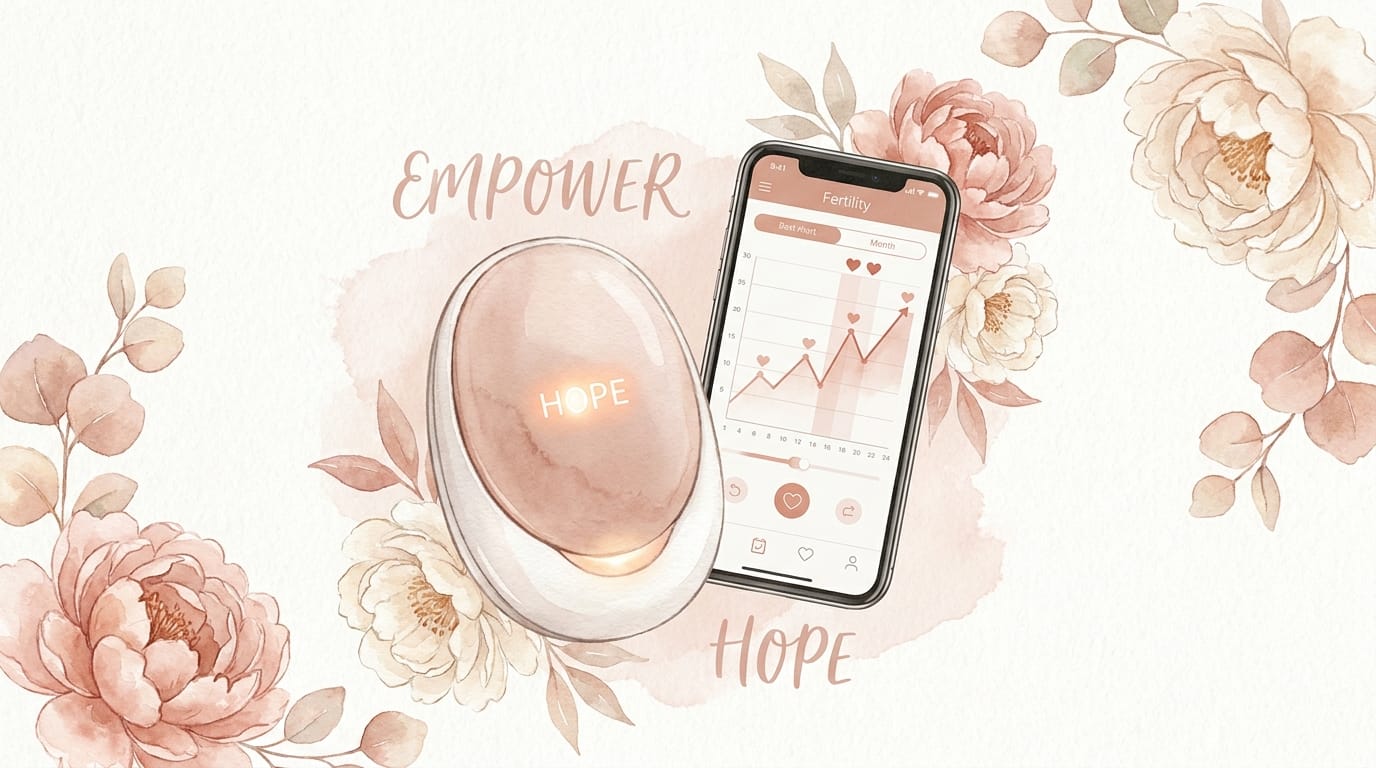
The Mira is one of the more sophisticated home fertility trackers out there, and I've seen it really help women who want lab-quality hormone data without actually going to a lab. If you're the type of person who likes concrete numbers rather than just 'high' or 'low' readings, this might be right up your alley.
Key Takeaways
- Mira measures actual hormone levels - not proxies - giving quantified data
- Tracks LH, E3G, FSH, and progesterone metabolite with specific test wands
- The AI algorithm personalises predictions after 2 to 3 cycles of data
- Costs $199 to $249 for the analyser plus $35 to $50 per box of test wands
- Works for regular and irregular cycles including PCOS
- Published clinical validation exists, setting it apart from many competitors
- Best for data-driven people who want precision over simplicity
In This Article
- What Is Mira?
- Hormones Tracked
- Day-to-Day Use
- What I Loved
- Where It Falls Short
- Compared to Alternatives
- Dani Recommends
- FAQ
- References
What Is the Mira Fertility Tracker?
After testing both kegg and Mira over the past year, I can tell you this clearly: if kegg is the simple, intuitive tracker, Mira is the scientific instrument. And I mean that as both a compliment and a caveat about complexity.
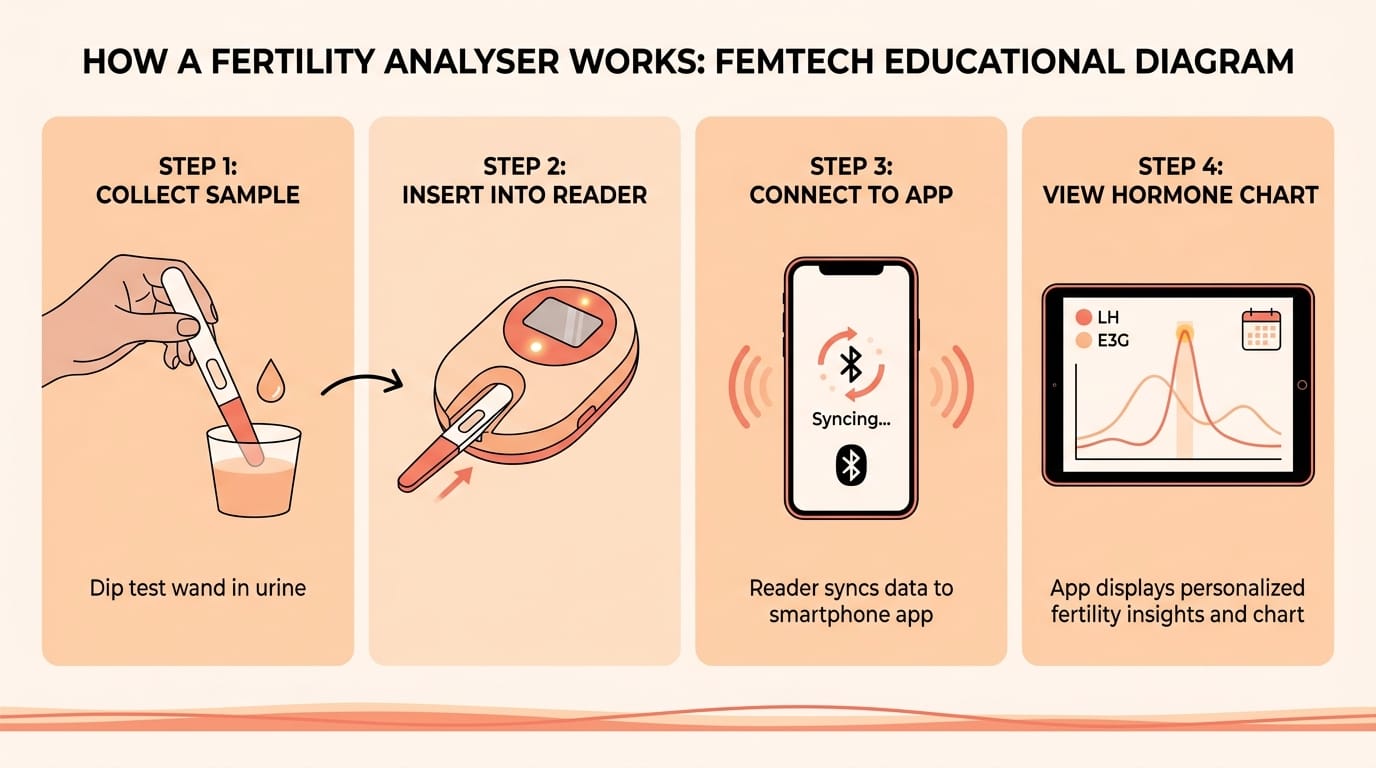
The Mira is a palm-sized analyser that reads hormone levels from urine-soaked test wands. Think of it as a miniature laboratory that sits on your bathroom shelf. You dip a specially designed wand in urine, insert it into the Mira device, and within approximately 15 to 20 minutes, the companion app displays your actual hormone concentration values.
What fundamentally sets Mira apart from standard OPKs is that it does not just tell you positive or negative. It gives you a number - your actual LH level in milli-international units per millilitre, your actual E3G concentration. This matters enormously because hormone surges vary significantly between women and between individual cycles. A positive OPK reading for one person might represent a very different LH concentration than a positive reading for someone else.
The device was developed by a team with backgrounds in biomedical engineering and fertility research, and they have published clinical data supporting the accuracy of their measurements. This commitment to validation is something I always look for when reviewing fertility technology, and it gives me significantly more confidence in the product.
What Hormones Does Mira Track?
Mira uses differently coloured wands to measure different hormones, and each one provides specific insights into your cycle.
LH - The Ovulation Trigger
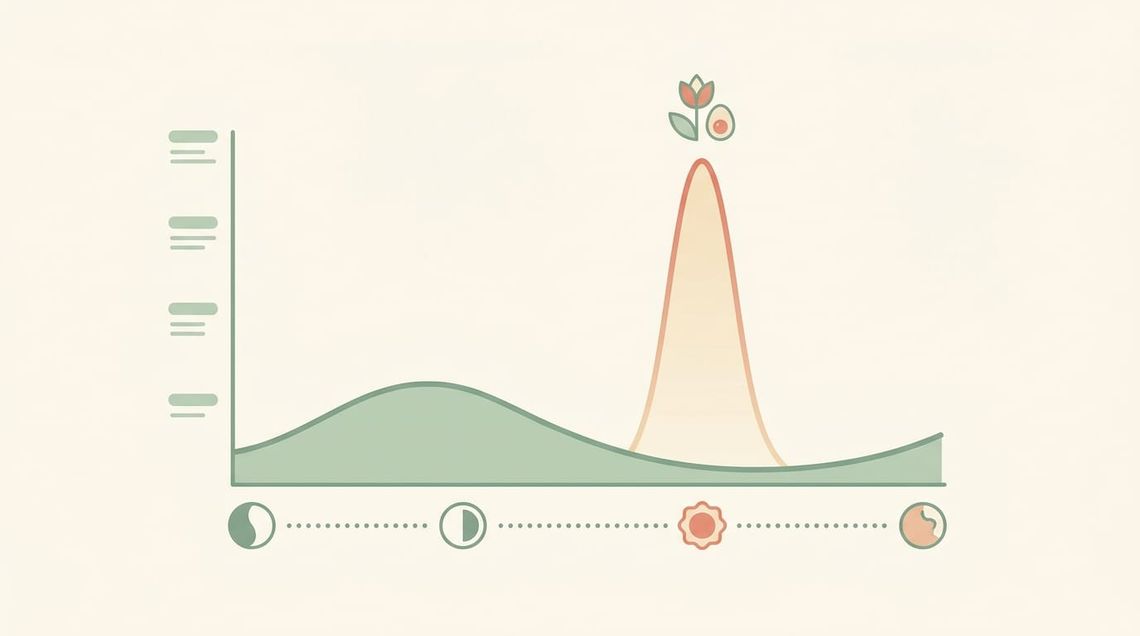
Luteinising hormone surges 24 to 36 hours before ovulation, making it the primary predictor of egg release. Mira gives you an actual numerical value, so you can observe your baseline, the initial rise, and the peak. This granularity helps distinguish between a true surge and a false elevation, which is particularly valuable for women with PCOS who may have multiple LH fluctuations.
E3G - The Fertility Warning
E3G is the urine metabolite of oestrogen. It rises in the days leading up to the LH surge, providing advance warning that your fertile window is approaching. During my testing, the E3G rise consistently appeared 2 to 3 days before my LH peak, giving me useful early notice to increase intercourse frequency.
FSH - The Follicle Stimulator
Follicle-stimulating hormone drives follicle development in the early cycle. Tracking FSH can help identify potential ovarian reserve concerns. I do not use this wand every cycle, but it provides valuable data if you are concerned about diminished ovarian reserve or want a more complete hormonal picture.
PdG - Ovulation Confirmation
This progesterone metabolite rises after ovulation and confirms that ovulation actually occurred. I find this wand the most unique and valuable feature of Mira - confirming ovulation through urine testing at home is genuinely useful and not something most home trackers can do.
Using Mira Day-to-Day
My testing routine involved using first-morning urine for the most concentrated and reliable sample. I would dip the appropriate wand for 10 to 15 seconds, insert it into the Mira device, and wait 15 to 20 minutes for results to appear in the app with hormone curves and predictions overlaid on a cycle timeline.
After 2 to 3 cycles of consistent use, the AI predictions became noticeably more accurate. The app learns your personal hormonal patterns and adjusts its fertile window predictions accordingly. This personalisation is a genuine strength - after enough data, it knows YOUR cycle, not just a generic template.
What I Loved About Mira
The real hormone data is the main selling point, and it delivers. Seeing your actual LH levels rise from a baseline of 12 to a peak of 65 milli-international units is far more informative than a simple smiley face. The device works well for irregular cycles because it reads actual hormone levels rather than relying on cycle-day algorithms. Ovulation confirmation through the PdG wand is genuinely unique and valuable.
The app presentation is beautiful - the hormone curves are educational and help you learn your own body patterns. Having published clinical validation data gives me confidence that I am not relying solely on marketing claims. And the device supports multiple user profiles with separate wands, which is thoughtful design for couples sharing the device.
Where Mira Falls Short
The ongoing wand costs add up quickly. If you test daily during your fertile window plus a few confirmation days, you are looking at $30 to $60 per cycle in consumables. The 15 to 20 minute test time per reading is significantly longer than a standard OPK at 3 to 5 minutes. I experienced occasional low-quality readings requiring retesting, which was frustrating. And the app, while visually excellent, could provide more educational content about interpreting your specific results.
Mira vs. Alternatives
Against Clearblue Advanced Digital: Clearblue is the clinically validated gold standard OPK - simple and effective. Mira provides far more granular data but requires more effort and ongoing expense. Choose Clearblue for simplicity, Mira for data depth.
Against kegg: These use fundamentally different approaches. kegg measures a physical property while Mira measures hormones directly. For clinical accuracy, Mira wins. For convenience and zero ongoing costs, kegg wins.
Against Tempdrop: Tempdrop tracks temperature to confirm ovulation retrospectively. Mira predicts and confirms using hormones. They are complementary - I used Tempdrop alongside Mira for the most complete picture possible.
Dani Recommends
🌟 My Verdict on Mira
Mira is the most data-rich home fertility tracker I have tested. If you want to understand your hormones rather than just know your fertile days, this is your device.
- Best for: Data-driven women, irregular cycles, PCOS, anyone wanting lab-grade insight at home
- Pair with: BBT tracking like Tempdrop for comprehensive ovulation monitoring
- Rating: 4.5 out of 5 - excellent technology with cost as the main barrier
- Would I buy it myself? Yes. The ongoing wand cost is the only hesitation
How Mira's AI Algorithm Works
One of the aspects of Mira that I find genuinely impressive is its machine learning algorithm, and I think understanding how it works helps you get more value from the device.
During your first 1 to 2 cycles of use, Mira is essentially learning your baseline. It measures your hormone levels throughout your cycle and builds a personalised profile of what your normal patterns look like. This includes your typical baseline LH level, the shape and timing of your LH surge, your E3G rise pattern, and your post-ovulation PdG confirmation curve.
By cycle 3, the algorithm has enough data to start making predictions. It identifies patterns in your hormone curves that precede ovulation and uses them to predict your fertile window before the LH surge occurs. This is fundamentally different from simple calendar methods, which assume ovulation happens on the same cycle day every month.
The AI also adapts to irregular cycles. If your ovulation day varies from month to month, Mira learns to recognise the hormone patterns that signal approaching ovulation regardless of which cycle day it falls on. This is where the device genuinely shines compared to calendar-based apps or simple OPKs.
After each cycle, the algorithm refines its predictions. I noticed a clear improvement in accuracy from cycle 1 through cycle 4, after which the predictions stabilised at a level I found quite reliable. The app also shows you confidence intervals for its predictions, which I appreciated as someone who likes to understand uncertainty rather than just receiving a binary fertile or not-fertile result.
Integrating Mira into Your Fertility Plan
Mira works best when it is part of a broader fertility tracking strategy rather than used in isolation. During my testing, I used Mira alongside BBT charting with a Tempdrop, cervical mucus observation, and occasional OPK cross-checking.
The combination gave me a comprehensive picture: Mira predicted my fertile window through hormone analysis, cervical mucus confirmed the approaching ovulation physically, and BBT confirmed that ovulation had actually occurred. For women who are serious about their fertility tracking, this multi-method approach is the gold standard.
I also found Mira particularly valuable during months when my cycle was disrupted by travel or stress. In those months, my usual cervical mucus patterns were less reliable, and having the actual hormone numbers from Mira helped me understand what was happening physiologically rather than just guessing.
True Cost Analysis of Mira
Let me break down the real costs of using Mira so you can make an informed budget decision. The Mira analyser itself costs between $199 and $249 depending on the current promotions and bundle deals. Then there are the ongoing wand costs, which add up over time and are the primary financial consideration.

If you test conservatively - starting around cycle day 10 and continuing through confirmed ovulation - you will use approximately 7 to 10 wands per cycle. At roughly $2 to 3 per wand depending on the pack size you buy, that is $14 to $30 per cycle or approximately $168 to $360 per year. If you test every day of your cycle for maximum data, you are looking at approximately 28 wands per month, which could exceed $700 annually.
Compared to Clearblue Advanced OPKs at $20 to 40 per cycle, Mira is more expensive for basic fertile window detection. But you are paying for significantly more data - actual hormone levels rather than just positive or negative. Compared to blood hormone testing at a clinic, Mira is dramatically cheaper. A single blood draw for hormone panels can cost $100 to $300 depending on your location and insurance. Mira gives you similar data multiple times per cycle for a fraction of that cost.
Using Mira Postpartum
One question I get from readers is whether Mira works after having a baby. The answer is yes, but with important caveats. During breastfeeding, prolactin suppresses ovulation and can create unusual hormone patterns that the Mira algorithm may not handle well initially. Your cycles may be absent, irregular, or very different from your pre-pregnancy patterns.
I recommend waiting until you have at least one or two menstrual periods before resuming Mira tracking. This gives the algorithm recognisable cycle data to work with. Even then, expect the first few postpartum cycles to produce less reliable predictions as your hormones stabilise. Many of my readers have successfully used Mira during their postpartum return to fertility, but patience during the recalibration period is important.
Support and Community
Mira has an active online community and customer support team that I have found responsive and helpful. The company hosts regular webinars with fertility specialists, maintains an informative blog with cycle education content, and has a dedicated support chat for device troubleshooting. Several of my readers have praised Mira customer service for replacing devices quickly when issues arose and for providing personalised cycle interpretation support. This level of support matters for a device that represents a significant investment.
Frequently Asked Questions
Is Mira FDA-cleared?
Mira is FDA-registered as a Class II medical device with published clinical studies validating its measurements. Check the latest status directly with Mira.
Can Mira replace blood tests?
Mira measures urine metabolites, not blood levels directly. While correlation is strong, blood tests remain the clinical gold standard. Mira is best for tracking and screening.
Does Mira work for PCOS?
Yes, especially for tracking multiple LH surges common in PCOS. The actual hormone values help distinguish true surges from false elevations.
How many wands per cycle?
Most users need 5 to 10 wands per cycle. Budget approximately $30 to $60 per cycle depending on testing frequency.
Can I use Mira while breastfeeding?
Yes, but prolactin can suppress ovulation and affect patterns. Results may be harder to interpret initially.
Is Mira worth the cost?
If you value precision data and have been frustrated by simple OPKs, yes. For tight budgets with regular cycles, a standard Clearblue may suffice.
Medical Disclaimer
The information in this article is for educational purposes only and should not be considered medical advice. Every fertility journey is unique. Always consult with a qualified healthcare professional before making decisions about your reproductive health.
References
- Johnson, S., et al. (2015). Urinary reproductive hormone ranges referenced to ovulation day. Clin Chem Lab Med, 53(7), 1099-1108.
- Su, H. W., et al. (2017). Detection of ovulation: a review. Bioeng Transl Med, 2(3), 238-246.
- Zinaman, M., Johnson, S., & Ellis, J. (2019). Smartphone fertility monitor accuracy. Fertil Steril, 112(3), e353.
Cite This Article
Bowen, D. (2026). Mira Fertility Tracker Review: Everything You Need to Know. Fertilitys. https://fertilitys.com/mira-fertility-tracker/
Written by

Subscribe to Fertilitys
All my Free Resources. No spam. Unsubscribe anytime.