Luteal Phase Mood Changes: Why You Feel Different After Ovulation
Irritability, anxiety, tearfulness after ovulation? It's not in your head. A nutritionist explains the science of luteal phase mood changes, PMS vs PMDD, and what actually helps.


You're not being dramatic
If you've ever felt like a completely different person in the week before your period — more anxious, more tearful, shorter-tempered, less able to cope with things that normally wouldn't bother you — you're not losing your mind. You're experiencing a well-documented neurobiological response to hormonal changes that happens every single cycle.
I can't tell you how many women I've sat with who apologised for being "too sensitive" or "dramatic" before we even started talking about their cycles. That word — dramatic — does enormous harm. Generations of women have been told they're "hormonal" (as if that's an insult rather than a description of how every human body works), that they should just push through it, that it's in their heads.

It's not in your head. It's in your neurochemistry. And understanding what's actually happening in your brain during the luteal phase is the first step toward managing it — and toward extending yourself the compassion you'd offer a friend without hesitation.
The science behind the mood shift
After ovulation, progesterone rises sharply. Progesterone itself has a mild calming effect — it's actually sedating at high levels, which is why some women feel sleepier in the luteal phase. But the story is more complex than "progesterone goes up, mood goes down."
Allopregnanolone (ALLO). This is a metabolite of progesterone — your body converts progesterone into it — and it acts on GABA receptors in your brain. These are the same receptors targeted by anti-anxiety medications and alcohol. In most women, ALLO has a calming, anti-anxiety effect. But research published in Translational Psychiatry (2023) found that women with PMDD have an abnormal sensitivity to ALLO — instead of feeling calmed, their brains have a paradoxical reaction, producing anxiety, irritability, and dysphoria (Comasco et al., 2023).
Think of it like this: imagine everyone else gets a calming glass of wine from progesterone, but your brain gets a shot of espresso instead. Same chemical, different response. That's the reality for women with severe premenstrual mood symptoms.
Serotonin. Progesterone and its metabolites influence serotonin neurotransmission — the system that regulates mood, impulse control, appetite, and sleep. Research shows that women with premenstrual mood disorders have altered serotonin transporter density during the luteal phase. Less available serotonin means more irritability, more impulsive reactions, more emotional volatility. This is why SSRIs (selective serotonin reuptake inhibitors) are effective for PMDD — they address the actual mechanism.
The drop matters more than the level. Here's what I wish more women understood: it's not just that progesterone is high in the luteal phase. It's that it drops rapidly in the final days before your period. Your brain adjusts to high progesterone over two weeks, and when it falls away — sometimes within 24–48 hours — the recalibration can feel like emotional whiplash. That's why the worst days are usually the 1–3 days before your period, not mid-luteal phase. Your brain is going through withdrawal.
What it actually feels like
Clinical descriptions don't do justice to the lived experience. So let me describe what I hear from clients — and what I've felt myself:
Anxiety. Often the first symptom to appear, sometimes as early as 1–2 days after ovulation. Generalised worry that doesn't have an obvious cause. Racing thoughts at 3am. A sense of dread that makes you check your phone repeatedly even though nothing's wrong. One client described it as "a background hum of panic that I can't turn off." The progesterone-ALLO-GABA pathway is directly involved.
Irritability. The one most people recognise. A shorter fuse, less patience, disproportionate reactions to minor frustrations. Your partner loading the dishwasher wrong becomes a capital offence. You know you're overreacting — and knowing that makes it worse, because now you're irritated AND guilty. Serotonin changes drive this — the same neurotransmitter shift that affects impulse control.
Sadness or tearfulness. Feeling weepy, heavy, hopeless, or emotionally flat. Some women describe it as a grey filter over everything. A sad advert makes you cry. A colleague's offhand comment stings for hours. This can look like depression but it lifts when your period starts — that cyclical pattern is the distinguishing feature. If it doesn't lift, that's worth investigating further.
Brain fog. Difficulty concentrating, forgetting why you walked into a room, losing your train of thought mid-sentence. Research found that women with PMDD show measurably impaired cognitive performance in the luteal phase, including slower reaction times and reduced working memory. This isn't laziness. It's biochemistry.
Social withdrawal. Wanting to cancel plans, avoid people, stay home. This is your nervous system signalling that it's overwhelmed — and sometimes honouring that impulse is the healthiest response you can have. Not every cancellation is avoidance. Sometimes it's self-preservation.
Emotional sensitivity. Your volume knob for everything is turned up. Beauty hits harder. Pain hits harder. Kindness makes you cry. Cruelty devastates you. You feel everything more intensely — and the world isn't designed for that level of sensitivity.
PMS vs PMDD — where's the line?
There's a spectrum, and knowing where you sit matters for treatment:
| PMS | PMDD | |
|---|---|---|
| Prevalence | ~75% of menstruating women | 3–8% of menstruating women |
| Mood symptoms | Mild to moderate irritability, sadness, anxiety | Severe mood swings, hopelessness, intense anxiety, rage, feeling out of control |
| Impact on daily life | Noticeable but manageable | Significantly impairs work, relationships, daily functioning |
| Timing | Late luteal phase (1–5 days before period) | Can start mid-luteal phase (7+ days before period) |
| Resolution | Improves within 1–2 days of period starting | Clears within 1–2 days of period starting |
| Treatment | Lifestyle, supplements, sometimes medication | Often requires SSRIs, hormonal treatment, or specialist care |
If mood symptoms significantly impair your ability to function for more than 2 cycles, speak to your GP about PMDD assessment.
PMDD is a clinical condition — it's in the DSM-5. It's not "bad PMS." If you find yourself dreading half your cycle, if relationships suffer, if you've had thoughts of self-harm in the luteal phase that disappear when your period arrives — please tell your GP. This is a recognised disorder with effective treatments, and you deserve to be taken seriously.
What actually helps
Track it first. Before anything else, track your mood alongside your cycle for 2–3 months. When you can see the pattern — symptoms starting at a specific DPO and lifting with your period — it transforms your relationship with it. You stop blaming yourself and start recognising it as hormonal. That cognitive shift alone reduces suffering. You're not broken. You're cycling.
Calcium (1,200mg daily). One of the most evidence-backed supplements for PMS. A landmark RCT by Thys-Jacobs (1998) found that calcium reduced overall PMS symptoms by 48% compared to placebo. That's a staggering effect size for a cheap, over-the-counter supplement. The mechanism: calcium levels fluctuate across the menstrual cycle, and supplementation stabilises them. I recommend this to virtually every client with premenstrual mood symptoms.
Magnesium (200–400mg daily). Magnesium glycinate specifically — best absorbed, least likely to cause digestive issues. Magnesium supports GABA activity (your brain's calming system) and serotonin production. Studies show significant reduction in anxiety, water retention, and mood symptoms. If you only add one supplement, make it magnesium.
Vitamin B6 (50–100mg daily). Involved in serotonin and dopamine synthesis. Evidence for PMS relief is moderate but consistent. Don't exceed 200mg daily long-term.
Omega-3 fatty acids. Anti-inflammatory and supportive of brain cell membrane health. Our omega-3 guide covers dosing — 1,000–2,000mg EPA+DHA daily.
Exercise — but the right kind. This is counterintuitive, but moderate exercise consistently outperforms high-intensity exercise for luteal phase mood. A 30-minute walk outdoors does more for your mood than a gruelling gym session. High-intensity exercise raises cortisol, which amplifies progesterone withdrawal effects. The luteal phase is the time for gentleness with yourself — swimming, yoga, walking, stretching. Save the HIIT for the follicular phase when your body can handle the stress better.
Complex carbohydrates. There's a reason you crave carbs in the luteal phase — your brain needs them for serotonin production. Don't fight it. Choose wholegrain bread, oats, sweet potatoes, and brown rice over refined sugar. Steady blood sugar = steadier mood. The craving is your body telling you what it needs.
Reduce alcohol and caffeine. Both worsen anxiety and disrupt sleep in the luteal phase. Even moderate alcohol depletes magnesium and B vitamins — the exact nutrients your brain needs right now. Caffeine amplifies cortisol. Consider cutting back from ovulation to your period and see if you notice a difference. Many women are surprised by how much this helps.
🌿 Dani Recommends
A luteal phase comfort bowl
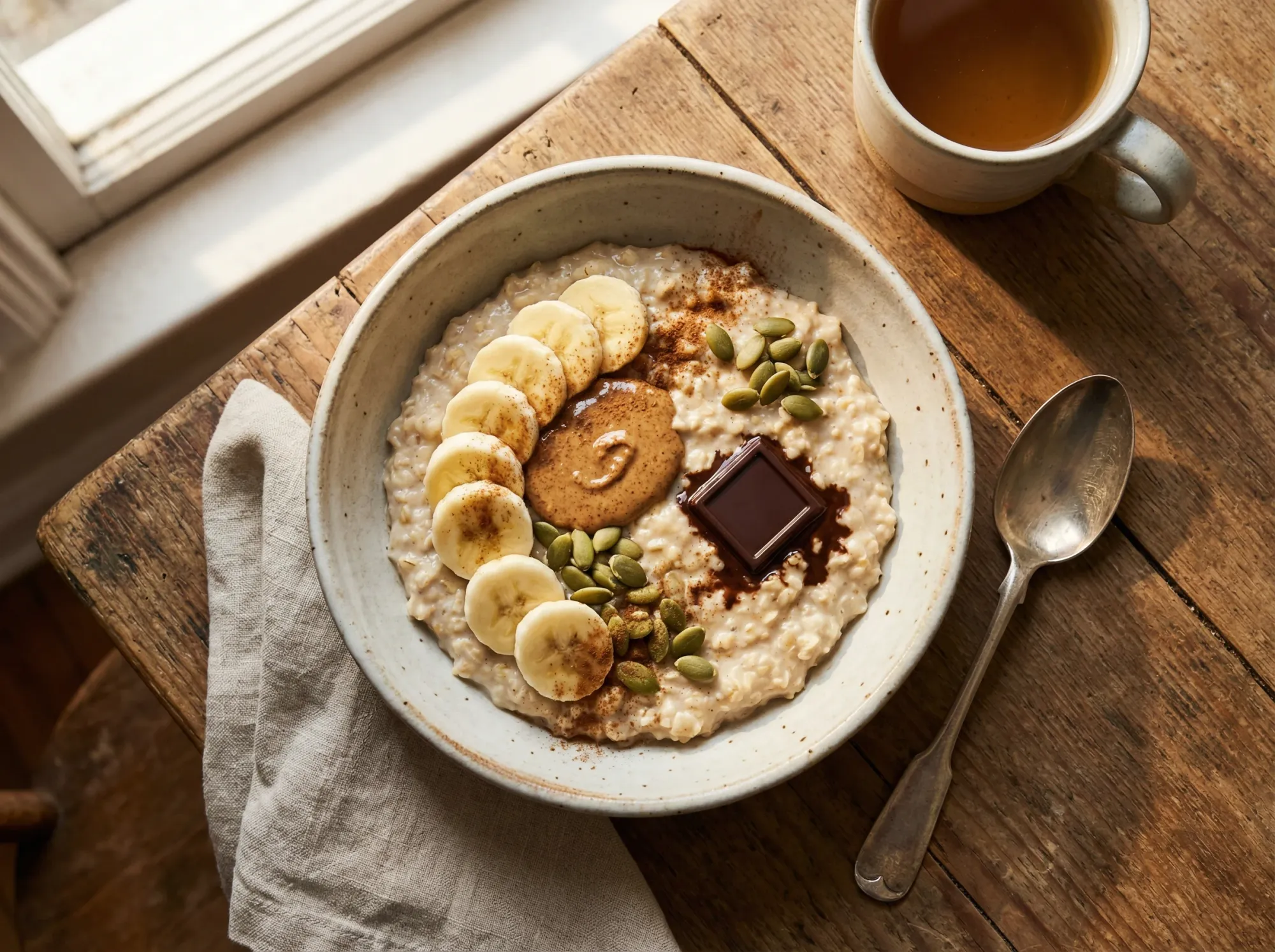
When the mood dip hits, this is what I make: warm porridge oats with a sliced banana, a tablespoon of almond butter, a sprinkle of cinnamon, and a handful of pumpkin seeds. The oats give you complex carbs for serotonin production. The banana adds B6 and magnesium. The almond butter keeps blood sugar steady. And pumpkin seeds are one of the richest food sources of magnesium — the mineral your brain is crying out for. It takes 5 minutes, costs almost nothing, and I eat it for breakfast from ovulation until my period starts. It's become a ritual. Sometimes I add a square of dark chocolate on top, because life is too short to white-knuckle your way through the second half of your cycle.
When to see your GP
Lifestyle and nutrition changes work well for mild to moderate PMS. But there are times when professional help isn't just appropriate — it's necessary:
- Mood symptoms significantly impair your work, relationships, or daily functioning for more than 2 consecutive cycles
- You experience thoughts of self-harm or suicidal ideation during the luteal phase — even if they disappear when your period starts
- Anxiety or depression is severe enough that you can't function normally
- Symptoms last longer than 7 days per cycle
- Lifestyle changes haven't improved things after 3 months of consistent effort
Medical treatments that work:
- SSRIs — can be taken daily or only during the luteal phase ("luteal-phase dosing"). Effective for 60–70% of women with PMDD. The fact that they work selectively during the luteal phase tells you this is a real, biochemical condition — not a mindset problem
- CBT (cognitive behavioural therapy) — shown to reduce the impact of PMS/PMDD symptoms by changing how you respond to them. Doesn't fix the neurochemistry but builds coping strategies that make the symptoms more manageable
- Combined oral contraceptive pill (specific formulations with drospirenone) — suppresses ovulation, eliminating the hormonal fluctuation. Not suitable if you're trying to conceive
A word about TTC and luteal phase mood
If you're trying to conceive, the luteal phase takes on an additional emotional layer that makes everything harder. You're not just dealing with hormonal mood shifts — you're dealing with the two-week wait. The hope, the symptom-spotting, the bargaining with the universe. And then, if your period arrives, the grief hits at exactly the moment your brain chemistry is most vulnerable.
I see this cycle repeat in clients and it breaks my heart. The progesterone drop triggers the period, the grief, AND the worst mood symptoms all at once. It's a perfect storm of hormonal and emotional pain.
What I want you to know: the sadness you feel when your period arrives isn't weakness. It's compounded — biochemical mood disruption layered with genuine loss. Be extraordinarily kind to yourself on those days. Clear your diary if you can. Don't make important decisions. Let your partner take over. And remember that in 2–3 days, when oestrogen starts rising again, you will feel like yourself. You will have hope again. The darkness of cycle day 1 is temporary, even when it doesn't feel that way.
The bottom line
Luteal phase mood changes are not a character flaw. They're a neurobiological response to hormonal shifts that affect the majority of menstruating women to some degree. Understanding the mechanism — progesterone, allopregnanolone, serotonin — takes it from "what's wrong with me?" to "my brain chemistry is doing something predictable, and I can work with it."
Track your symptoms. Feed your brain what it needs. Move gently. Rest without guilt. And if it's severe, tell your GP — because PMDD is treatable, and you don't have to white-knuckle your way through half your life.
Why do I feel so anxious after ovulation?
Rising progesterone produces allopregnanolone (ALLO), which acts on GABA receptors in your brain. In some women, this interaction causes anxiety rather than calm — a sensitivity central to PMDD. Serotonin changes also contribute. The anxiety typically peaks in the late luteal phase and resolves when your period starts.
Is luteal phase depression normal?
Mild sadness or emotional sensitivity affects up to 75% of women. Severe depression, hopelessness, or difficulty functioning may indicate PMDD — a clinical condition that responds well to treatment. Track your symptoms and discuss persistent patterns with your GP.
What supplements help with luteal phase mood swings?
Calcium (1,200mg daily — reduced PMS symptoms by 48% in one RCT), magnesium glycinate (200–400mg daily), vitamin B6 (50–100mg daily), and omega-3 fatty acids (1,000–2,000mg EPA+DHA). Start taking them daily rather than just in the luteal phase.
Can exercise help with PMS mood changes?
Yes — but the type matters. Moderate exercise like walking, swimming, and yoga consistently improves luteal phase mood. High-intensity exercise can worsen symptoms by raising cortisol. A 30-minute walk outdoors is often more effective than a gym session during this phase.
How do I know if I have PMDD?
PMDD is diagnosed when you have at least 5 symptoms (including at least 1 mood symptom) in the luteal phase that significantly impair daily functioning, across at least 2 consecutive cycles. The hallmark: symptoms resolve within days of your period starting. Track daily for 2–3 cycles and bring the data to your GP.
References
- Comasco, E. et al. (2023). Emotion-induced brain activation across the menstrual cycle in individuals with premenstrual dysphoric disorder. Translational Psychiatry, 13, 124. Nature
- Thys-Jacobs, S. et al. (1998). Calcium carbonate and the premenstrual syndrome: effects on premenstrual and menstrual symptoms. American Journal of Obstetrics and Gynecology, 179(2), 444–452.
- Rapkin, A.J. & Akopians, A.L. (2012). Pathophysiology of premenstrual syndrome and premenstrual dysphoric disorder. Menopause International, 18(2), 52–59.
- RCOG. (2017). Management of Premenstrual Syndrome (Green-top Guideline No. 48). RCOG
- Reed, B.G. & Carr, B.R. (2018). The Normal Menstrual Cycle and the Control of Ovulation. In: Endotext. NCBI
Medical disclaimer: This article is for informational purposes only and does not constitute medical advice. If you experience severe mood symptoms, thoughts of self-harm, or suspect you may have PMDD, please consult your GP. PMDD is a treatable condition — you do not have to manage it alone. If you're in crisis, contact the Samaritans (116 123) or your local emergency services.
Written by

Subscribe to Fertilitys
All my Free Resources. No spam. Unsubscribe anytime.