LH Hormone Guide: The Luteinizing Hormone, LH Surge, and Ovulation

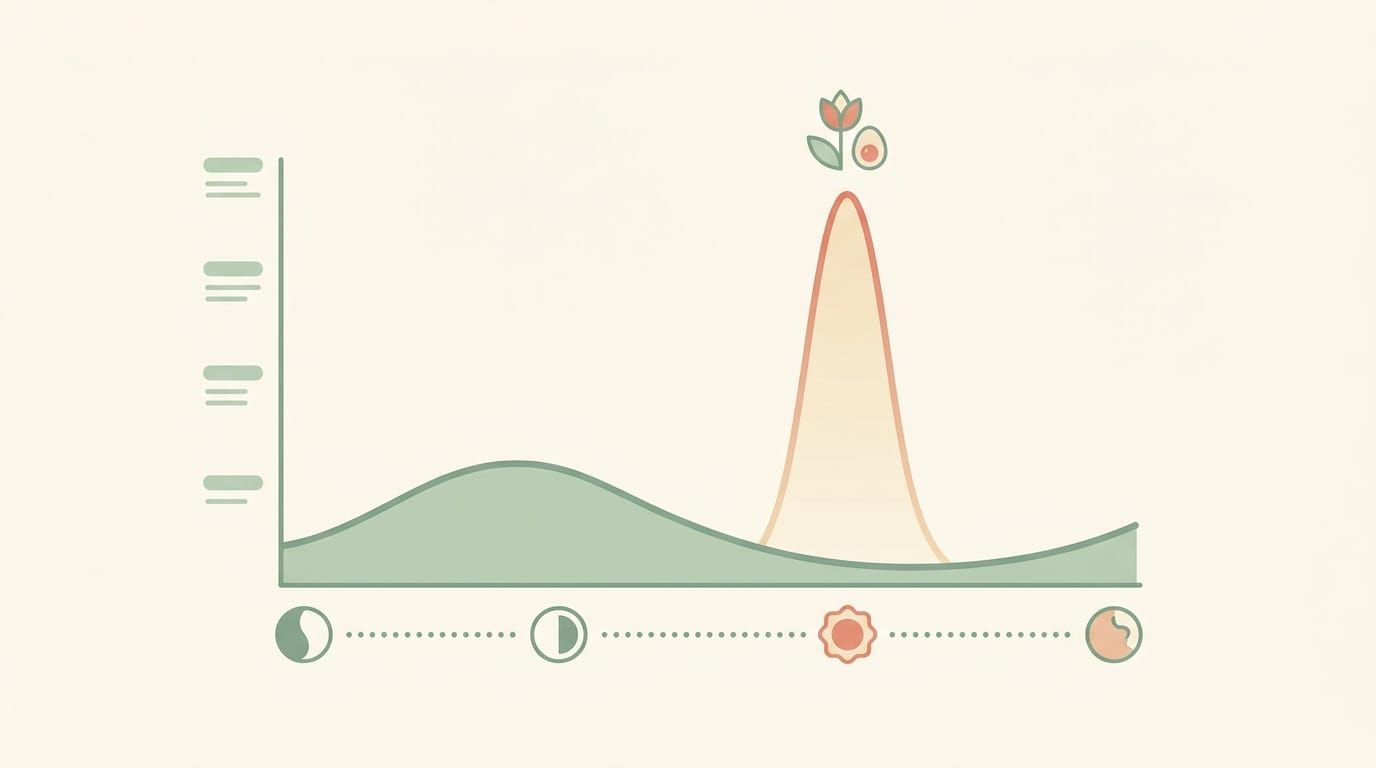
Quick Answer: Luteinizing hormone (LH) is the hormone that triggers ovulation. An LH surge - a sharp rise detected by ovulation predictor kits - signals that ovulation will occur within 24-36 hours. Understanding your LH levels helps time intercourse for conception, identify ovulation problems, and diagnose conditions like PCOS.
Key Takeaways
- LH (luteinizing hormone) triggers the release of an egg from the ovary - the LH surge is the biological signal that ovulation is about to happen.
- Ovulation typically occurs 24-36 hours after the LH surge begins, making it the most reliable predictor of your fertile window.
- Normal LH levels vary throughout your cycle: low in the follicular phase, sharp peak at ovulation, and moderate during the luteal phase.
- An abnormally high LH-to-FSH ratio (greater than 2:1) may indicate PCOS, while very low LH levels can suggest hypothalamic issues.
- Ovulation predictor kits (OPKs) detect LH in urine and are one of the most accessible tools for tracking ovulation at home.
What Is Luteinizing Hormone (LH)?
LH - you've probably seen it on ovulation test strips and fertility apps, but what actually is it? I explain LH to my clients all the time, and the lightbulb moment usually comes when they realise this one little hormone is basically the starting gun for ovulation. Once you understand how it works, a lot of other fertility pieces fall into place.
Luteinizing hormone (LH) is a gonadotropin - a reproductive hormone produced by the anterior pituitary gland (a pea-sized structure at the base of your brain). In women, LH has two primary jobs:
- Triggering ovulation: The LH surge causes the dominant follicle in the ovary to rupture and release a mature egg. This is ovulation.
- Supporting the corpus luteum: After ovulation, LH helps the ruptured follicle transform into the corpus luteum, which produces progesterone to support the uterine lining for potential implantation.
LH doesn't work alone - it works alongside FSH (follicle-stimulating hormone) in a carefully coordinated dance that drives your menstrual cycle. Understanding how LH behaves throughout your cycle is one of the most useful things you can learn for fertility tracking.
The LH Surge and Ovulation
The LH surge is one of the most significant hormonal events in your menstrual cycle, and for women trying to conceive, it's the single most important signal to pay attention to.
What Triggers the LH Surge?
As the dominant follicle in your ovary grows during the follicular phase, it produces increasing amounts of oestradiol (oestrogen). When oestradiol reaches a critical threshold - typically around 200 pg/mL sustained for about 50 hours - it triggers a positive feedback loop in the hypothalamus and pituitary gland. This causes a dramatic, rapid rise in LH - the LH surge.
Hoff et al. (1983) demonstrated that the LH surge is a remarkably consistent event: it begins approximately 34-36 hours before ovulation and lasts for 12-24 hours. The actual ovulation (release of the egg) occurs roughly 24-36 hours after the surge begins.
How Long After the LH Surge Do You Ovulate?
This is one of the most common questions I see, and the answer is important for timing intercourse:
- The LH surge begins - ovulation will occur in approximately 24-36 hours
- Peak LH - ovulation will occur in approximately 12-24 hours
- LH declining - ovulation has likely already occurred
Park et al. (2007) studied the precise timing and found that 90% of women ovulated between 24 and 36 hours after the LH surge onset. The most fertile days are the day of the LH surge and the day after - which aligns with the known survival times of sperm (up to 5 days) and egg (12-24 hours).
What Does the LH Surge Feel Like?
Honestly? Most women don't feel anything specific. Some women report mild cramping on one side around ovulation (Mittelschmerz), a change in cervical mucus (becoming clear, stretchy, and slippery - like egg white), or a slight increase in libido. But these signs are subtle and inconsistent - which is why LH testing is so valuable as an objective measure.
Normal LH Levels Throughout Your Cycle
LH levels are not static - they fluctuate significantly throughout the menstrual cycle. Understanding what's "normal" at each stage helps you interpret your own results.
Follicular Phase (Days 1-13)
LH levels are low during most of the follicular phase, typically ranging from 2.4-12.6 mIU/mL. The pituitary releases small amounts of LH (pulsatile secretion) that work alongside FSH to stimulate follicle growth.
Ovulation (Around Day 14)
The LH surge causes levels to spike dramatically - typically reaching 14-95 mIU/mL or higher. The exact peak varies between women and between cycles, which is why OPKs use a threshold rather than an absolute number.
Luteal Phase (Days 15-28)
After ovulation, LH levels drop back to baseline, typically ranging from 1.0-11.4 mIU/mL. LH continues to play a supporting role by maintaining the corpus luteum and its progesterone production.
These ranges come from Stricker et al. (2006) and are based on standard laboratory reference values. Individual labs may have slightly different reference ranges, so always compare your results to the reference range provided on your report.
LH Levels and Fertility Problems
Abnormal LH levels can provide clues about underlying fertility issues. Here's what different patterns may indicate:
High LH Levels
Elevated baseline LH levels (particularly during the follicular phase) can be a sign of:
- PCOS (Polycystic Ovary Syndrome): Women with PCOS often have elevated LH levels with a high LH:FSH ratio (greater than 2:1). This means LH is disproportionately high compared to FSH, which disrupts normal follicle development and ovulation (Jonard and Dewailly, 2004).
- Ovarian insufficiency (diminished ovarian reserve): As the ovaries produce less oestrogen, the pituitary gland increases LH (and FSH) production in an attempt to stimulate the ovaries. This is why high LH in the early follicular phase may suggest declining ovarian function.
- Premature ovarian failure: Persistently high LH and FSH levels (particularly FSH >25 mIU/mL on day 3) can indicate premature ovarian insufficiency.
Low LH Levels
Low or absent LH levels may indicate:
- Hypothalamic amenorrhoea: When the hypothalamus doesn't produce enough GnRH (gonadotropin-releasing hormone), LH levels remain low and ovulation doesn't occur. This is common in women who are underweight, over-exercising, or under severe stress.
- Pituitary disorders: Conditions affecting the pituitary gland (tumours, Sheehan syndrome, radiation damage) can reduce LH production.
- Kallmann syndrome: A rare genetic condition characterised by absent or delayed puberty and low LH levels.
No LH Surge
If you're testing with OPKs and consistently not detecting an LH surge, it may mean:
- You're not ovulating (anovulation)
- Your surge is very short and you're missing it (try testing twice daily)
- You have PCOS, which can cause elevated baseline LH that doesn't show a clear surge
- Your urine is too diluted (test with concentrated urine, usually mid-morning)

Using OPKs (Ovulation Predictor Kits)
OPKs are the most accessible way to detect your LH surge at home. They work by measuring LH concentration in your urine, similar to how a pregnancy test measures hCG.
How to Use OPKs Effectively
- When to start testing: Begin testing around day 10 of a 28-day cycle (or adjust based on your cycle length - start about 4 days before you expect to ovulate)
- Test twice daily: The LH surge can be brief (as short as 10-12 hours in some women). Testing once daily risks missing it. I recommend testing at around 11am and again at 5pm.
- Reduce fluid intake: Avoid drinking large amounts of water for 2-4 hours before testing to ensure concentrated urine.
- Don't use first morning urine: Unlike pregnancy tests, OPKs work better with mid-morning urine because LH is typically produced in the early morning and takes several hours to appear in urine.
- Read within the time window: Results read after the recommended time (usually 5-10 minutes) may be unreliable.
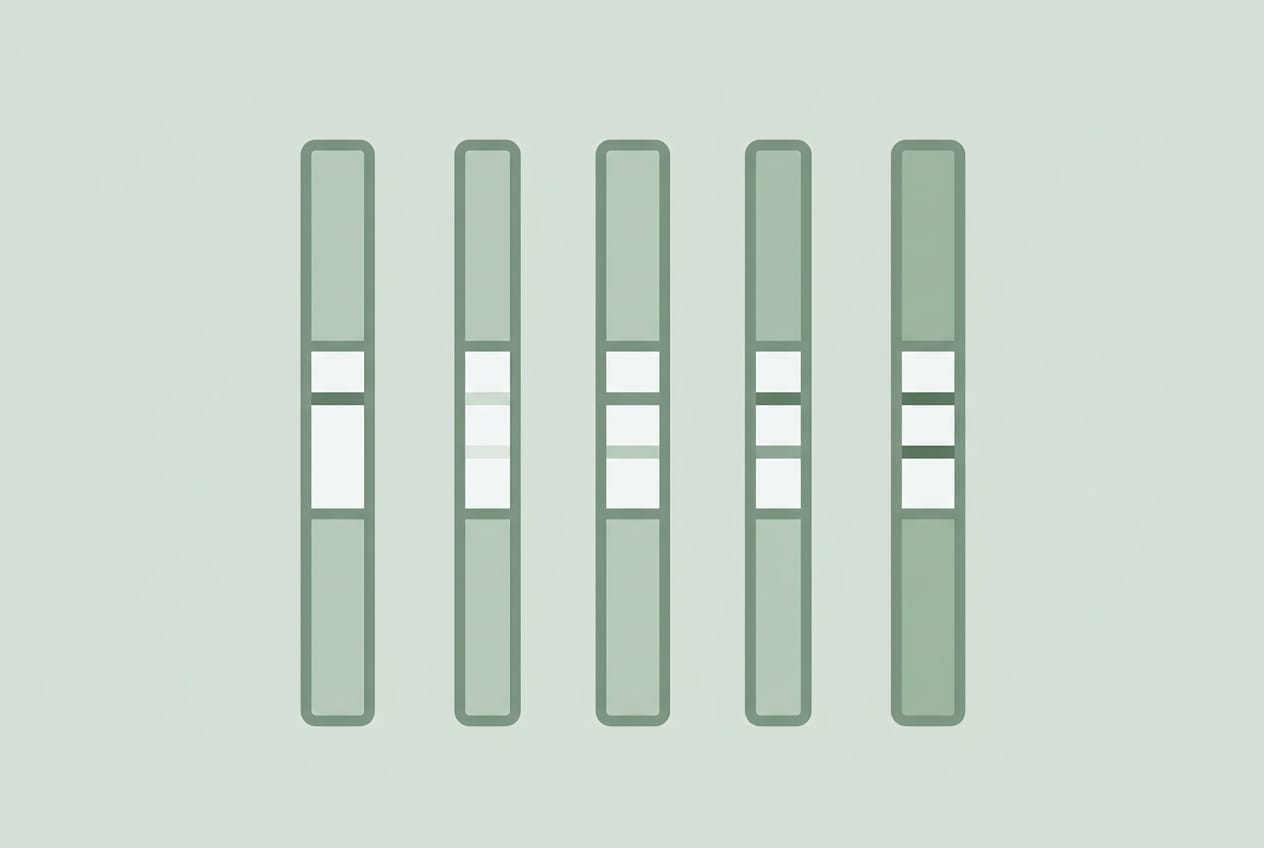
Interpreting OPK Results
- Test line is lighter than control line: Negative - no LH surge detected yet. Keep testing.
- Test line is as dark or darker than control line: Positive - LH surge detected. Ovulation will likely occur within 24-36 hours.
- Consistently dark test lines: May indicate PCOS or perimenopause. The elevated baseline LH can cause OPKs to show a "positive" reading without a true surge.
OPK Limitations
While OPKs are useful, they're not perfect. Miller and Soules (1996) found that OPKs correctly identified the LH surge in about 80-90% of cycles, but had limitations:
- They predict ovulation timing (24-36 hours) but don't confirm ovulation actually occurred
- Women with PCOS may get false positives due to chronically elevated LH
- Very short surges may be missed if testing frequency is too low
- They don't account for the variation in time between surge onset and actual ovulation
For confirmation that ovulation actually occurred, combine OPKs with basal body temperature (BBT) charting or progesterone blood tests on day 21 (7 days post-expected ovulation).
LH vs. FSH: Understanding the Ratio
LH and FSH are often measured together, and their ratio provides useful diagnostic information:
- Normal ratio (LH:FSH approximately 1:1): Indicates balanced hormonal function
- Elevated ratio (>2:1 LH:FSH): Classic PCOS pattern - Jonard and Dewailly (2004) found this ratio was present in approximately 60-70% of PCOS patients
- Low LH with normal/low FSH: May suggest hypothalamic dysfunction or pituitary issues
- Both LH and FSH elevated: May suggest diminished ovarian reserve or menopause
LH in Men
While most fertility hormone discussions focus on women, LH is equally important in men. In the male body, LH stimulates the Leydig cells in the testes to produce testosterone. Without adequate LH, testosterone production falls, which can affect sperm production and libido.
McLachlan et al. (2002) reviewed the role of LH in male fertility and found that both very low and very elevated LH levels could impair sperm production. Men with low LH may benefit from LH-stimulating medications (such as hCG injections), while elevated LH with low testosterone may indicate primary testicular failure.
Dani Recommends
If you're tracking ovulation with OPKs, I'd strongly recommend pairing them with at least one other method - either BBT charting or cervical mucus tracking. OPKs tell you the surge is coming, but BBT confirms ovulation actually happened. Using both together gives you the full picture.
For the OPKs themselves, I've found that easy@home strips (available in bulk on Amazon) are reliable and cost-effective. The premom app can read and store your OPK results, which makes tracking patterns over multiple cycles much easier than squinting at test strips and guessing.
If your OPKs are consistently showing positive readings without a clear surge pattern, or you're not detecting a surge after 15+ days of testing, it's worth speaking to your doctor. This could indicate anovulation, which is treatable.
LH Blood Tests: What to Ask Your Doctor
If you're having trouble conceiving or have irregular cycles, your doctor may order LH blood tests. Here's what to know:
- Day 3 LH: Drawn on cycle day 3 (with FSH and oestradiol) to assess baseline hormonal function. Normal range: 2.4-12.6 mIU/mL.
- Day 21 progesterone: While this tests progesterone (not LH), a low day-21 progesterone suggests you didn't ovulate, which may be related to LH problems.
- Random LH: A single LH level outside of the surge window isn't very informative. If possible, ask for timed blood draws around expected ovulation.
Frequently Asked Questions
How long does the LH surge last?
The LH surge typically lasts 12-24 hours, though it can be as short as 10 hours or as long as 48 hours. This is why testing twice daily with OPKs is recommended - a once-daily test can easily miss a short surge.
Can you ovulate without an LH surge?
No. The LH surge is a necessary physiological event for ovulation - without it, the follicle doesn't rupture and the egg isn't released. However, you can have a surge that's too short or too low for OPKs to detect, even though ovulation occurred. If you're not seeing positive OPKs but your periods are regular and you have a sustained BBT rise, you may be ovulating with a subtle LH surge.
What time of day does the LH surge start?
The LH surge can begin at any time of day, which is another reason to test twice daily. Research by Miller and Soules (1996) found that the surge was detected more often with afternoon urine samples than with first-morning urine samples.
Does the LH surge predict ovulation exactly?
It predicts ovulation within a window - typically 24-36 hours after the surge begins. It doesn't tell you the exact hour. Most studies show ovulation occurring between 24-36 hours post-surge onset, with a range of 16-48 hours.
Can stress affect LH levels?
Yes. Severe physical or emotional stress can suppress the hypothalamic-pituitary-gonadal axis, leading to reduced GnRH pulsatility and consequently lower LH levels. This can result in delayed ovulation or anovulation. This is one reason why extreme dieting, intense exercise, or high-stress periods can disrupt menstrual cycles.
What is a normal LH level on day 3?
A normal day-3 LH level is typically between 2.4-12.6 mIU/mL, though reference ranges vary slightly between laboratories. An elevated day-3 LH (particularly with a high LH:FSH ratio) may suggest PCOS, while a very low day-3 LH may suggest hypothalamic dysfunction.
Can OPKs give false positives?
Yes. The most common cause of false positive OPKs is PCOS - chronically elevated baseline LH levels can cause the test line to appear positive even when there's no true surge. Perimenopause can also cause elevated baseline LH. If you're getting consistent "positive" readings across your entire cycle, blood tests may be more reliable.
Cite This Page
Bowen, D. (2026). LH Hormone Guide: The Luteinizing Hormone, LH Surge, and Ovulation. Fertilitys. Retrieved from https://fertilitys.com/lh-hormone-guide
References
- Hoff, J.D., et al. (1983). The physiological mechanism governing the timing of the midcycle gonadotropin surge. Journal of Clinical Endocrinology and Metabolism, 57(6), 1178-1183.
- Jonard, S. and Dewailly, D. (2004). The follicular excess in polycystic ovaries, due to intra-ovarian hyperandrogenism, may be the main culprit for the follicular arrest. Human Reproduction Update, 10(2), 107-117.
- McLachlan, R.I., et al. (2002). Hormonal regulation of spermatogenesis in primates and man. Trends in Endocrinology and Metabolism, 13(9), 363-369.
- Miller, P.B. and Soules, M.R. (1996). The usefulness of a urinary LH kit for ovulation prediction during menstrual cycles of normal women. Obstetrics and Gynecology, 87(1), 13-17.
- Park, S.J., et al. (2007). The accuracy of urinary luteinizing hormone testing in predicting ovulation. Reproductive Biology and Endocrinology, 5(1), 41.
- Stricker, R., et al. (2006). Establishment of detailed reference values for luteinizing hormone, follicle stimulating hormone, estradiol, and progesterone during different phases of the menstrual cycle. Annals of Clinical Biochemistry, 43(6), 473-479.
Medical Disclaimer: This article is for informational purposes only and does not constitute medical advice. If you are concerned about your hormone levels or fertility, please consult a qualified healthcare professional for personalised testing and interpretation.
Written by

Subscribe to Fertilitys
All my Free Resources. No spam. Unsubscribe anytime.