Inito Fertility Monitor Review: Is It Worth It?
An honest review from a fertility nutritionist who recommends it to clients.


I've been recommending the Inito Fertility Monitor to clients for over a year now, and my opinion hasn't changed: it's the best at-home fertility tracker for anyone who wants to understand their hormones, not just get a smiley face telling them when to have sex.
That said, it's not for everyone. And most Inito Fertility Monitor reviews online either gush about it because they're selling it, or trash it because they had one bad cycle. So here's my genuinely honest take — who it's perfect for, who should skip it, and whether the £149/$149 price tag is justified.
The Short Version
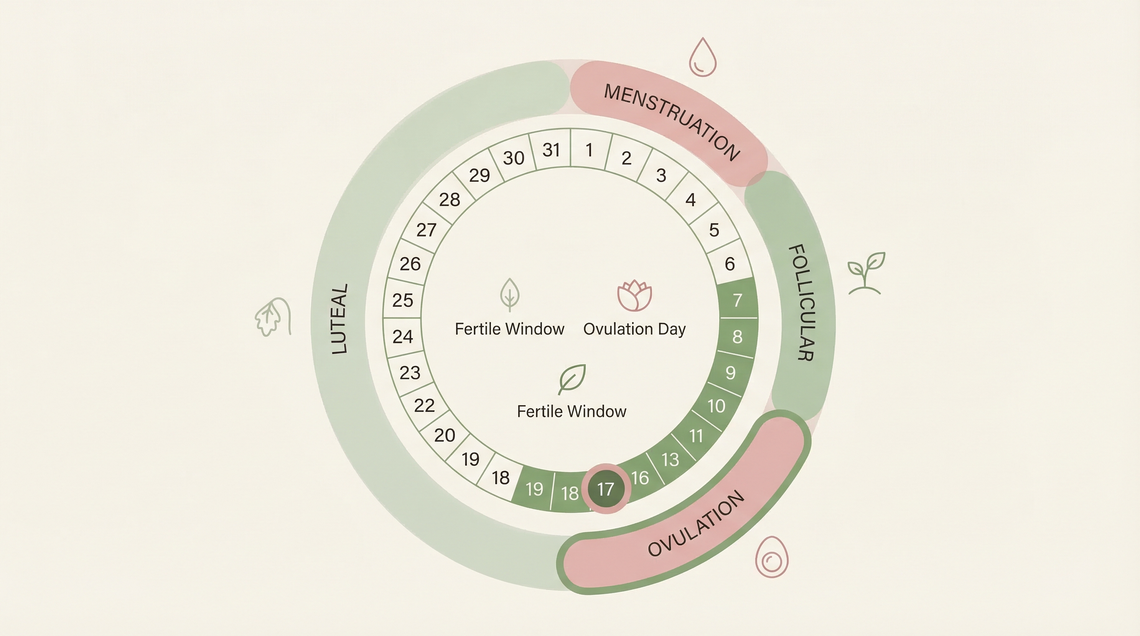
The Inito Fertility Monitor measures four hormones from a urine test strip: oestrogen (E3G), LH, progesterone metabolite (PdG), and FSH. It clips onto your phone, reads the strip using your camera, and gives you quantitative hormone values — actual numbers, not just "high" or "low." It then predicts your fertile window and confirms whether you actually ovulated.
That last part — confirming ovulation through PdG — is what sets it apart from most fertility monitors. Cheap ovulation tests predict ovulation by detecting the LH surge. Inito confirms it happened by measuring the progesterone rise afterwards. For anyone who's had cycles where they got a positive OPK but didn't actually ovulate, that distinction is everything.
My verdict: Worth it for women who want hormone data, especially those with irregular cycles or suspected anovulation. Overkill if you have clockwork 28-day cycles and just want basic ovulation timing.
What Does the Inito Actually Measure?
Four hormones, one test strip. That's genuinely impressive for a home device.

- E3G (oestrone-3-glucuronide) — the urinary metabolite of oestrogen. Rises in the days leading up to ovulation, helping identify the start of your fertile window.
- LH (luteinising hormone) — surges 24–36 hours before ovulation. This is what standard ovulation prediction kits detect.
- PdG (pregnanediol glucuronide) — the urinary metabolite of progesterone. Rises after ovulation. This is the ovulation confirmation hormone — without it, you're just guessing.
- FSH (follicle-stimulating hormone) — added more recently. Helps track follicle development earlier in the cycle.
But is it actually accurate? The clinical validation study (Rao et al., 2023, published in Scientific Reports) tested Inito against laboratory ELISA — the gold standard for hormone measurement. The results: an average coefficient of variation of 5.05% for PdG, 4.95% for E3G, and 5.57% for LH. In plain English, the readings were consistent and closely matched lab results. They also identified a novel ovulation confirmation criterion with 100% specificity and an AUC of 0.98 — which is excellent for a home device.
How to Use the Inito Fertility Monitor
Your morning routine gains about five minutes. That's the honest time commitment.
You buy the monitor (a small reader that clips onto your phone) and a pack of test strips. Each morning, you dip a strip in your first morning urine, insert it into the reader, and the Inito app scans it using your phone's camera. Results appear in the app within about 10 minutes.
The app tracks your hormone levels across the cycle and displays them as a chart. Over time, it learns your personal patterns and refines its predictions. The first cycle is essentially a learning cycle — predictions get more accurate from cycle 2 onwards.
A few practical notes from recommending this to clients:
- You'll use approximately 10–15 strips per cycle depending on cycle length
- Testing takes about 5 minutes total (including the wait time)
- The reader is iPhone-only as of early 2026 — no Android support, which is a genuine limitation
- Lighting matters for the camera-based reading — test in consistent lighting each morning
- First morning urine gives the most reliable results, same as any hormone test
Who Should Buy the Inito?
Not everyone needs a four-hormone monitor. Here's where I genuinely recommend it.
Women with irregular cycles. If your cycles vary by more than a few days, standard OPKs are unreliable because you don't know when to start testing. Inito's multi-hormone approach catches the fertile window even when it shifts.
Women who suspect anovulatory cycles. Getting a positive OPK doesn't guarantee ovulation — your body can mount an LH surge and fail to release an egg. Inito's PdG tracking confirms whether ovulation actually occurred. I've had clients discover they were having anovulatory cycles only after switching to Inito from basic OPKs.
Women with PCOS. PCOS often causes multiple LH surges that trick standard ovulation tests. Inito's combined hormone tracking cuts through this — it won't call "peak fertility" on a false LH surge if the oestrogen pattern doesn't match.
Anyone working with a fertility practitioner. The quantitative data Inito provides is genuinely useful in consultations. Instead of telling your nutritionist "I think I ovulated around day 16," you can show them your actual hormone charts. That changes the quality of the advice they can give.
Women considering IUI or timed intercourse protocols. When timing matters clinically, having your own hormone data alongside clinic monitoring provides an extra layer of confidence.
Who Should Skip It?
I'm not going to pretend everyone needs this level of data. If your cycles run like clockwork — 26 to 30 days, predictable symptoms, no surprises — cheap LH test strips from Amazon at £15 for 50 will tell you everything you need to know. Spending ten times that on quantitative hormone tracking is like buying a weather station when you can just look out the window.
Android users are out of luck entirely. As of early 2026, Inito is iPhone-only, and there's no timeline for Android support. If that's you, look at Mira instead.
And be honest with yourself about the ongoing cost. The monitor is £149/$149, but strips run £35-50 per cycle. Over six months of trying, you're looking at £350-500 total. That's still less than one private fertility consultation — but it adds up faster than most people expect when they see the initial price tag.
Inito vs Mira: How Do They Compare?
This is the question I get asked most. Both are quantitative hormone monitors, both measure multiple hormones, and both cost roughly the same upfront. The differences are in the details.
| Feature | Inito | Mira |
|---|---|---|
| Hormones tested | E3G, LH, PdG, FSH (1 strip) | E3G, LH, PdG (separate wands) |
| Reading method | Phone camera | Built-in reader (electrochemical) |
| Phone compatibility | iPhone only | iPhone and Android |
| Accuracy concern | Affected by lighting conditions | Not affected by lighting |
| Device price | ~$149 | ~$199 |
| Strip/wand cost per cycle | ~$35-50 | ~$30-50 |
| Ovulation confirmation | Yes (PdG) | Yes (PdG) |
| FDA cleared | Yes | Yes |
| Clinically validated | Yes (Rao et al., 2023) | Yes (multiple studies) |
My recommendation: Inito wins on value (cheaper device, all four hormones on one strip). Mira wins on reliability (electrochemical reader isn't affected by your phone camera or bathroom lighting) and accessibility (Android support). If you have an iPhone and consistent testing conditions, Inito. If you want foolproof readings or you're on Android, Mira.
A 2023 case study published in the Journal of the Turkish-German Gynecological Association compared both monitors across normal, delayed ovulation, and anovulatory cycles and found both effectively tracked hormone trends — though each had slightly different strengths in specific scenarios.
Inito vs Clearblue Advanced: Why I Switched My Recommendations
Before Inito existed, I recommended the Clearblue Advanced Digital Ovulation Test to most clients. It was the gold standard — reliable, easy to use, available at every pharmacy. And for basic ovulation prediction, it still works fine.
But Clearblue has a fundamental limitation: it only predicts ovulation. It detects the oestrogen rise (giving you a "high fertility" flashing smiley) and the LH surge (giving you a "peak fertility" static smiley). What it can't do is confirm that ovulation actually happened.
I started noticing a pattern with certain clients — particularly those with PCOS or long cycles. They'd get their peak smiley, time everything perfectly, and nothing would happen. Month after month. When we eventually got bloods done, some of them had been having anovulatory cycles the entire time. The LH surge was real. The ovulation wasn't.
That's when I started recommending Inito. The PdG measurement closes that gap. If you ovulate, PdG rises. If you don't, it doesn't. No ambiguity. For £149 versus a few quid per cycle for Clearblue, you're getting a fundamentally different level of information.
That said, Clearblue has its place. If cost is a major factor and you have regular cycles, basic OPKs are perfectly adequate. Not everyone needs quantitative hormone data — and that's OK. The right tool depends on your situation, not on which device has the fanciest marketing.
What I'd Change About the Inito
No product is perfect, and I'd be doing you a disservice if I pretended otherwise. If the Inito team ever asks for feedback, here's my list:
- Android support. It's 2026. Half the world uses Android. This is the single biggest barrier to recommending Inito — I've had clients excited about it, only to discover they can't use it. Fix this.
- App health integrations. Let people export their data to Apple Health, Google Fit, or at minimum as a CSV. Hormone data trapped in one app limits its usefulness.
- Better first-cycle guidance. Several clients felt confused by their first cycle because the app hadn't calibrated yet. Clearer messaging that "cycle 1 is a learning cycle" would reduce frustration.
- Lighting dependency. The camera-based reading system works, but it's sensitive to bathroom lighting variations. A small LED reading chamber (like an attachment for the phone clip) would solve this.
- Strip cost transparency. The initial device price looks reasonable, but the ongoing strip cost catches people off guard. Be upfront about the 6-month and 12-month total cost in the marketing.
None of these are dealbreakers. But they're the kind of improvements that would move Inito from "great for some people" to "great for most people."
Real-World Pros and Cons
After recommending Inito to dozens of clients and hearing their feedback over months, here's what consistently comes up.
What clients love
- Seeing actual hormone numbers instead of just "high/low" — it feels empowering
- The PdG ovulation confirmation eliminates guesswork
- Discovering patterns they didn't know about (late ovulation, short luteal phases, anovulatory cycles)
- Having data to bring to their doctor or nutritionist
- All four hormones on a single test strip (vs Mira's separate wands)
Common frustrations
- iPhone-only is a dealbreaker for many
- The camera reader can give inconsistent readings in poor lighting
- First cycle data is unreliable — the app needs a cycle to calibrate
- Strips expire, and you can't stockpile them for months
- No integration with other health apps (Garmin, Apple Health, etc.) — the data lives only in the Inito app
- The app interface could be more intuitive — several clients needed help interpreting their charts initially
Is the Inito Fertility Monitor Worth It?
At £149/$149 for the monitor plus ongoing strip costs, it's not cheap. Over 6 months of trying to conceive, you're looking at roughly £350-500 total. That's less than a single private fertility consultation in most cities — and you walk away with months of quantitative hormone data that a one-hour appointment can't give you.
If you're the kind of person who wants to understand what's happening inside your body — not just follow instructions — Inito delivers on that promise. The clinical validation is solid, the hormone coverage is the best in its class, and the ovulation confirmation feature fills a genuine gap that basic OPKs leave open.
But if you just want to know when to try, a £15 pack of LH strips will get you there. Don't spend money on technology you won't use to its potential.
Frequently Asked Questions
How accurate is the Inito Fertility Monitor?
In the 2023 validation study by Rao et al. published in Scientific Reports, Inito demonstrated high correlation with laboratory ELISA testing, with coefficients of variation of approximately 5% across all three primary hormones (E3G, PdG, LH). The ovulation confirmation criterion achieved 100% specificity with an AUC of 0.98. Real-world accuracy depends on consistent testing conditions — particularly lighting for the camera-based reader.
Is the Inito Fertility Monitor worth the money?
For women with irregular cycles, suspected anovulation, or PCOS — yes. The quantitative hormone data and ovulation confirmation justify the cost. For women with regular cycles who just need basic ovulation timing, standard LH strips are sufficient and much cheaper. Consider your total cost over 6 months: roughly £350-500 including strips, which is still less than most private fertility assessments.
Does the Inito work with Android phones?
No. iPhone only. If you're on Android, Mira is the closest alternative.
How many test strips do you use per cycle?
Roughly 10-15, depending on cycle length. They come in packs of 15. Budget £35-50 per cycle on top of the device.
References
- Rao S, et al. Validation of urinary reproductive hormone measurements using a novel smartphone connected reader. Sci Rep. 2023;13:8645. doi:10.1038/s41598-023-35384-6
- Stanford JB, et al. Using quantitative hormonal fertility monitors to evaluate the luteal phase: proof of concept case study. J Turk Ger Gynecol Assoc. 2023;24(1):47-52.
- Natural Womanhood. Pros and cons of Mira, Inito, Kegg, and other femtech devices. 2024. naturalwomanhood.org
Medical Disclaimer: This article is for informational purposes only. Fertility monitors are not medical devices for diagnosing infertility. If you've been trying to conceive for 12 months (or 6 months if over 35) without success, consult a fertility specialist regardless of what your home monitor shows.
Written by

Subscribe to Fertilitys
All my Free Resources. No spam. Unsubscribe anytime.