How to Know If You're Infertile: Warning Signs and When to Get Tested

Quick Answer: The medical definition of infertility is not conceiving after 12 months of regular, unprotected sex (or 6 months if you're over 35). However, most causes of infertility have no obvious symptoms - the only reliable way to know is through fertility testing, including hormone panels, semen analysis, and ultrasound scans.
Key Takeaways
- Infertility is medically defined as the inability to conceive after 12 months of trying (6 months if over 35), but this doesn't mean conception is impossible.
- Most infertility has no visible symptoms - you can feel completely healthy and still have underlying fertility issues.
- Key warning signs in women include very irregular periods, absent periods, severe period pain, and recurrent miscarriage.
- Male factor infertility accounts for roughly 40-50% of all infertility cases, yet is rarely discussed.
- Fertility testing is the only reliable way to identify issues - it's not something you can diagnose from symptoms alone.
The Question Nobody Wants to Ask
This is one of those searches that probably took some courage to type. If you're here because you're worried something might be wrong, I want to acknowledge that first. It's a scary thing to even consider. The good news? Most fertility issues are treatable. But let's start by understanding what infertility actually means - because it might not be what you think.
Here's the first thing I want you to know: the word "infertile" is a medical term, not a verdict. Being diagnosed with infertility does not mean you will never have children. It means you've hit a roadblock, and that roadblock often has solutions.
What Does "Infertility" Actually Mean?
The clinical definition of infertility varies slightly depending on the source, but the most commonly accepted definition comes from the World Health Organization (WHO) and NICE (National Institute for Health and Care Excellence):
- Under 35: Not conceiving after 12 months of regular, unprotected sexual intercourse
- Over 35: Not conceiving after 6 months of trying
- Over 40: Immediate referral for fertility testing is recommended
It's also important to distinguish between primary infertility (never having conceived) and secondary infertility (having conceived before but unable to conceive again). According to Mascarenhas et al. (2012), secondary infertility accounts for approximately half of all infertility cases globally.
Something that surprises many people: infertility is incredibly common. The WHO estimates that approximately 1 in 6 people worldwide experience infertility at some point in their lives (Cox et al., 2022). You are far from alone in this.
Warning Signs in Women
I want to be upfront: many women with infertility have no symptoms at all. Their periods are regular, they feel healthy, and the issue only becomes apparent when they start trying to conceive. However, there are some signs that may indicate underlying fertility issues.
Irregular or Absent Periods
If your cycles are consistently longer than 35 days, shorter than 21 days, or highly unpredictable, it may indicate ovulation problems. Conditions like PCOS (polycystic ovary syndrome) commonly cause irregular cycles and are a leading cause of anovulation (not ovulating).
Balen et al. (1995) found that approximately 70-80% of women with chronic anovulation had PCOS as the underlying cause. If your periods have always been irregular, it's worth investigating before you start trying to conceive.
Very Painful Periods
Severe period pain that interferes with daily life - not just "uncomfortable" but genuinely debilitating - can be a sign of endometriosis or adenomyosis. Both conditions can affect fertility, though many women with these conditions do conceive naturally.
A study by Prescott et al. (2016) found that women with endometriosis had significantly lower fertility rates than the general population, but that early diagnosis and treatment improved outcomes.
Very Heavy or Very Light Periods
Unusually heavy periods (soaking through a pad or tampon every hour for several hours) can indicate fibroids, polyps, or adenomyosis. Very light periods (barely there, lasting less than 2 days) may suggest thin uterine lining or hormonal issues. Both deserve investigation if you're trying to conceive.
Recurrent Miscarriage
If you've had two or more consecutive miscarriages, this falls under the definition of recurrent pregnancy loss and warrants investigation. Rai and Regan (2006) found that recurrent miscarriage affects approximately 1-2% of couples trying to conceive, and causes can include chromosomal abnormalities, uterine structural issues, antiphospholipid syndrome, and hormonal factors.
Pelvic Pain Outside of Periods
Chronic pelvic pain, particularly if it worsens around ovulation or during intercourse, can be associated with endometriosis, pelvic adhesions, or blocked fallopian tubes - all of which can affect fertility.
Pain During Sex
Persistent pain during intercourse (dyspareunia) can sometimes indicate endometriosis, vaginal dryness from low oestrogen, or pelvic floor dysfunction. While not always linked to fertility, it's worth discussing with your doctor, particularly if you're trying to conceive.
Warning Signs in Men
Male factor infertility is responsible for approximately 40-50% of all infertility cases (Agarwal et al., 2015), yet it receives far less attention in the fertility conversation. This is partly because male infertility often has no visible symptoms.
Erectile or Ejaculation Problems
Difficulty achieving or maintaining an erection, or problems with ejaculation (premature, delayed, or retrograde - where semen enters the bladder instead of exiting through the urethra) can all affect the ability to conceive naturally.
Testicular Issues
A history of undescended testicles (cryptorchidism), testicular surgery, or testicular injury can all affect sperm production. Varicocele (enlarged veins in the scrotum) is present in approximately 35-40% of men with infertility (Gorelick and Goldstein, 1993).
Small or Painful Testicles
Very small testicles or testicular pain/swelling should be investigated regardless of fertility plans, but they can also indicate underlying issues with sperm production.
Changes in Body Hair, Libido, or Breast Tissue
Hormonal imbalances in men can manifest as reduced body or facial hair, decreased sex drive, or gynecomastia (breast tissue development). These may indicate low testosterone or other hormonal issues that affect fertility.
Factors That Increase Infertility Risk
While infertility can affect anyone, certaors increase the risk. Understanding these can help you assess whether earlier testing might be worthwhile.
Age
I know nobody wants to hear this, but age is the single most significant factor in female fertility. A woman's egg quantity and quality decline naturally, with a more pronounced decline after age 35. ACOG (2014) guidelines reflect this reality.
For men, age also matters but the decline is more gradual. Johnson et al. (2015) found that advanced paternal age (over 40) was associated with reduced fertility and increased time to conception.
Medical History
- Previous pelvic or abdominal surgery (can cause adhesions)
- STIs, particularly chlamydia and gonorrhoea (can cause tubal damage)
- PCOS, endometriosis, or fibroids
- Cancer treatment (chemotherapy and radiation can damage eggs and sperm)
- Thyroid disorders
- Diabetes
Lifestyle Factors
- Smoking - significantly reduces fertility in both men and women (Augood et al., 1998)
- Excessive alcohol consumption
- Being significantly underweight or overweight
- High stress levels (though this is a contributing factor, not usually a sole cause)
- Certain medications (some antidepressants, some blood pressure medications)
Occupational and Environmental Exposures
Prolonged exposure to certain chemicals, pesticides, heavy metals, or excessive heat (e.g., frequent hot tub use, working with laptops on the lap) can affect sperm quality. Sheiner et al. (2003) reviewed occupational exposures and fertility and identified several workplace hazards.
When to Get Fertility Testing
The guidelines are fairly clear, but I want to add some nuance:
Seek Testing If:
- Under 35: You've been trying for 12 months with regular unprotected sex
- Over 35: You've been trying for 6 months
- Over 40: You should be referred for testing immediately
- Any age: You have known risk factors (irregular periods, history of pelvic surgery, endometriosis, PCOS, previous STI)
- Any age: You have a history of recurrent miscarriage (2 or more)
- Any age: Your partner has known sperm issues
Don't Wait If:
One thing I hear too often is people saying "we haven't been trying that long, so we can't get tested yet." While the 12-month guideline exists for a reason (many couples do conceive within that time), if something feels wrong - if you have irregular periods, if you have a known condition, if your gut is telling you something's off - ask for testing earlier. The worst they can say is "let's wait a bit longer."
What Fertility Testing Involves
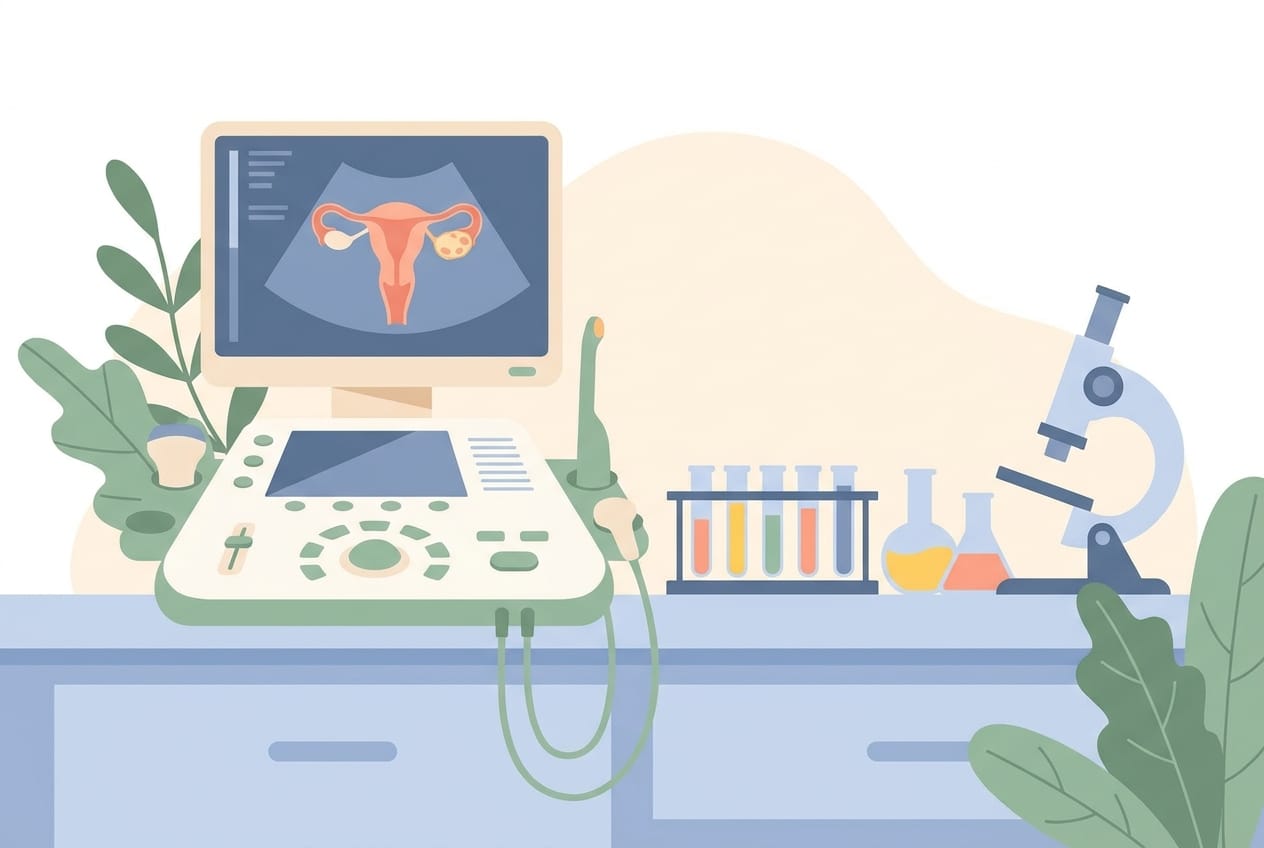
Knowing what to expect can reduce the anxiety around fertility testing. Here's a typical workup:
For Women
- Hormone blood tests: FSH, LH, oestradiol, AMH (anti-Müllerian hormone), thyroid function, prolactin, progesterone (day 21 - to confirm ovulation)
- Ultrasound scan: Transvaginal ultrasound to check ovaries, follicle count, and uterine structure
- Hysterosalpingogram (HSG): An X-ray dye test to check if fallopian tubes are open
- Sonohysterogram: Saline-infused ultrasound to look for polyps, fibroids, or adhesions inside the uterus
- Laparoscopy: Keyhole surgery to directly visualise the pelvic organs (usually reserved for suspected endometriosis)
For Men
- Semen analysis: The cornerstone of male fertility testing. Measures sperm count, motility (movement), morphology (shape), and volume. Should be done after 2-5 days of abstinence.
- Hormone blood tests: Testosterone, FSH, LH (if semen analysis is abnormal)
- Physical examination: To check for varicocele, testicular size, and other physical issues
- Scrotal ultrasound: If physical examination reveals abnormalities
Important Notes on Semen Analysis
One result is not a diagnosis. Cooper et al. (2010) showed significant natural variation in semen parameters between samples. If the first result is abnormal, it should be repeated after 2-3 months before drawing conclusions. Lifestyle changes made during that interval (reducing alcohol, quitting smoking, avoiding heat exposure) can also improve results.
Dani Recommends
If there's one piece of advice I could give you from everything I've read and heard, it's this: don't wait until you're in crisis to get tested. If you have any reason to suspect something might be off - irregular cycles, a known condition, a partner with a relevant history - ask your GP for basic fertility blood tests. They're simple, inexpensive, and can catch problems months or years before you start trying.
I'd also recommend that both partners get tested together. There's a frustrating tendency to treat infertility as a "woman's issue," when male factor contributes to nearly half of all cases. Going through testing as a team takes the pressure off one person and gives you the full picture.
The Emotional Side of a Diagnosis
Getting a fertility diagnosis can feel like the ground has shifted under you. Whether it's "unexplained infertility" (which accounts for about 25-30% of cases and is its own special kind of frustration) or a specific condition like blocked tubes or low sperm count, the emotional impact is real.
I want to validate something: it's okay to grieve. You can grieve the easy conception you expected, the timeline you imagined, the sense of control you thought you had. Peterson et al. (2007) found that receiving a fertility diagnosis was associated with increased anxiety and depression, regardless of whether treatment options were available.
But I also want to offer hope. A fertility diagnosis is not a full stop - it's a signpost. It tells you which direction to go. The vast majority of infertility has treatments available, and many couples who receive a diagnosis go on to have healthy pregnancies and babies.
What If Tests Come Back Normal?
If all your tests come back normal but you still can't conceive, you may receive a diagnosis of unexplained infertility. This is more common than you'd think - affecting approximately 25-30% of infertile couples (Smith et al., 2003).
Unexplained infertility is frustrating because there's nothing obvious to "fix." However, it generally responds well to fertility treatments. Pandian et al. (2015) found that couples with unexplained infertility had good success rates with treatments like IUI (intrauterine insemination) with ovulation stimulation, and IVF.
The important thing to remember: "unexplained" does not mean "untreatable." It means the current tests haven't identified the specific issue - which could be related to egg quality, subtle sperm function issues, or implantation factors that we don't yet have good tests for.
Frequently Asked Questions
Can you be infertile and still get periods?
Yes. Having regular periods confirms that you're menstruating, but it doesn't confirm that you're ovulating regularly or that your eggs are of sufficient quality for fertilisation. Many women with regular cycles have underlying fertility issues that are only detected through testing.
How do I know if my husband is infertile?
The only reliable way to assess male fertility is through a semen analysis. This simple, non-invasive test measures sperm count, motility, and morphology. It can be done at a fertility clinic or through your GP. Some clinics offer home testing kits, though lab-based analysis provides more comprehensive results.
Is it harder to get pregnant the longer you've been trying?
Statistically, most couples conceive within the first 6 months of trying, with cumulative conception rates reaching about 80-85% by 12 months. If you've been trying for over 12 months without success, the probability of natural conception in the following months decreases but doesn't drop to zero. Seeking testing at this point is appropriate.
Can stress prevent you from getting pregnant?
Severe, chronic stress can potentially affect ovulation through hormonal pathways, but moderate stress alone is rarely the primary cause of infertility. The "just relax" advice is not only unhelpful - it's medically inaccurate for most cases of infertility. butmanaging stress is beneficial for overall wellbeing during your fertility journey.
Should I get fertility testing even if I'm not trying to conceive yet?
If you're planning to delay pregnancy (for career, relationship, or personal reasons), basic fertility screening can be valuable. AMH levels, a transvaginal ultrasound with antral follicle count, and a hormone panel can give you a sense of your current ovarian reserve. This information can help you make informed decisions about when to start trying.
Does a miscarriage mean I'm infertile?
No. A single miscarriage is extremely common - affecting approximately 1 in 4 recognised pregnancies - and does not indicate infertility. Most women who experience one miscarriage go on to have successful pregnancies. However, recurrent miscarriage (2 or more consecutive losses) warrants investigation.
What's the difference between infertility and subfertility?
Technically, "subfertility" refers to a reduced (but not absent) ability to conceive, while "infertility" implies a complete inability. In practice, the terms are often used interchangeably. Most couples diagnosed with infertility do eventually conceive, with or without treatment.
Next Steps
If you suspect you might be dealing with infertility, here's what I'd suggest:
- Track your cycle. Use an app or paper chart to log your periods, any symptoms, and if possible, your basal body temperature or ovulation test results. This data is incredibly useful for your doctor.
- Book a GP appointment. Explain your concerns clearly. Request basic blood tests (FSH, LH, oestradiol, AMH, thyroid, progesterone on day 21) and ask your partner to arrange a semen analysis.
- Don't self-diagnose. Google is not a fertility specialist. Many of the "signs of infertility" you'll read about online are vague, misleading, or simply wrong. Rely on medical professionals.
- Be kind to yourself. Whatever the tests reveal, remember that a diagnosis is information, not a life sentence. There are treatments, there are options, and there are paths forward.
Cite This Page
Bowen, D. (2026). How to Know If You're Infertile: Warning Signs and When to Get Tested. Fertilitys. Retrieved from https://fertilitys.com/how-to-know-if-you-are-infertile
References
- ACOG (2014). Female age-related fertility decline. Committee Opinion No. 589. Obstetrics and Gynecology, 123(3), 719-721.
- Agarwal, A., et al. (2015). A unique view on male infertility around the globe. Reproductive Biology and Endocrinology, 13(1), 37.
- Augood, C., et al. (1998). Smoking and female infertility: a systematic review and meta-analysis. Human Reproduction, 13(6), 1532-1539.
- Balen, A.H., et al. (1995). Polycystic ovary syndrome: a spectrum of disease. Human Reproduction, 10(8), 2102-2107.
- Cooper, T.G., et al. (2010). World Health Organization reference values for human semen characteristics. Human Reproduction Update, 16(3), 231-245.
- Cox, C.M., et al. (2022). Infertility prevalence estimates, 1990-2021. Human Reproduction, 38(1), 29-40.
- Gorelick, J.I. and Goldstein, M. (1993). Loss of fertility in men with varicocele. Fertility and Sterility, 59(3), 613-616.
- Johnson, S.L., et al. (2015). Consistent age-dependent declines in human semen quality: a systematic review and meta-analysis. Ageing Research Reviews, 19, 22-33.
- Mascarenhas, M.N., et al. (2012). National, regional, and global trends in infertility prevalence since 1990. PLoS Medicine, 9(12), e1001356.
- Pandian, Z., et al. (2015). Treatments for unexplained infertility. Cochrane Database of Systematic Reviews, 2.
- Peterson, B.D., et al. (2007). Infertility-related distress and its impact on quality of life. Fertility and Sterility, 88(4), S15.
- Prescott, J., et al. (2016). A prospective cohort study of endometriosis and subsequent risk of infertility. Human Reproduction, 31(7), 1475-1482.
- Rai, R. and Regan, L. (2006). Recurrent miscarriage. The Lancet, 368(9535), 601-611.
- Sheiner, E.K., et al. (2003). Effect of occupational exposures on male fertility. Epidemiology, 14(4), 468-473.
- Smith, S., et al. (2003). Female unexplained infertility. Cochrane Database of Systematic Reviews, 1.
Medical Disclaimer: This article is for informational purposes only and does not constitute medical advice. If you are concerned about your fertility, please consult a qualified healthcare professional for personalised testing and guidance.

Written by

Subscribe to Fertilitys
All my Free Resources. No spam. Unsubscribe anytime.