Best Fertility Monitors Compared: Mira, Inito, Clearblue, and More


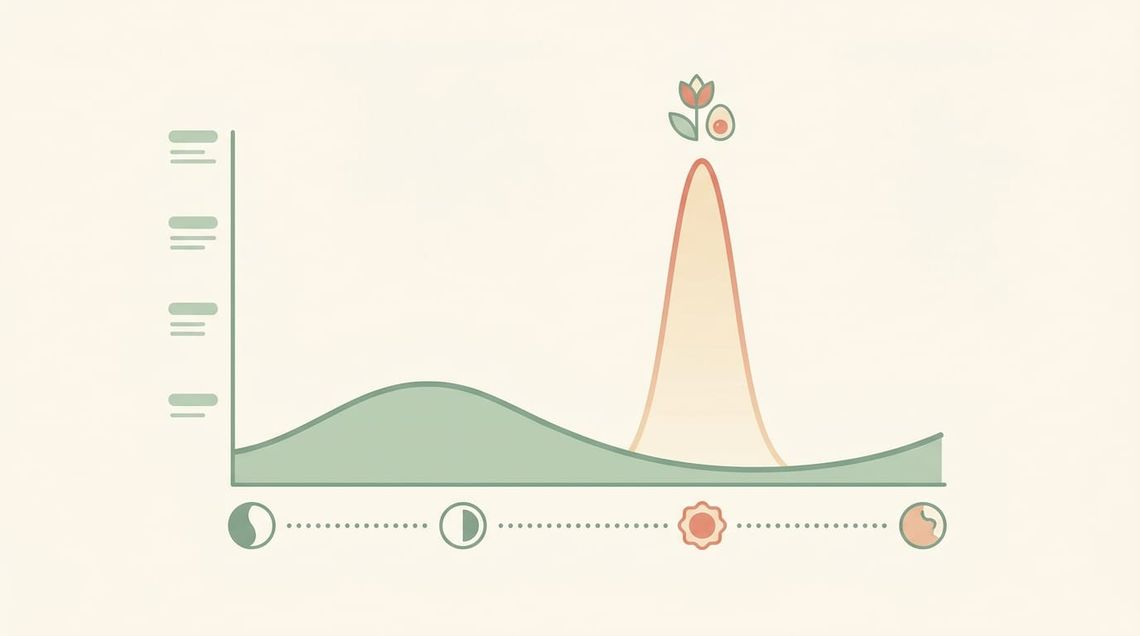
Quick Answer: Fertility monitors track hormones like LH, oestrogen, and progesterone metabolites to predict or confirm ovulation. The best monitor depends on your needs: Mira offers lab-grade hormone tracking, Inito measures four hormones on one strip, and Clearblue is the simplest mainstream option. Each has trade-offs in accuracy, cost, and ease of use.
Key Takeaways
- Fertility monitors go beyond basic OPKs by tracking multiple hormones and providing more precise fertile window predictions.
- Mira and Inito offer the most comprehensive hormone data (LH, oestrogen, PdG/progesterone metabolites, FSH) in at-home devices.
- Clearblue Advanced remains the most accessible and affordable monitor, tracking LH and oestrogen with simple digital results.
- The "best" monitor depends on your budget, tech comfort level, and whether you need confirmation that ovulation actually occurred (not just predicted).
- All monitors work best when combined with understanding of your own cycle patterns over multiple months.
Why Use a Fertility Monitor Instead of Regular OPKs?
Choosing a fertility monitor can feel overwhelming - there are so many options and they all claim to be the best. I've worked with women using everything from basic OPKs to high-tech wearable trackers, and honestly, the 'best' one depends entirely on your situation. Let me break down what's actually worth your money.
The answer comes down to precision and additional data. Basic OPKs detect your LH surge, which tells you ovulation is likely within 24-36 hours. That's useful. But monitors go further - they can:
- Detect your fertile window opening before the LH surge (by tracking oestrogen)
- Confirm that ovulation actually occurred (by tracking progesterone metabolites)
- Show you hormone trends over time, helping identify patterns or irregularities
- Provide more reliable results for women with PCOS or irregular cycles
After researching the options available, I've compared the main contenders. Here's my honest assessment of each.
Mira Fertility Tracker
What It Measures
Mira uses quantitative hormone analysis - it gives you actual numerical values, not just positive/negative results. Depending on which test wands you use, it measures:
- LH (luteinizing hormone) - for ovulation prediction
- E3G (oestrogen metabolite) - for early fertile window detection
- PdG (progesterone metabolite) - for ovulation confirmation
- FSH - for ovarian reserve assessment (with specific wands)
Pros
- Quantitative results give you actual hormone levels, not just positive/negative
- The Mira AI learns your individual cycle patterns over time
- Confirms ovulation with PdG testing - a feature most monitors lack
- App shows hormone curves, which is incredibly useful for understanding your cycle
- Can help identify PCOS, anovulation, and other hormonal patterns
Cons
- Expensive - the analyser costs approximately $199/£179, and wands are approximately $2-4 each (you may use 15-25 per cycle)
- Requires daily testing during your fertile window for best results
- The app requires a smartphone and Bluetooth connection
- Initial learning curve to understand the hormone curves
Who It's Best For
Women who want the most detailed hormonal picture possible, those with irregular cycles or PCOS, and anyone who's been trying to conceive for several months and wants deeper data. If you're a data person who wants to understand your hormones - not just get a "yes/no" - Mira is the standout choice.
Inito Fertility Monitor
What It Measures
Inito measures four hormones on a single test strip:
- LH - ovulation prediction
- E3G (oestrogen metabolite) - fertile window detection
- PdG (progesterone metabolite) - ovulation confirmation
- FSH - cycle health monitoring
Pros
- All four hormones on one strip - no need to switch wands like with Mira
- Confirms ovulation with PdG, which is rare for at-home devices
- More affordable than Mira - the clip-on reader costs approximately $89/£79, and strips are approximately $1.50-2 each
- Clear app interface with cycle predictions
- Good for identifying anovulatory cycles
Cons
- Requires a compatible smartphone (iPhone or Android) - the reader clips onto your phone
- Slightly less quantitative than Mira - shows trends but not exact numerical values in the same way
- Test strip availability can be an issue outside the US
- The phone-clip design is a bit fiddly compared to standalone devices
Who It's Best For
Women who want multi-hormone tracking including ovulation confirmation, but at a lower price point than Mira. The all-in-one strip design is particularly convenient if you hate switching between different test types.
Clearblue Advanced Fertility Monitor
What It Measures
- LH - ovulation prediction
- E3G (oestrogen metabolite) - early fertile window detection
Pros
- Simple, standalone device - no smartphone required
- Clear digital display with easy-to-read "low," "high," and "peak" fertility indicators
- Widely available in pharmacies and online
- The most established brand in fertility monitoring
- Relatively affordable - monitor approximately $100-130/£80-100, test sticks approximately $1-1.50 each
Cons
- Does not confirm ovulation (no progesterone/PdG testing)
- Limited data - you get a reading, not hormone curves or numbers
- Not as useful for women with PCOS (can give misleading results with chronically elevated LH)
- The "high fertility" reading can sometimes last many days without reaching "peak," which is frustrating
- Some users report inconsistent results cycle to cycle
Who It's Best For
Women who want something simple, reliable, and tech-free. If you don't want to use an app or look at hormone graphs, Clearblue gives you a straightforward answer: low, high, or peak fertility.
Tempdrop
What It Measures
Tempdrop is not a hormone monitor - it's a wearable basal body temperature (BBT) sensor worn on the upper arm during sleep. It continuously measures your skin temperature and uses an algorithm to identify your true basal body temperature, compensating for movement and disturbances.
Pros
- Confirms ovulation retrospectively through temperature shift
- No daily testing required - just wear it to sleep
- Solves the biggest problem with traditional BBT: disturbed sleep and inconsistent waking times
- One-time purchase (approximately $159/£139) with no ongoing consumable costs
- Works with fertility awareness method (FAM) apps like Read Your Body, OvuSense, and Natural Cycles
Cons
- Confirms ovulation after it's happened - not predictive for timing intercourse
- Takes 2-3 months of data to train the algorithm
- Doesn't detect the fertile window opening (no oestrogen tracking)
- Best used alongside another method (OPKs or cervical mucus tracking) for complete cycle coverage
Who It's Best For
Women who want passive ovulation confirmation without daily testing. Ideal for those who already use fertility awareness methods or want to combine temperature tracking with OPKs for a complete picture.
OvuSense
What It Measures
OvuSense is a vaginal core body temperature sensor worn overnight. Unlike Tempdrop (which measures skin temperature), OvuSense measures core temperature directly, which it claims is more accurate for detecting the ovulatory temperature shift.
Pros
- Measures core body temperature directly (more accurate than skin temp)
- Claims to predict and confirm ovulation with 99% accuracy in clinical studies
- Works well for women with PCOS and irregular cycles
- Provides both prediction (for upcoming cycles) and confirmation (for current cycle)
Cons
- Vaginal insertion is not for everyone - some women find it uncomfortable or awkward
- Subscription model (approximately $29/£25 per month for sensor + app)
- Requires wearing it every night for the entire cycle for best prediction accuracy
- Less widely known than other options
Who It's Best For
Women with PCOS or highly irregular cycles who need a reliable ovulation tracking method that isn't affected by their hormonal irregularities. The vaginal sensor approach is unique and particularly suited to women who find OPKs unreliable.
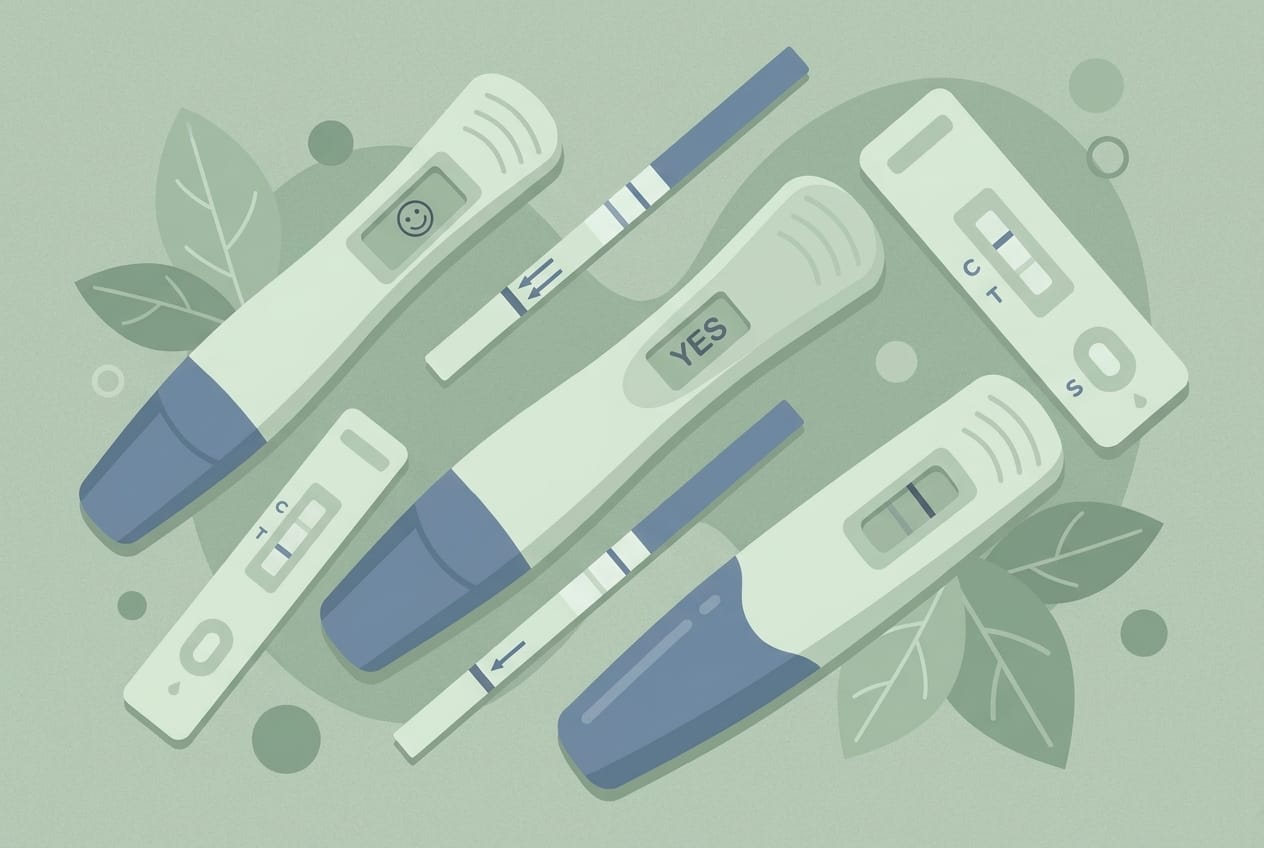
Fertility Monitor Comparison Chart
Let me summarise the key differences:
- Mira: Most comprehensive data (quantitative LH, E3G, PdG, FSH). Highest cost. Best for data-driven tracking.
- Inito: 4 hormones on 1 strip. Confirms ovulation. Mid-range cost. Best value for multi-hormone tracking.
- Clearblue Advanced: LH + E3G. Simple digital display. Affordable. Best for simple, tech-free tracking.
- Tempdrop: BBT sensor. Confirms ovulation. No consumables. Best for passive tracking alongside OPKs.
- OvuSense: Core temp sensor. Predicts + confirms. Best for PCOS and irregular cycles.
How to Choose the Right Fertility Monitor
With so many options, how do you pick? Here's how I'd think about it:
If Budget Is Your Priority
Start with Clearblue Advanced or basic OPK strips. These give you the core data you need (LH surge detection and early fertile window) at the lowest cost. You can always upgrade later if you need more information.
If You Want the Most Data
Mira gives you the most comprehensive hormonal picture. If you're a numbers person who wants to see actual hormone curves and trends, Mira is the clear winner. It's particularly useful if you've been trying for a while and want to understand your cycle at a deeper level.
If You Want Confirmation That Ovulation Happened
Inito or Mira (with PdG wands) - these are the only at-home monitors that can confirm ovulation through progesterone metabolite testing. Without this, you're relying on prediction only.
If You Have PCOS
Basic OPKs are often unreliable with PCOS due to chronically elevated LH. OvuSense or Mira (with quantitative LH, which can show you don't have a true surge pattern) are better choices.
If You Hate Daily Testing
Tempdrop - wear it to sleep and it does the work. No morning testing, no urine strips, no apps to open. Just data that's there when you need it.
Dani Recommends
After researching all the options, here's my honest recommendation for most women:
Start with OPKs (cheap, easy, effective) for the first 3-6 months of trying. If you're not getting pregnant and want more data, upgrade to Inito - it gives you the most bang for your buck with four hormones on one strip and ovulation confirmation.
If budget isn't a concern and you want the best possible data, Mira is the gold standard. The quantitative hormone curves are genuinely useful for understanding your individual cycle.
Whichever monitor you choose, remember: it's a tool, not a guarantee. The best monitor in the world can't compensate for timing issues, sperm quality, or anatomical factors. Use it as one piece of the puzzle.
Frequently Asked Questions
Are fertility monitors worth the money?
It depends on your situation. If you're just starting to try to conceive, basic OPKs (which cost a fraction of a monitor) are usually sufficient. If you've been trying for 6+ months without success, have irregular cycles, or want more detailed data, a fertility monitor is something I've seen be a really worthwhile investment for many of my clients. The cost of a monitor is typically much less than a single cycle of fertility treatment.
Can fertility monitors diagnose infertility?
No. Fertility monitors track hormones and predict/confirm ovulation, but they cannot diagnose infertility. In my practice, if a monitor consistently shows anovulatory cycles or abnormal hormone patterns, that's valuable information to bring to your doctor - and I always encourage my clients to do this, but diagnosis requires clinical testing.
Do fertility monitors work for PCOS?
Some work better than others. Basic OPKs are often unreliable with PCOS because chronically elevated LH can cause false positives. Quantitative monitors like Mira (which show actual hormone levels rather than just positive/negative) and temperature-based monitors like OvuSense tend to be more reliable for PCOS.
How accurate are fertility monitors?
Accuracy varies by device and what you're measuring. For LH surge detection, most monitors are 95-99% accurate. For predicting the fertile window (typically 5-6 days), accuracy is approximately 80-90% depending on the device. For confirming ovulation, only monitors that test PdG (Inito, Mira) or track temperature (Tempdrop, OvuSense) can provide this.
Can I use a fertility monitor alongside other tracking methods?
Absolutely - and I'd encourage it. Combining an OPK or monitor with cervical mucus tracking and/or BBT charting gives you the most complete picture. The monitor predicts when you're approaching ovulation, while cervical mucus and BBT provide additional confirmation.
Do I need to use a fertility monitor every cycle?
Not necessarily. Once you understand your cycle pattern from 2-3 months of data, you may be able to predict your fertile window based on your typical cycle length and symptoms. However, if your cycles are irregular or you're actively trying to conceive, using the monitor each cycle provides the most accurate timing.
Which fertility monitor works without a smartphone?
The Clearblue Advanced Fertility Monitor is the only standalone monitor that doesn't require a smartphone. All others (Mira, Inito, Tempdrop, OvuSense) require a smartphone app for results and data.
Cite This Page
Bowen, D. (2026). Best Fertility Monitors Compared: Mira, Inito, Clearblue, and More. Fertilitys. Retrieved from https://fertilitys.com/best-fertility-monitors
References
- Bigelow, J.L., et al. (2004). Mucus observations in the fertile window: a better predictor of conception than timing of intercourse. Human Reproduction, 19(4), 884-892.
- Fehring, R.J., et al. (2017). Comparison of wireless skin and vaginal temperature monitoring. Journal of Obstetric, Gynecologic and Neonatal Nursing, 46(5), e170-e178.
- Johnson, S., et al. (2011). Use of a digital ovulation test for the timing of intercourse. Reproductive BioMedicine Online, 22(Suppl 1), S61.
- Miller, P.B. and Soules, M.R. (1996). The usefulness of a urinary LH kit for ovulation prediction during menstrual cycles of normal women. Obstetrics and Gynecology, 87(1), 13-17.
- Park, S.J., et al. (2007). The accuracy of urinary luteinizing hormone testing in predicting ovulation. Reproductive Biology and Endocrinology, 5(1), 41.
Medical Disclaimer: This article is for informational purposes only and does not constitute medical advice or product endorsement. Product features and pricing are based on publicly available information and may change. Always consult a qualified healthcare professional for personalised fertility guidance.
Written by

Subscribe to Fertilitys
All my Free Resources. No spam. Unsubscribe anytime.