Recurrent Miscarriage: Causes, Testing, and What Comes Next
Recurrent miscarriage affects 1 in 100 couples. Known causes, NHS testing pathways, evidence-based treatments, and the emotional reality of repeated pregnancy loss.


Quick Answer
Recurrent miscarriage is defined as two or more consecutive pregnancy losses (three in some UK guidelines). Causes include antiphospholipid syndrome, chromosomal abnormalities, uterine issues, thyroid disorders, and often remain unexplained. Testing is available through the NHS, and targeted treatments — particularly progesterone and aspirin — improve outcomes. Most women with recurrent miscarriage go on to have a successful pregnancy.
Key Takeaways
- Recurrent miscarriage affects approximately 1 in 100 couples trying to conceive
- Antiphospholipid syndrome (sticky blood) is the most common treatable cause, affecting about 15% of women with recurrent loss
- ESHRE (2022) guidelines recommend testing after two consecutive losses, not three
- The PRISM trial showed progesterone supplementation improved live birth rates in women with early bleeding and previous miscarriage history
- Even when no cause is found (unexplained), the majority of women go on to have a successful pregnancy
Table of Contents
If you are reading this after two, three, or more miscarriages, I want to start by saying something that might be hard to hear right now: this is not your fault. I know that your brain is searching for what you did wrong. I know you are replaying every moment. I know the guilt feels unbearable. But I need you to hear this: you did not cause this.
Recurrent miscarriage is one of the most isolating experiences a person can go through. Each loss compounds the grief, and each new pregnancy becomes a source of terror rather than joy. The world moves on while you are stuck in a cycle of hope and devastation.
This article covers the medical side — causes, testing, treatments — because knowledge is power. But it also covers the emotional side, because that is where the real suffering lives. I have walked many women through this, and I want you to know: there is a path forward, and you do not have to walk it alone.
What Counts as Recurrent Miscarriage?
There is a surprising lack of consensus on this, and it matters for accessing care.
- ESHRE (European Society of Human Reproduction and Embryology, 2022) defines recurrent pregnancy loss as two or more miscarriages
- RCOG (Royal College of Obstetricians and Gynaecologists) traditionally used three or more, but updated guidance now supports investigation after two losses
- ASRM (American Society for Reproductive Medicine) defines it as two or more clinical pregnancy losses
The shift from three to two losses is significant. If you have had two miscarriages and your GP says you need to wait for a third before investigating, the latest guidelines do not support that. ESHRE 2022 explicitly recommends starting testing after two losses. You can cite this guidance in your appointment.
It is also worth noting that recurrent miscarriage affects approximately 1-2% of couples. You are not as alone as you feel — though I know it does not feel that way.
Known Causes of Recurrent Miscarriage
Approximately 50% of recurrent miscarriage cases have an identifiable cause. The most common are:
Antiphospholipid Syndrome (APS)
Also known as "sticky blood," APS is the most common treatable cause of recurrent miscarriage, accounting for approximately 15% of cases. It is an autoimmune condition where antibodies attack phospholipids in the blood, causing clots that can block blood flow to the developing pregnancy. Diagnosis requires specific blood tests (lupus anticoagulant, anticardiolipin antibodies, anti-beta-2-glycoprotein). Treatment with low-dose aspirin and heparin significantly improves outcomes. See my article on <a href="/fertility-testing/">fertility testing</a> for more on the blood tests involved.
Chromosomal Abnormalities
About 2-5% of couples with recurrent miscarriage carry a balanced chromosomal translocation — where one partner has a rearrangement of genetic material that is normal for them but can cause problems in the embryo. A simple blood test (karyotype) can identify this. If found, options include natural conception with prenatal diagnosis, or IVF with preimplantation genetic testing (PGT).
Uterine Abnormalities
Structural issues in the uterus — such as a septate uterus (a wall of tissue dividing the cavity), fibroids, or polyps — can interfere with implantation and pregnancy development. These are detected by ultrasound or hysteroscopy. Many are surgically correctable.
Thyroid Disorders
Both underactive and overactive thyroid can increase miscarriage risk. TSH levels should be checked as part of any recurrent miscarriage investigation. The British Thyroid Association recommends a TSH below 2.5 mIU/L for women trying to conceive.
Other Factors
- Thrombophilias (inherited clotting disorders) — factor V Leiden, protein S deficiency
- Diabetes — poorly controlled blood sugar increases miscarriage risk
- Age — particularly maternal age over 35, when egg quality declines
- Male factors — sperm DNA fragmentation may contribute, though evidence is still developing
- Lifestyle — heavy smoking, excessive alcohol, and very high BMI are associated with increased risk
What Testing Is Available?
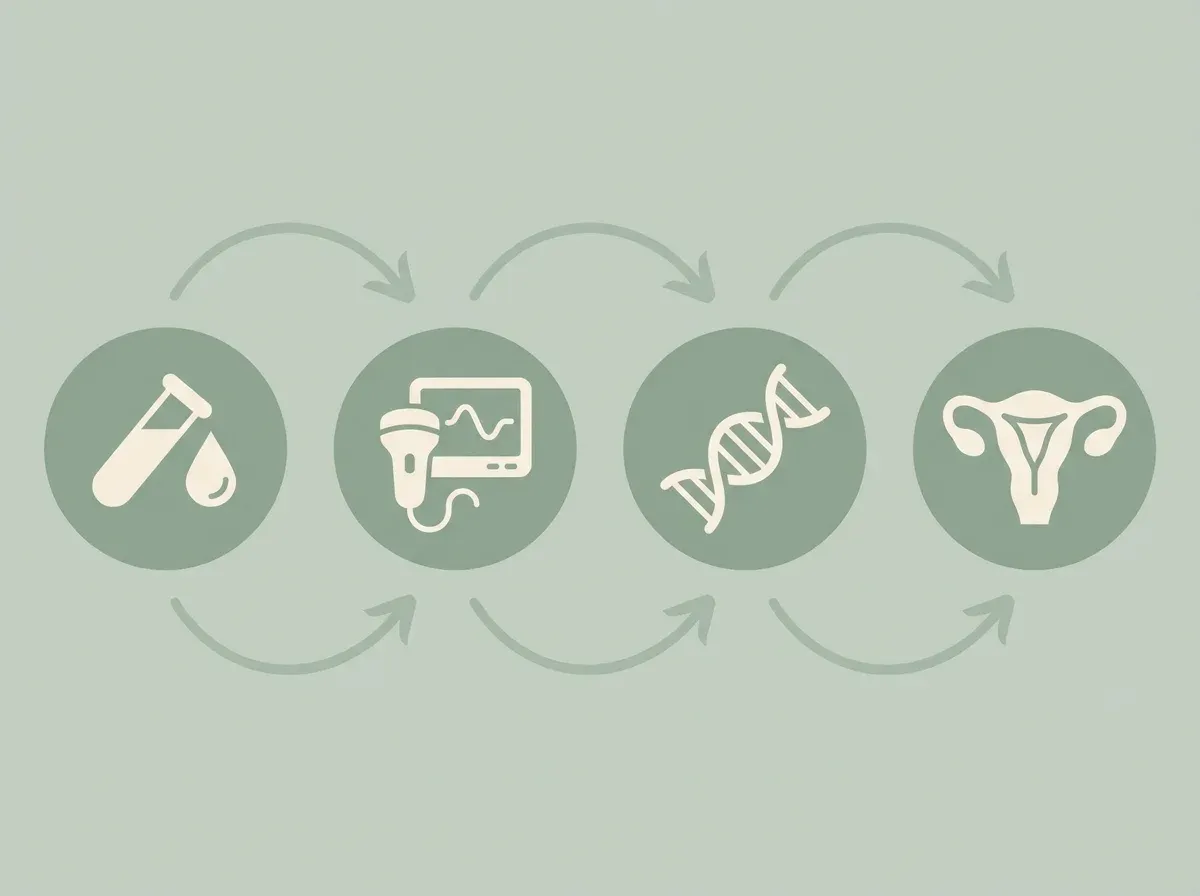
If you have had two or more miscarriages, you are entitled to investigation on the NHS. ESHRE 2022 recommends the following tests:
- Blood tests for antiphospholipid syndrome (lupus anticoagulant, anticardiolipin antibodies) — tested twice, at least 12 weeks apart
- Karyotype (chromosome analysis) for both partners — to check for balanced translocations
- Pelvic ultrasound or hysteroscopy — to assess uterine structure
- Thyroid function tests (TSH, T4)
- Blood glucose or HbA1c — to check for diabetes
- Progesterone levels — to assess luteal phase adequacy
- Consider testing for thrombophilias if APS is negative
You should be referred to a recurrent miscarriage clinic or early pregnancy unit for these investigations. If your GP is reluctant to refer, ask specifically for a referral to your nearest specialist clinic. The <a href="https://www.miscarriageassociation.org.uk">Miscarriage Association</a> has a directory of clinics.
Evidence-Based Treatments
When a cause is found, targeted treatment significantly improves the chance of a successful pregnancy. Here are the treatments with the strongest evidence:
Aspirin and Heparin for APS
This is the gold standard treatment for antiphospholipid syndrome. Low-dose aspirin (75mg) started before conception, combined with low-dose heparin injections started after a positive pregnancy test, improves live birth rates from approximately 40% to over 70% in women with APS and recurrent miscarriage.
Progesterone Supplementation
The PRISM trial (Coomarasamy et al., 2019) showed that vaginal progesterone improved live birth rates in women with early pregnancy bleeding who had a history of miscarriage — with the greatest benefit in women with three or more previous losses (live birth rate improved from 44% to 72%). The RCOG now recommends offering progesterone to women with recurrent miscarriage who have bleeding in early pregnancy. See my article on <a href="/progesterone-and-fertility/">progesterone and fertility</a> for more detail.
Surgical Correction of Uterine Abnormalities
If a uterine septum or large fibroid is identified, surgical correction (usually by hysteroscopy) can improve pregnancy outcomes. The evidence for polypectomy improving miscarriage rates is less robust but still considered worthwhile.
Thyroid Management
Ensuring TSH is below 2.5 mIU/L before and during early pregnancy reduces miscarriage risk. This usually involves levothyroxine supplementation.

When No Cause Is Found
In approximately 50% of recurrent miscarriage cases, no cause is identified after full investigation. This is called unexplained recurrent miscarriage, and it is one of the most frustrating diagnoses because there is nothing to treat.
But here is the number that matters: even with unexplained recurrent miscarriage, the majority of women go on to have a successful pregnancy. ESHRE 2022 reports a 60-75% live birth rate in subsequent pregnancies for women with unexplained recurrent loss.
Supportive care — which includes early pregnancy monitoring, emotional support, and progesterone supplementation in early pregnancy — has been shown to improve outcomes even in unexplained cases. This is not nothing. It is meaningful, evidence-based care.
I tell my clients with unexplained recurrent miscarriage: the fact that no cause was found is not a dead end. It means we support you comprehensively — nutritionally, emotionally, and medically — and give your next pregnancy the best possible foundation.
The Emotional Reality of Repeated Loss
I wrote about <a href="/coping-with-infertility/">coping with infertility</a> in a separate article, but recurrent miscarriage deserves its own emotional conversation because the grief compounds in a unique way.
Each loss does not replace the last one — it sits on top of it. By the third or fourth miscarriage, you are carrying layers of grief, each connected to a different hope, a different timeline, a different imagined future.
The fear of trying again is paralysing. You want a baby more than anything, but the thought of another positive pregnancy test fills you with dread. You might find yourself hoping for a negative test because it hurts less than the prospect of another loss.
These feelings are normal, rational responses to terrible experiences. They do not mean you should stop trying. They mean you need support — real, specialised support from someone who understands pregnancy loss.
Resources that my clients have found genuinely helpful:
- Miscarriage Association (miscarriageassociation.org.uk) — helpline, support groups, and online community
- Tommy's (tommys.org) — specialist midwife helpline and pregnancy after loss support
- Petals (petalscharity.org) — free specialist counselling after pregnancy loss
- Your GP — ask for a referral to a psychologist or counsellor with experience in reproductive loss
Dani Recommends
Walking Through Grief
After each loss, I recommend gentle daily walks — not for fitness, but for processing. Walk somewhere with trees if you can. Do not listen to podcasts or music. Let your mind go where it needs to go. Cry if you need to. Be angry if you need to. The rhythmic movement of walking activates a part of your brain that helps process trauma. This is not exercise therapy — it is grief therapy in motion. I did this after my own losses, and it was the single most helpful thing I did.
Frequently Asked Questions
How many miscarriages count as recurrent?
ESHRE 2022 guidelines define recurrent miscarriage as two or more consecutive pregnancy losses. Some UK guidelines still use three, but the trend is moving towards two. If you have had two miscarriages, you are entitled to investigation — do not wait for a third.
What tests should I ask my GP for?
Request: antiphospholipid syndrome blood tests (lupus anticoagulant, anticardiolipin antibodies), karyotype for both partners, pelvic ultrasound, thyroid function (TSH), and blood glucose. These are the core investigations recommended by ESHRE 2022 and should be available on the NHS.
Can recurrent miscarriage be treated?
Yes, when a cause is found. Antiphospholipid syndrome responds well to aspirin and heparin. Uterine abnormalities can often be corrected surgically. Thyroid issues can be managed with medication. Even when no cause is found, supportive care with progesterone and early monitoring improves outcomes.
What are the chances of a successful pregnancy after recurrent miscarriage?
The statistics are more hopeful than you might expect. After three miscarriages with no cause found, your chance of a successful next pregnancy is approximately 60-75% (ESHRE 2022). With treatment for identified causes, the success rate is even higher. Most women with recurrent miscarriage go on to have a baby.
Should I see a specialist or can my GP help?
Your GP can initiate basic testing, but you should be referred to a specialist recurrent miscarriage clinic for comprehensive investigation and management. Ask your GP for a referral to your nearest specialist unit. The Miscarriage Association has a list of clinics on their website.
How long should I wait before trying again after a miscarriage?
The traditional advice was to wait 3 months, but evidence from Schliep et al. (2016) suggests that conceiving within the first 3 months after a miscarriage is not associated with increased complications. Many specialists now say there is no medical reason to wait, though you may need time emotionally. There is no right answer — go when you feel ready.
Is recurrent miscarriage always the woman's issue?
No. Male factors — particularly sperm DNA fragmentation — are increasingly recognised as a contributing factor. If standard female testing comes back normal, a sperm DNA fragmentation test for your partner is worth considering. This is not about blame — it is about finding the cause so you can treat it.
Medical Disclaimer
This article is for informational purposes only and does not constitute medical advice. Recurrent miscarriage requires specialist investigation and management. Please seek referral to a recurrent miscarriage clinic through your GP. If you are currently experiencing a miscarriage or have heavy bleeding, contact your GP, nearest A&E, or call 111. If you are struggling emotionally, please contact the Miscarriage Association helpline or Samaritans (116 123).
Cite This Page
Dani, Fertilitys. "Recurrent Miscarriage: Causes, Testing, and What Comes Next." Fertilitys.com, 1 Aug. 2026, https://fertilitys.com/recurrent-miscarriage/
References
- ESHRE (2022) 'Recurrent pregnancy loss: guideline of the European Society of Human Reproduction and Embryology', Human Reproduction, 37(3), pp. 389-408.
- Coomarasamy, A. et al. (2019) 'A randomized trial of progesterone in women with bleeding in early pregnancy', New England Journal of Medicine, 380(19), pp. 1815-1824.
- RCOG (2011) 'The investigation and treatment of couples with recurrent first-trimester and second-trimester miscarriage', Green-top Guideline No. 17.
- Schliep, K.C. et al. (2016) 'Trying to conceive after an early pregnancy loss', Obstetrics and Gynecology, 127(2), pp. 204-212.
- Bender Atik, R. et al. (2018) 'ESHRE guideline: recurrent pregnancy loss', Human Reproduction Open, 2018(2), hoy004.
- Coomarasamy, A. et al. (2018) 'Recurrent miscarriage: the green-top guideline', BJOG, 125(13), pp. e470-e487.
- Miscarriage Association (2024) 'Support and information'. Available at: https://www.miscarriageassociation.org.uk
Written by

Subscribe to Fertilitys
All my Free Resources. No spam. Unsubscribe anytime.